How to Start Your Car in Cold Weather With 7 Essential Steps
To start your car in cold weather, you need to follow some essential steps to ensure a smooth and hassle-free experience. The frigid temperatures can take a toll on your vehicle, especially the battery and engine components.
First things first, turn off all electronics to conserve battery power.
Next, check your battery and clean the terminals if needed.
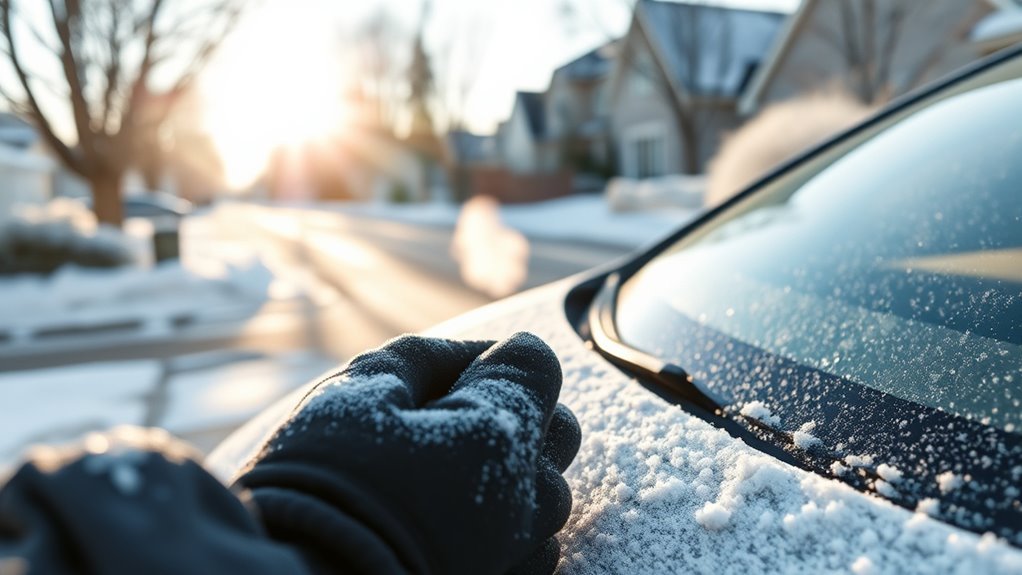
Don’t forget to clear snow and ice from windows, mirrors, and the exhaust.
When you’re ready to start the engine, turn the key slowly.
Avoid pressing the accelerator, and limit each start attempt to 10 seconds.
If you don’t succeed, wait a minute before trying again to protect your starter.
If the battery’s dead, make sure to jump-start it properly.
Once the engine starts, warm it gently before driving.
Keep going for more useful tips to handle winter starts smoothly!
Turn Off All Electronics and Accessories
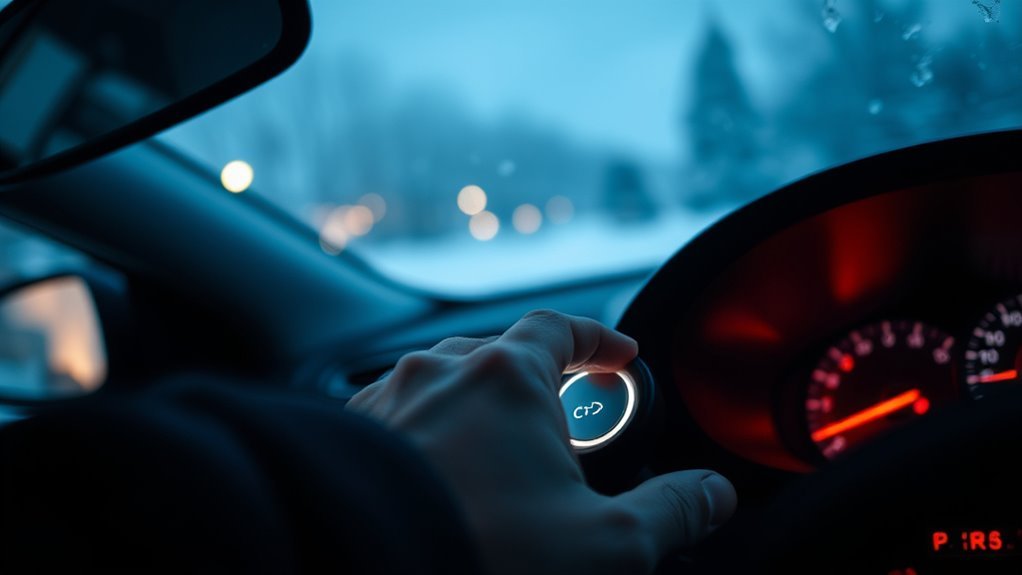
Before you start your car in cold weather, make sure to turn off all electronics and accessories.
Always turn off all electronics before starting your car in cold weather to protect your battery.
When you turn off all electronics and accessories like the radio, heater, defroster, headlights, and wipers, you reduce the electrical load on the battery.
This is essential because cold weather makes the battery work harder to provide enough power for starting the engine.
If you leave accessories on, they’ll cause unnecessary drain, quickly depleting the battery’s energy and increasing the risk of engine failure.
By turning off all electronics before starting, you guarantee the battery can focus its full power on cranking the engine.
This simple step greatly improves your chances of a successful start, especially when temperatures drop and the battery’s performance naturally declines.
Check and Prepare the Battery for Cold Weather
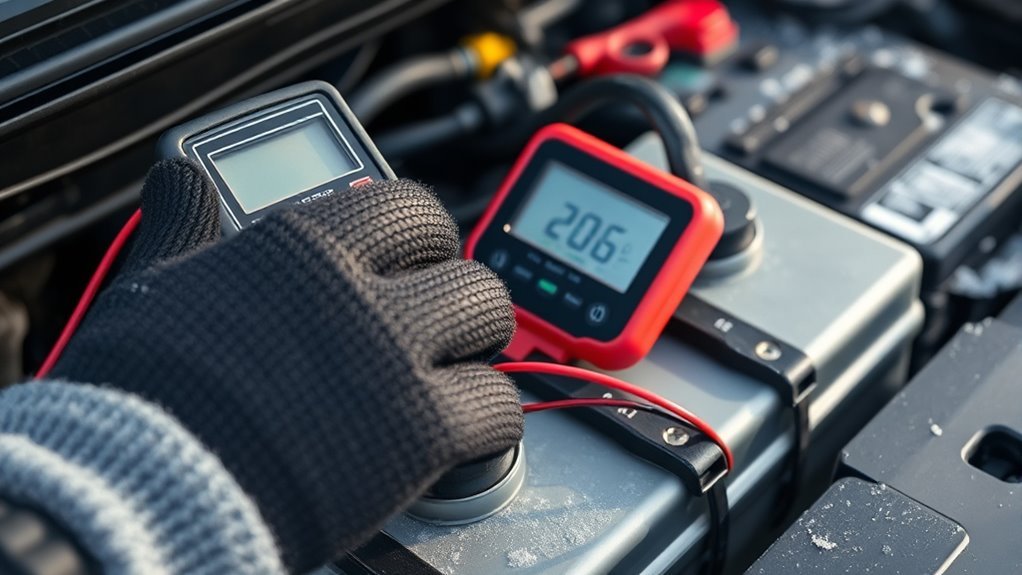
Reducing the electrical load is just one part of preparing your car for cold weather starts.
You need to check and prepare the car battery to *guarantee* reliable performance. Here’s what to do:
- Test your battery’s cold cranking amps before winter to confirm it can handle freezing temperatures.
- Clean the battery terminals to remove corrosion using a baking soda and water mix with a wire brush.
- Consider your battery age—if it’s over three years old, replace it or warm the battery indoors overnight.
- Use a battery maintainer or battery blanket during extremely cold nights to keep it warm and efficient.
Following these steps helps prevent starting issues and extends your battery’s lifespan in harsh winter conditions.
Clear Snow and Ice From Your Vehicle
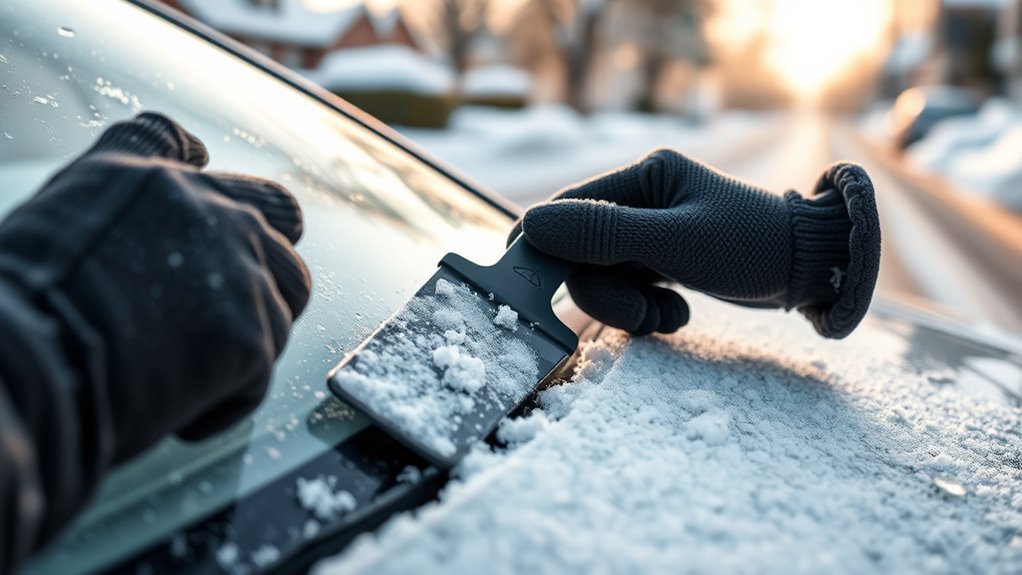
While the cold weather might tempt you to skip it, clearing snow and ice from your entire vehicle is essential for safe driving.
Use a snow brush and ice scraper to clear the roof, hood, trunk, windows, mirrors, and windshield.
Clear all surfaces—roof, hood, trunk, windows, mirrors, and windshield—with a snow brush and ice scraper.
Don’t forget to remove snow and ice from the wipers and make sure they’re free to move before using the windshield washer system.
Also, clear around the wheel wells and under the vehicle to avoid traction issues.
Most importantly, clear the exhaust pipe of any snow or ice to prevent dangerous carbon monoxide buildup inside your vehicle.
Taking the time to clear your vehicle thoroughly in winter weather ensures better visibility, safer driving, and protects your vehicle’s components from damage.
Use Proper Starting Techniques for Cold Engines
If you want your car to start smoothly in cold weather, you need to use proper starting techniques for cold engines.
A cold start requires care to protect the starter and help the engine warm efficiently.
Follow these steps for the best results:
- Turn the ignition key slowly and hold for no more than 10 seconds during your initial attempt to avoid overheating the starter.
- Avoid pressing the accelerator pedal; this prevents flooding the engine.
- Use the manufacturer’s starting procedure, which may include waiting for fuel pump priming before cranking.
- If the engine doesn’t start, wait a minute or two before your next attempt to allow components to recover.
These steps help you prevent damage and get your engine warm quickly without unnecessary strain.
Wait Between Starting Attempts to Protect the Starter
After you’ve made a starting attempt using the proper technique, give your car a minute or two before trying again.
It’s important to wait between starting attempts to protect the starter motor from overheating. Continuous cranking without resting can cause the starter to burn out prematurely, leading to costly repairs.
Limiting each starting attempt to 10-15 seconds helps avoid unnecessary strain. During the wait, the starter motor gets a chance to cool down, which minimizes the risk of damage and extends its lifespan.
Additionally, waiting allows the battery to recover, reducing electrical stress on the starter system. By pacing your starting attempts and letting the starter rest, you’ll protect the starter and improve your chances of a successful cold-weather start without harming your car.
Consider Jump-Starting If the Battery Is Dead
When your car won’t start due to a dead battery, jump-starting can get you back on the road quickly.
Follow these steps carefully to start your car in freezing conditions:
- Connect the positive jumper cable to the dead battery’s positive terminal and then to the donor vehicle’s positive terminal.
- Attach the negative cable to the donor battery’s negative terminal, then to an unpainted metal part of your car’s engine block for a proper ground connection.
- Start the donor vehicle and let it run for a few minutes to transfer battery power.
- Try to start your car within 30 seconds; if it doesn’t start, wait a minute and try again.
Proper jump-starting restores power safely without damaging your vehicle.
Warm Up Your Engine Safely Before Driving
Before you hit the road, let your engine idle for about 30 seconds to a minute to guarantee proper lubrication.
Make sure to clear snow and ice from your car to help it warm evenly and keep visibility clear.
And remember, avoid revving the engine during warm-up to prevent unnecessary wear and fuel waste.
Proper Idling Time
Although it might seem like you should let your car idle for a long time in cold weather, modern engines only need about 30 seconds to a minute to warm up properly.
Proper idling time is vital to guarantee efficient engine warm-up without wasting fuel or harming engine components.
Follow these steps for ideal idling duration during winter driving:
- Start your car and let it idle for 30 to 60 seconds.
- Avoid idling longer than 10 minutes; it’s unnecessary and inefficient.
- After the brief warm-up period, begin driving gently to gradually raise engine temperature.
- Keep an eye on engine performance and avoid prolonged idling to prevent issues like fouled spark plugs or overheating.
This approach balances engine care and fuel efficiency during cold weather winter driving.
Defrost Before Driving
After giving your engine a brief warm-up, turn on the defroster and heater to start melting ice and snow on your windshield and windows.
This gradual warm-up helps clear the ice and snow safely, improving your visibility before driving.
Use the vehicle’s defrost setting to direct warm air onto the windshield, while the heater prevents fogging on the windows.
Let the engine run for several minutes to reach its ideal temperature, allowing the defrost system to work efficiently.
Make sure you remove all ice and snow from the windshield and windows to guarantee maximum visibility.
Taking these steps will help you warm up your engine safely and maintain clear windows, making your drive in cold weather safer and more comfortable.
Avoid Excessive Revving
When you start your car in cold weather, resist the urge to rev the engine excessively. This can cause unnecessary strain and damage.
Instead, follow these steps for a safe engine warm-up:
- Allow your engine to idle steadily for 30 seconds to 1 minute without pressing the accelerator. This ensures proper lubrication.
- Avoid excessive revving, which can lead to oil starvation and engine damage before reaching proper temperature.
- Watch your warm-up gauges. Modern engines reach ideal temperature faster at a steady idle, so high RPMs aren’t necessary.
- Maintain a smooth, steady idle until RPMs stabilize and the engine warms up. This prevents revving harm and reduces emissions.
Frequently Asked Questions
What Are the 7 Steps Before You Start Your Car?
You turn off electrical accessories, check your battery’s condition and cold cranking amps, and remove snow and ice.
Then, you open the hood and turn the ignition to “on” for 10 seconds.
Finally, start your car without holding the key too long.
How to Properly Start a Car in Cold Weather?
Picture frost glistening on your windshield as you turn the key.
You’ll crank the engine for no more than 10 seconds.
Then patiently wait before trying again, ensuring your battery and starter aren’t overworked in the chill.
What Are the 5 P’s for Cold Weather?
The 5 P’s for cold weather are Proper Preparation, Patience, Prevention, Proper Starting Technique, and Post-Start Care.
You’ll want to follow these to keep your car running smoothly in freezing conditions.
Make sure you’re ready for whatever the weather throws at you!
How to Warm up a Frozen Car Engine?
Imagine your car won’t start on a frigid morning.
You plug in a block heater overnight.
Then, warm the battery indoors.
This prevents sluggish starts and helps the frozen engine warm evenly.
Ensuring a smooth ignition is key!
Conclusion
Starting your car in cold weather doesn’t have to be a hassle.
By turning off all electronics, prepping your battery, clearing snow, and using the right starting techniques, you’ll avoid unnecessary stress.
Remember to wait between attempts and consider jump-starting if needed.
Warming up your engine safely gets you ready to hit the road without a hitch.
With these steps, you’ll be back on track in no time—just like clockwork, even when the mercury drops!
In conclusion, starting your car in cold weather can be straightforward if you follow these essential steps.
By preparing your vehicle properly and using the right techniques, you can minimize the stress of winter driving.
So, whether it’s turning off electronics, waiting between attempts, or jump-starting, you’ll ensure a smooth start.
Stay warm, prepared, and ready to hit the road, no matter how low the temperature goes!