7 Tips to Move Furniture Safely During Bad Weather
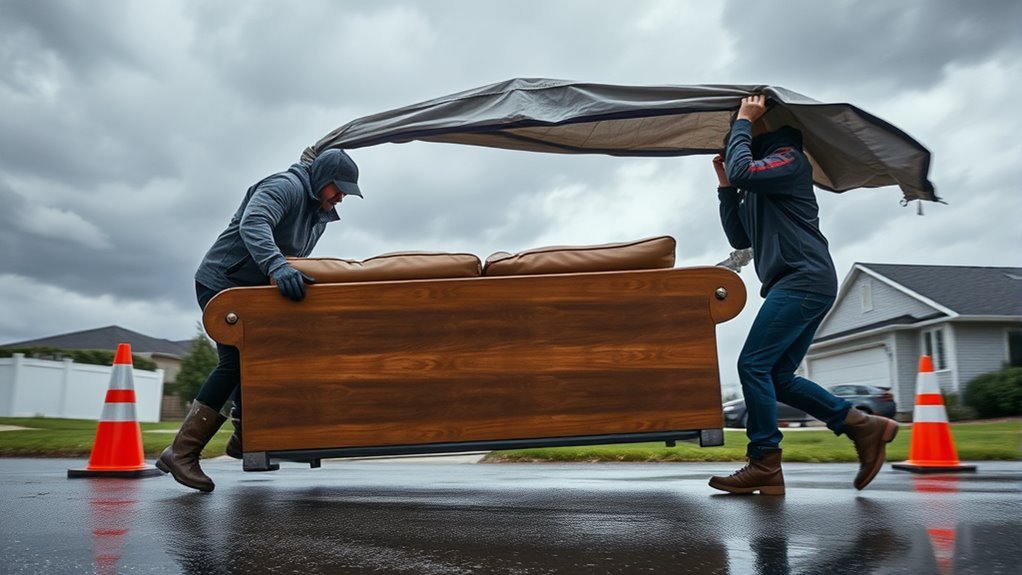
Moving furniture during bad weather can be quite challenging, but with the right strategies, you can protect your belongings and ensure a smoother process. Start by checking the weather forecast several days in advance. This will help you plan for any potential delays or changes.
Be sure to use waterproof covers, plastic sheeting, and secure wrapping to shield your furniture and valuables from moisture.
Next, prepare your walkways and entryways with mats and salt to prevent slips and falls.
Disassembling bulky pieces can make them easier to handle, and elevating items off wet surfaces is crucial for protection.
If possible, set up covered staging areas to keep your items dry.
Moving systematically not only speeds up the process but also ensures everything remains safe.
Keep going to discover even more practical strategies for moving in bad weather!
Monitor Weather Forecasts and Plan Ahead

Although moving furniture is already challenging, doing it during bad weather requires extra vigilance.
You should check the weather forecast at least five days before your move using reliable sources like Weather.gov and local news updates.
Watch for rain, snow, or storms, and update the forecast regularly, focusing on severe weather alerts such as high winds or flooding.
If tornado warnings, blizzards, or flash floods appear, be ready to reschedule immediately.
Developing a contingency plan with flexible scheduling and extra help or equipment is essential in case weather conditions worsen unexpectedly.
Also, document weather conditions and any schedule changes with photos or notes.
This will help with insurance claims and keep your move on track despite unpredictable weather.
Select Waterproof and Durable Moving Materials
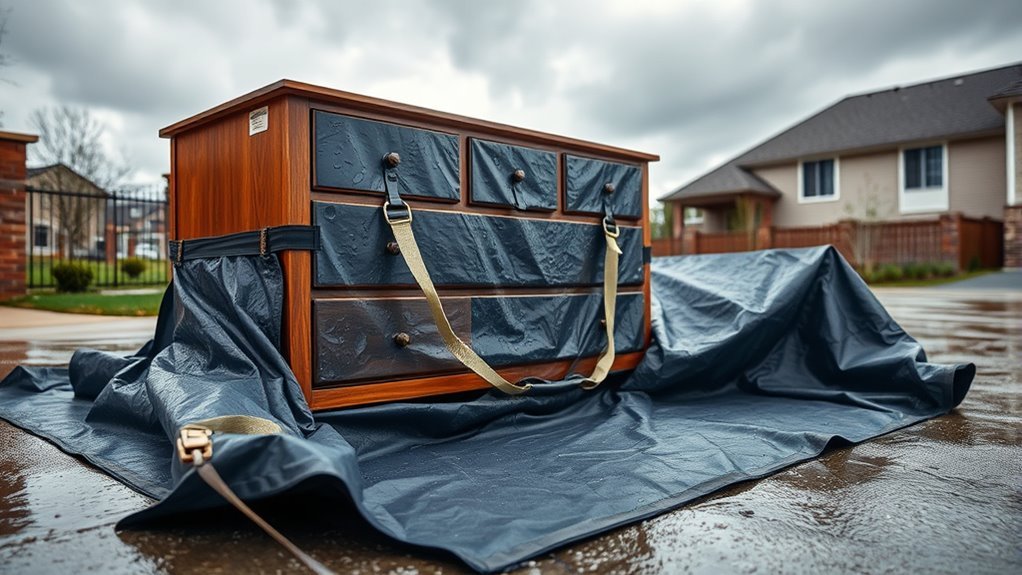
Once you’ve monitored the weather and planned accordingly, focus on protecting your belongings with waterproof and durable materials.
Use heavy-duty plastic bins with secure lids or waterproof stretch wrap to keep moisture out.
Reinforce cardboard boxes with duct tape around seams to prevent water damage.
For delicate or upholstered items, opt for waterproof furniture covers or specialized moving bags.
During loading and transit, cover furniture and boxes with a tarp or heavy plastic sheeting to shield them from rain or snow.
Keep extra plastic sheeting and waterproof tape handy to quickly seal and protect any items that need additional coverage.
These precautions help you avoid costly water damage and ensure your furniture and belongings arrive safe and dry, no matter the weather conditions.
Protect Entryways and High-Traffic Areas
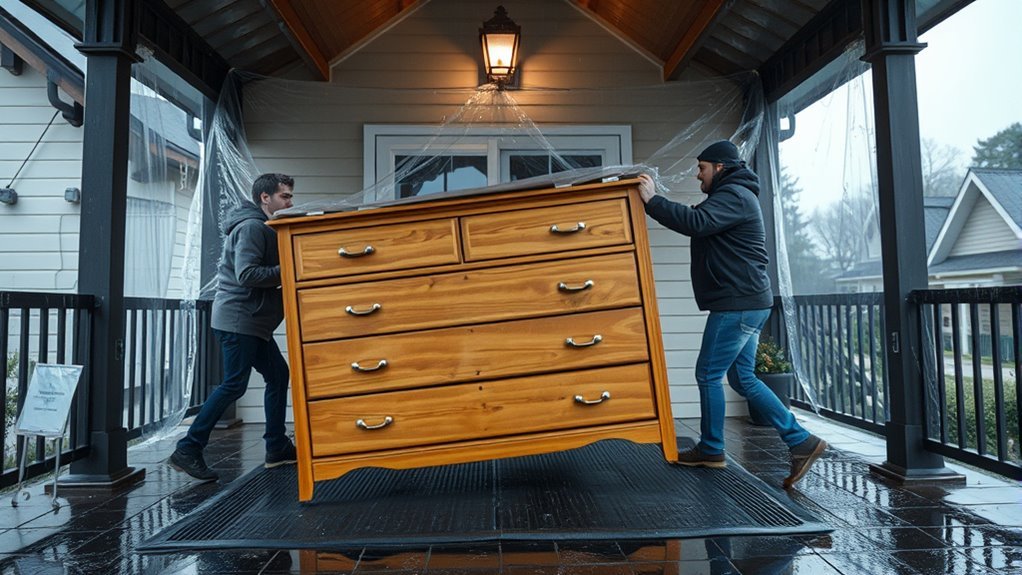
You’ll want to protect your entryways and busy pathways by laying down plastic mats or old towels to absorb moisture and prevent slips.
Taping plastic sheeting or tarps over carpets and hardwood floors keeps them safe from water and mud.
Also, setting up covered loading zones like pop-up canopies helps shield your furniture from rain during the move.
Floor Protection Methods
Because wet weather can make floors slippery and dirty, protecting entryways and high-traffic areas is essential when moving furniture.
You’ll want to use effective floor protection methods to keep your surfaces safe from water and dirt damage.
Here’s how:
- Lay down plastic sheeting, rugs, or foam mats as moisture barriers to absorb water and prevent slips in high-traffic areas.
- Secure floor coverings with painter’s tape or duct tape to avoid tripping hazards.
- Place heavy-duty cardboard or waterproof protective padding at door thresholds to shield floors during loading.
- Create wet zones with towels or absorbent mats to catch mud and moisture tracked inside.
These steps ensure waterproofing and prevent damage while wrapping furniture and moving through entryways.
Covered Loading Zones
Protecting your floors during a move is just one part of keeping furniture safe in bad weather.
Setting up a covered loading zone with tents or pop-up canopies offers essential rain protection and weatherproofing.
Use plastic sheeting as a waterproof barrier over entryways and high-traffic areas to prevent water and mud from entering.
Place non-slip mats at door thresholds to reduce slipping hazards and protect flooring.
Position furniture on protective pads inside the loading area to avoid water damage and ease sliding.
| Action | Purpose |
|---|---|
| Covered loading zone | Shield furniture from rain |
| Plastic sheeting | Waterproof barrier |
| Non-slip mats | Prevent slipping |
| Protective pads | Protect furniture surfaces |
| Clear loading area | Facilitate quick, safe moves |
Secure and Safeguard Valuables and Electronics
You’ll want to store your valuables and electronics in waterproof containers or sealed bags to keep them safe from moisture.
Whenever possible, keep high-value items with you in your vehicle to avoid exposure and loss.
Also, organize and label everything clearly so you can access them quickly and handle them with extra care during the move.
Waterproof Storage Solutions
When moving valuables and electronics during bad weather, using waterproof storage solutions is essential to keep your items safe and dry.
Here’s how to guarantee effective waterproof storage:
- Use waterproof containers like plastic bins with secure lids or sealable bags to guard against moisture.
- Wrap electronics in anti-static bubble wrap, then cover them with plastic sheeting or waterproof blankets to prevent water damage.
- Utilize waterproof furniture bags designed specifically to protect valuable items from rain, snow, and humidity.
- Clearly label and organize all valuables so you can access them quickly without exposing them unnecessarily to wet conditions.
Personal Transport for Valuables
Although bad weather complicates moving valuables, transporting high-value items personally helps you control their safety and reduces exposure to moisture.
When you handle personal transport, pack your valuables and electronics in waterproof containers or sealed plastic bags to prevent water damage.
For delicate electronics, use waterproof cases combined with anti-static bubble wrap for extra moisture protection.
Avoid leaving valuables in moving trucks where moisture can seep in; instead, keep them in your vehicle to ensure they stay dry and secure.
This hands-on approach minimizes the risk of loss and damage during bad weather.
Organized Labeling and Access
Since valuables and electronics require extra protection during bad weather moves, organizing and labeling them clearly becomes essential.
Proper labeling and access help you protect fragile items and ensure smooth handling.
Follow these steps:
- Store valuables in waterproof containers or sealed plastic bags to guard against moisture.
- Use waterproof markers to label boxes clearly, highlighting fragile contents for careful handling.
- Keep high-value items like jewelry and important documents with you for immediate access and added security.
- Organize boxes to prioritize easy access once you arrive, minimizing exposure time.
This organization guarantees your valuables stay safe, dry, and easily accessible throughout the move.
Reducing stress and potential damage is the key!
Prepare Outdoor Pathways for Safe Moving
Before you start moving furniture, make sure to clear all outdoor pathways of debris, snow, and ice to prevent slips and falls.
Apply ice melt at least 30 minutes prior to reduce slip hazards.
Use non-slip tape or mats on steps and walkways to improve traction.
Cover walkways with tarps or plastic sheeting to shield surfaces from rain or snow during the move.
Keep reapplying ice melt as needed to maintain safe footing.
Staying proactive with these steps ensures safer outdoor pathways and smoother moving, even in bad weather.
| Task | Material Needed | Purpose |
|---|---|---|
| Clear debris | Broom, shovel | Remove obstacles |
| Melt ice | Ice melt, rock salt | Prevent slippery surfaces |
| Add traction | Non-slip tape, mats | Increase grip on walkways |
| Cover surfaces | Tarps, plastic sheets | Protect from rain and snow |
Wrap and Cover Furniture Properly for Moisture Protection
When moving furniture in bad weather, wrapping and covering items properly can prevent costly water damage.
Use these tips to guarantee moisture resistance:
- Combine thick moving blankets with plastic sheeting or stretch wrap to create a waterproof barrier around your furniture wrap.
- Seal upholstered items and mattresses with heavy plastic or waterproof covers to block water infiltration.
- Wrap wooden furniture with blankets, then secure with tape or shrink wrap to protect against moisture and dirt.
- Cover glass and delicate pieces first with bubble wrap or packing paper before encasing them in plastic sheeting for added protection.
Always tightly secure all protective coverings with tape or straps to prevent slipping and maintain the seal during transport.
This careful approach keeps your furniture safe from moisture damage in bad weather.
Adjust Moving Techniques to Ensure Safety and Efficiency
Although bad weather can complicate moving day, you can adapt your techniques to keep the process safe and efficient.
Start by disassembling furniture to reduce weight and improve maneuverability on wet or icy surfaces.
Use waterproof blankets and stretch wrap to shield pieces from moisture exposure during loading and unloading.
Place furniture on furniture pads or pallets to elevate them above wet truck floors and protect belongings from water damage.
Set up covered staging areas to limit exposure to rain or snow and move systematically to speed up the process.
By combining careful preparation with proper weather protection, you’ll reduce risks and keep your furniture safe.
These adjustments ensure your move goes smoothly, even when nature doesn’t cooperate.
Frequently Asked Questions
How to Move Furniture During Bad Weather?
You should wrap your furniture tightly with waterproof covers and plastic wrap to keep it dry.
Move during clear weather if possible, and use covered staging areas.
Also, carefully plan pathways to avoid slips or damage.
Why Wrap Furniture in Plastic When Moving?
You should wrap furniture in plastic because 60% of moving damage results from moisture exposure.
It protects your pieces from water, dirt, and damage.
Plus, it keeps parts secure and makes handling easier during bad weather.
What Is the Hardest Room to Pack When Moving?
You’ll find the kitchen hardest to pack because of fragile glassware, dishes, and appliances.
Handling these delicate items requires extra care and proper packing materials to prevent damage during your move.
It’s essential to take your time and ensure everything is securely packed.
That way, you can have peace of mind knowing your kitchen items will arrive safely at your new home.
How to Move Furniture When It’s Raining?
You should cover your furniture with waterproof blankets or plastic,
wear rain gear, and move quickly to keep things dry.
Keep pathways clear, use tarps at entry points,
and load near your door under cover.
Conclusion
Moving furniture in bad weather can feel like steering a stormy sea, but with the right preparation, you’ll stay safe and dry.
By planning ahead, using waterproof materials, protecting entryways, and wrapping your furniture well, you’ll avoid damage and accidents.
Remember to secure valuables and clear outdoor paths to keep everything running smoothly.
Adjust your techniques to the conditions, and you’ll master the move with confidence, no matter what the weather throws at you.
In conclusion, moving furniture during bad weather doesn’t have to be a headache.
With proper planning and the right materials, you can protect your belongings and ensure everyone’s safety.
Remember to adapt your methods based on the weather conditions, and always prioritize securing your valuables.
Stay organized and focused, and you’ll navigate through the storm with ease. Happy moving!