
10 Essential Tips to Dress for Freezing Weather
To dress for freezing weather, it’s essential to layer effectively to stay warm and dry. Start with snug moisture-wicking base layers made from materials like merino wool or synthetic fibers. These help keep sweat off your skin, which is crucial in cold conditions.
Next, add insulating middle layers that provide warmth. High loft or down options work great for this purpose.
Finally, top it all off with a waterproof and windproof outer shell that also breathes.
Don’t forget to protect your extremities! Insulated, weather-resistant gear for your head, face, hands, and feet is key to staying comfortable.
It’s also important to manage moisture by ventilating and adjusting your layers as needed.
And remember, carrying extra layers is a smart move in case the weather shifts or your activity level changes.
Follow these tips, and you’ll soon master the art of dressing for freezing weather!
Understand the Importance of Layering
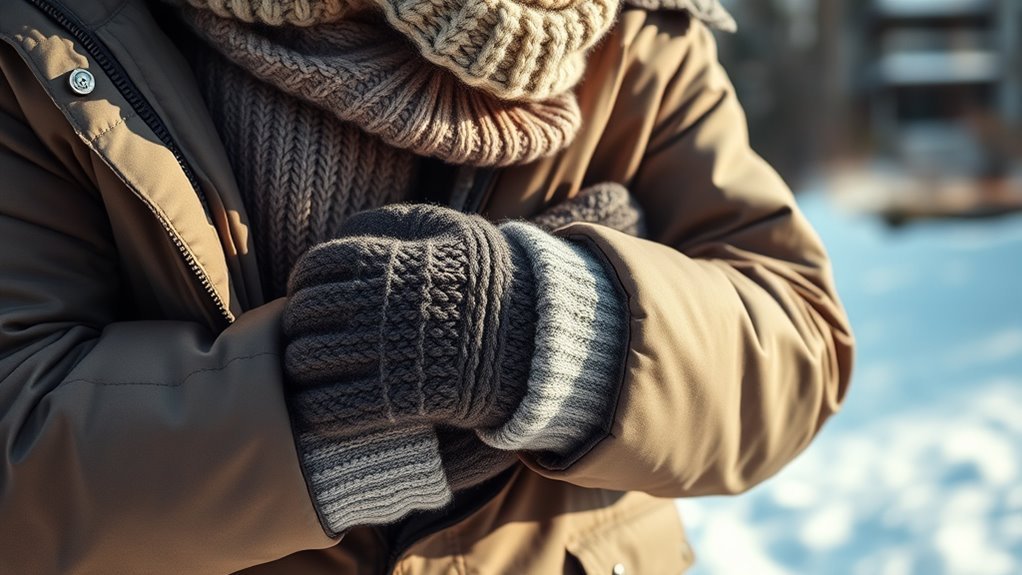
When dressing for freezing weather, you’ll want to master proper layering to stay warm and dry.
Start with snug base layers made of moisture-wicking fabrics like synthetic fibers or merino wool. These keep your skin dry and prevent chills.
Next, add a middle insulating layer that traps heat without bulk—think fleece or down.
Finally, wear an outer layer that’s windproof and waterproof to shield you from rain, snow, and biting wind. This layer also needs to be breathable so moisture can escape, preventing dampness inside.
Remember, layering isn’t static—you can add or remove layers to regulate your temperature.
This helps you avoid sweating too much or getting too cold.
Choose Moisture-Wicking Base Layers
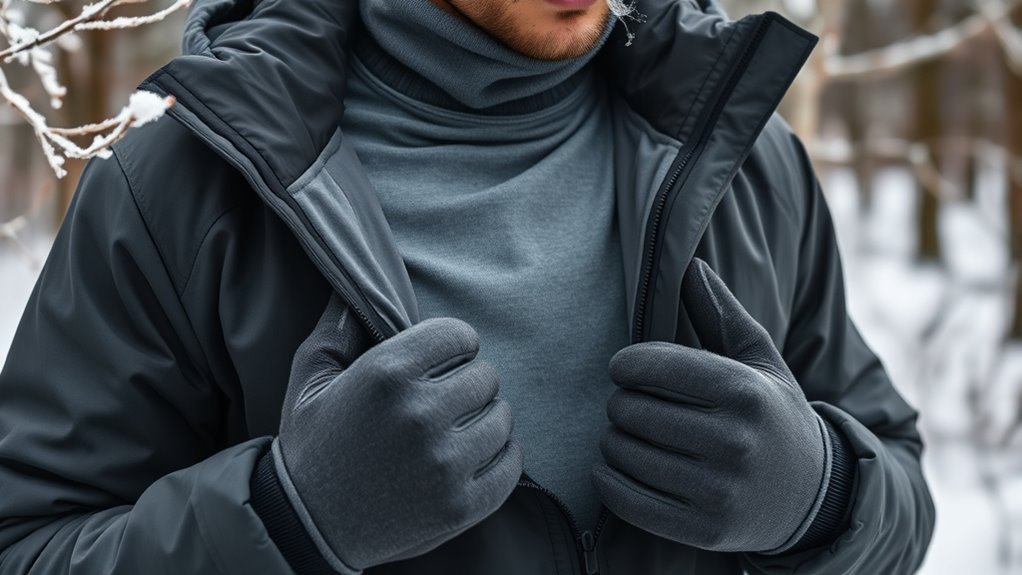
Because staying dry is key to warmth, you should choose moisture-wicking base layers that pull sweat away from your skin.
Moisture-wicking fabrics like synthetic polyester or natural merino wool help keep you dry and comfortable in freezing weather by drying quickly and preventing dampness.
Moisture-wicking fabrics such as polyester and merino wool keep you dry and comfortable in freezing weather.
When selecting base layers, focus on a snug fit to boost insulation and comfort.
Consider these points:
- Opt for merino wool for its breathability, odor resistance, and warmth even when damp.
- Choose synthetic fibers for quick-drying performance during high activity.
- Select lightweight or midweight fabrics based on your activity level and conditions.
- Ensure base layers fit closely to your skin without restricting movement.
Select Effective Insulating Middle Layers
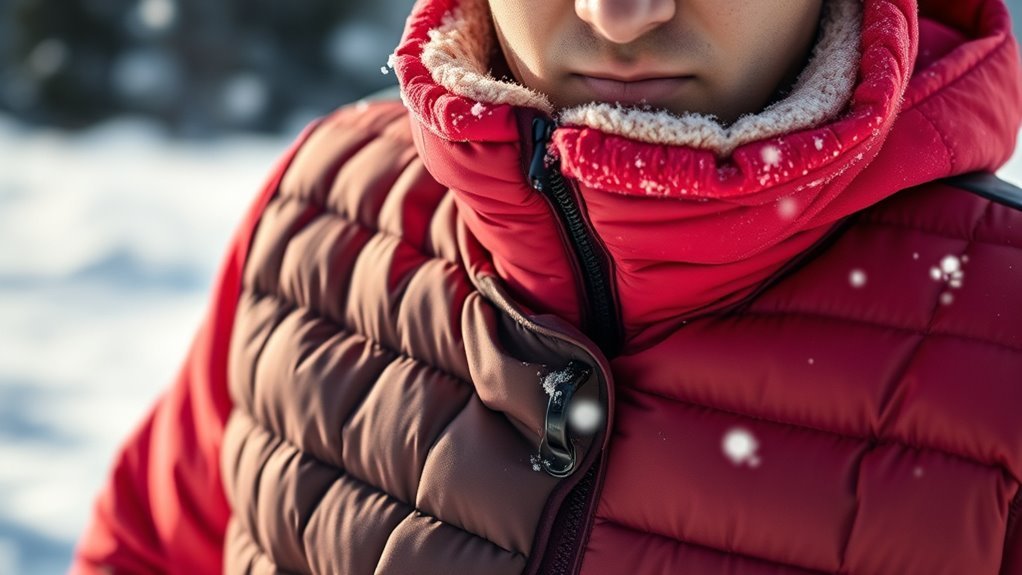
Although base layers keep moisture at bay, your insulating middle layers trap warm air close to your body to maintain core temperature in freezing weather.
When selecting insulating layers, focus on materials with high loft and fill power, as these determine how well the layer traps heat, not just thickness.
Down jackets offer excellent warmth with impressive fill power, but synthetic options like polyester fill perform better when wet, retaining insulation.
Consider layering multiple insulating pieces, such as a fleece vest under a down jacket, to boost warmth without bulk.
And don’t forget insulating pants or leggings made from fleece or down to keep your legs warm in extreme cold.
Prioritizing loft and fill power ensures your middle layers effectively shield you from freezing temperatures.
Invest in a Waterproof and Windproof Outer Layer
You’ll want to choose a shell made from waterproof and windproof materials to block out harsh weather while keeping you dry.
Look for breathable fabrics with ventilation options that let sweat escape, so you stay comfortable inside.
Prioritize adjustable features and sealed seams to guarantee complete protection against wind and moisture.
Shell Material Selection
Selecting the right shell material is essential for staying warm and dry in freezing weather.
Your outer layer must be waterproof and breathable to keep moisture out while allowing sweat to escape. Look for fabrics with sealed seams to prevent water from sneaking in during snow or rain.
Here’s what to contemplate when choosing your shell material:
- Waterproof materials like Gore-Tex or eVent offer reliable protection against wet conditions.
- Windproof fabrics such as nylon or polyester with DWR coating block chilling winds effectively.
- Breathable shells help manage internal moisture buildup from physical activity.
- Lightweight, packable options provide weather defense without weighing you down.
Keep these points in mind, and you’ll find a shell that suits your needs perfectly!
Breathability and Ventilation
Choosing the right shell material sets the stage, but ensuring your outer layer breathes well keeps you comfortable in freezing weather.
Breathability is key because it lets sweat vapor escape, preventing moisture buildup that can chill you.
Look for breathable fabrics like Gore-Tex or eVent—they block external water while allowing internal vapor to vent.
Ventilation features, such as zippered vents or adjustable openings, give you control over airflow and moisture release during activity.
This helps regulate your body temperature.
By investing in a waterproof and windproof outer layer that balances protection with breathability, you reduce condensation inside your clothing.
This balance keeps you dry, warm, and comfortable no matter how harsh the cold gets.
Wind and Water Protection
When cold winds howl and snow starts falling, a waterproof and windproof outer layer keeps you protected and comfortable.
This essential piece prevents rain, snow, and slush from soaking your clothes, while blocking chilling winds that can drop the temperature by 20°F or more.
Look for features like:
- Waterproof fabrics that keep moisture out
- Windproof materials that reduce heat loss
- Sealed seams to stop water and cold air infiltration
- Breathable construction allowing sweat to escape
Investing in high-quality outerwear with these features lets you enjoy the outdoors longer and stay warm.
Don’t compromise on protection—choose a jacket or shell designed to shield you from harsh weather with reliable waterproof and windproof performance.
Protect Your Head and Face From the Cold
Because your head and face lose heat rapidly in freezing weather, you should wear a warm, insulated hat that covers your ears.
Using face coverings like balaclavas or neck gaiters is essential to protect exposed skin from frostbite and wind chill.
Your head can account for up to 50% of heat loss, so choosing a wool beanie or similarly insulated hat is crucial.
Balaclavas made from merino wool or synthetic fabrics offer full face coverage, shielding your skin from biting cold.
Layering with insulated face masks or waterproof face shields can be vital in extreme conditions to prevent frostbite and keep breathing comfortable.
Covering your head and face well helps maintain overall warmth by minimizing heat loss from these vascularized areas.
This way, you can ensure you stay warm and safe outdoors.
Keep Your Hands Warm With Proper Gloves or Mittens
Just as protecting your head and face helps prevent heat loss, keeping your hands warm plays a big role in staying comfortable in freezing weather.
You’ll want to pick insulated gloves or mittens designed for cold, wet conditions. Mittens often offer better heat retention by trapping more air around your fingers.
To maximize warmth:
- Layer glove liners under waterproof gloves or mittens for added insulation and dexterity.
- Choose waterproof, windproof materials like GORE-TEX to block moisture and cold wind.
- Use chemical hand warmers inside gloves or mittens for extra heat retention in extreme cold.
- Guarantee a snug but comfortable fit to keep warmth in without cutting off circulation.
With these tips, your hands will stay warm and dry, no matter how freezing it gets outside.
Wear Insulated and Waterproof Footwear
Two key features make insulated and waterproof footwear essential for freezing weather: they keep your feet warm and dry.
Choose insulated boots rated for -30°C or lower to prevent heat loss. Pair them with thick wool or synthetic-lined socks for added warmth.
Make sure your boots fit well, allowing room for socks without cutting circulation.
Look for slip-resistant soles to stay safe on ice.
Consider adding gaiters or waterproof covers for extra protection against snow and moisture.
| Feature | Benefit | Tip |
|---|---|---|
| Insulated | Keeps heat inside | Choose -30°C or lower rating |
| Waterproof | Keeps moisture out | Select boots with sealed seams |
| Slip-resistant | Prevents falls on ice | Check sole tread pattern |
| Proper fit | Allows thick socks, warmth | Try boots with room for socks |
| Gaiters | Extra snow protection | Use over boots in deep snow |
Use Accessories Like Neck Gaiters and Balaclavas
When freezing temperatures strike, using accessories like neck gaiters and balaclavas can make a big difference in keeping your head, neck, and face warm.
These items trap heat and shield your skin from harsh winds and frostbite.
Neck gaiters are versatile—you can pull them up over your nose and mouth or wear them around your neck for added warmth.
Balaclavas offer full-face coverage while allowing you to breathe comfortably.
Both are crafted from insulating materials that retain warmth and wick moisture away.
This helps you maintain core body temperature during prolonged cold exposure.
- Neck gaiters provide flexible protection against wind and cold.
- Balaclavas shield your face from frostbite while ensuring ventilation.
- They are made from fleece, wool, or synthetic fibers for maximum warmth.
- They help prevent cold-related injuries by reducing heat loss.
Manage Moisture and Ventilate Properly
Although staying warm is essential, managing moisture and ventilation is equally important to prevent dampness that can quickly sap your body heat in freezing weather.
Start with moisture-wicking base layers that pull sweat away from your skin. This keeps you dry and reduces frostbite risk.
Moisture-wicking base layers draw sweat away, keeping you dry and lowering frostbite risk in cold conditions.
Use breathable fabrics in your layers to maintain insulation while allowing moisture vapor to escape.
Proper ventilation, like zippered vents or adjustable openings, lets you regulate airflow, balancing warmth and moisture control.
When you start to overheat, open vents or remove an outer layer to avoid trapping sweat inside.
Remember, moving generates heat, so controlling ventilation prevents excessive sweating.
Carry Extra Layers for Changing Conditions
Always pack lightweight backup layers so you can easily adjust your clothing when the weather shifts.
Keep these extra layers within reach to stay prepared for sudden temperature drops or wind chills.
Being able to add or remove layers on-the-go helps you stay comfortable and safe in freezing conditions.
Pack Lightweight Backup Layers
Since weather can change without warning, you should pack lightweight, moisture-wicking backup layers to stay comfortable and safe.
These layers help you adjust quickly to temperature drops or unexpected moisture.
Keep your backup layers handy in your backpack or vehicle, so you’re prepared if your primary gear gets wet or damaged.
Focus on packable, quick-drying fabrics that won’t weigh you down.
- Always carry an extra set of moisture-wicking base layers.
- Include lightweight insulative options like thin fleece or softshell.
- Choose quick-drying materials for fast comfort restoration.
- Store backup layers compactly for easy access during sudden weather shifts.
Adjust Layers On-The-Go
When you face shifting weather or changing activity levels, carrying extra base and outer layers lets you quickly adjust your clothing to stay comfortable and dry.
Layer adjustment helps you control heat loss, keeping you dry and warm throughout your activity.
Always store lightweight, packable layers like thin fleece or synthetic insulation in your backpack or pockets for quick access.
Perform layer changes in sheltered areas to minimize heat loss.
Monitor your body temperature and activity intensity to decide when to add or remove layers.
| Layer Type | Purpose | Material Suggestion |
|---|---|---|
| Base Layer | Moisture control | Synthetic or wool |
| Mid Layer | Insulation | Fleece or down |
| Outer Layer | Wind/waterproofing | Waterproof shell |
Store Layers Within Reach
Although freezing weather demands careful preparation, you can stay comfortable by keeping extra layers within easy reach.
Carrying accessible layers lets you quickly adapt to temperature changes without stopping to dig through your gear.
To organize your additional clothing efficiently, consider these tips:
- Store lightweight, packable layers like fleece or down vests in designated compartments.
- Keep spare gloves, hats, and socks accessible to replace wet or frozen items promptly.
- Use gear with clips or pockets designed to organize layers for fast retrieval.
- Regularly check and swap out worn or damp layers to maintain warmth and dryness.
Staying warm doesn’t have to be a hassle!
Frequently Asked Questions
What Are the 5 P’s for Cold Weather?
The 5 P’s for cold weather are Proper Planning, Preparation, Protection, Performance, and Post-care.
You’ll plan your layers and prepare extra gear.
Don’t forget to protect your extremities, perform with activity, and manage post-care to stay safe and warm in freezing conditions.
What Is the 3 3 3 Rule for Outfits?
Think of the 3-3-3 rule as your armor against winter’s bite:
you wear three layers on your body, legs, and extremities.
It’s how you shield yourself, trapping warmth like a fortress around you.
How to Dress for Freezing Weather?
You dress for freezing weather by layering: start with a moisture-wicking base,
add an insulating middle, and finish with a waterproof outer layer.
Don’t forget insulated boots, thermal socks,
a warm hat, gloves, and a neck warmer to stay cozy.
What Are the 4 P’s for Cold Weather?
The 4 P’s for cold weather are Proper layering, Protection, Prevention, and Performance.
You’ll want to layer wisely to trap heat and wick away moisture.
Protect your extremities by wearing gloves, hats, and warm socks.
It’s also important to prevent moisture buildup, as it can lead to chills.
Lastly, choose gear that keeps you warm, dry, and mobile for the best comfort.
Staying comfortable in the cold means paying attention to these four key aspects!
Conclusion
When dressing for freezing weather, layering isn’t just smart—it’s your best friend.
You can’t put all your eggs in one basket, so combine moisture-wicking base layers, insulating middles, and a waterproof outer shell to stay warm and dry.
Don’t forget to protect your head, feet, and face, and always carry extra layers for surprises.
With these tips, you’ll be ready to face the cold without breaking a sweat or losing your cool.
In conclusion, mastering the art of layering is essential for surviving freezing weather.
By incorporating moisture-wicking materials, insulation, and waterproofing, you can ensure comfort and warmth.
Remember to safeguard your extremities and always be prepared with extra clothing.
With these strategies in mind, you’ll confidently embrace the winter chill and enjoy the beauty of the season!