How Long to Hang a Deer in Warm Weather
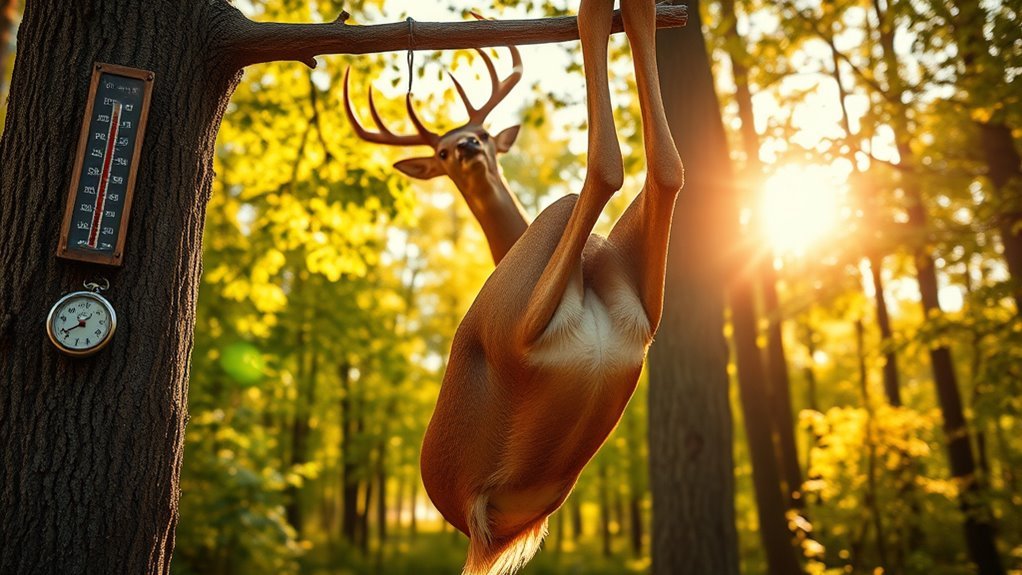
You should hang a deer for no more than one to three days in warm weather to keep the meat safe and tasty.
Temperatures above 45°F speed up bacterial growth and spoilage, risking tough, off-flavored meat or even dangerous toxins.
To prevent this, cool the carcass quickly, hang it in shade with good airflow, and use ice or refrigeration when possible.
Keep an eye out for spoilage signs and learn the best ways to handle and process your deer for quality results.
Optimal Temperature Range for Hanging Deer
Although it might be tempting to hang your deer in warmer conditions, you should aim to keep the temperature between 35°F and 45°F for ideal aging.
For optimal aging, maintain a temperature between 35°F and 45°F when hanging your deer.
This temperature range is vital because it slows bacterial growth, minimizing spoilage while encouraging natural mold development that tenderizes the meat.
If the temperature rises above 45°F, spoilage accelerates rapidly due to increased bacterial activity.
On the other hand, keeping the temperature steady within this range allows you to hang the deer safely for up to 12 days, especially between 34°F and 38°F.
Fluctuating temperatures outside this window can disrupt the aging process, increasing the risk of decay and bacterial contamination.
Maintaining the right temperature is key to preserving your meat’s quality and flavor.
Risks of Hanging Deer in Warm Weather
When you hang a deer in warm weather, bacteria like E. coli and salmonella can multiply quickly, even if you don’t see or smell anything off.
Fluctuating temperatures make it harder to age the meat properly and increase the chance of spoilage.
Knowing the signs of spoilage is essential to avoid eating unsafe meat.
Bacterial Growth Risks
Because bacteria like E. coli, salmonella, and staphylococcus multiply rapidly above 40°F, hanging a deer in warm weather can quickly lead to spoilage.
When you leave a carcass in warm weather, bacterial growth accelerates, increasing the risk of harmful contamination.
These bacteria produce toxins that often survive cooking, so even thorough heating won’t guarantee safety.
You might notice green slime or a foul odor after just a few hours—clear signs that bacterial growth has reached dangerous levels.
To reduce these risks, you need to cool the deer immediately and process it quickly.
Delaying this allows bacteria to multiply unchecked, compromising the meat’s quality and safety.
Managing bacterial growth carefully ensures your venison stays safe to eat, even when temperatures climb.
Temperature Fluctuation Effects
Bacterial growth doesn’t just depend on high temperatures—it also responds strongly to temperature swings.
When you deer hang in conditions with temperature fluctuation, especially above 50°F during the day, you risk accelerating spoilage.
Enzymes break down tissues unevenly, degrading meat quality. Rapid warming after cooling periods speeds decay, even if temperatures drop at night.
Maintaining consistent temperatures below 40°F is key to preventing mold and ensuring safe aging.
| Temperature Range | Effect on Deer Hang | Risk Level |
|---|---|---|
| Below 40°F | Ideal aging | Low |
| 40°F – 50°F | Slow enzyme activity | Moderate |
| Above 50°F | Rapid bacterial growth | High |
| Fluctuating temps | Uneven tissue breakdown | High |
| Rapid temp rise | Accelerated decay | Very High |
Spoilage Indicators
If you hang a deer in warm weather, you’ll quickly notice signs that spoilage is setting in. Bacterial growth speeds up above 40°F, causing mold to appear on the meat’s surface and a strong, unpleasant odor to develop.
You might also see green slime forming or maggots and insects swarming the carcass—clear indicators the meat is decomposing.
Leakage of gut contents, especially rumen material, introduces dangerous bacteria that can cause foodborne illness. When meat stays warm for too long, it can develop toxins that cooking won’t destroy, making it unsafe to eat.
To avoid these risks, watch carefully for mold, odor, and any unusual slime or insect activity. If you spot any, discard the meat immediately to protect your health.
Effects of Warm Temperatures on Meat Quality
You’ll notice that warm temperatures can quickly harm the tenderness and flavor of your deer meat.
When it’s too hot, spoilage risks spike, making it harder to enjoy quality cuts.
Managing the temperature carefully is key to keeping your meat fresh and flavorful.
Tenderness and Flavor Impact
Although warm temperatures can speed up enzymatic activity that tenderizes deer meat, they also risk pushing conditions above the safe 45°F threshold where spoilage sets in.
When you hang a deer carcass within the ideal 35-45°F range, enzymes break down muscle fibers, improving tenderness and enhancing the natural flavor.
This controlled aging allows beneficial molds to develop enzymes that add complexity to the flavor profile.
However, if temperatures climb too high or fluctuate, the meat’s quality rapidly declines, leading to tougher texture and off-flavors.
To preserve the best tenderness and flavor, you need to monitor the hanging environment closely.
Keeping the deer carcass at consistent, cool temperatures ensures the enzymatic process works effectively without compromising safety or taste.
Spoilage Risks Increase
When temperatures rise above 40°F, bacteria multiply quickly on your deer carcass, greatly increasing the risk of spoilage.
You need to be cautious because warm temperatures accelerate bacterial growth, which can lead to unsafe meat.
Consider these key spoilage risks:
- Harmful bacteria like E. coli and salmonella grow rapidly, even if you don’t notice any odor.
- Enzymes and bacteria produce toxins in heat that may survive cooking, posing health hazards.
- Spoiled meat can develop green slime, discoloration, or even maggots, signaling it’s unsafe to eat.
- The longer your deer hangs in warm weather, the more likely decay and foodborne illness will occur.
To protect meat quality and safety, avoid hanging your deer too long when temperatures stay above 40°F.
Best Practices for Handling Deer Post-Kill
Since bacterial growth can start quickly after the kill, you should gut and cool the deer within the first hour.
Hanging deer in warm weather requires quick skinning to speed up cooling and reduce spoilage risks.
Keep the carcass in a shaded, well-ventilated area to maintain a lower temperature.
Placing ice or frozen jugs inside the cavity helps regulate the internal temperature, slowing bacterial growth.
Avoid hanging the deer for more than 24-48 hours when temperatures exceed 50°F, as the meat can spoil rapidly.
Once cooled, process or refrigerate the meat as soon as possible—ideally within 24 hours—to preserve freshness and ensure safety.
Following these best practices will help you handle your deer properly and keep the meat safe to eat.
Methods to Control Temperature During Hanging
Keeping your deer at a safe temperature during hanging demands proactive steps to control heat and airflow.
Proper ventilation and temperature management are vital to slow spoilage, especially in warm weather. Here are four effective methods to control temperature during hanging:
Effective ventilation and temperature control are key to preserving your deer during warm-weather hanging.
- Hang the deer in a shaded, well-ventilated area to minimize heat buildup.
- Place frozen water jugs inside the cavity to maintain temperatures between 35-45°F.
- Cover the carcass with a breathable cloth or tarp to protect from sunlight and insects while allowing airflow.
- Use a fan or portable refrigeration unit for precise temperature regulation.
And don’t forget to periodically open the cavity to add ice packs or frozen bottles.
Signs of Spoiled Venison to Watch For
Even with careful temperature control, venison can still spoil if conditions aren’t ideal.
You need to watch for signs like discoloration—brown or green patches signal bacterial growth and tissue breakdown.
If you notice any visible maggots or green slime, discard the meat immediately.
A foul odor, especially a sour or rancid smell that lingers after rinsing, is a strong indicator the venison has gone bad.
You should also check the texture; if the meat feels slimy or sticky, it’s likely unsafe to eat.
Remember, harmful bacterial toxins may remain even after cooking, so don’t take chances.
Staying alert to these signs helps ensure your venison stays safe and delicious.
Processing and Storage Recommendations
When temperatures rise above 50°F, you should process or chill your deer promptly to prevent bacterial growth.
Hanging a deer longer than 1 to 3 days in warm weather risks spoilage.
To handle this properly, follow these recommendations:
- Hang the deer only in a shaded, well-ventilated area to slow heat buildup.
- Skin and quarter the deer quickly to speed cooling and reduce bacteria growth.
- Use ice or a refrigerated environment to keep the carcass cold if ambient temperatures stay above 45°F.
- Process the deer immediately if you can’t maintain temperatures below 50°F to guarantee safety.
Taking these steps will help ensure your deer remains safe and fresh!
Frequently Asked Questions
What Temperature Is Too Warm to Hang a Deer?
You shouldn’t hang a deer when temperatures rise above 45°F.
Anything at or above 50°F is too warm, increasing spoilage risk.
What Is the 7 Day Buck Rule?
You might think seven days is too long, but the 7 Day Buck Rule lets you hang a mature buck safely for up to a week—
if temperatures stay between 35-40°F and airflow is consistent.
Keeping the right conditions is key to preserving the meat.
How Long Does It Take for a Deer to Spoil in 50 Degree Weather?
In 50-degree weather, your deer can start spoiling within 24 to 36 hours unless you cool it properly.
You’ll want to process or chill it quickly to avoid bad odor and slime developing after two days.
How Long Should You Hang a Deer?
You shouldn’t let your deer hang like a forgotten painting; keep it no longer than 1 to 3 days in warm weather.
Skin it quickly and use cooling methods to avoid spoilage and preserve quality.
Conclusion
Hanging a deer in warm weather is a delicate balance—too short, and the meat won’t tenderize; too long, and it risks spoiling.
While cool temperatures slow bacteria, warmth speeds decay, turning a prized catch into waste. You’ve got to act fast, controlling temperature and watching for spoilage signs.
By staying vigilant and using proper handling, you can protect your venison’s quality.
In conclusion, it’s crucial to manage the hanging time carefully. Aim to hang your deer for a short period, ideally between 24 to 48 hours, while keeping an eye on the temperature.
With the right precautions, you can prevent spoilage and ensure your deer meat remains delicious.
Remember, the goal is to enjoy perfectly aged venison, not to let it go to waste!