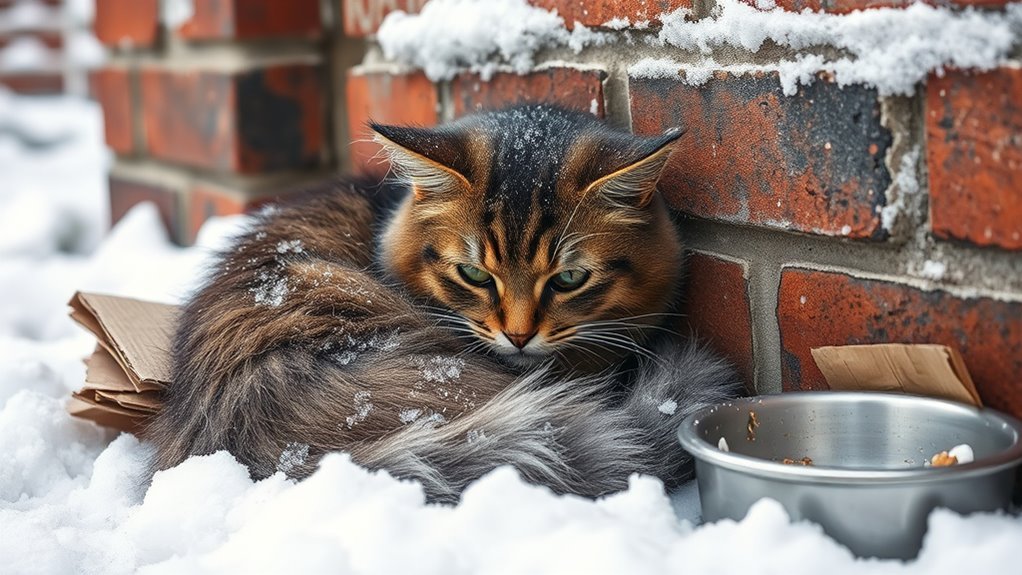
How Do Stray Cats Survive Cold Weather Survival
Stray cats are remarkably resilient creatures, especially when it comes to surviving cold weather. They have developed various strategies to endure harsh conditions, such as finding hidden natural shelters like dense bushes, hollow trees, or abandoned burrows. These spots help them stay warm and protected from the elements.
To thrive in winter, stray cats rely on extra calories from available food. They become more cautious around potential dangers like cars and antifreeze, which can be deadly.
If you’re looking to support these resilient survivors during the winter months, there are a few ways to help. Building insulated shelters with straw can provide warmth, and securing food and water from freezing is essential for their survival.
Understanding their needs and taking action can make a significant difference in keeping these cats safe and comfortable through the cold season.
There’s so much more to explore on how we can assist these remarkable animals!
Identifying Feral, Stray, and Pet Cats in Winter
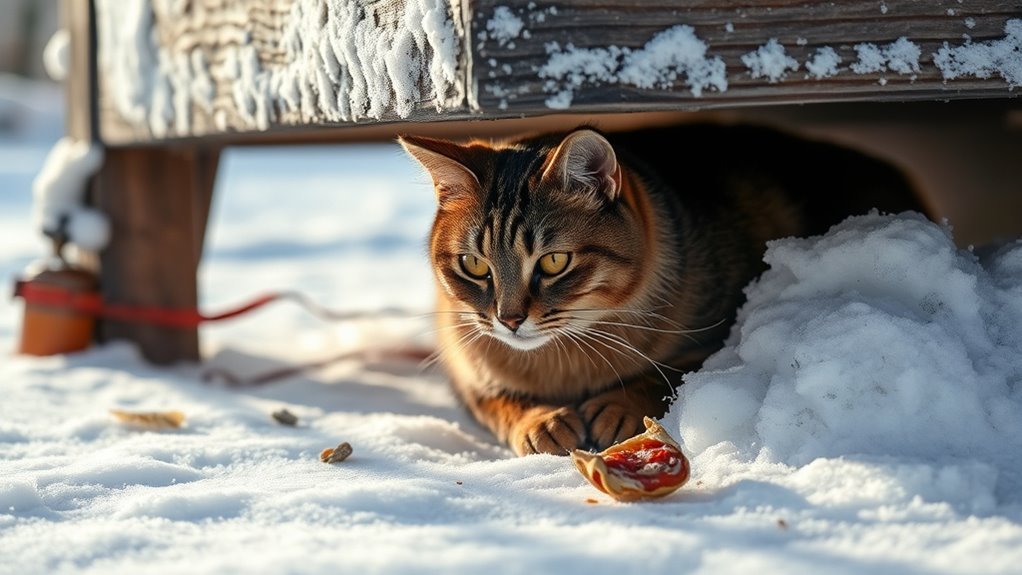
When you encounter cats outdoors in winter, it helps to know whether they’re feral, stray, or pets.
Feral cats are born in the wild and avoid humans, often hissing or retreating to protect their body heat.
Feral cats, born wild, avoid people and often hiss or hide to conserve body heat.
Stray cats, once domesticated, may approach you cautiously, seeking food and water to aid their winter survival.
Pet cats usually wear collars, showing they rely on owners for care.
You can tell the difference by watching their body language and behavior:
feral cats stay hidden and wary, while strays might be more social and visibly hungry.
Recognizing these signs helps you understand their needs, especially during harsh weather.
Finding shelter, conserving body heat, and securing food and water become critical for their survival.
Natural Shelter Choices for Stray Cats
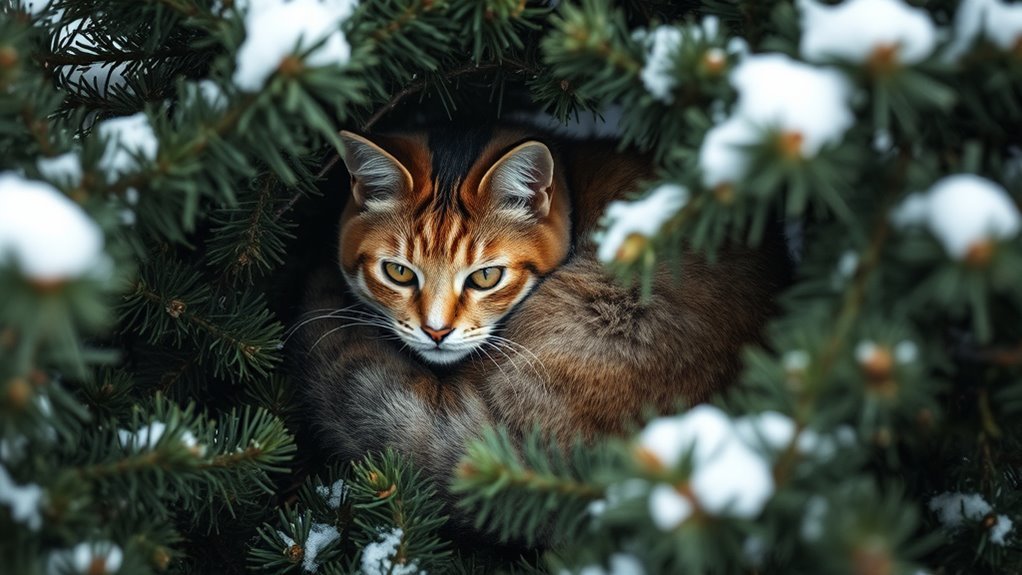
Although stray cats face harsh winter conditions, they cleverly find natural shelters that offer protection and warmth.
You’ll notice they choose hidden spots like dense shrubbery or rocky crevices. They use natural shelter to conserve body heat and energy.
These places provide insulation against wind and snow, helping cats survive cold weather by minimizing heat loss.
| Shelter Type | Benefits | Energy Conservation |
|---|---|---|
| Under bushes | Camouflaged, wind block | Retains body heat |
| Rocky crevices | Natural insulation | Reduces heat escape |
| Abandoned burrows | Warm, hidden | Saves energy |
| Hollow trees | Shield from snow | Maintains warmth |
| Under vehicles | Engine warmth | Boosts heat retention |
Building and Maintaining Outdoor Cat Shelters
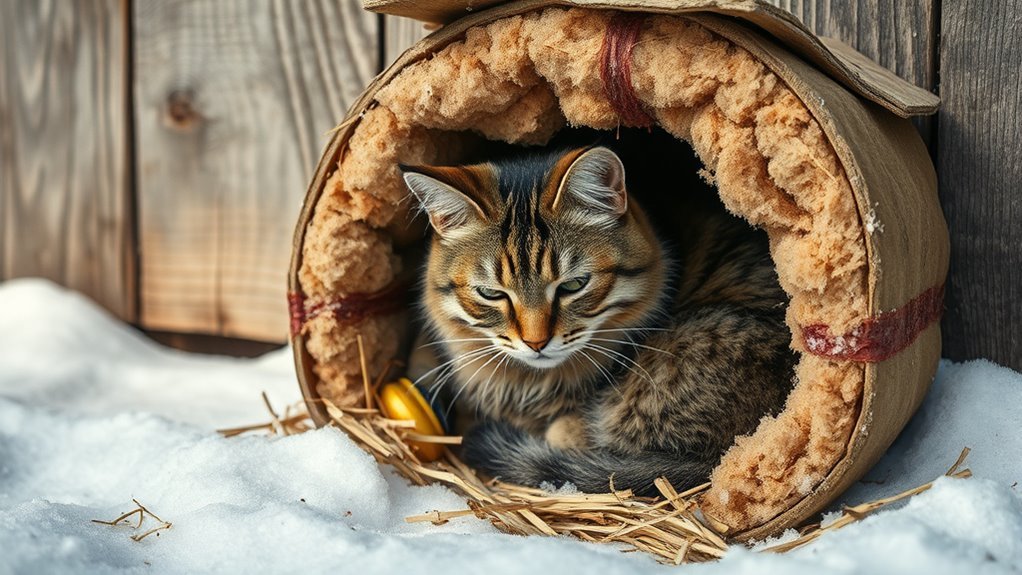
Because stray cats rely on outdoor shelters to survive winter, building and maintaining a proper shelter is essential.
You should create an outdoor shelter about 2×3 feet, elevated off the ground to trap warmth effectively.
Use waterproof materials like plastic totes or repurposed wooden boxes for durability against harsh weather.
For insulation, fill the shelter with straw instead of blankets or hay—straw resists moisture and keeps cats warm.
Seal the shelter tightly and position the entrance away from prevailing winds.
Using reflective materials like Mylar blankets inside can help reflect body heat back into the shelter.
Don’t forget to regularly check and clean the shelter, removing snow, moisture, and debris to keep it dry and comfortable.
Proper upkeep ensures stray cats have a safe refuge during cold weather.
Essential Food and Water Tips for Cold Weather
You’ll want to increase food portions to help stray cats maintain their energy in the cold.
Make sure water doesn’t freeze by using insulated or heated bowls.
Setting up feeding stations protected from wind and rain keeps food and water accessible and safe.
Increasing Food Portions
When temperatures drop, increasing the food portions you offer stray cats gives them the extra energy they need to generate body heat and stay warm.
Providing extra food guarantees they get enough calories essential for winter survival.
Feeding calorie-rich options like fish or poultry boosts their energy reserves, helping them endure harsh conditions.
Offering meals once or twice daily keeps a steady supply of nutrients available.
Wet or canned food, with its higher moisture content, also prevents dehydration in freezing weather.
Make sure the food is served in insulated or heated bowls to keep it from freezing, which encourages cats to eat regularly.
Preventing Water Freezing
Although cold weather makes it challenging, you can prevent water from freezing by using heated or insulated bowls. This ensures stray cats have access to fresh hydration throughout the day.
Heated water bowls are effective tools to maintain a liquid water source, even in freezing temperatures.
To enhance hydration for stray cats, consider these tips:
- Place water bowls in sunny, sheltered areas to minimize freezing and evaporation.
- Use deep, wide, non-metal containers and warm the water before serving to slow ice formation.
- Install heated pet fountains or add heated pads beneath bowls to keep water from freezing.
Feeding Station Setup
Since cold weather poses unique challenges, setting up a feeding station that protects food and water from freezing and harsh conditions is essential for helping stray cats stay nourished and hydrated.
Use deep, wide, non-metal bowls to prevent water from freezing quickly, and consider warming the water before serving.
Placing food and water under a shelter—like an overhang or inside an insulated feeding station—shields them from wind and snow.
Heated bowls or outdoor heated pads can keep water from freezing overnight, ensuring cats have access to hydration.
Offer canned or moist food for extra hydration and energy, especially during extreme cold.
Providing additional food portions daily helps stray cats conserve energy and maintain body heat, improving their chances of survival in freezing temperatures.
Preventing Frostbite and Cold-Related Injuries
To keep stray cats safe from frostbite and cold injuries, it’s crucial to provide them with warm shelters and dry bedding.
Feral cats depend on shelters that trap body heat to prevent cold injuries, especially frostbite, which commonly affects ears, paws, and tails.
You can help reduce their risk by:
- Placing insulated shelters in sheltered areas to block wind and retain warmth.
- Using dry straw or blankets inside shelters to keep bedding moisture-free.
- Checking shelters regularly for damage or dampness to ensure they stay warm and dry.
Frostbite causes tissue damage from freezing, so protecting feral cats with effective shelters helps maintain their body heat and health during harsh cold spells.
Promptly addressing any signs of frostbite can save their lives.
The Role of Community Support in Stray Cat Survival
Providing warm shelters and proper care helps protect stray cats from cold injuries, but individual efforts can only go so far.
Community support plays an essential role in improving feral cats’ winter survival.
When neighbors share resources and knowledge, they can build and maintain outdoor shelters with insulation, providing vital refuge during harsh weather.
Volunteer-led programs also help manage feral cat populations, reducing exposure to freezing temperatures.
By working together, communities guarantee steady access to food and water, which keeps outdoor cats healthier and stronger through winter.
Awareness campaigns encourage responsible feeding and sheltering, creating a safer environment for all stray cats.
You can make a real difference by joining or supporting these community efforts to protect vulnerable cats during cold months.
Safe Trapping and TNR Practices During Winter
Although winter presents unique challenges, you can safely trap and participate in TNR (Trap-Neuter-Return) programs by timing your efforts during the warmer parts of the day and using insulated traps.
These measures help protect cats from extreme cold and reduce stress during trapping.
To guarantee their safety and promote recovery, follow these key steps:
- Use well-maintained insulated traps to shield cats from harsh weather and maintain warmth.
- Provide immediate access to shelter and warmth after trapping to prevent hypothermia or frostbite.
- Return cats quickly to a safe, sheltered outdoor area with food, water, and heated shelter to support their recovery.
Protecting Cats Around Vehicles and Hazardous Areas
Winter can put stray cats in unexpected danger not only from the cold but also from everyday hazards like vehicles.
Cats often seek shelter in the warmth of a vehicle engine, risking injury if the engine starts suddenly.
To protect cats, always tap the hood or honk the horn before starting your car.
Tap your car’s hood or honk before starting to keep hidden cats safe this winter.
Be sure to inspect areas like wheel wells where cats might hide.
Avoid using antifreeze or salt near vehicles, as these winter hazards can poison cats or attract them to dangerous spots.
You can also place a cover or barrier over the engine bay to deter cats from nesting inside.
Taking these precautions helps keep stray cats safe around vehicles and other hazardous areas during cold weather.
Frequently Asked Questions
How Do Stray Cats Stay Alive in the Winter?
You’ll find stray cats curling up tightly in sheltered spots, using natural materials for warmth.
They eat more to boost body heat and rely on community shelters or extra food to survive harsh winter conditions.
What Is the 3-3-3 Rule for Stray Cats?
They say, “Patience is a virtue.”
The 3-3-3 rule means you spot a stray cat within 3 days, in 3 locations,
and approach or trap it within 3 weeks to safely rescue or assess its feral nature.
How Cold Is Too Cold Outside for Stray Cats?
You shouldn’t let stray cats stay outside when temperatures drop below 20°F (-6°C).
It’s too cold, and they risk frostbite or hypothermia without proper shelter or human help to keep them safe and warm.
What Is the Main Cause of Death in Feral Cats?
You see feral cats curled tightly, shivering in the biting cold—exposure to harsh weather is their main threat.
Without shelter or warmth, they face hypothermia and frostbite, which sadly cause most of their deaths in winter’s grip.
Conclusion
Caring for stray cats during winter means lending a little warmth and kindness when they need it most.
By understanding their unique needs, helping with cozy shelters, and keeping food and water flowing, you’re giving them a gentle hug against the chill.
Remember, a little community effort can turn harsh cold into a softer season for these resilient wanderers.
Your thoughtful actions make all the difference in their quiet battle against winter’s bite.
In conclusion, supporting stray cats in cold weather is vital.
Providing shelter, food, and water not only helps them survive but also fosters a sense of community.
Together, we can create a warmer environment for these cats, easing their struggle against the elements.
Every little bit counts, so let’s come together and show compassion for our furry friends this winter!