How Do Mini Splits Work in Cold Weather?
You can count on mini splits to keep your space warm even when it’s freezing outside, down to about -13°F.
They work by extracting heat from cold outdoor air using special refrigerants and inverter-driven compressors that adjust speed for efficiency.
Built-in defrost cycles and base pan heaters prevent ice buildup, so they run smoothly all winter.
Proper installation and maintenance help maximize performance.
If you want to understand how these features come together, you’ll find more useful details ahead.
Basic Operation of Mini Split Heat Pumps in Winter
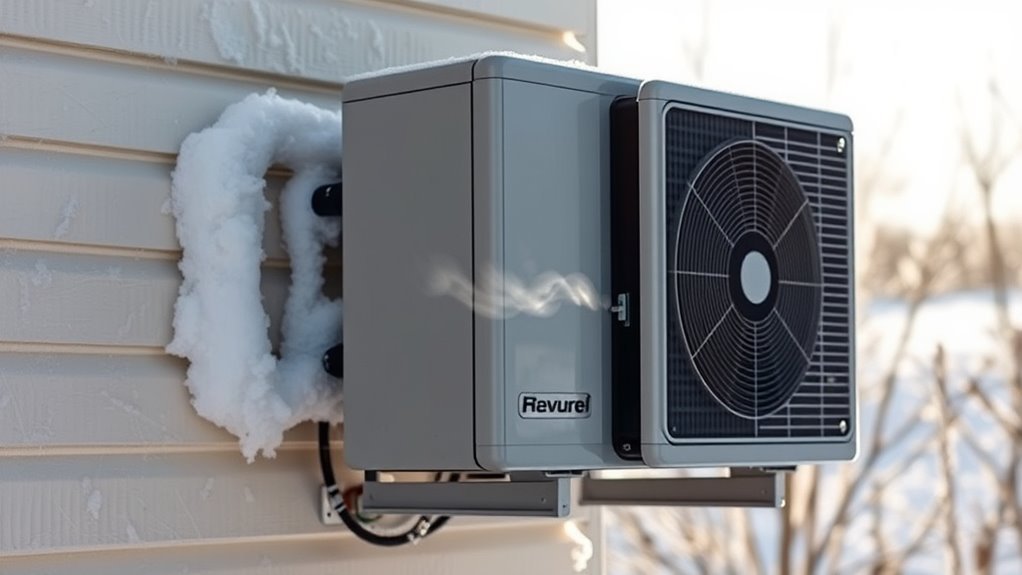
Although cold weather presents challenges, mini split heat pumps keep your home warm by reversing the refrigeration cycle to extract heat from the outdoor air and transfer it indoors.
Mini split heat pumps stay warm by reversing the refrigeration cycle to pull heat from cold outdoor air.
You’ll find the outdoor unit plays a vital role, absorbing heat even at low outdoor temperatures thanks to refrigerants with low boiling points.
Cold-weather models use inverter technology to adjust compressor speed, maintaining maximum heating capacity and energy efficiency as conditions change.
To prevent ice buildup, these systems incorporate defrost cycles and base pan heaters, ensuring continuous operation throughout winter.
By understanding this basic operation, you’ll appreciate how modern heat pumps deliver reliable warmth despite harsh conditions.
This makes them an effective choice for cold climates.
Extracting Heat From Cold Outdoor Air
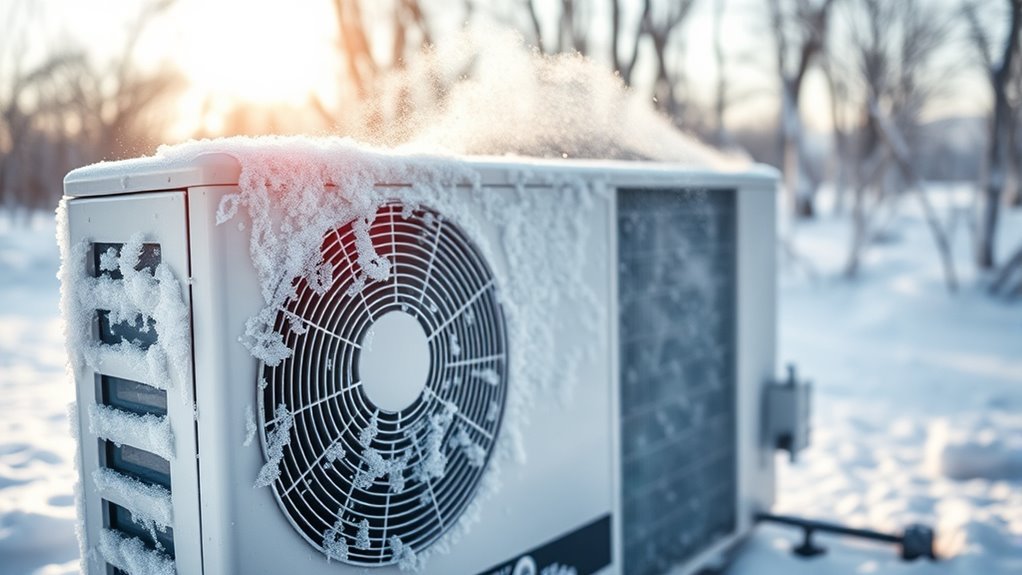
Mini split heat pumps work hard to pull heat from outdoor air, even when temperatures plunge as low as -13°F.
They use refrigerants with low boiling points, allowing vaporization and effective heat extraction at low temperature conditions.
The compressor plays a key role by circulating these refrigerants, ensuring warmth is drawn from cold climate outdoor air.
To maintain performance, defrost cycles activate periodically to clear ice buildup on outdoor coils, preventing efficiency loss.
Here’s what helps mini splits extract heat efficiently in cold weather:
- Specialized refrigerants enable vaporization despite freezing outdoor air.
- Defrost cycles remove ice, ensuring continuous heat extraction.
- The compressor manages refrigerant flow, adapting to low temperature demands.
Understanding these mechanisms helps you appreciate how mini splits keep your home warm in winter.
Inverter-Driven Compressors and Variable-Speed Technology
You’ll notice that inverter-driven compressors adjust their speed to match exactly how much heat you need. This keeps your space comfortable without wasting energy.
This variable-speed technology means your mini split runs efficiently, even when it’s really cold outside.
Compressor Speed Adjustment
When outdoor temperatures plunge, inverter-driven compressors adjust their speed continuously to match heating demand. This helps your system run more efficiently.
This compressor speed adjustment guarantees your mini split adapts seamlessly to varying cold weather operation conditions. Thanks to variable-speed technology, the compressor increases or decreases its RPMs based on outdoor temperatures.
This means your system maintains consistent and efficient heating even at low temperatures.
Here’s what this means for you:
- Your system runs quieter and with less wear by avoiding constant on/off cycling.
- It extracts maximum heat from cold outdoor air, even when temperatures drop dramatically.
- You enjoy steady indoor comfort without sudden temperature swings, regardless of outdoor conditions.
Energy Efficiency Benefits
The ability of inverter-driven compressors to adjust their speed not only guarantees reliable heating but also considerably boosts energy efficiency.
By using a variable-speed compressor, your mini split can operate at low capacity when full power isn’t needed. This means it can maintain warmth even in cold weather without wasting energy.
This precise control helps the system avoid inefficient on/off cycling, delivering consistent heat while conserving power. Thanks to inverter technology, many mini splits achieve high HSPF ratings—often exceeding 10—highlighting their superior seasonal efficiency.
By continuously matching compressor speed to outdoor conditions, these systems optimize energy use and reduce your heating costs.
Defrost Cycles and Ice Prevention Mechanisms
Although mini splits excel at heating in cold weather, they can still face frost buildup on outdoor coils.
To combat this, defrost cycles temporarily reverse refrigerant flow, melting ice buildup effectively.
During defrost mode, your system halts heating and switches to cooling to safely remove frost accumulation.
Frost sensors and automatic defrost controls detect when ice forms, triggering these cycles as needed.
Additionally, base pan heaters in the outdoor unit prevent ice formation by warming the bottom area.
Key ice prevention mechanisms include:
- Frost sensors monitoring frost accumulation for timely defrost cycles.
- Defrost mode reversing refrigerant flow to melt ice buildup.
- Base pan heaters preventing ice on the outdoor unit’s base.
These features ensure your mini split runs efficiently, even in harsh winter conditions.
Cold-Climate Mini Split Models and Their Features
If you need reliable heating in freezing temperatures, cold-climate mini split models like Mitsubishi Hyper-Heating and Fujitsu Halcyon XLTH are designed to perform efficiently down to -13°F or -15°F.
These systems use inverter-driven compressors that adjust output to keep your home warm even in extreme cold. Their outdoor units include advanced defrost cycles and base pan heaters to prevent ice buildup, ensuring continuous operation.
With high HSPF ratings above 10, these cold-climate mini splits deliver superior seasonal efficiency, saving energy while maintaining comfort.
Plus, their multi-zone capabilities and specialized refrigerants allow you to customize heating throughout your space.
Choosing a cold-climate mini split means you get reliable heating and efficient performance when winter temperatures drop dramatically.
Maintaining Efficiency at Subfreezing Temperatures
Cold-climate mini split models offer impressive features for low temperatures, but maintaining their efficiency when the mercury drops below freezing takes more than just advanced technology.
You need to understand how inverter-driven compressors and hyper-heating technology work together to sustain performance in subfreezing temperatures.
Efficient heat extraction relies on innovative coil designs and smart defrost cycles that prevent ice buildup, keeping your system running smoothly.
To maintain peak efficiency, focus on:
- Utilizing inverter-driven compressors that adapt speed for consistent heat output.
- Relying on hyper-heating technology to operate at full capacity below -13°F.
- Ensuring defrost cycles and base pan heaters effectively clear frost from coils.
Importance of Proper Installation for Cold Weather Performance
You need to size your mini split system correctly to handle the demands of cold weather efficiently.
Working with a certified dealer guarantees the installation meets all specifications for peak performance.
This combination helps your system run reliably when temperatures drop.
Correct System Sizing
Because proper system sizing directly impacts your mini split’s efficiency, it’s essential to guarantee that it meets heating demands during cold weather.
Getting the right capacity means your unit won’t overwork or underperform, even when temperatures drop below freezing.
During installation, professionals consider insulation, climate, and home size to select the ideal system size, usually measured in BTUs or tons.
Choosing the correct system sizing improves performance and efficiency, preventing frequent cycling or wear.
Keep these points in mind for proper capacity:
- Avoid oversized units that cycle on and off, reducing efficiency.
- Ensure insulation quality is factored in for accurate load calculations.
- Select models with features like hyper-heating for reliable cold weather operation.
Proper installation and sizing ensure your mini split delivers consistent warmth without strain.
Certified Dealer Installation
Getting your mini split sized correctly sets the stage, but proper installation by certified dealers truly *unleashes* its cold weather potential.
Certified installation *ensures* the refrigerant line is the right length, properly insulated, and drained to maintain efficiency. Experts follow manufacturer guidelines for proper placement and elevation of the outdoor unit to prevent frost buildup and optimize heat output.
They also install base pan heaters to stop ice formation, which can impair performance. By sealing and insulating all components accurately, they enhance frost buildup prevention and system reliability during cold spells.
Plus, certified technicians verify refrigerant levels for peak operation. With ongoing support from these pros, you’ll keep your mini split running efficiently, even in the harshest winter conditions.
Proper installation isn’t just a step—it’s essential.
Winter Maintenance Tips for Mini Split Systems
Although mini split systems are designed to handle cold weather, maintaining them properly throughout winter guarantees they run efficiently and last longer.
You should focus on preventing airflow restrictions and ice buildup on outdoor units to protect system performance.
Using the defrost mode helps clear frost accumulation and supports freeze protection. Proper drainage around the outdoor unit also prevents water pooling and ice formation.
Here are essential winter maintenance tips for your mini split:
- Keep outdoor units free of snow, ice, and debris; elevate them to improve airflow and reduce frost buildup.
- Regularly clean or replace filters to maintain ideal heat transfer and avoid airflow restrictions.
- Schedule professional inspections before winter to ensure refrigerant levels and electrical components are in good condition.
Comparing Mini Split Heat Pumps to Traditional Heating Systems
Maintaining your mini split system properly during winter helps it perform at its best.
But you might wonder how it stacks up against traditional heating options.
Mini split heat pumps excel in cold weather, especially models with hyper-heating that operate efficiently down to -13°F.
Unlike traditional electric baseboard heaters with low HSPF ratings, mini splits offer much higher efficiency, cutting energy use by up to 50%.
Gas furnaces lose heat through ducts, but mini splits avoid these losses entirely.
Thanks to inverter technology, mini split heat pumps adjust compressor speed to maintain steady heating as temperature drops.
This is a big difference compared to fixed-speed traditional systems.
This adaptability means you get consistent, cost-effective heating with superior efficiency.
Frequently Asked Questions
Do Mini Splits Work Well in Extreme Cold?
Yes, mini splits work well in extreme cold if you choose a high-quality, cold-climate model with hyper-heating technology.
You’ll need proper installation and maintenance to keep it efficient even when temperatures drop below freezing.
How to Use Mini Split Efficiently in Winter?
Did you know mini splits can save up to 30% on winter heating costs?
You should keep the thermostat steady.
Clear snow from the outdoor unit, use heat mode with defrost, and run it continuously for efficiency.
At What Temperature Do Mini Splits Stop Working in Winter?
Mini splits usually stop working effectively around 5°F,
but cold-climate models with hyper-heating tech can operate down to -13°F or lower.
Below those temps, they might shut off or need auxiliary heating.
How to Keep Mini Splits From Freezing up in Winter?
You can keep your mini split from freezing up by elevating the outdoor unit, clearing snow regularly, and activating the base pan heater.
These steps help ensure that your system stays warm and operates efficiently.
Using defrost mode is another effective way to prevent ice buildup.
Additionally, keeping filters and coils clean is crucial for guaranteeing proper airflow.
This maintenance will help you avoid issues with freezing.
Conclusion
Now that you know how mini splits work in cold weather, you can see they’re no steampunk contraption but cutting-edge tech designed to keep you warm efficiently.
With their smart compressors, defrost cycles, and cold-climate features, they handle winter’s chill like a pro.
Just remember proper installation and maintenance, and you’ll enjoy cozy comfort without skyrocketing energy bills.
Embrace this modern marvel, and winter won’t stand a chance against your mini split’s warmth!
In conclusion, mini splits are an innovative solution for staying warm during cold weather. Their advanced technology not only provides efficient heating but also helps maintain lower energy costs.
By ensuring proper installation and regular maintenance, you can maximize your comfort and energy savings. So, don’t let the winter cold deter you—invest in a mini split and experience the perfect blend of warmth and efficiency!