How Does Fish Bite Change in Cold Weather?
You’ll notice fish bite less aggressively and feed more slowly in cold weather because their metabolism drops and activity decreases.
They tend to stay in deeper or warmer spots, making bites lighter and more subtle.
To succeed, you’ll need patience and gentle bait presentation.
Different species respond uniquely, and adjusting your gear and techniques can help improve your catch.
Keep going if you want to discover the best strategies and safety tips for cold weather fishing.
Understanding Fish Behavior in Cold Weather

Although fish behavior changes considerably in cold weather, understanding these shifts can improve your fishing success.
Recognizing how cold weather alters fish behavior can significantly enhance your fishing results.
In cold water, fish metabolism slows down markedly, cutting their activity and feeding rates nearly in half. This means fish activity drops, and bites become lighter and less aggressive.
You’ll notice that fish move more slowly and feed less frequently, conserving energy in the chill. To adapt, focus on areas with deeper water or structures where fish linger for warmth and oxygen.
When you present bait, be patient and subtle—quick, aggressive moves won’t work as well. Knowing how cold water impacts fish behavior helps you adjust your tactics and boosts your chances of a successful catch during colder months.
Key Environmental Factors Influencing Fish Activity
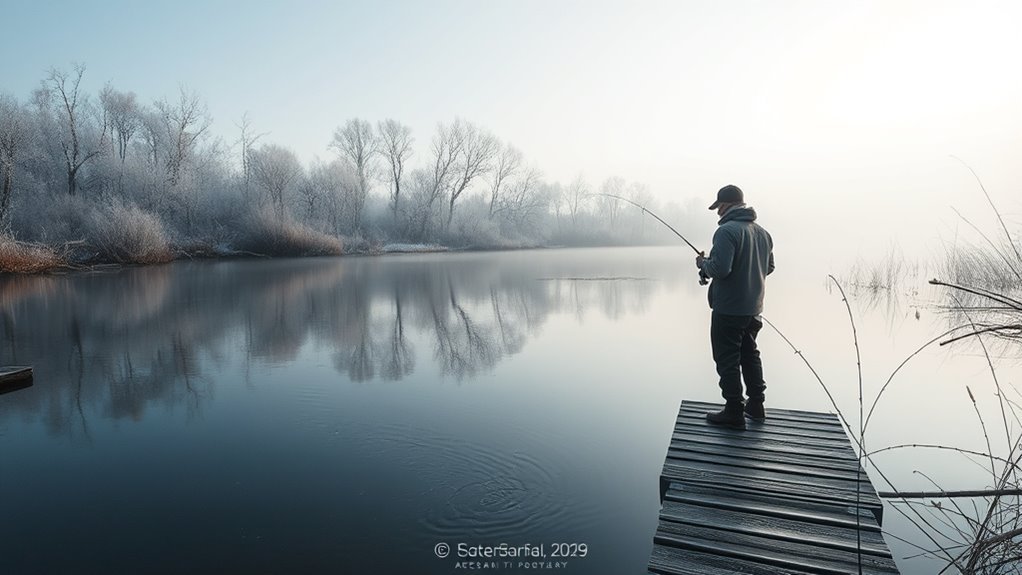
Cold weather affects fish behavior in various ways, but understanding the environmental factors at play can help you predict when and where fish are more likely to bite.
As water temperature drops, fish metabolism slows down markedly, cutting their feeding activity nearly in half. You’ll notice fish moving to greater depth, seeking thermally stable areas like basins or near inlets to conserve energy.
Barometric pressure shifts, especially falling pressure before storms, can temporarily boost fish activity despite the cold. Additionally, reduced light penetration caused by snow or ice often encourages fish to feed more actively, counteracting their slowed metabolism.
Fish Species Most Responsive in Cold Conditions
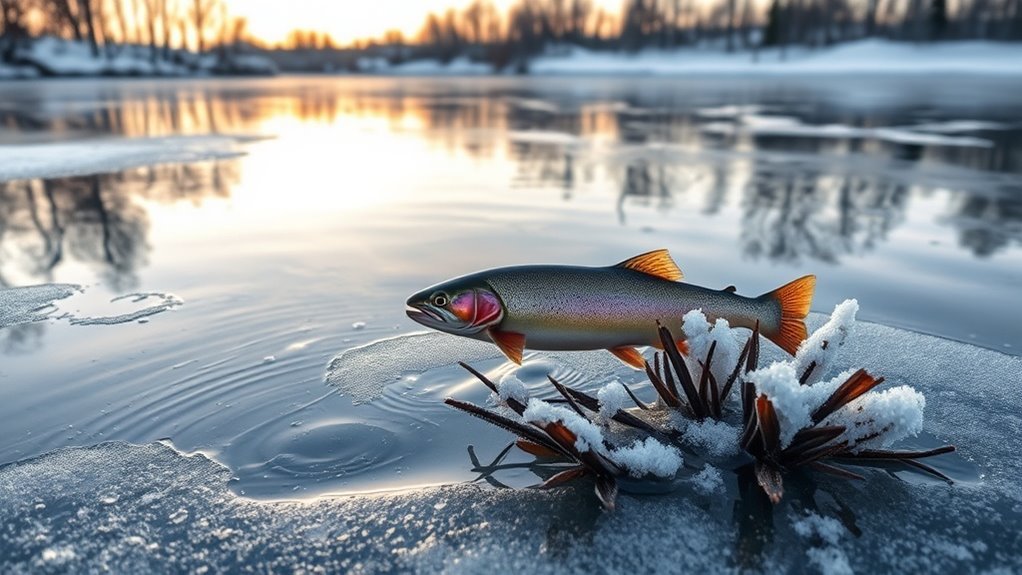
When temperatures drop, certain fish species stay active and offer better chances of a catch if you adjust your tactics accordingly.
Walleye, for example, show high bite sensitivity in cold weather, especially during low-light periods using live bait or slow-moving lures.
Trout also remain active in colder water temperatures, particularly in spring-fed lakes and rivers.
If you’re ice fishing, crappie and bluegill continue to bite in shallow, oxygen-rich zones beneath the ice.
Pike and musky maintain aggressive fish activity near structures, responding well to big, slow lures.
Although largemouth bass reduce activity in cold weather, you can still entice them with slow retrieves and finesse baits.
Understanding which fish species respond best helps you capitalize on colder conditions and improve your catch rate.
Effective Cold Weather Fishing Techniques
When fishing in cold weather, you’ll want to slow down your presentation with techniques like finesse jigging or deadstick baiting. This helps match the sluggish behavior of the fish.
Choosing the right bait is crucial. Live minnows or natural lures can make a big difference in triggering bites.
You’ll also need to adapt your strategy by targeting deeper, stable areas.
Using electronics to locate fish more effectively is key during these colder months.
Slow Presentation Strategies
Since fish metabolism slows in chilly water, you’ll need to adopt slower, more delicate presentation techniques to coax bites.
Lower water temperature reduces fish activity, so a slow presentation is key to increasing your bite rate.
Using finesse techniques—like slow retrieves and long pauses—mirrors the sluggish prey fish expect in the cold.
Focus on a delicate presentation to avoid spooking hesitant fish.
Try these slow presentation strategies:
- Use minimal, gentle movements to imitate lethargic prey.
- Employ slow, vertical jigging or deadstick setups.
- Incorporate long pauses between actions to trigger strikes.
- Choose smaller natural baits and move them subtly.
Optimal Bait Choices
Slowing your presentation helps match fish activity in cold water, but choosing the right bait can make all the difference.
At lower water temperatures, sluggish fish respond best to smaller, natural baits like minnows, waxworms, and worms because they’re easy to digest and emit appealing scents.
You should focus on subtle bait presentation with minimal movement to mimic lethargic prey. Adding scent enhancers or liquid attractants boosts your chances by stimulating feeding responses in less active fish.
Natural-looking lures—soft plastics, small spoons, or jigs in muted colors—also increase effectiveness.
Targeting stable, oxygen-rich areas like deep holes or structures improves bait success, as fish gather where conditions favor their activity.
Adapted Fishing Methods
Although cold weather makes fish less active, you can still catch them by adjusting your techniques to match their sluggish behavior.
Focus on slow presentations with longer pauses to mimic cold, slow prey. Target deep structures where the water temperature remains stable, as fish gather there to conserve energy.
Using live bait like minnows or worms can trigger bites by appealing to fish’s natural feeding instincts. Ice fishing or vertical jigging lets you reach these deeper areas effectively.
Try these adapted methods to boost your success:
- Slow trolling to cover more ground without spooking fish.
- Vertical jigging near submerged cover.
- Using live bait to enhance feeding cues in cold water.
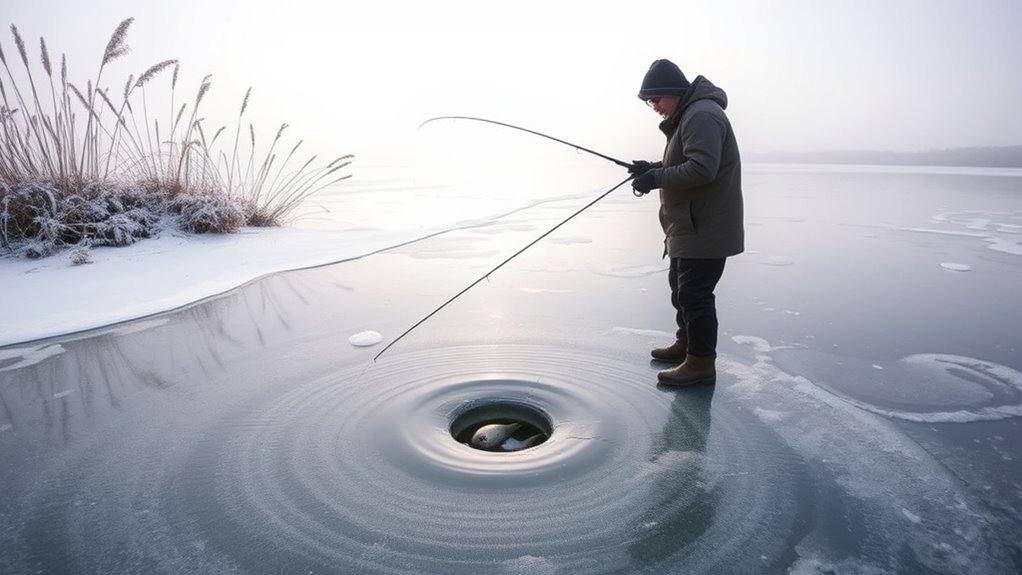
- Employing ice fishing techniques in frozen conditions.
These approaches align with fish activity and help you outsmart winter conditions.
Essential Gear and Equipment for Cold Weather Fishing
When you head out for cold weather fishing, having the right gear makes all the difference in comfort and success.
Start with insulated clothing and moisture-wicking layers to stay warm and dry. Plus, insulated boots are essential to protect your feet from freezing temperatures.
Equip fishfinders to locate fish efficiently, even when visibility is low beneath ice or murky water.
Use small hooks paired with live bait like minnows or waxworms to entice those sluggish fish.
Sensitive rods and smooth-drag reels are key to detecting those subtle bites that are common in colder conditions.
And don’t forget hand warmers to keep your hands nimble!
Extra clothing is always a good idea for added warmth.
With this essential gear, you’ll definitely increase your chances of a productive and comfortable fishing trip in the cold weather.
Safety Measures for Fishing in Cold Weather
Having the right gear keeps you comfortable, but staying safe in cold weather fishing requires extra attention.
Proper gear ensures comfort, but cold weather fishing safety demands careful vigilance and preparation.
You must monitor weather conditions and water temperature closely, as they impact ice safety and your well-being.
Always wear layered, moisture-wicking protective clothing and insulated boots to stay warm and dry.
Use safety gear like hand warmers and fingerless gloves to keep dexterity while handling bait.
Remember these vital safety measures:
- Check ice thickness regularly and avoid thin ice areas to prevent accidents.
- Carry essential safety gear: ice picks, whistle, and a first aid kit.
- Keep communication devices handy and inform someone of your plan and return time.
- Approach icy surfaces cautiously to avoid slips and falls.
Prioritizing these steps ensures a safer, more enjoyable cold weather fishing experience.
Frequently Asked Questions
Do Fish Bite Less When It’s Cold?
Yes, fish bite less when it’s cold because their metabolism slows down.
You’ll notice slower, lighter bites, and they’ll feed less frequently.
To catch them, you’ll need to fish slower and target deeper, warmer spots.
What Is the 80/20 Rule in Fishing?
You’ll catch 80% of fish with just 20% of effort—that’s the 80/20 rule in fishing!
Focus on the best spots and tactics, and you’ll reel in way more fish without wasting time everywhere else.
It’s all about being smart with your time on the water.
What Time Do Fish Bite in the Winter?
You’ll find fish biting best between late morning and mid-afternoon in winter, especially from 10 a.m. to 3 p.m.
When the sun warms shallow water, they get more active and feed aggressively.
Do Fish Bite Top Water When It’s Cold?
You won’t get many topwater bites when it’s cold—like trying to wake a hibernating bear.
Fish slow down and stay deep, so switch to slow, bottom baits to catch their attention during chilly months.
Conclusion
When cold weather creeps in, fish behavior shifts, so stay sharp and adapt your approach.
By understanding the chilly changes and choosing the right techniques and tackle, you’ll catch more despite the cold.
Remember, safety should always shine as brightly as your skill.
With patience, preparation, and persistence, you’ll turn frosty fishing into fruitful fun.
Embrace the brisk bite and bring your best game to the bite in biting cold!
—
As temperatures drop, fish become less active and seek deeper, warmer waters.
Adjust your fishing techniques accordingly, focusing on slower presentations and subtle movements.
Utilizing the right tackle and bait is crucial during this time, as fish are more selective.
So, don’t forget to prioritize safety while you’re out there!
In conclusion, adapting to cold weather fishing can lead to rewarding experiences.
By understanding fish behavior and employing the right strategies, you can make the most of chilly conditions.
Stay patient and prepared, and you’ll find that even in the cold, fishing can be both fun and fruitful!