How Does Concrete Dry Properly in Cold Weather?
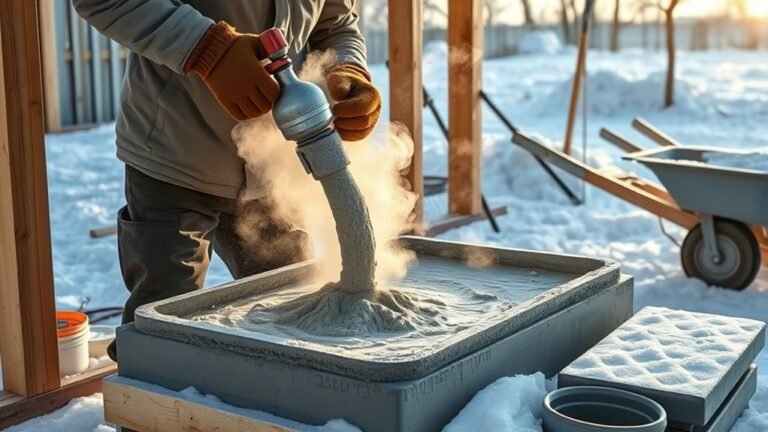
Properly curing concrete in cold weather is essential to ensure strength and durability.
To achieve this, it’s crucial to keep the concrete above freezing and maintain a steady warmth during the curing process.
Using insulating blankets or heated enclosures can help retain that necessary heat.
Additionally, consider warming your water and aggregates before mixing to further enhance the curing process.
Monitoring temperatures closely is vital, as freezing can halt curing and lead to cracks.
Extending the curing time is also beneficial for strength development in cold conditions.
Avoid common mistakes like rushing the process or neglecting proper protection.
Stay prepared, and with these practices in place, you can ensure that your concrete remains durable and strong, even when temperatures drop outside.
Why Freezing and Curing Don’t Mix
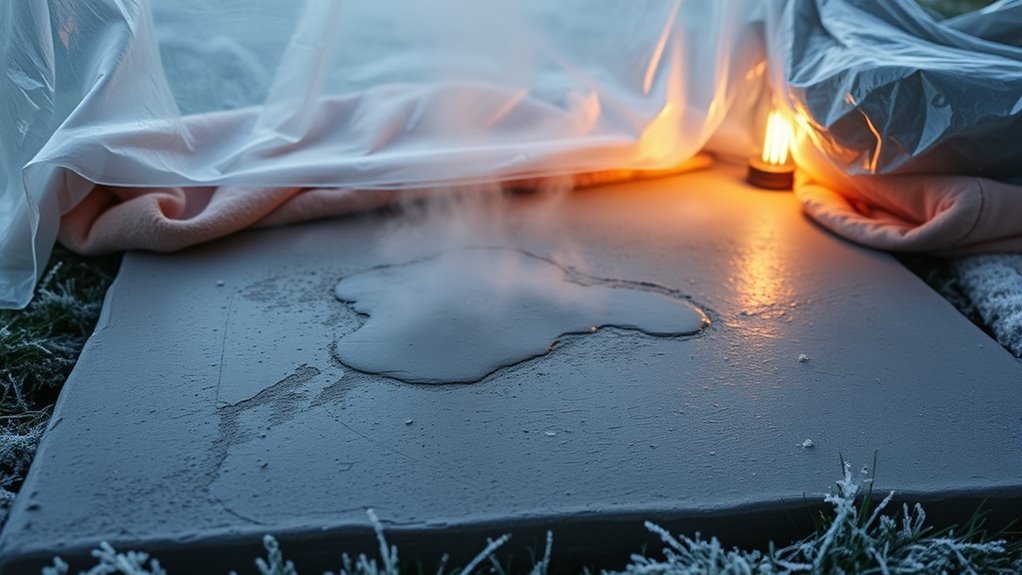
Although you might think cold weather only slows concrete drying, freezing temperatures actually stop the curing process entirely.
When water freezing occurs inside concrete, it halts the hydration process vital for chemical bonding and strength development.
If the concrete temperature drops below 40°F, hydration slows or stops, preventing proper curing.
Ice formation creates internal stresses, leading to cracks and long-term damage.
To avoid this, you need effective thermal protection, such as insulation blankets, to keep concrete warm during curing.
Maintaining a suitable concrete temperature ensures the hydration process continues uninterrupted, allowing strength to develop as intended.
Without these precautions, freezing compromises the concrete’s durability and performance.
Optimal Temperature Ranges for Concrete Placement and Curing
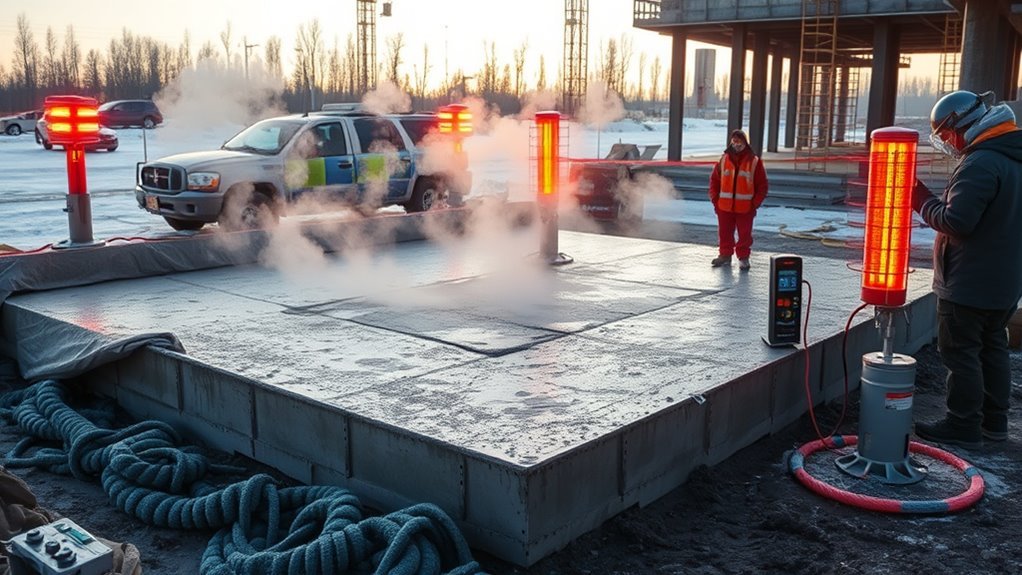
Freezing temperatures can bring the curing process to a halt, so keeping concrete within the right temperature range during placement and curing is vital.
Maintaining proper temperature during concrete placement and curing is essential to prevent freezing and ensure strength development.
Ideally, you should place concrete when ambient temperatures are between 50°F and 70°F. In cold weather, maintaining a concrete temperature above 40°F for at least 72 hours promotes proper hydration and strength development.
Pouring below 40°F in the first 24 hours can delay setting and weaken the final structure. For thick pours over 25 inches, curing temperatures should stay above 45°F to avoid freezing.
Use insulation blankets and other protective measures to regulate temperature and prevent drops below freezing point.
After curing, limit temperature drops to 20-50°F over 24 hours to prevent cracking and ensure the curing process completes successfully.
Preparing the Site and Materials for Cold Weather Concrete
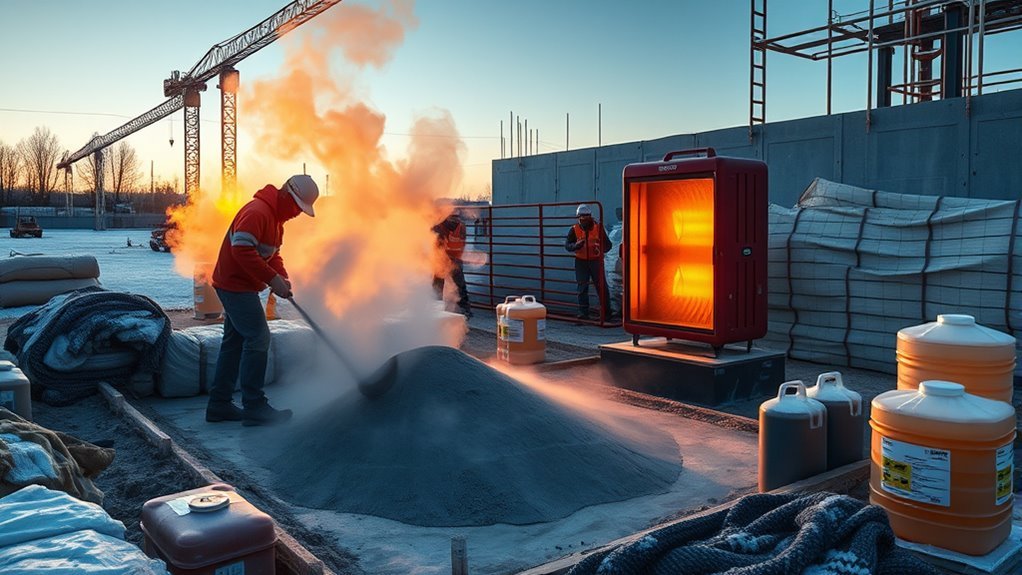
When working with concrete in cold weather, you need to prepare both the site and materials carefully to guarantee successful curing.
Start with thorough ground thawing and subgrade preparation. Remove all frost, ice, and snow to prevent weak spots.
Use warm aggregates and preheating water to raise the concrete’s initial temperature above 50°F, especially for sections under 12 inches thick.
Insulate the subbase with materials like polystyrene foam or thermal blankets to support winter concrete curing.
Also, confirm form removal is done only when the concrete has gained sufficient strength.
Finally, protect the site with windbreaks and protective enclosures to maintain stable ambient temperatures during placement.
These steps help you control conditions, ensuring durable, high-quality concrete despite the cold.
Techniques to Retain Heat During Concrete Curing
To keep your concrete warm during curing in cold weather, you’ll need to use effective heat retention techniques.
Start by covering concrete with insulating blankets or curing blankets made from fiberglass or foam to trap heat generated by exothermic reactions.
These coverings help maintain curing temperatures and prevent heat loss.
You can also incorporate hydronic heating systems—pipes embedded near the concrete that circulate warm water—to support temperature maintenance.
Using heated water and aggregates before mixing boosts initial temperatures, enhancing heat retention.
Additionally, apply vapor barriers to conserve moisture and reduce evaporation, which is vital for moisture conservation during curing.
Together, these methods ensure your cold weather concrete cures properly by minimizing temperature drops and promoting consistent hydration despite harsh conditions.
Using Insulation and Heated Enclosures Effectively
How can you guarantee your concrete stays warm enough to cure properly in cold weather?
Using insulation blankets with R-values of at least 3.0 is essential for heat retention and preventing moisture loss.
Insulation blankets with R-values of 3.0 or higher are vital for retaining heat and moisture during curing.
Wrap them tightly, securing edges and seams to block wind and maintain consistent curing conditions.
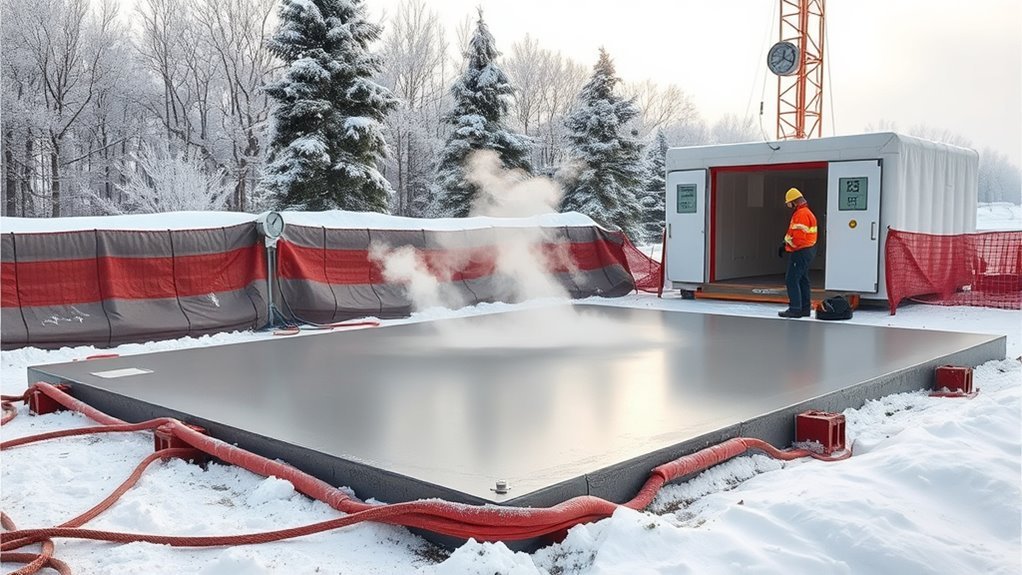
Heated enclosures create a controlled environment, keeping temperatures above 50°F despite freezing ambient temperatures.
Combine these with thermal barriers or foams beneath the enclosure to enhance insulation effectiveness and stabilize internal temperature.
Together, insulation blankets and heated enclosures provide precise temperature control, reducing heat loss and moisture evaporation.
This approach ensures your concrete experiences proper curing, even in harsh cold weather.
Monitoring Temperature and Moisture During Curing
You’ll want to keep a close eye on both temperature and moisture to guarantee proper curing in cold weather.
Using tools like temperature sensors and infrared thermometers helps you prevent freezing and maintain ideal conditions.
At the same time, tracking moisture levels stops premature evaporation and supports consistent hydration.
Temperature Monitoring Methods
Although cold weather poses challenges for concrete curing, monitoring temperature and moisture closely guarantees the process stays on track.
You can use internal temperature sensors, like embedded thermocouples or wireless devices such as SmartRock®, to gather real-time temperature data from inside the concrete.
Infrared thermometers help measure surface temperatures quickly without damaging the material, ensuring the curing temperature remains within safe limits.
Maturity meters combine temperature history with curing time to estimate strength development accurately.
Concrete temperature monitoring through these thermal measurement tools allows you to maintain precise temperature control, preventing freezing or overheating.
Moisture Control Techniques
When curing concrete in cold weather, controlling moisture is just as crucial as monitoring temperature to guarantee proper strength development.
Effective moisture control prevents plastic shrinkage and supports proper drying. You can use insulation blankets and external moisture barriers to maintain curing temperature and enhance moisture retention.
Employ moisture monitoring tools to track bleed water evaporation. This ensures the concrete doesn’t dry too quickly or stay overly wet.
These curing methods help avoid premature freezing and cracking. By regularly checking internal and surface temperatures alongside moisture levels, you ensure ideal conditions for curing.
Maintaining this balance helps concrete achieve its intended strength and durability despite cold weather challenges.
Staying vigilant with both moisture and temperature control leads to successful cold-weather concrete curing every time.
Selecting and Adjusting Mix Designs for Cold Conditions
Since cold weather slows down concrete curing, you’ll need to modify your mix design to make certain of proper strength and durability.
Start by lowering the water-cement ratio to around 0.45 to 0.50. This helps reduce bleed water and boost freeze-thaw resistance.
Lower the water-cement ratio to 0.45–0.50 to reduce bleed water and improve freeze-thaw durability.
Incorporate cold weather admixtures like calcium chloride or non-chloride accelerators. These will speed up early strength gain and increase the hydration rate.
Use rapid-setting cement, such as Type III portland cement. This helps achieve the desired strength faster at low curing temperatures.
Don’t forget aggregate storage! It’s important to keep aggregates in heated or insulated spaces to maintain consistent temperature during mixing.
Finally, consider adding supplementary cementitious materials like fly ash or slag. These enhance durability and reduce permeability.
These mix design adjustments ensure your concrete cures properly despite cold conditions.
Common Mistakes to Avoid in Cold Weather Concreting
Adjusting your mix design is just one part of successful cold weather concreting.
You must avoid common mistakes like neglecting insulation or protective coverings, which jeopardize hydration and freeze protection.
Not monitoring internal temperature can lead to unrecognized freezing, delaying setting and hindering strength development.
Using unheated tools or cold mixing water lowers curing temperature, further impairing concrete quality.
| Mistake | Impact | Prevention |
|---|---|---|
| No insulation | Freezing water, cracking | Use insulating blankets |
| Ignoring temperature | Delayed setting, weakness | Employ temperature monitoring |
| Inadequate curing time | Poor strength development | Extend curing duration |
Planning and Cost Considerations for Winter Concrete Projects
Although cold weather concreting demands extra resources, careful planning can keep costs manageable and guarantee quality results.
Careful planning in cold weather concreting balances extra costs with quality and reliability.
When you tackle winter construction costs, start with thorough project planning that includes a Cold Weather Protection Plan. This plan should address site preparation, temperature monitoring, and the use of protective measures like insulated blankets and warm mixing water.
These tactics support early strength development and proper concrete curing despite low temperatures. Using cold weather protection strategies not only safeguards your concrete but also helps avoid costly repairs and delays.
Incorporating expert advice and region-specific practices ensures resource efficiency. Although additional expenses are inevitable, investing upfront in these measures ultimately controls winter project costs and ensures your cold weather concrete sets correctly and performs reliably.
Frequently Asked Questions
Will Concrete Cure at 40 Degrees in Winter?
Yes, concrete will cure at 40 degrees in winter, but it’ll slow down.
You’ll need to use insulation or heating to keep it warm enough.
This ensures proper hydration and strength development despite the cold temperatures.
How Long Does It Take for Concrete to Dry in Cold Weather?
You’ll feel like waiting forever—concrete in cold weather can take 60 days or more to dry.
It’s slower because cold slows hydration and evaporation.
What Happens if Concrete Is Allowed to Freeze Within the First 24 Hours?
If concrete freezes within the first 24 hours, it stops curing properly, causing cracks and weak spots.
You’ll end up with reduced strength and durability, risking structural failure and costly repairs down the line.
Will Concrete Cure at 25 Degrees?
Yes, concrete can cure at 25°F,
but you’ll need to safeguard it from freezing.
Use insulation or heating,
possibly add accelerators,
and monitor conditions closely to guarantee hydration continues
and proper curing occurs despite the cold.
Conclusion
When working with concrete in cold weather, remember that “a stitch in time saves nine.”
By preparing properly—using the right mix, insulating well, and monitoring temperature—you’ll guarantee your concrete cures strong and durable.
Don’t rush or cut corners, as freezing can ruin your work.
Taking these steps upfront saves you from costly repairs and delays later.
With careful planning and attention, your cold-weather concrete project will stand the test of time.
In conclusion, handling concrete in cold weather requires proper preparation and attention to detail. Utilizing the right mix, effective insulation, and diligent temperature monitoring are key.
By avoiding shortcuts and ensuring everything is set up correctly from the start, you can prevent freezing issues.
This way, your concrete not only cures effectively but also remains durable and resilient over time.
With these strategies in place, your cold-weather concrete project will truly endure.