
Why Does Colder Weather Make You Tired?
Colder weather can leave you feeling tired and sluggish. This phenomenon is primarily due to reduced exposure to natural light, which disrupts your circadian rhythm. When this happens, your body produces more melatonin, making you feel sleepier.
Additionally, less sunlight leads to lower levels of vitamin D and serotonin. Both of these deficiencies can negatively impact your mood and energy levels, making you feel even more fatigued.
On top of that, colder temperatures often mean we tend to move around less. This decreased activity slows down your metabolism and circulation, further draining your energy.
All these changes combine to make you feel more tired during the winter months. However, adjusting your habits, like getting outside when the sun is shining, can help you feel more energized despite the chill.
The Role of Reduced Sunlight in Winter Fatigue

How exactly does reduced sunlight in winter make you feel more tired?
When daylight hours shrink, your exposure to natural light decreases, which throws off your circadian rhythm—the internal clock that regulates sleep and wake cycles.
With less sunlight, your body ramps up melatonin production, the hormone that signals it’s time to rest. This makes you feel sleepier during the day.
Less sunlight boosts melatonin, the hormone that tells your body it’s time to rest, making you feel sleepier.
At the same time, limited sunlight reduces your vitamin D levels, which are essential for maintaining energy and a positive mood.
This combination disrupts your natural alertness, making waking up and staying focused tougher.
How Circadian Rhythm Disruption Affects Energy Levels
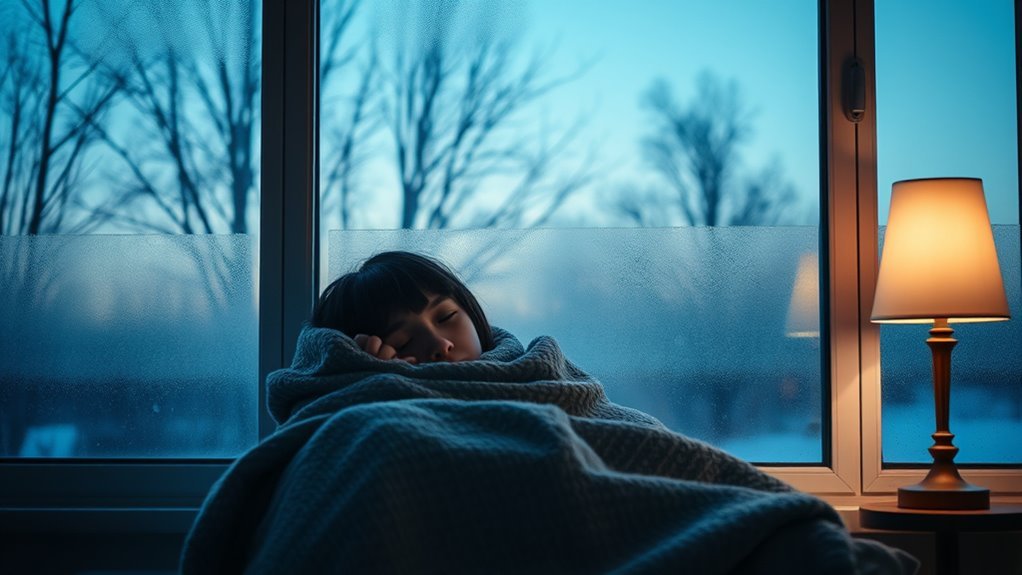
You might notice feeling groggier in the mornings when winter cuts down on your exposure to natural light.
Less morning light delays your circadian rhythm and boosts melatonin production, making it harder to wake up alert.
Understanding this shift can help you find ways to reset your internal clock and regain energy.
Reduced Morning Light
Although the colder months bring shorter days and less morning light, this change can considerably disrupt your internal circadian clock.
Reduced morning light exposure delays the reset of your circadian rhythm, making it harder for you to wake up and feel alert.
Since sunlight suppresses melatonin production in the morning, less light means melatonin lingers longer, contributing to grogginess.
This shift can make your sleep-wake cycle less aligned with natural light, which often leads to seasonal affective symptoms like fatigue and low energy.
Getting enough morning light is essential to keep your circadian rhythm on track, helping you maintain regular sleep patterns and better energy levels throughout the day.
Without it, you’re more likely to feel tired and sluggish in colder weather.
Melatonin Production Increase
As reduced morning light delays your circadian rhythm, your body responds by producing more melatonin, the hormone that signals sleepiness.
When you get less natural light, especially in colder months, your internal clock shifts, causing melatonin levels to rise and making you feel more tired throughout the day.
This disruption not only extends the time you want to sleep but also lowers your daytime energy.
Since melatonin release is closely tied to your circadian rhythm, less light in the morning means your body struggles to reset this clock.
Without sufficient natural light exposure, you’ll find it harder to shake off sluggishness.
To combat this, try increasing your morning light exposure.
This helps reduce melatonin production and boosts alertness, making you feel more energized despite the colder weather.
Vitamin D Deficiency and Its Impact on Mood and Fatigue

When sunlight grows scarce during colder months, your body produces less vitamin D, which can leave you feeling tired and low.
Vitamin D deficiency is linked to fatigue, low mood, and weakened immune function. Without enough vitamin D, your energy levels can drop, making everyday tasks feel more exhausting.
This deficiency also affects your immune system, increasing vulnerability to illness and prolonging recovery, which adds to your tiredness.
Luckily, you can boost your vitamin D through supplements, diet, or safe sun exposure when possible.
Studies show that maintaining adequate vitamin D levels helps reduce fatigue and improves your mood during winter.
Paying attention to your vitamin D intake is a simple yet effective way to combat the sluggishness that colder weather often brings.
Psychological Effects of Winter on Mental Health
Since winter brings shorter days and less sunlight, you might find your mood dipping and energy draining more quickly than usual.
This shift often triggers seasonal affective disorder (SAD), affecting about 5% of adults, causing depression and fatigue.
Reduced sunlight lowers serotonin production, which can leave you feeling sad and sluggish.
At the same time, increased cortisol levels from holiday stress and seasonal mood dips add to mental exhaustion and irritability.
Sleep disturbances, such as insomnia or hypersomnia common in winter, further disrupt your mood and cognitive function.
Psychological factors like loneliness and post-holiday blues can intensify these effects, making you feel even more tired and emotionally drained.
Understanding these psychological impacts helps you recognize why colder months challenge your mental health and energy levels.
The Link Between Cold Weather and Decreased Physical Activity
Although colder weather often keeps you indoors, it directly reduces your physical activity levels.
When you move less, your muscles weaken and your endurance drops, which leads to lower energy levels.
These seasonal changes in activity create a cycle where reduced movement impairs circulation and slows down your metabolism.
As a result, you feel more tired and less motivated to stay active, contributing to winter fatigue.
Staying inside during cold months means you burn fewer calories and expend less energy, which can make you feel sluggish.
Understanding this link helps you recognize that maintaining some level of physical activity, even indoors, is vital to combating the tiredness that often comes with colder weather and seasonal shifts.
Nutritional Factors That Influence Winter Tiredness
A key nutritional factor that influences your winter tiredness is vitamin D, which your body produces less of due to reduced sun exposure during colder months.
Lower vitamin D levels can lead to increased fatigue, muscle weakness, and mood disturbances.
Since vitamin D plays an essential role in energy production and immune health, its deficiency can make you feel more tired and vulnerable to illness in winter.
The seasonal drop in vitamin D also affects serotonin regulation, contributing to feelings of low mood and exhaustion.
Limited outdoor activity and shorter daylight hours often worsen this deficiency.
To combat winter tiredness, consider monitoring your vitamin D levels and, if necessary, supplementing to support your energy and immune system during the colder season.
Effective Lifestyle Adjustments to Boost Winter Energy
You can boost your winter energy by getting natural sunlight within the first hour of waking to reset your internal clock.
Sticking to a consistent sleep schedule, even on weekends, helps you feel more rested and alert during the day.
These simple habits work together to fight off winter fatigue and keep your energy steady.
Morning Light Exposure
When you expose yourself to natural morning light within an hour of waking, your body suppresses melatonin production and sets your circadian rhythm for the day.
This morning exposure to natural light helps reset your internal clock, making you feel more alert and energized throughout the colder months.
Spending time outdoors or near a window during daylight boosts vitamin D synthesis and lifts your mood.
If natural light is limited, using a light therapy box with 10,000 lux for 20-30 minutes can simulate sunlight effectively.
To maximize benefits, avoid bright screens before and just after waking, as they can interfere with melatonin suppression and disrupt your circadian rhythm.
Prioritizing morning light exposure is a simple, effective way to fight winter fatigue.
Consistent Sleep Routine
Although shorter winter days can disrupt your circadian rhythm, keeping a consistent sleep schedule helps your body stay on track.
Going to bed and waking up at the same time daily reinforces your internal clock. This improves sleep quality and reduces fatigue.
To strengthen this routine, create a relaxing pre-sleep habit like reading or listening to calming music. This signals your body it’s time to wind down.
Make sure your sleep environment is cool, dark, and quiet to promote restful sleep throughout the night.
Avoid screens and caffeine before bedtime, as they can interfere with your ability to fall asleep.
Sleep Hygiene Practices for Overcoming Winter Fatigue
Since colder weather can disrupt your natural sleep cycle, adopting strong sleep hygiene practices becomes essential to combat winter fatigue.
Improving your sleep quality and maintaining a regular sleep schedule help regulate melatonin production, which is often affected by reduced daylight.
Better sleep and consistent schedules support melatonin balance disrupted by shorter winter days.
To overcome winter fatigue effectively, focus on these habits:
- Keep your bedroom cool, dark, and quiet to create a sleep-friendly environment.
- Limit screen time at least an hour before bed to avoid blue light interfering with melatonin.
- Establish relaxing bedtime routines like reading or deep breathing to signal your body to wind down.
- Avoid heavy meals and caffeine near bedtime to prevent sleep disruptions.
When to Consult a Healthcare Professional About Persistent Fatigue
If your tiredness lingers for more than two to three weeks despite good sleep and a healthy lifestyle, it’s time to see a healthcare professional.
Persistent fatigue that doesn’t improve with adequate natural light exposure, balanced nutrition, and proper rest may signal underlying issues like sleep disorders, seasonal affective disorder, or vitamin D deficiency.
A thorough health evaluation can uncover medical conditions such as hypothyroidism, anemia, or depression that contribute to ongoing tiredness.
Don’t ignore worsening fatigue; early consultation helps identify treatable causes and prevents complications.
Prioritizing professional advice ensures you receive targeted treatment to restore your energy and overall well-being, especially during colder months when fatigue tends to increase.
Frequently Asked Questions
Why Do I Feel so Tired in Cold Weather?
You feel tired in cold weather because your body uses more energy to stay warm.
Shorter, darker days mess with your sleep cycle.
Plus, less sunlight means lower vitamin D, which can zap your energy.
Conclusion
As the cold wraps around you, it’s easy to blame the chill for your tiredness—but there’s more beneath the surface.
Reduced sunlight, disrupted rhythms, and hidden nutritional gaps all quietly sap your energy.
But what if the key to feeling vibrant this winter isn’t just about fighting the cold?
What if the real answer lies in small, intentional changes you haven’t tried yet?
Don’t let winter fatigue win—your energy revival might be closer than you think.
In conclusion, colder weather can lead to feelings of tiredness, but understanding the causes can help you combat it.
By addressing factors like reduced sunlight, adjusting your daily rhythms, and filling nutritional gaps, you can boost your energy levels.
Embrace small, intentional changes this winter to reclaim your vitality and beat that winter fatigue.