Does Cold Weather Make Arthritis Worse and How to Manage the Pain?
Yes, cold weather can make arthritis worse by thickening the fluid in your joints and lowering barometric pressure, which increases stiffness and pain.
To manage this, keep your joints warm with layered clothing and heat therapy. Staying active with gentle exercises indoors can also help you stay limber.
Additionally, maintaining a healthy diet is crucial to reduce inflammation.
Using pain relief creams can provide temporary relief, and prioritizing good sleep is essential for overall well-being.
If you want to learn other effective ways to ease winter joint discomfort, there are helpful strategies ahead.
How Cold Weather Affects Joint Health

Although cold weather doesn’t cause arthritis, it can make your joint symptoms worse.
This happens because the cold thickens the synovial fluid that lubricates your joints, leading to increased stiffness.
During winter, this thicker fluid means your joints don’t move as smoothly, causing stiff joints and making arthritis pain more noticeable.
You might also feel more discomfort when temperatures drop. Cold can trigger joint pain signals, especially if you’re already sensitive.
To reduce joint pain, it’s important to keep your joints warm and protected from the cold.
Wearing gloves and layered clothing helps maintain warmth, which can ease stiffness and improve joint function.
The Role of Barometric Pressure in Arthritis Pain
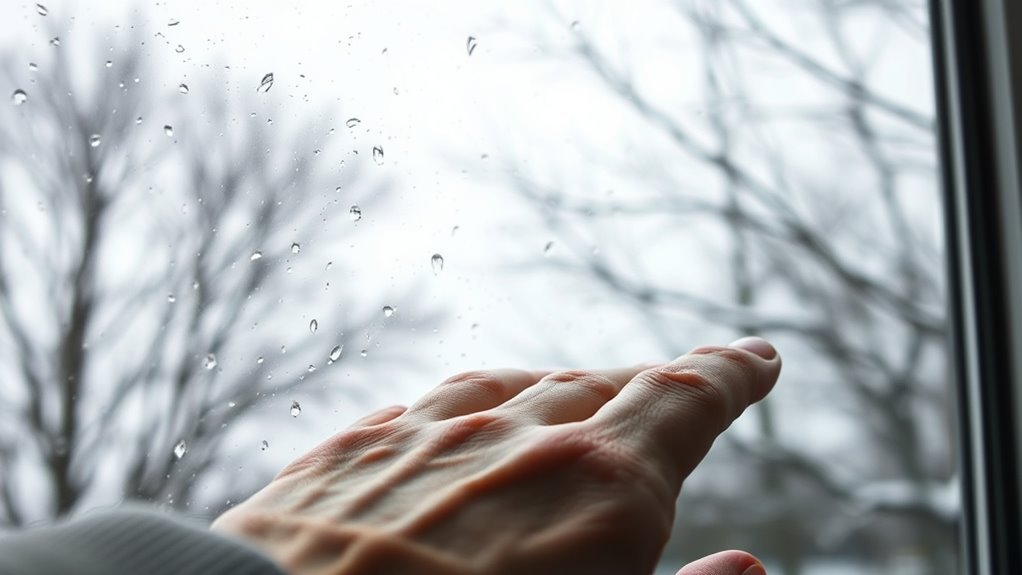
When barometric pressure drops, your joints can swell and put extra stress on already sensitive areas affected by arthritis.
This drop causes muscles and tendons around your joints to expand, increasing discomfort and triggering arthritis pain, especially during winter weather.
Your joint tissues detect these pressure changes, which can lead to inflammation and pain flare-ups.
Lower barometric pressure alters the space inside your joint cavities, making them more prone to strain and stiffness.
Understanding this connection helps you anticipate when arthritis pain might worsen and take steps toward pain relief.
Using heat therapy, staying active, and managing inflammation can ease the strain your joints endure during pressure shifts.
Recognizing how barometric pressure affects you is key to managing arthritis pain effectively.
Identifying Weather Sensitivity in Arthritis Patients
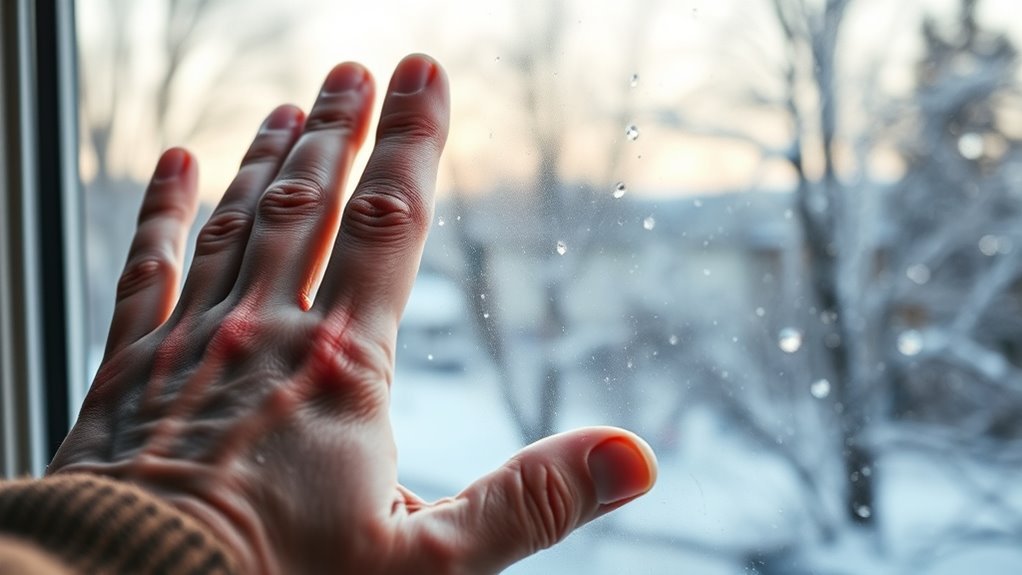
Understanding how barometric pressure shifts can worsen arthritis pain sets the stage for recognizing whether you might be sensitive to weather changes.
If you notice increased joint pain, stiffness, or swelling during cold weather or when a cold front approaches, you could have weather sensitivity.
Many arthritis patients report that low temperatures and fluctuating barometric pressure trigger their symptoms.
Pay attention to patterns—do your arthritis symptoms worsen on damp, chilly days?
Tracking these changes can help you confirm your sensitivity.
Since experiences vary, some people feel little difference, while others face significant discomfort.
By identifying your weather sensitivity, you can better anticipate flare-ups and manage your arthritis more effectively.
Recognizing the link between weather and your joint pain is a key step toward tailored care.
Effective Ways to Stay Warm and Protect Your Joints
Since cold weather can tighten your joints and worsen arthritis pain, staying warm becomes essential to managing discomfort.
You should wear layered warm clothing like thermal leggings, hats, gloves, and scarves to trap body heat and reduce stiffness.
Using heat packs and heated accessories such as warm socks or microwaveable packs offers quick relief when joint pain flares up in winter weather.
Keep your indoor space comfortably warm with heaters or electric blankets to maintain joint flexibility.
Additionally, soaking in a hot bath helps loosen stiff joints and boosts circulation.
These simple steps protect your joints from cold-induced pain and stiffness, making it easier to stay comfortable throughout the colder months.
Importance of Regular Physical Activity During Winter
You’ll find that staying active during winter helps keep your joints flexible and reduces stiffness caused by the cold.
Low-impact exercises like yoga, swimming, or gentle stretching are great options to move safely indoors.
Regular activity also boosts circulation and releases natural pain relievers, making it easier to manage arthritis discomfort.
Winter Exercise Benefits
How can staying active during the cold winter months ease arthritis pain?
Winter exercise helps maintain your joint flexibility and reduces stiffness caused by cold weather.
Regular physical activity boosts circulation, releases endorphins, and supports muscle strength—all essential for managing arthritis pain effectively.
Exercising indoors or in heated areas can protect you from harsh conditions while keeping you consistent.
| Benefit | How It Helps | Example Activityv |
|---|---|---|
| Joint Flexibility | Reduces stiffness | Gentle stretching |
| Pain Relief | Releases natural painkillers | Yoga |
| Muscle Strength | Prevents injuries | Light resistance |
| Circulation Boost | Improves nutrient flow | Walking |
| Cold Weather Shield | Avoids worsening joint symptoms | Indoor swimming |
Keep moving to manage arthritis pain this winter!
Low-Impact Activity Options
Staying active during winter doesn’t have to mean intense workouts.
Low-impact activities like walking, swimming, or yoga are excellent choices that help maintain joint flexibility without stressing sore joints.
These gentle movements boost circulation, which can reduce stiffness and ease arthritis pain naturally by releasing endorphins.
You’ll find warm indoor environments, such as heated pools or yoga studios, make it easier and more comfortable to stay consistent with these exercises when it’s cold outside.
Even incorporating simple movement into your daily routine—like short stretching sessions or wrist and ankle rolls—can markedly support joint health and prevent stiffness.
Nutritional Strategies to Combat Winter Inflammation
Although cold weather can trigger arthritis flare-ups, adjusting your diet can help ease inflammation and protect your joints.
Focus on incorporating nutrient-rich foods and staying hydrated to manage winter inflammation effectively.
- Eat omega-3 fatty acids found in fatty fish and flaxseeds to lower joint inflammation.
- Include anti-inflammatory foods like berries and leafy greens to reduce swelling.
- Boost vitamin C intake with oranges and strawberries to support collagen and joint health.
- Limit processed foods, sugar, and refined carbs, which can increase inflammation.
Don’t forget to stay hydrated by drinking water, herbal teas, and broths.
This helps lubricate joints and flush out toxins, keeping your arthritis symptoms in check during colder months.
Benefits of Supplements for Joint Comfort
Beyond adjusting your diet, certain supplements can offer significant relief for arthritis-related joint discomfort, especially during colder months.
Supplements like glucosamine, chondroitin, and collagen help reduce joint pain and improve mobility.
Omega-3 fatty acids fight inflammation and ease stiffness typical in winter months.
Curcumin also lowers systemic inflammation, supporting your arthritis management plan.
Before starting any supplements, check with your healthcare provider to avoid interactions.
| Supplement | Benefit |
|---|---|
| Glucosamine | Reduces joint pain, improves mobility |
| Omega-3 Fatty Acids | Decreases inflammation, eases stiffness |
| Curcumin | Lowers systemic inflammation |
These supplements support cartilage and ligament health, helping you manage arthritis more comfortably in cold weather.
Managing Stress to Reduce Arthritis Symptoms
Because chronic stress boosts inflammation, it can make your arthritis symptoms worse and increase joint pain.
Managing stress effectively plays a key role in reducing this inflammation and improving your immune response.
You can take charge by incorporating these strategies:
- Practice mindfulness meditation or deep breathing exercises to lower stress and inflammatory markers.
- Engage in regular physical activity to release endorphins—your body’s natural painkillers—and ease arthritis discomfort.
- Prioritize good sleep hygiene to support your immune system and minimize joint inflammation.
- Seek social support and relaxation techniques, which lessen perceived pain and enhance overall well-being.
When to Seek Medical Advice for Winter Joint Pain
If your joint pain worsens during winter or doesn’t improve with home care, you should see a healthcare professional for a thorough evaluation.
Persistent winter joint pain, especially when accompanied by stiffness that disrupts daily activities or sleep, signals the need to seek healthcare.
You should also get medical advice if you notice sudden swelling, redness, or warmth around your joints, as these may indicate an infection or arthritis flare requiring prompt treatment.
New symptoms like fever, fatigue, or unexplained weight loss alongside arthritis symptoms also warrant a doctor’s visit to rule out other conditions.
Regular check-ins with your healthcare provider help adjust your treatment plan and manage worsening arthritis symptoms during colder months effectively.
Don’t delay seeking medical advice to keep your joints healthy.
Frequently Asked Questions
What Relieves Arthritis Pain?
You can relieve arthritis pain by applying heat, doing low-impact exercises,
eating anti-inflammatory foods, wearing supportive shoes, and managing stress through relaxation techniques.
These actions help reduce stiffness, inflammation, and discomfort effectively.
What Not to Do for Arthritis?
Don’t turn into a couch potato, or your joints will scream louder than a rock concert!
Avoid skipping warm-ups, ignoring cold weather, wearing bad shoes, or doing sudden high-impact moves—you’ll only make arthritis pain worse.
What Is the Best Painkiller for Osteoarthritis?
The best painkiller for osteoarthritis is usually acetaminophen for safety.
However, combining it with NSAIDs, like ibuprofen, often works better.
You can also try topical NSAIDs for localized pain to minimize side effects.
How to Calm Arthritis Flare?
To calm an arthritis flare, you should apply warm compresses, do gentle stretching, and stay warm.
Eating anti-inflammatory foods and practicing stress reduction techniques are also helpful.
These steps effectively reduce pain, stiffness, and inflammation.
Conclusion
Think of your joints like a garden in winter—cold winds might nip the buds, but with care, warmth, and nourishment, new life can still bloom.
By staying active, protecting yourself from the chill, and managing stress, you give your arthritis the best chance to stay comfortable through cold weather.
Listen to your body’s signals, and don’t hesitate to seek help when needed.
With the right approach, you can weather the season and keep your joints thriving.
In conclusion, while cold weather can indeed exacerbate arthritis symptoms, proactive management can make a significant difference.
Staying warm, engaging in gentle exercise, and being mindful of your emotional well-being are crucial steps.
Always pay attention to your body and reach out for support when necessary.
By implementing these strategies, you can navigate the winter months more comfortably and keep your joints healthy.