How Does Cold Weather Affect Hot Water Heaters?
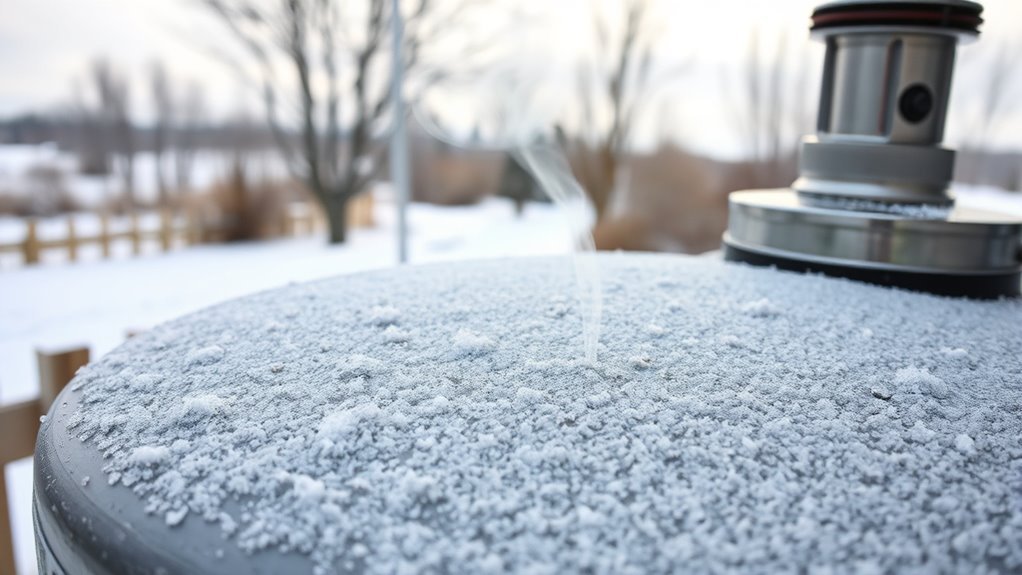
Cold weather can significantly impact your hot water heater’s performance. When cold water enters the system, it requires more time and energy to heat up. This increased demand not only raises your energy bills but can also lead to faster wear and tear on your heater.
If the pipes and the heater aren’t properly insulated, the situation worsens.
Additionally, sediment buildup is a common issue during winter months. This buildup can reduce efficiency, and you may start to notice strange noises or even leaks.
As hot water demand typically increases during colder months, your water heater faces even more strain.
By understanding how to protect and maintain your heater, you can ensure it runs smoothly and efficiently all season long.
The Impact of Cold Temperatures on Water Heater Efficiency
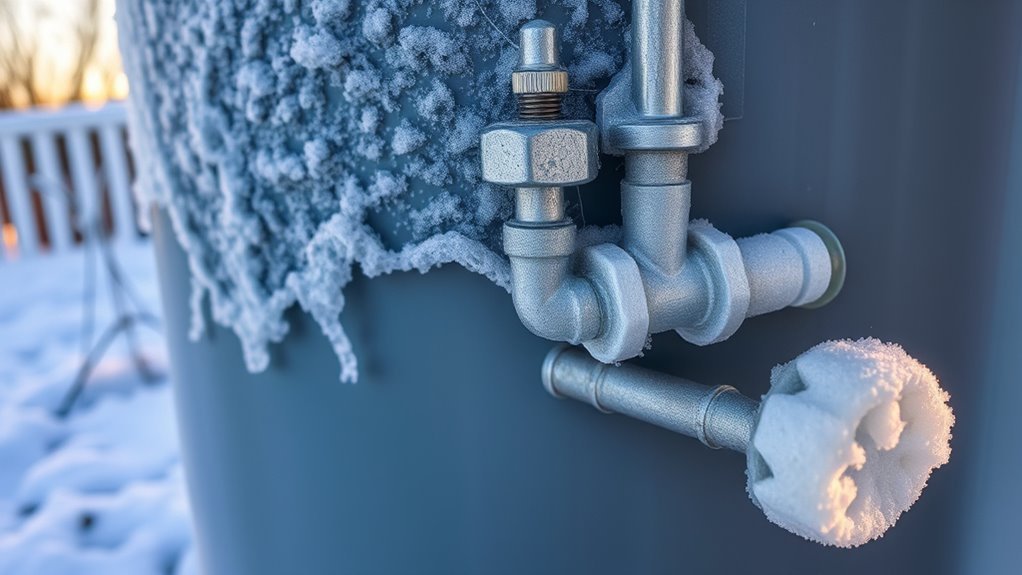
Although cold outdoor temperatures might seem harmless, they substantially affect your water heater’s efficiency.
Cold outdoor temperatures significantly reduce your water heater’s efficiency, increasing energy use and wear.
When cold water enters your system, the temperature drop forces the water heater to work harder to reach the desired hot water supply.
This increased system workload raises energy use, driving up utility bills and wearing down the heater faster.
If your pipes and water heater lack proper insulation, heat loss intensifies, further reducing water heater efficiency.
Unconditioned spaces like garages or basements expose your system to lower ambient temperatures, compounding the problem.
By understanding how cold temperatures impact your water heater, you can better protect its performance and longevity.
This way, you’ll ensure consistent hot water while managing energy consumption effectively.
How Cold Water Inflow Affects Heating Performance
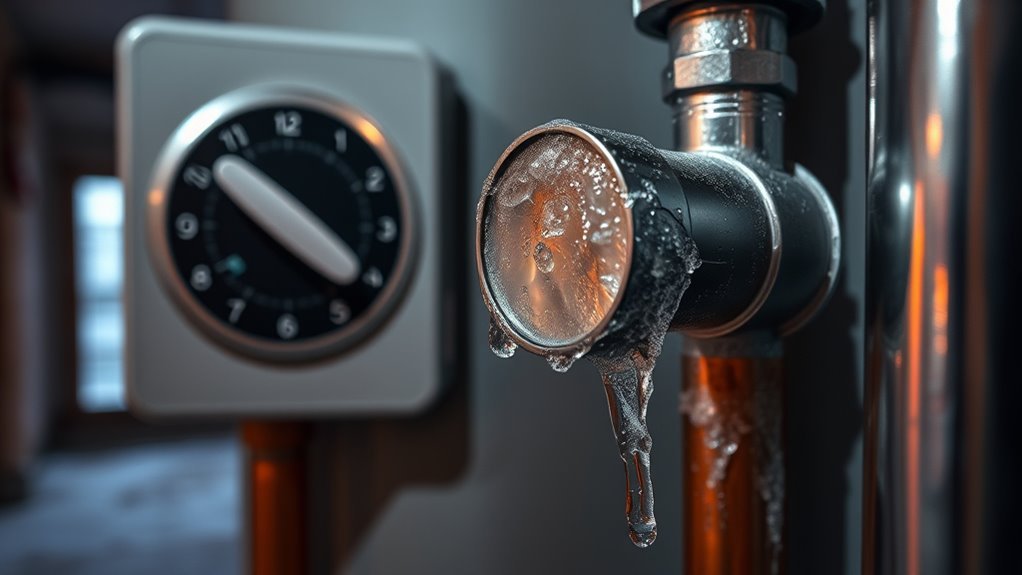
Cold water entering your water heater can substantially impact its heating performance, especially during colder months.
When cold water inflow occurs, the heater must work harder to raise the lower incoming temperature to your set level. This increased temperature difference reduces overall efficiency, meaning your heater consumes more energy to maintain the hot water supply.
In cold weather, this effect becomes more pronounced, causing your system to cycle more frequently and strain the heater.
Consider these key points about cold water inflow’s impact on heating performance:
- The heater works longer to compensate for the lower incoming temperature.
- Increased energy consumption occurs due to reduced efficiency.
- A larger temperature difference demands higher heater capacity.
- Uninsulated heaters in cold areas face more frequent cycling and strain.
Common Water Heater Issues Triggered by Winter Conditions
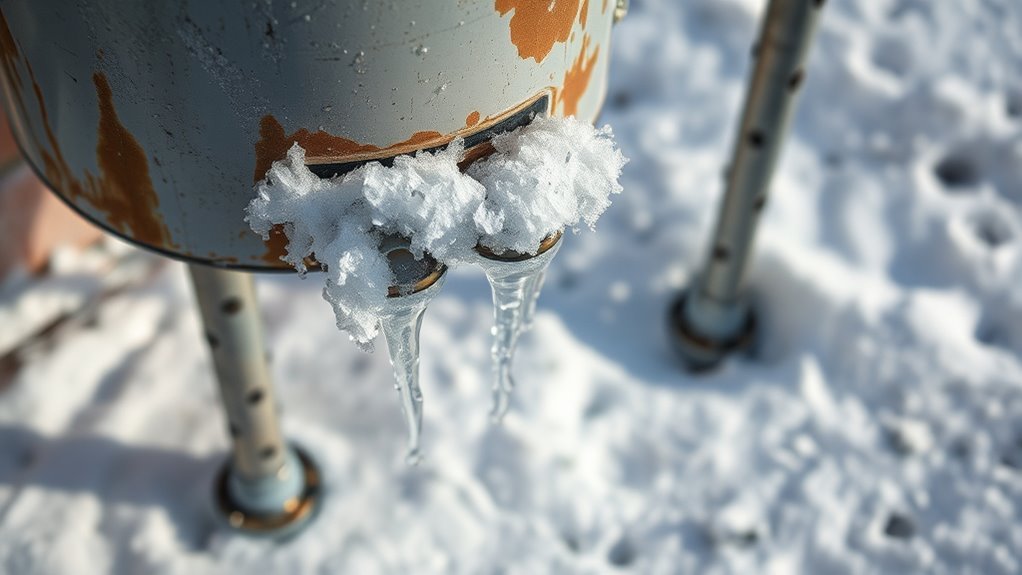
When winter hits, your water heater faces several challenges that can affect its performance and longevity.
Cold weather causes lower water temperature to enter the tank, forcing your heater to work harder and increasing strain on the unit.
Chilly incoming water makes your heater labor more, adding extra wear to the system.
Sediment buildup inside the tank worsens in winter, reducing heat transfer efficiency and leading to inconsistent hot water.
Without proper insulation, heat loss intensifies, causing longer wait times for warm water and higher energy bills.
Additionally, freezing external pipes can crack and leak, resulting in potential system damage.
You might notice fluctuating water temperature, unusual noises, or leaks—all signs your water heater struggles during colder months.
Addressing these issues early helps maintain your system’s efficiency and prevents costly repairs down the line.
The Role of Sediment and Mineral Buildup During Cold Months
Since minerals in hard water tend to settle more quickly during colder months, you’ll often see increased sediment buildup at the bottom of your water heater tank.
This mineral accumulation, mainly calcium and magnesium deposits, forms a layer that reduces heating efficiency by insulating the heating element.
As sediment buildup compacts, it can cause tank corrosion and clogging, threatening your water heater’s lifespan.
To keep your system running smoothly during cold weather, regular maintenance is essential.
Here’s what you should focus on:
- Flushing the tank to remove mineral deposits
- Checking for signs of sediment buildup
- Monitoring heating efficiency
- Inspecting for early signs of tank corrosion
Proper care helps prevent costly repairs and guarantees your hot water heater performs well all winter.
Effects of Poor Pipe and Tank Insulation in Winter
If your pipes and water heater tank lack proper insulation, you’ll notice heat escaping quickly. This causes your water temperature to drop and drives up energy use.
Poor insulation leads to significant heat loss, forcing your water heater to work harder to maintain the desired temperature. This not only reduces efficiency but can also shorten its lifespan.
Without adequate thermal protection, pipes are more vulnerable to freezing during cold spells. That puts you at risk for costly bursts and leaks.
Insufficient insulation also delays heat retention, which means longer wait times for a steady hot water supply at your fixtures.
By improving insulation on both the tank and pipes, you enhance heat retention and reduce heat loss.
This helps protect against freezing pipes, ensuring a consistent hot water supply and better overall efficiency throughout the winter months.
Signs Your Water Heater Is Struggling in Cold Weather
Improving insulation can help protect your water heater, but you still need to watch for signs that it’s struggling in cold weather.
Cold incoming water puts extra system strain on your heater, which might cause fluctuating water temperatures or a reduced hot water supply.
Sediment buildup often worsens in winter, leading to unusual noises.
You may also notice leaks or corrosion as the system works harder, driving up your energy bills.
Watch for these warning signs:
- Inconsistent or fluctuating water temperatures during cold months
- Banging or knocking noises from sediment buildup
- Noticeable leaks or corrosion around the unit
- Increased energy bills caused by extra effort to heat cold water
Addressing these signs early can prevent costly damage.
How Increased Hot Water Demand Affects Your System
When cold weather sets in, you tend to use more hot water for longer showers and baths. This puts extra demand on your water heater.
This increased hot water demand means your system has to heat more water to compensate for colder outside temperatures and colder incoming water.
As a result, your water heater struggles to keep up, often running continuously or cycling more frequently. This leads to increased energy consumption and faster system wear.
During the colder months, the combination of higher hot water usage and the strain from colder water reduces hot water availability. It can make it harder to maintain consistent temperatures.
Over time, this extra stress can shorten your heater’s lifespan. It also increases the likelihood of repairs or replacement due to the constant strain from winter’s demands.
Preventative Maintenance Tips for Winter Water Heater Care
Because cold weather puts extra strain on your water heater, you should take proactive steps to keep it running efficiently throughout winter.
Proper preventative maintenance can prevent costly issues and improve your system’s efficiency during cold months.
Preventative maintenance helps avoid expensive repairs and boosts your system’s efficiency during winter.
Focus on insulating your water heater and pipes to reduce heat loss.
Regularly flush the tank to remove sediment buildup that lowers performance.
Set your thermostat between 120°F and 140°F to balance comfort with energy savings.
Finally, inspect for leaks or corrosion and repair them promptly to maintain optimal operation.
- Insulate water heater and connecting pipes to reduce heat loss.
- Flush the tank annually to prevent sediment buildup.
- Adjust thermostat to maintain proper temperature.
- Check and fix leaks early to avoid system damage.
When to Seek Professional Water Heater Service in Winter
If your water heater shows signs like fluctuating temperatures, strange noises, or leaks during winter, it’s time to call a professional.
Don’t wait—schedule inspections before the cold hits or if your hot water suddenly drops.
Always choose a licensed technician to guarantee your system gets the proper care it needs.
Identifying Warning Signs
How can you tell when your water heater needs professional attention during winter?
Watch for warning signs that your heater is struggling in cold weather. Sediment buildup often causes banging or knocking noises.
Fluctuating water temperature or inconsistent hot water supply suggests internal problems worsening with the cold.
Rust leaks or visible corrosion around the tank signal serious issues needing inspections.
You might also notice longer heating times paired with rising energy bills, indicating your system is working harder than it should.
Key warning signs to watch for include:
- Unusual noises from sediment buildup
- Fluctuating water temperature
- Rust leaks around the tank
- Increased energy bills and longer heating cycles
If you spot these signs, it’s time to call a professional before winter worsens the issue.
Timing Professional Inspections
Although your water heater might seem fine during mild weather, scheduling a professional inspection before the coldest months can catch sediment buildup and other issues that worsen in winter.
You should have a licensed plumber perform annual maintenance in the fall to optimize performance and reduce cold-weather-related breakdowns.
If you notice fluctuating water temperatures or unusual noises, seek prompt service to address potential system issues early.
Early detection of leaks, corrosion, or pilot light problems prevents sudden failures during peak winter demand.
Timely professional inspections help maintain your water heater’s efficiency and extend its lifespan, ensuring consistent hot water when you need it most.
Don’t wait for a breakdown—regular maintenance is key to avoiding costly repairs and discomfort in cold weather.
Choosing Qualified Technicians
When cold weather causes your hot water heater to produce inconsistent temperatures or insufficient hot water, you should call a qualified technician without delay.
These professionals specialize in winter-specific maintenance, ensuring your system’s insulation is intact and addressing sediment buildup that can impair system performance.
Routine inspections before and during cold months help prevent leaks and system breakdowns.
Look for technicians who:
- Are licensed and experienced in winter-related water heater issues.
- Quickly identify and fix leaks or rust.
- Perform thorough routine inspections focusing on insulation and sediment.
- Respond promptly to urgent problems like pilot light outages.
Upgrading and Protecting Your Water Heater for Cold Climates
To keep your water heater running efficiently in cold climates, you should consider upgrading to models designed for winter challenges and take steps to safeguard your system.
Tankless heaters with cold-weather features like frost protection and enhanced insulation reduce heat loss and improve efficiency.
Proper insulation around pipes prevents freezing and minimizes energy waste.
Regular maintenance, including flushing to remove sediment buildup, ensures peak performance.
Installing a recirculating pump helps deliver hot water faster, cutting down on unnecessary heat loss.
| Upgrade Option | Benefit | Key Feature |
|---|---|---|
| Tankless Heater | Continuous hot water | High efficiency |
| Pipe Insulation | Prevents freezing | Reduces heat loss |
| Recirculating Pump | Faster hot water delivery | Energy saving |
| Regular Maintenance | Removes sediment buildup | Enhances lifespan |
Frequently Asked Questions
Do Hot Water Heaters Struggle in Cold Weather?
Yes, your hot water heater struggles more in cold weather because it works harder to heat colder incoming water.
You might notice longer wait times for hot water and potential strain on the system, especially if it’s older or poorly maintained.
Will Hot Water Pipes Freeze Before Cold Water Pipes?
You might think hot water pipes freeze first, but they usually don’t because their water stays warmer and pipes are larger.
Cold water pipes, especially if uninsulated, tend to freeze sooner in cold weather.
How Cold Is Too Cold for a Water Heater?
You’ll find temperatures below 20°F are too cold for your water heater to perform well without extra insulation or heating.
Below freezing, you risk frozen pipes and damage, so protect your heater accordingly.
Why Is My Hot Water Not Working When It’s Cold Outside?
Your hot water’s not working because cold weather lowers incoming water temperature, strains your heater, or causes frozen pipes.
Check for insulation issues, sediment buildup, or leaks.
And don’t forget to consider servicing your water heater to restore proper function.
Conclusion
Cold weather can reduce your water heater’s efficiency by up to 25%. This makes it work harder and use more energy.
You’ll notice longer wait times for hot water and higher utility bills if you don’t take care of it.
By insulating pipes, scheduling maintenance, and upgrading your system for winter, you can keep your hot water flowing smoothly all season long.
Don’t wait—protect your heater now to avoid costly repairs later!
In conclusion, cold weather can significantly impact the performance of your hot water heater.
By taking proactive steps like insulating your pipes and scheduling regular maintenance, you can enhance efficiency and reduce energy costs.
Keep your hot water accessible and your utility bills manageable throughout the winter months.
Act now to ensure your heater is ready to handle the colder temperatures, preventing any unexpected issues down the line!