How to Do Tires Lose Air in Cold Weather
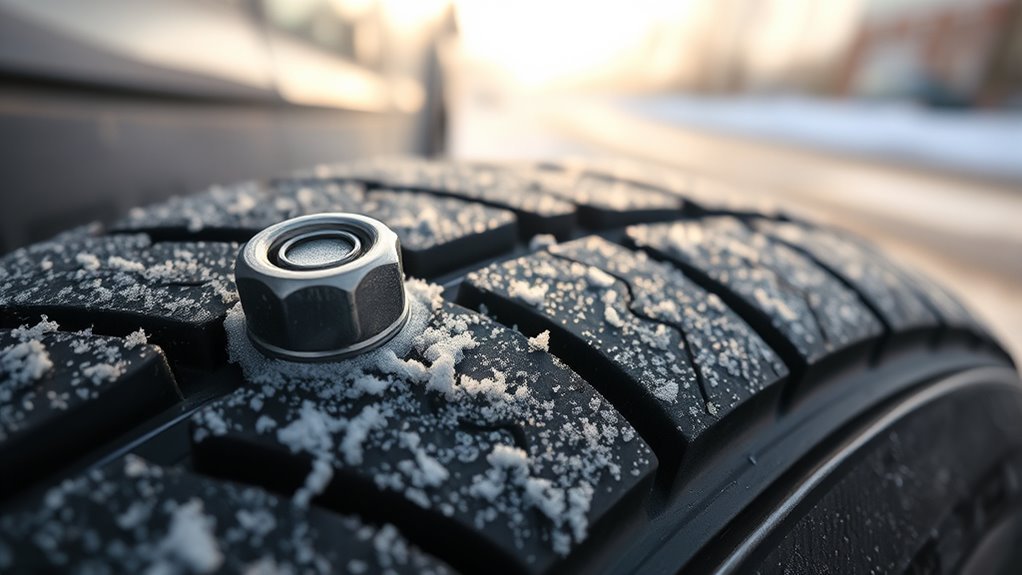
Your tires lose air in cold weather due to the contraction of air inside as temperatures drop, which lowers the pressure.
When it gets colder, air molecules slow down and pack closer together, taking up less space.
As a result, your tires may feel less inflated, impacting performance and safety.
You might notice that your tires look softer or receive warning lights on your dashboard.
Keeping an eye on tire pressure can help prevent issues.
Understanding how cold weather affects tire pressure is key to maintaining proper inflation throughout the winter months.
Make sure to check your tire pressure regularly to ensure safe driving conditions!
The Science Behind Tire Pressure Changes in Cold Weather
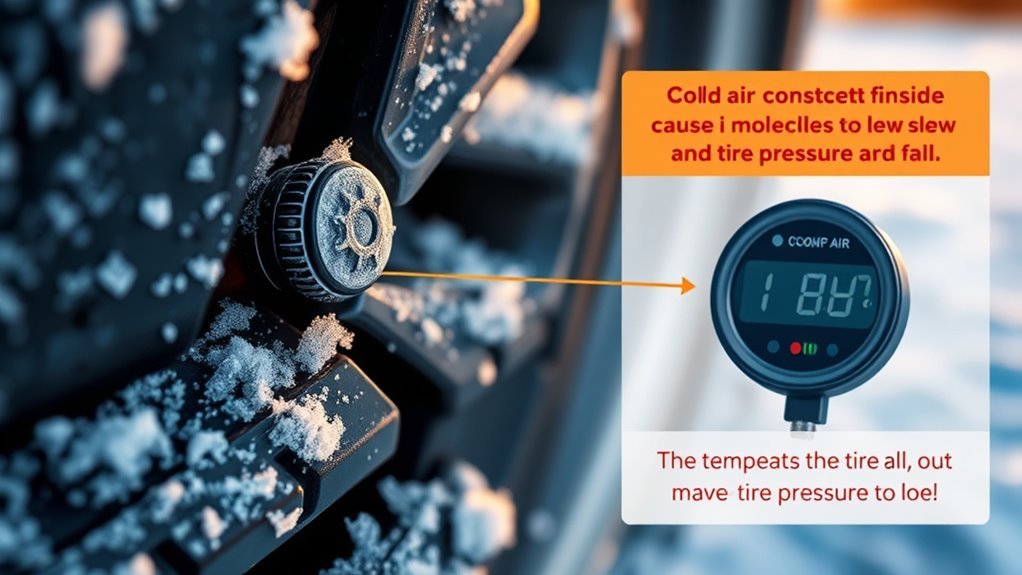
Although you might not notice it immediately, tire pressure drops as temperatures fall because the air molecules inside your tires contract.
As temperature drops during cold weather, the gas molecules inside your tires move less and take up less space, causing tire pressure to decrease.
For every 10°F drop, expect a pressure loss of about 1-2 PSI.
This happens even before you start driving, so you can’t rely on heat from the road to fix it.
Understanding this helps you realize why regular pressure checks are vital in colder months.
The Ideal Gas Law shows that when volume and the amount of gas stay constant, pressure directly depends on temperature.
Keeping an eye on tire pressure ensures safe driving and better fuel efficiency in cold weather.
How Temperature Affects Air Molecules Inside Tires
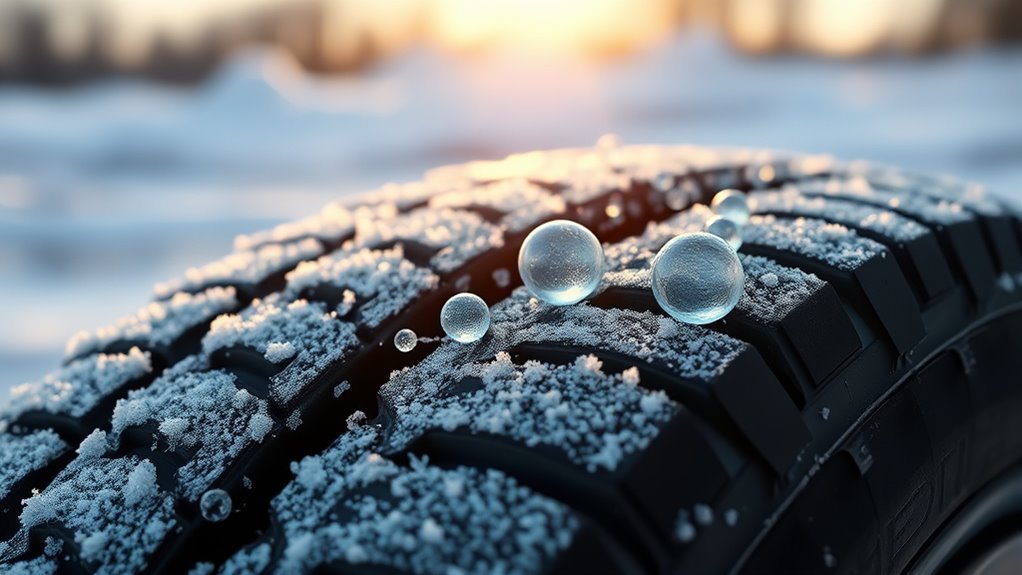
When temperatures drop, the air molecules inside your tires slow down and pack closer together, making the air denser.
This denser air occupies less volume, which causes the tire pressure to fall.
As temperature decreases, the air molecules lose kinetic energy, exerting less force on the tire walls.
This leads to a noticeable pressure drop inside your tires.
Typically, for every 10°F drop in temperature, you’ll see a 1 to 2 PSI decrease in pressure.
Because the air molecules are compressed into a smaller space and move less vigorously, the tire feels less full.
As air molecules compress and slow down, tires lose pressure and feel less full in the cold.
Understanding how temperature affects air molecules inside tires helps you recognize why maintaining proper tire pressure becomes critical during cold weather.
Common Signs of Low Tire Pressure During Winter
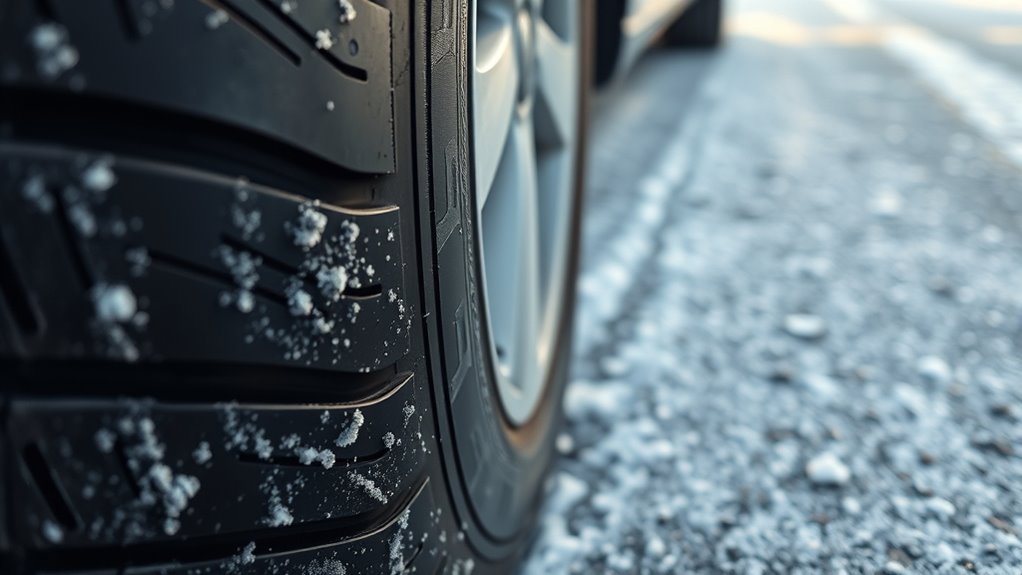
If your tires lose pressure during winter, you’ll likely notice they look visibly deflated or bulge at the sides.
This low tire pressure affects your vehicle’s performance, especially during winter driving when traction and handling are critical.
You might also feel your tires are softer when pressing them by hand after cold weather sets in.
Additionally, the TPMS warning light on your dashboard often activates if the pressure drops below recommended levels, alerting you to check your tires.
Another subtle sign is decreased fuel efficiency, as underinflated tires increase rolling resistance.
Paying attention to these signs helps you maintain ideal tire pressure and ensures safer driving conditions throughout the cold weather months.
Safety Risks of Driving With Underinflated Tires
When your tires are underinflated, you lose vital traction, especially on slippery roads. This makes it harder to control your vehicle.
Plus, it increases your stopping distance by up to 15 feet, which can be dangerous in emergencies.
Driving with underinflated tires also causes uneven tire wear. This not only risks blowouts but can lead to costly repairs as well.
Reduced Traction Hazards
Because underinflated tires reduce the contact area with the road, you lose significant traction on icy or snowy surfaces—sometimes by as much as 50%.
Maintaining proper tire pressure in cold weather is vital to keep your grip steady and your drive safe.
When you drive with underinflated tires, you face several hazards:
- Reduced traction causes your vehicle to slip more easily, especially on ice or snow.
- Steering becomes less responsive due to uneven tire contact, making it harder to control your car.
- The risk of hydroplaning on wet roads increases, as underinflated tires can’t channel water effectively.
To avoid these dangers, regularly check and adjust your tire pressure during cold spells.
This way, you ensure ideal traction and safer winter driving.
Increased Stopping Distance
Although you might not notice it immediately, driving with underinflated tires considerably increases your stopping distance, especially on wet or icy roads.
Low tire pressure shrinks the tire’s contact patch, reducing traction and making it harder to stop quickly.
In cold weather, this effect worsens, extending your stopping distance by up to 50% on icy surfaces.
Even a 1 PSI drop can add 2-3% more braking distance, putting you at greater risk.
| Situation | Increased Stopping Distance |
|---|---|
| Wet Road | Up to 15 feet longer |
| Icy Road | Up to 50% longer |
| 1 PSI Pressure Drop | 2-3% longer |
| Underinflated Tires | Higher skidding & blowout risk |
Keep your tire pressure in check to stay safe this cold season.
Tire Wear Consequences
Underinflated tires don’t just affect your stopping distance—they also pose serious safety risks.
When tire pressure drops, especially in cold weather, you compromise your vehicle’s performance and safety.
Here’s what you need to know about tire wear consequences:
- Underinflated tires wear unevenly, mainly on the edges. This shortens tire lifespan and increases replacement costs.
- Low tire pressure reduces traction and braking ability. This makes it harder to control your vehicle, especially on icy roads.
- Underinflated tires generate excess heat. This raises the risk of blowouts and sudden tire failure at high speeds.
So, maintaining proper tire pressure is *essential* during cold weather.
It helps prevent dangerous tire wear and keeps you safe on the road.
Best Practices for Checking Tire Pressure in Cold Conditions
You should check your tire pressure when the tires are cold, ideally before driving or after sitting for a few hours, to get an accurate reading.
Use a reliable pressure gauge to measure each tire, including the spare, and adjust the PSI to match your vehicle’s recommended levels.
Staying consistent with these checks, especially in cold weather, helps keep your tires properly inflated and your driving safe.
When To Check
Since tire pressure drops quickly in cold weather, it’s important to verify your tires when they’re cold—either before you start driving or after they’ve been stationary for at least three hours.
This ensures you get an accurate reading and avoid inflated results caused by heat.
To know when to check tire pressure in cold weather, follow these tips:
- Always check tire pressure in the morning or after your car has been parked for three hours.
- Avoid checking right after driving to prevent skewed readings due to heat.
- Monitor tire pressure at least once a month during winter to catch any fluctuations.
Using these practices will help you maintain proper tire pressure and keep your vehicle safe all season long.
Using Pressure Gauges
Although checking tire pressure might seem straightforward, using the right gauge and technique is essential for accurate readings in cold weather.
Always use reliable pressure gauges—digital or dial types work best—to get precise measurements.
Before you measure, make sure your tires are cold, either before driving or after sitting for at least three hours.
Remove the valve stem cap carefully and attach the gauge firmly to avoid any air leakage during measurement.
Once you get the tire pressure reading, compare it with the manufacturer’s recommended PSI found on your door jamb or owner’s manual.
After adjusting pressure as needed, don’t forget to replace the valve cap securely to keep moisture and dirt out.
This helps prevent future leaks and maintains accurate tire pressure.
Maintaining Consistent Pressure
After using a pressure gauge to check your tires, maintaining consistent pressure becomes the next step to guarantee safety and performance during cold weather.
You need to monitor your tire pressure regularly and take these best practices into account:
- Always check tire pressure when tires are cold—before driving or after at least 3 hours of inactivity—to get accurate readings with your gauge.
- Use a reliable digital or dial gauge instead of relying solely on TPMS. Temperature fluctuations can affect TPMS accuracy, so it’s better to be safe.
- Adjust tire pressure to match the vehicle manufacturer’s recommended PSI, which is usually found on the door jamb or in the owner’s manual.
After you adjust, recheck the pressure after driving a mile to ensure it stabilizes.
Staying on top of your tire pressure is key for safety and performance!
Maintenance Tips to Keep Tires Properly Inflated in Winter
When temperatures drop by 20°F or more, you need to check your tire pressure at least once a month to prevent underinflation.
Cold weather causes air inside tires to contract, lowering tire pressure and affecting performance.
Use a reliable tire pressure gauge to get accurate readings, and inflate your tires to the manufacturer’s recommended PSI found on the door jamb or owner’s manual.
Avoid over-inflation, as it can lead to uneven wear.
To maintain proper inflation, visit gas stations or tire shops offering free or low-cost compressed air.
Regularly inspect your tires for damage or uneven wear, and consider switching to winter tires for better traction and more stable pressure throughout the cold months.
Keeping tire pressure consistent ensures safer driving and extends tire life.
Where to Get Help With Tire Pressure Issues During Cold Weather
If you notice your tires losing air in cold weather, you can turn to professionals like Jiffy Lube technicians who can quickly inflate your tires to the recommended PSI and check for any issues.
Proper tire pressure is vital, especially when temperatures drop. Here’s where to get help:
- Visit Jiffy Lube or other auto repair shops for tire inspections, TPMS diagnostics, and tread checks.
- Use free or low-cost air stations available at many tire retailers to adjust your tire pressure as needed.
- Schedule routine maintenance appointments to ensure your tires stay properly inflated and safe during winter months.
These steps help prevent safety risks caused by low tire pressure and keep your vehicle running smoothly in cold weather.
Frequently Asked Questions
Do I Need to Add Air to My Tires in Cold Weather?
Yes, you should add air to your tires in cold weather.
The temperature drop causes pressure to decrease, so check your tires regularly.
Topping them off will help maintain safe driving conditions and ideal tire performance.
How Do I Keep My Tires From Losing Air in Cold Weather?
You can’t just wish your tires to keep air in cold weather.
Instead, regularly check pressure, inflate slightly above recommended PSI, and use winter tires.
Inspect for leaks—because ignoring it won’t stop the air from sneaking out.
What Is the 7 7 Rule for Winter Tires?
The 7-7 rule means you check your winter tire pressure every 7 days.
Keep it within 7 PSI of the recommended level.
This helps you avoid underinflation and maintain safety on cold, slippery roads.
How Much Psi Do Tires Lose in Cold Weather?
You’ll typically lose about 1 PSI for every 10°F drop in temperature.
So, if it gets 20°F colder, your tires can lose around 2 PSI.
This can affect your tire pressure considerably in cold weather.
Conclusion
Now that you know how cold weather sneaks air out of your tires, you’re better equipped to keep them properly inflated.
Just like a trusty pocket watch keeps you on time, regularly checking your tire pressure helps you avoid safety risks.
Maintaining smooth rides all winter long is essential.
Don’t let chilly temps catch you off guard—stay proactive. Follow the tips, and you’ll be able to cruise confidently until spring warms things up again.
Remember, checking your tire pressure regularly is key during cold weather.
By doing so, you not only enhance safety but also improve your vehicle’s performance.
Keep an eye on that pressure gauge, and you’ll be ready for whatever the winter roads throw at you!