Do Roaches Survive Cold Weather?
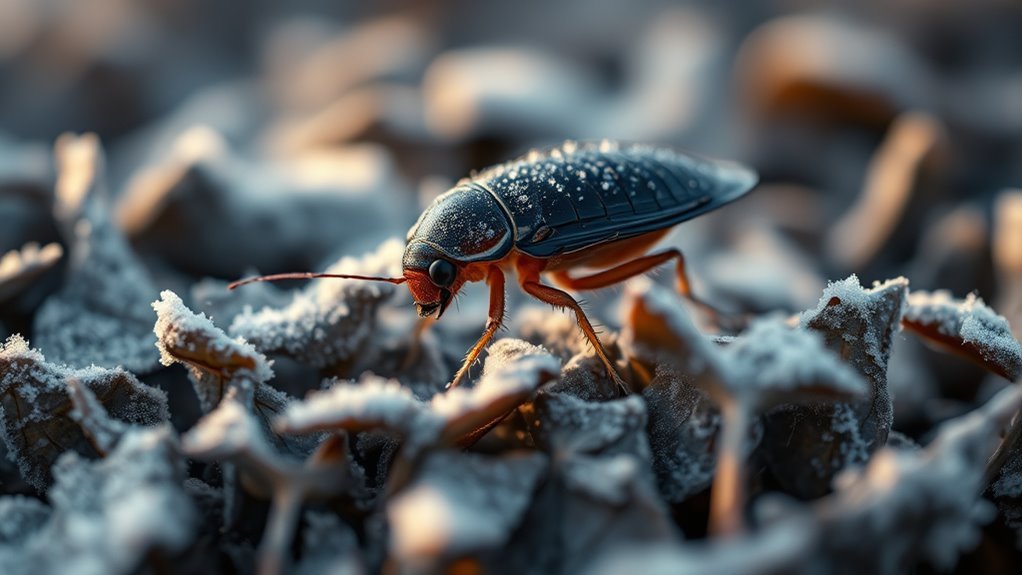
You might think cold weather kills roaches, but that’s not the case! Many of these resilient pests survive by seeking warmth indoors.
They can’t handle freezing temperatures outdoors for long, but they find shelter in cracks, wall voids, and heated rooms inside your home.
Their eggs are fragile in the cold, but adults hide in insulated spots to ride out winter.
So, cold alone won’t keep roaches away. If you want to understand how they outsmart winter and how to stop them, there’s more to discover!
Understanding their behavior in cold weather is crucial for effective pest management.
Let’s dive deeper into their survival tactics and what you can do to keep them at bay!
How Cockroaches Respond to Cold Temperatures
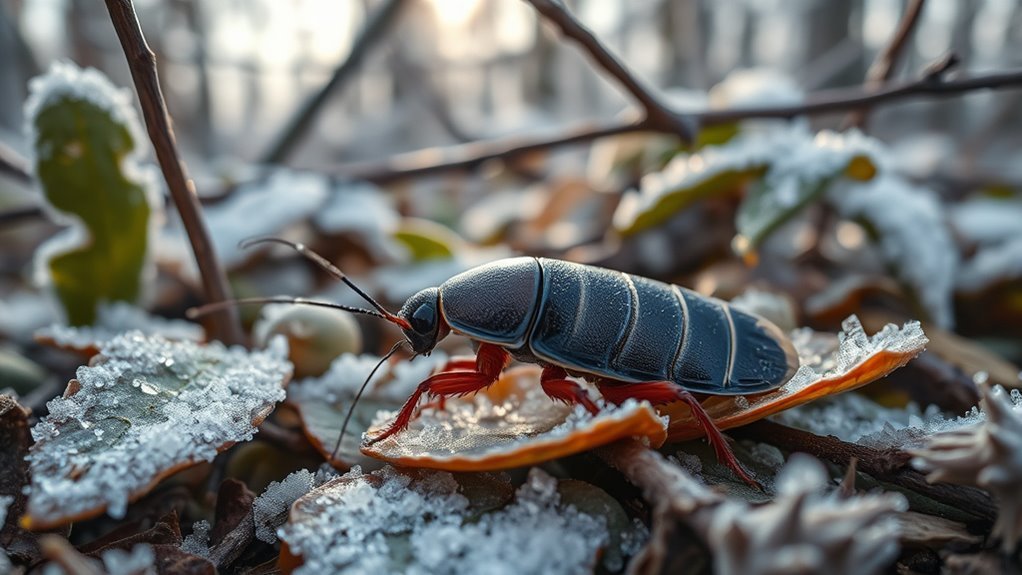
Although cockroaches are cold-blooded and rely on external heat, they can’t survive long in temperatures below 15°F (-9°C).
When cold temperatures drop, you’ll notice cockroaches seeking warmth to survive. They often enter diapause, a dormancy state that helps them temporarily withstand colder conditions.
While adult cockroaches are sensitive to cold, their eggs can sometimes survive brief freezing periods.
During winter, cockroaches typically move indoors to escape the chill and find suitable warmth and food sources.
Understanding how cockroaches respond to cold temperatures is essential for effective pest control.
Targeting their preferred warm environments can help reduce infestations during colder months.
You’ll find that managing indoor warmth limits their ability to thrive when outside conditions turn harsh.
Winter Survival Strategies of Common Cockroach Species
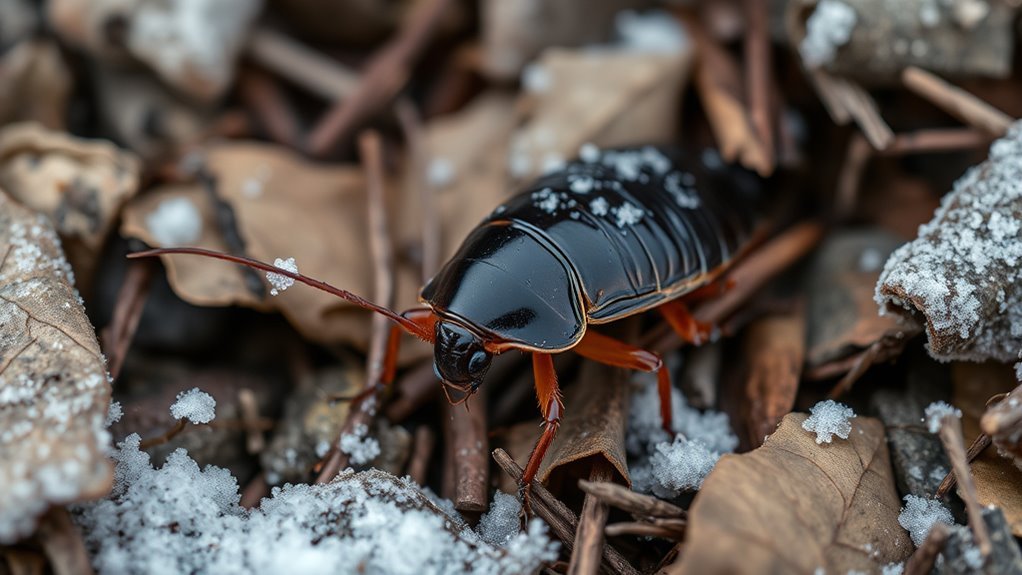
You’ll notice that different cockroach species handle cold in unique ways—German cockroaches struggle below 45°F, while Oriental cockroaches tolerate cooler spots better.
To survive winter, they often move indoors, hiding behind appliances or inside wall voids where it stays warm.
Understanding these habits helps you see why they’re tough to eliminate once the temperature drops.
Species Cold Tolerance
When temperatures drop, cockroach species show varying levels of cold tolerance that affect their winter survival strategies.
German cockroaches struggle to survive cold weather, rarely enduring temperatures below 50°F. This naturally limits their outdoor winter survival.
In contrast, Oriental cockroaches display greater cold tolerance and can sometimes survive near-freezing conditions.
However, most cockroach eggs remain vulnerable, with cold causing high mortality below 50°F.
To survive temperature drops, cockroaches rely heavily on finding warm hiding spots like heated buildings or insulated areas.
You’ll find American cockroaches also seeking indoor shelter since their cold tolerance is limited to brief exposures above freezing.
Understanding these differences helps you target pest control effectively by focusing on disrupting their winter hiding spots and minimizing their chances to survive cold weather.
Indoor Winter Habitats
As temperatures drop, cockroaches seek out warm, hidden spots indoors to survive the winter.
You’ll find them exploiting various indoor habitats to endure cold temperatures, using every available shelter and insulated space.
These winter survival strategies help them stay safe and active despite the chill outside.
Common winter hideouts include:
- Wall voids and cracks where warmth lingers.
- Damp areas like basements and crawlspaces.
- Behind appliances and inside cabinets for insulation.
- Heated rooms such as boiler rooms and laundry areas.
- Dark, humid, undisturbed spots providing reliable shelter.
The Impact of Cold on Cockroach Eggs and Reproduction
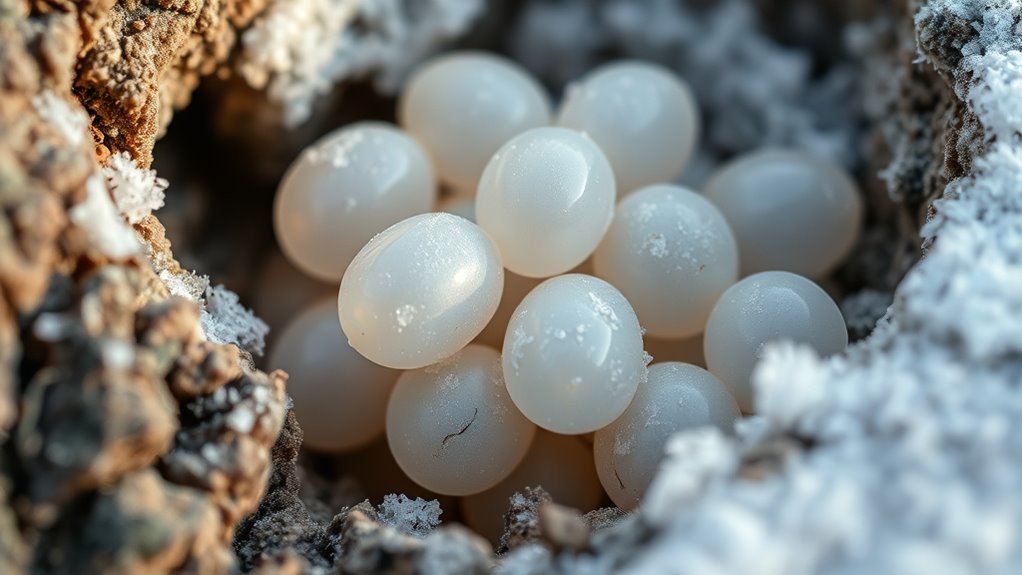
You’ll find that cockroach eggs handle cold better than adults, but prolonged temperatures below 50°F can stop their development or kill them.
Cold can delay reproduction and affect when eggs hatch, often pushing it to warmer seasons.
Understanding these patterns helps explain why infestations can spike once temperatures rise again.
Egg Cold Resilience
Although adult cockroaches struggle to survive cold weather, their eggs show greater resilience to low temperatures.
Cockroach eggs have a higher cold resistance and temperature tolerance, allowing them to maintain viability during winter.
However, prolonged exposure to temperatures below 50°F (10°C) can reduce their survival chances.
Most eggs don’t survive extended periods below freezing, yet short-term exposure might not affect their hatch rate considerably.
Once temperatures rise, delayed eggs hatch quickly, potentially causing infestations to surge.
- Cockroach eggs resist cold better than adults.
- Prolonged cold below 50°F threatens egg survival.
- Freezing temperatures under 32°F usually kill eggs.
- Cold delays egg hatching but doesn’t prevent it.
- Species vary in cold resistance and temperature tolerance.
Temperature Effects on Reproduction
When cold weather sets in, it directly impacts cockroach reproduction by lowering egg viability and hatch rates.
Cold temperatures disrupt the development of cockroach eggs, especially during the winter months.
While cockroach eggs show more cold-resistance than adults, they rarely survive prolonged exposure below 50°F (10°C).
Temperatures under 45°F (7°C) cause most eggs to die, halting reproduction.
Extended cold periods below 60°F (15°C) markedly reduce survival rates, delaying or preventing hatching.
These temperature effects mean you’ll see fewer new cockroaches when it’s cold outside.
Understanding how cold temperatures suppress egg viability and hatch rates helps explain why cockroach populations struggle to reproduce effectively in colder climates, limiting their survival through harsh winters.
Seasonal Hatching Patterns
Since cockroach eggs tolerate cold better than adults, they often survive winter by entering dormancy until temperatures rise.
You’ll notice that cold temperatures temporarily halt hatching patterns, allowing eggs to pause development and improve egg survival.
Egg casings, or oothecae, shield cockroach eggs during winter, especially indoors where conditions are less harsh.
Once warmth returns, dormancy ends, triggering seasonal infestation as eggs hatch.
The temperature impact varies by species, with most eggs unable to survive extended freezing but enduring short cold spells.
- Cockroach eggs resist cold better than adults.
- Prolonged below 50°F exposure can kill eggs.
- Dormancy pauses egg development in winter.
- Egg casings protect eggs indoors during cold.
- Hatching resumes with warmer temperatures, causing infestations.
Typical Winter Hiding Spots for Cockroaches Indoors
If you want to spot where cockroaches hide during winter, look behind appliances like refrigerators, dishwashers, and microwaves.
These spots keep them warm and provide access to food crumbs.
Common hiding places also include wall voids, cracks, and crevices near plumbing and electrical outlets.
Make sure to check under sinks and inside cabinets, as moisture attracts them.
Basements and utility rooms, especially those with water heaters or laundry areas, are ideal for them.
These areas offer dark, humid environments perfect for shelter.
Bathrooms are another hotspot due to moisture, particularly behind toilets and underneath tubs.
Effective Winter Prevention Techniques for Homeowners
Knowing where cockroaches hide during winter helps you target your prevention efforts more effectively.
As the temperature drops, sealing cracks around windows, doors, and foundations is essential to prevent roach entry.
You can also reduce indoor clutter and store items in sealed containers to eliminate hiding spots and food sources.
Keeping kitchens and bathrooms clean and fixing leaks removes moisture that attracts cockroaches.
For long-term prevention, consider professional pest control to tackle hidden roach populations.
Here are some key winter prevention techniques to prevent infestations:
- Seal cracks and gaps to block roach entry.
- Declutter and use sealed storage containers.
- Fix leaks and control indoor moisture.
- Clean surfaces promptly to remove crumbs and spills.
- Schedule professional pest control treatments for lasting results.
When and Why to Seek Professional Pest Control Assistance
When cold weather drives cockroaches indoors seeking warmth, you’ll want to act quickly by calling professional pest control.
Experts can identify cockroach species, assess infestations during winter, and target all life stages with treatments that DIY methods often overlook.
They also seal entry points and find hiding spots you might miss, which helps prevent infestations from worsening as cold temperatures persist.
Early professional pest control ensures long-term prevention and peace of mind.
| Concern | Impact | Solution |
|---|---|---|
| Cockroach Entry | Infestation grows indoors | Seal entry points |
| Hidden Hiding Spots | Difficult to detect | Professional inspection |
| Winter Survival | Roaches seek warmth indoors | Targeted winter treatments |
| Long-term Risk | Infestation worsens by spring | Early professional control |
Frequently Asked Questions
How Cold Is Too Cold for Roaches?
Roaches can’t survive temperatures below 45°F for long.
If it dips under 40°F, most roaches die quickly.
Why Shouldn’t You Kill a Cockroach?
You shouldn’t hasten a cockroach’s departure alone because it’s merely a brief interruption.
They reproduce swiftly, hide well, and their eggs remain untouched.
Will a Cold House Get Rid of Roaches?
No, a cold house won’t get rid of roaches completely.
They’ll find warm spots to survive.
You’ll need targeted treatments to eliminate them because simply lowering the temperature isn’t enough to kill them all.
What Temperature Is Needed to Kill Cockroaches?
You need temperatures below 15°F (-9°C) to kill cockroaches effectively.
At 0°F (-18°C), most adults die within 15 minutes.
Prolonged exposure to cold above freezing can also kill their eggs.
Conclusion
You might think cold weather is the ultimate cockroach killer,
but these pests laugh in the face of winter’s chill.
While you’re bundling up, roaches are sneaking into your warmest hiding spots, waiting out the freeze.
So, don’t get too comfortable thinking winter will solve your bug problem.
Instead, take action now—because roaches surviving the cold is the last thing you want to discover when spring rolls around.
In conclusion, while it may seem like cold weather would eliminate cockroaches, the reality is that they can find refuge in warm areas.
This means that simply waiting for winter won’t solve your roach problem.
Taking proactive measures is essential if you want to avoid a bigger infestation come spring.
Stay vigilant and act now to keep your home cockroach-free, even during the colder months!