What Do Poinsettias Like in Cold Weather?
Poinsettias are beautiful plants that can brighten up your home during the colder months, but they need special care to thrive in cold weather. To keep your poinsettias healthy, it’s essential to maintain temperatures above 50°F. This helps prevent cold stress, which can cause issues like leaf drop and wilting.
Place your poinsettias in bright, indirect light, ideally indoors when it’s chilly outside.
Make sure to use well-draining containers filled with fresh soil.
Water your plants only when the top inch of soil feels dry, and always use room-temperature water for the best results.
You can also help increase humidity by misting the leaves or using a pebble tray.
These simple steps will protect your beautiful plants from frost and freezing temperatures, ensuring they stay vibrant throughout the winter months.
There’s more to learn about keeping your poinsettias thriving as the temperatures drop!
Ideal Temperature Range for Poinsettias
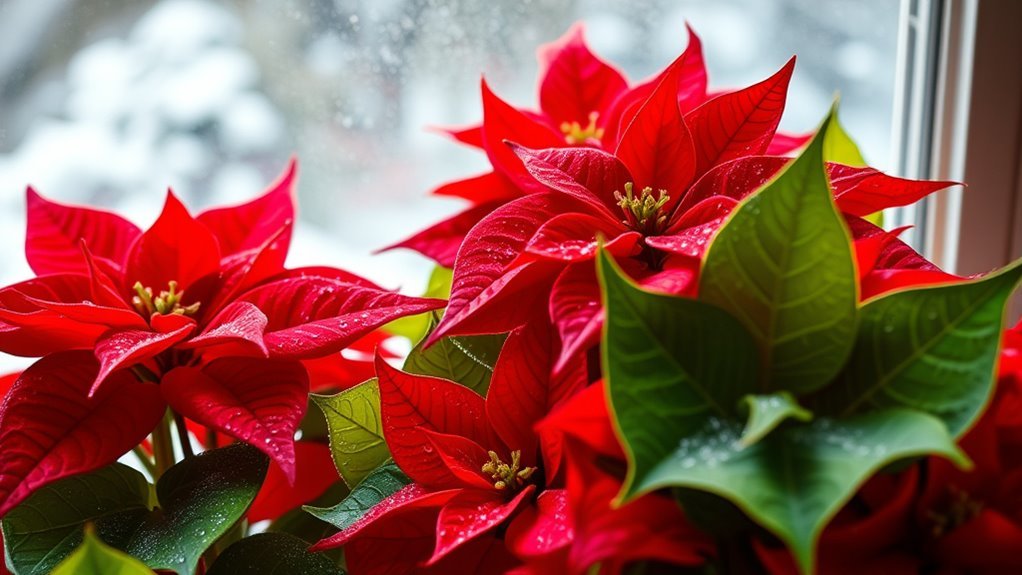
Although poinsettias can tolerate brief temperature changes, they thrive best when you keep them between 65°F and 75°F.
Poinsettias flourish when maintained in temperatures between 65°F and 75°F for optimal health.
This ideal temperature range guarantees the plant stays healthy and vibrant.
When you expose poinsettias to cold weather below 50°F, you risk weakening them, which often leads to leaf drop.
If temperatures dip under 32°F, the damage can be fatal. So, it’s essential to keep your poinsettia indoors or in a protected spot during cold spells.
Maintaining a stable climate within this range helps prevent cold stress and keeps your plant looking its best throughout the season.
Recognizing Cold Stress Symptoms
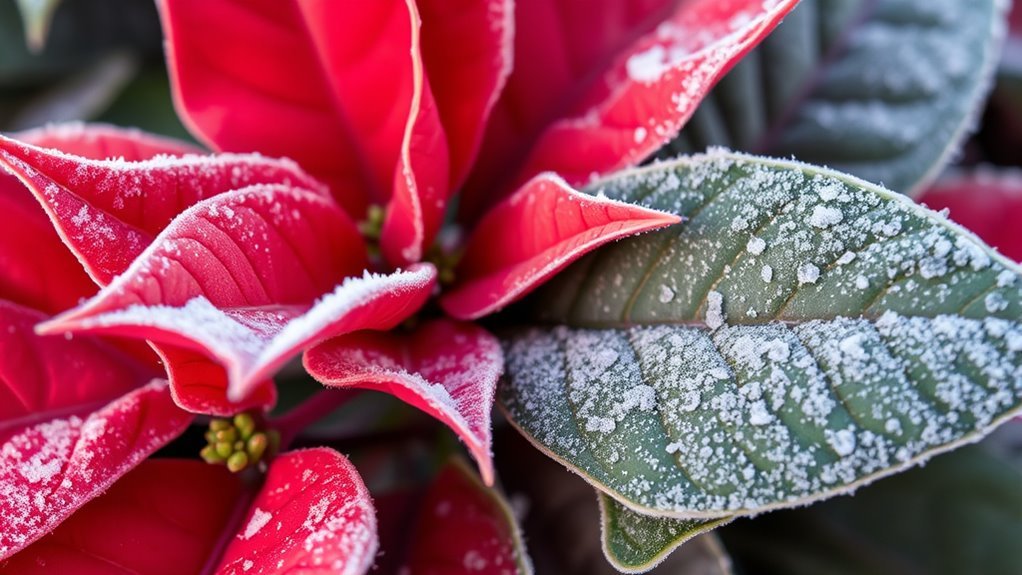
You’ll notice cold stress in your poinsettias through changes like dull or browning leaves and bracts.
Wilting and drooping leaves are clear signs they’re struggling with low temperatures.
If you see leaf drop along with these symptoms, it’s time to take action to protect your plant.
Leaf Color Changes
How can you tell if your poinsettia is suffering from cold stress?
One clear sign is a change in leaf color. When exposed to cold temperatures below 50°F, the leaves and bracts may develop yellow or brown edges.
These color shifts indicate cold damage and stress. Sudden dulling or discoloration from vibrant reds or greens often means your plant has been chilled.
Here’s a quick guide to leaf color changes caused by cold stress:
| Leaf Color Change | Temperature Range | Cold Stress Indicator |
|---|---|---|
| Bright Green | Above 60°F | Healthy |
| Pale Green/Yellow | 50°F – 60°F | Mild cold stress |
| Brown Edges | Below 50°F | Moderate cold stress |
| Yellowing Leaves | Prolonged cold | Severe cold stress |
| Leaf Drop | Continuous cold | Critical damage |
Keep an eye on these signs to protect your poinsettia effectively.
Wilting and Drooping
When poinsettias face temperatures below 50°F, their leaves often start wilting and drooping—a clear sign of cold stress.
Cold temperatures slow down the plant’s vascular system, causing a loss of turgor pressure that leads to drooping foliage.
If you notice sudden drooping after moving your poinsettia outdoors or near a draft, it’s a strong indication the plant is suffering from cold damage.
Watching for drooping leaves can help you catch cold stress early and know when to bring your poinsettia into a warmer, protected environment.
Acting quickly prevents further damage and helps your plant recover.
Browning and Leaf Drop
Beyond wilting and drooping, cold stress often shows up as browning and leaf drop in poinsettias.
When exposed to cold temperatures below 50°F, you’ll notice leaves wilting, turning brown at the edges, and falling off prematurely.
Sudden temperature drops or drafts trigger leaf drop as the plant reacts to cold damage.
If your poinsettia spends time outside in freezing or near-freezing weather, it’s especially vulnerable to these symptoms.
Recognizing signs of cold stress early helps you take quick action to protect your plant.
Here’s what to look for:
- Leaves with brown, crispy edges.
- Premature leaf drop leaving bare stems.
- Wilting leaves that quickly lose color and firmness.
Catch these signs early to help your poinsettia bounce back.
Protecting Poinsettias From Frost and Freezing
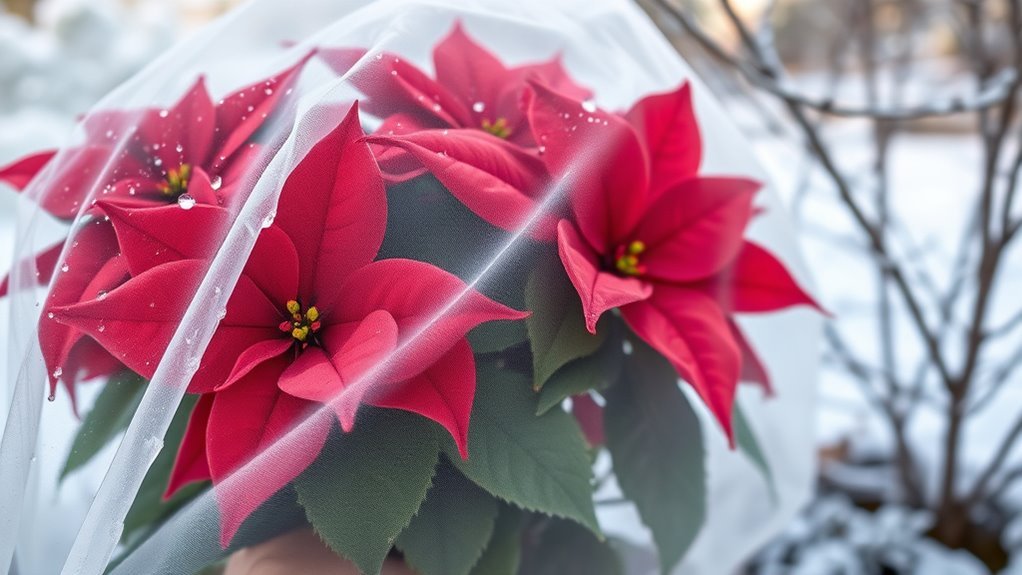
You need to protect your poinsettias from frost since freezing temperatures can damage their leaves and bracts.
Keep them indoors when it’s cold and avoid exposing them to chilly drafts.
When you take them outside briefly, use warm coverings and bring them back inside before temperatures drop below 50°F.
Frost Damage Risks
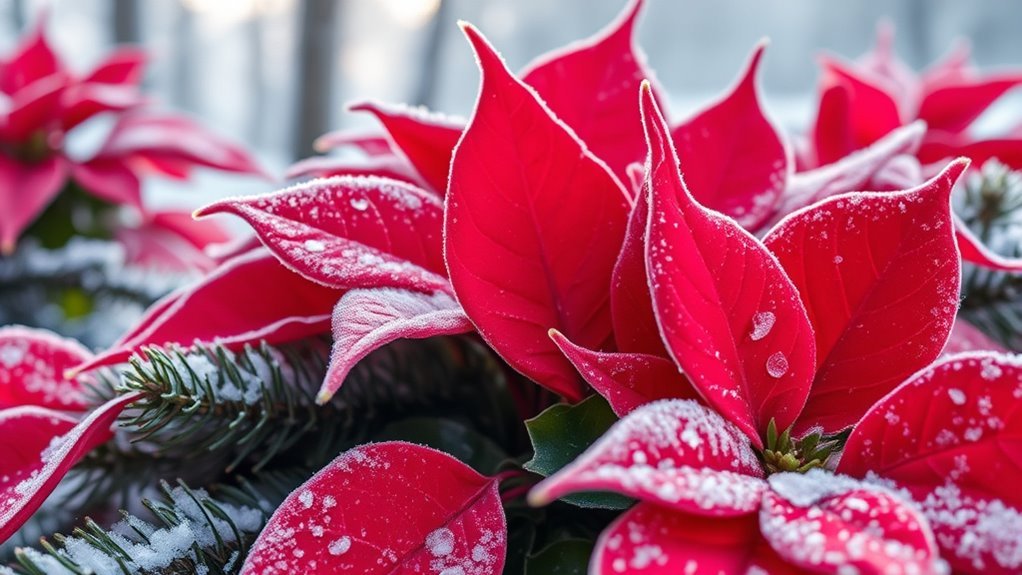
Since poinsettias are tropical plants, they can’t tolerate frost or freezing temperatures without sustaining damage.
Exposure to cold temperatures below 32°F causes frost damage by rupturing cells in leaves and stems.
This leads to blackening, wilting, and can eventually kill your plant.
To protect your poinsettia, you need to prioritize indoor placement once temperatures drop below 50°F.
Remember these key frost damage risks:
- Leaf and bract blackening from cell rupture
- Wilting due to damaged tissue
- Death if exposed to prolonged freezing
Avoid leaving your poinsettia outdoors during cold nights.
Covering it only offers limited protection.
Monitoring weather forecasts and moving your plant inside early helps you prevent irreversible frost damage.
Preventing Freeze Injury
Although poinsettias brighten your home during the holidays, they need careful protection from cold weather to avoid freeze injury.
To prevent freeze injury, bring your poinsettia indoors before temperatures dip below 50°F.
Keep it away from cold drafts and maintain a warm, draft-free space between 65°F and 75°F.
When moving poinsettias in chilly weather, wrap them with plastic or paper to shield against frost.
| Action | Reason |
|---|---|
| Bring indoors early | Avoid temperatures under 50°F |
| Use protective wrap | Insulate from frost |
| Avoid outdoor exposure | Prevent leaf and root damage |
| Keep away from drafts | Reduce cold stress |
Following these steps helps your poinsettia thrive despite cold weather challenges.
Best Practices for Outdoor Placement in Cooler Months
When temperatures drop below 50°F, you should limit your poinsettia’s outdoor time to prevent cold damage.
For best outdoor placement in cooler months, pick a sunny, sheltered spot away from drafts, wind, and cold air sources like vents or doorways.
Use protective coverings such as plastic or fabric wraps to insulate the plant during brief outdoor stays.
Follow these tips to keep your poinsettia safe in cold temperatures:
- Place it where it gets plenty of indirect sunlight during warm daytime hours.
- Keep outdoor exposure short and always bring it inside overnight if frost threatens.
- Wrap the plant before moving it outdoors to reduce chilling stress.
These practices help your poinsettia thrive despite chilly conditions.
Soil and Container Tips for Cold Weather Survival
To help your poinsettia survive cold weather, choose containers made of ceramic, resin, wood, or plastic.
Metal pots can conduct cold and damage the plant.
Use fresh, high-quality soil that resists freezing better than old or porous soil.
Also, guarantee the soil drains well to prevent waterlogging, which cold temperatures can worsen.
Place your container in a sheltered, sunny spot and avoid prolonged exposure to temperatures below 50°F.
| Container Material | Cold Weather Impact |
|---|---|
| Ceramic, Resin, Wood, Plastic | Insulates soil, protects roots |
| Metal | Conducts cold, risks root damage |
| Soil Quality | Fresh soil resists freezing better |
Choosing the right container and soil helps your poinsettia withstand chilly conditions effectively.
Watering and Humidity Management During Cold Weather
Since poinsettias thrive with slightly moist soil, you’ll want to water them only when the top inch feels dry during cold weather.
Proper watering and humidity management prevent root rot and leaf drop in cold temperatures.
Maintaining proper watering and humidity helps avoid root rot and leaf drop during chilly weather.
Use room-temperature water to avoid cold shock, especially after moving plants indoors.
Maintain moderate humidity around 40-60% to help your poinsettia stay healthy.
Here’s how you can manage watering and humidity effectively:
- Water sparingly, ensuring soil isn’t soggy but stays slightly moist.
- Mist leaves occasionally or place the pot on a pebble tray with water to boost humidity.
- Use a humidifier if indoor air feels dry during winter months.
These steps help your poinsettia handle cold temperatures by balancing watering and humidity just right.
Frequently Asked Questions
How Cold Can a Poinsettia Tolerate?
You can’t let poinsettias tolerate temperatures below 50°F without risking damage.
If it dips below 32°F, you’ll likely lose the plant.
Why Are Poinsettias Wrapped in Foil?
Like a cozy blanket on a chilly night, you wrap poinsettias in foil to keep their roots warm,
prevent moisture loss, and shield them from cold air.
This way, they stay healthy until you bring them indoors.
How to Keep a Poinsettia Alive in Winter?
You’ll keep your poinsettia alive in winter by placing it in bright, indirect light.
Make sure to maintain temperatures above 50°F.
Water only when the soil feels dry, and be careful to avoid drafts.
It’s also important to protect it from frost during outdoor moves or cold snaps.
When Should I Put My Poinsettia in the Dark?
You should start putting your poinsettia in the dark around early October, giving it 14-16 hours of uninterrupted darkness each night.
This helps trigger blooming just in time for the holiday season.
Conclusion
You’ve got to treat your poinsettias like delicate treasures when cold weather hits.
Keeping them within their ideal temperature range, avoiding frost, and managing soil moisture carefully will help them thrive.
Think of your care as a warm blanket, shielding them from winter’s chill.
With the right attention, your poinsettias won’t just survive—they’ll bloom brightly, turning cold days into festive celebrations full of life and color.
In conclusion, protecting your poinsettias during cold weather is essential for their health.
By ensuring they have the right temperature, shielding them from frost, and maintaining proper soil moisture, you create an environment where they can flourish.
So, treat your poinsettias with the care they deserve, and watch them transform your space into a vibrant winter wonderland.
With a little effort, you can enjoy their beautiful blooms all season long!