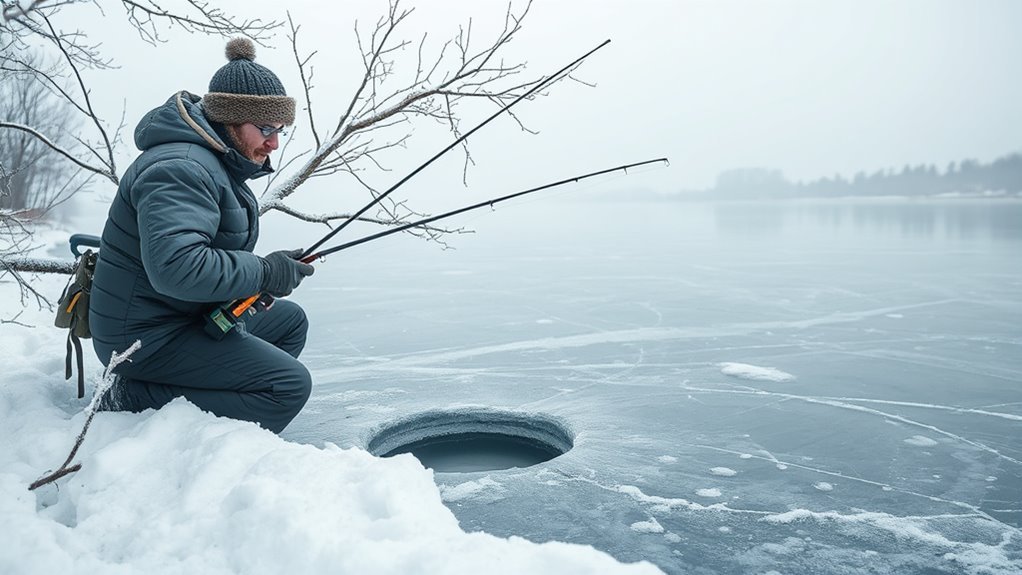
Do Crappie Bite in Cold Weather?
Yes, crappie do bite in cold weather, but they behave differently.
You’ll find them in deeper, warmer water near structures like docks, ledges, and brush piles.
They feed slower, so use light gear, small baits, and slow presentations to entice bites.
Avoid quick movements or heavy lines that can spook them.
If you adjust your technique and focus on prime winter spots, you’ll improve your catch.
Stick around to uncover more tips for winter crappie success.
Winter Crappie Activity and Behavior
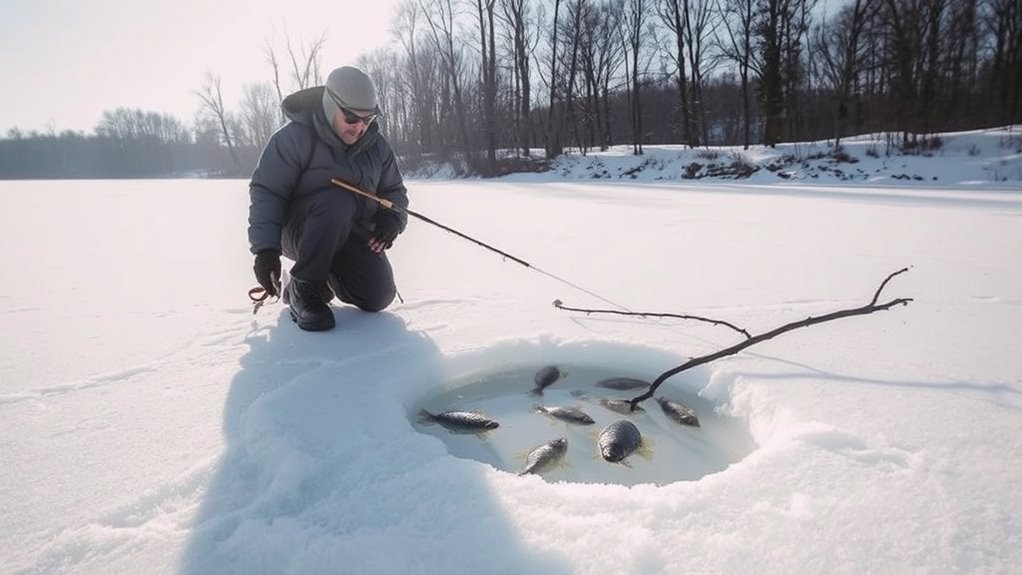
Although the water cools down in winter, crappie stay active and keep biting, especially when temperatures hover in the 50s.
Crappie remain active and bite consistently in winter, especially when water temperatures linger around the 50s.
You’ll notice winter crappie activity remains steady, even though cold water slows their metabolism.
They tend to school in deep water, where the water temperature stays a bit warmer.
Crappie often gather near structure like docks and drop-offs within the water column, which offers protection and food sources.
During cold weather, their feeding becomes more subtle. So, you’ll need sensitive gear and slow presentations close to the bottom.
The winter bite can be just as productive as spring if you adjust your approach to match their behavior in cold water.
Understanding this helps you stay successful despite the chill.
Ideal Locations and Habitat in Cold Weather
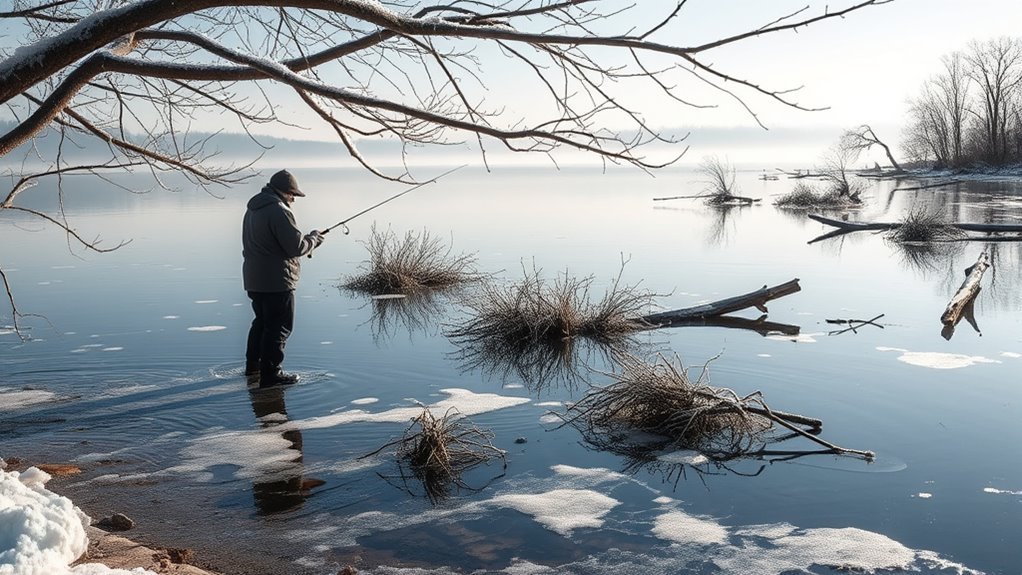
When water temperatures drop, crappie move to deep, structure-rich areas like creek channels, old riverbeds, and underwater ledges where they find shelter and food.
You’ll want to focus on deep water zones near the main lake or channel, especially around drop-offs and underwater ledges. These areas offer both cover and feeding opportunities.
Creek channels are prime spots since they provide natural structure that crappie favor in cold weather. Docks on the edge of deep water or near creek channels also serve as excellent habitat.
Don’t overlook brush piles, timber, and riprap banks—they offer essential cover.
Watching for shad near the brim of these zones can help you identify where crappie are suspending, making your cold-weather fishing more productive.
Effective Techniques and Bait Selection
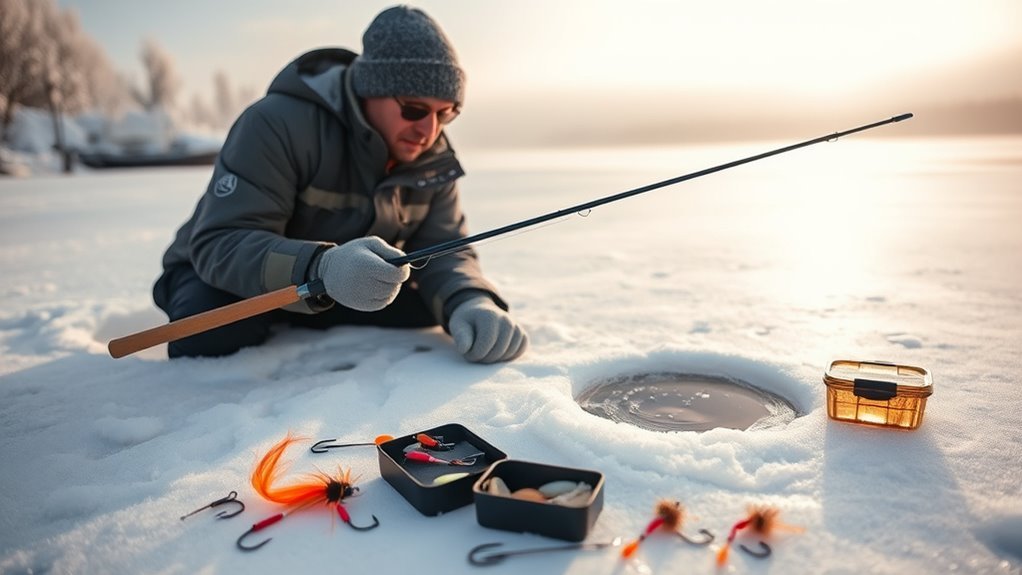
Finding the right spots is only half the battle; selecting the proper techniques and bait can make all the difference in cold-weather crappie fishing.
Choosing the right spots is crucial, but mastering techniques and bait truly elevates cold-weather crappie fishing success.
As water temperatures drop into the 50s, crappie slow down. So, you’ll want to use slow, deliberate fishing gear and methods.
Small baits like 2-inch minnows or light jigs work best, mimicking natural prey. Sometimes, live bait can be especially effective in enticing finicky crappie in chilly conditions.
Try these approaches:
- Use heavier jig heads (up to 3/8 oz.) to reach deep structures where crappie suspend.
- Employ float & fly or dead-sticking techniques with minimal movement.
- Adjust lure size and color to match crappie preferences during temperature drops.
Adapting this way boosts your chances of a successful cold-weather catch.
Common Mistakes to Avoid When Fishing in Winter
If you want to catch crappie in cold weather, steering clear of common mistakes will improve your success.
During the winter months, when the water is cold, crappie bite slows down. So, don’t fish too fast or use heavy line that can spook them.
Focus on deep channels and main lake structure instead of shallow flats or creek backs.
Don’t quit too early—patience and long hours are key because crappie often bite intermittently.
Also, don’t rely solely on visual cues; use electronics to locate fish and structure more effectively.
Finally, choose bait sizes and presentations that match the crappie’s slowed metabolism in winter.
Avoid aggressive tactics that work in warmer seasons but fail when crappie are sluggish.
Regional Differences and Seasonal Adaptations
Because crappie behavior varies widely across regions, adapting your winter fishing tactics to local conditions is essential.
Regional differences shape how crappie respond to colder water temperatures, influencing their fish movement and preferred habitats.
In some lakes, crappie stay active in deeper water near structures, while in others, they may be less accessible.
To succeed in winter fishing, consider these seasonal adaptations:
- Target deep water zones like ledges and creek channels, where crappie seek warmth.
- Focus around submerged cover and docks, prime spots during cold months.
- Study regional lake conditions to understand when and where crappie bite.
Frequently Asked Questions
How Do You Crappie Fish in Cold Weather?
You fish crappie in cold weather by targeting deeper, warmer spots like creek channels or docks.
Use sensitive gear with small jigs or minnows, and present your bait slowly to entice their less aggressive bites.
It’s all about adjusting your technique to the colder conditions.
Patience is key, as crappie may be less active when the temperature drops.
Will Crappie Bite During a Cold Front?
Yes, crappie will bite during a cold front if you adjust your approach.
Focus on deeper, warmer spots, use slow, subtle presentations, and fish after the temperature drop once they’ve settled.
Stay patient and persistent!
Is Winter a Good Time to Catch Crappie?
Winter’s like a quiet library where crappie gather in deep, warm corners.
You’ll find them biting if you’re patient, use slow presentations, and target structures.
What Temperature Do Crappie Bite Best In?
You’ll find crappie bite best when water temperatures range between 50° and 60°F.
They stay active and feed well in the high 40s, but slow down markedly below 45°F.
Conclusion
When you fish for crappie in cold weather, remember they’re still active but slower.
Studies show crappie bite rates drop by nearly 40% as water temps fall below 50°F.
To stay successful, focus on deeper, sheltered spots and use slow, subtle presentations.
Avoid common mistakes like overcasting or using flashy lures.
By adjusting your approach to winter’s challenges, you’ll increase your chances of landing those elusive cold-weather crappie.
Keep experimenting and stay patient!
In conclusion, crappie can still be caught in cold weather, but it requires a strategic approach.
Target deeper areas, use slow techniques, and steer clear of flashy lures.
With persistence and the right tactics, you can enjoy successful crappie fishing even in winter.
So gear up and get ready to tackle those chilly fishing days!