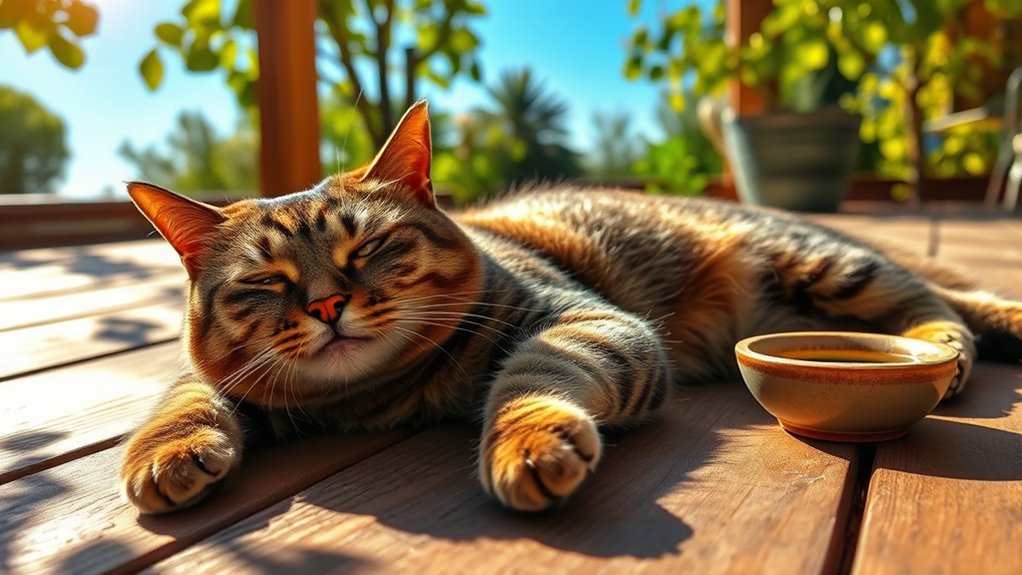
Do Cats Like Warm Weather?
You’ll notice your cat loves warm weather because it’s built into their nature.
Descended from desert ancestors, they instinctively seek cozy, sunlit spots to relax and conserve energy.
They regulate body heat by grooming and finding warm or cool surfaces, depending on their needs.
But be careful: too much heat can cause discomfort or even heatstroke.
If you want to understand how to keep your feline friend comfy and safe during warm days, there’s more to explore.
It’s essential to know the signs of overheating and how to provide adequate shade and hydration for your cat.
Remember, your furry companion thrives in warmth but also needs protection from extreme temperatures!
Why Cats Are Naturally Drawn to Warmth
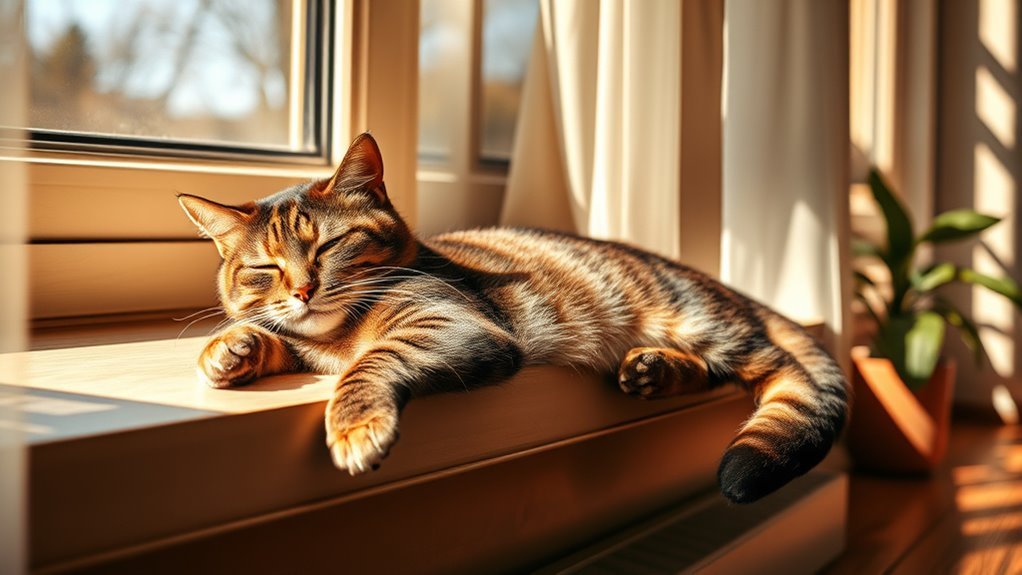
Although cats enjoy lounging in sunny spots you might find cozy, their preference for warmth goes much deeper.
Cats’ ancestors lived in hot, arid environments, so their love for heat is hardwired into their DNA.
You’ll notice your cat instinctively seeks warm places because maintaining a body temperature between 101°F and 102.5°F is vital for their comfort and health.
When they find warmth, it helps them keep their muscles relaxed and energy conserved.
Whether it’s a sunbeam, a heated surface, or a soft blanket, your cat actively seeks these spots to stay cozy and regulate their internal heat.
This natural draw to warmth isn’t just about comfort—it’s an evolutionary trait that keeps cats feeling their best.
Optimal Temperature Range for Cat Comfort
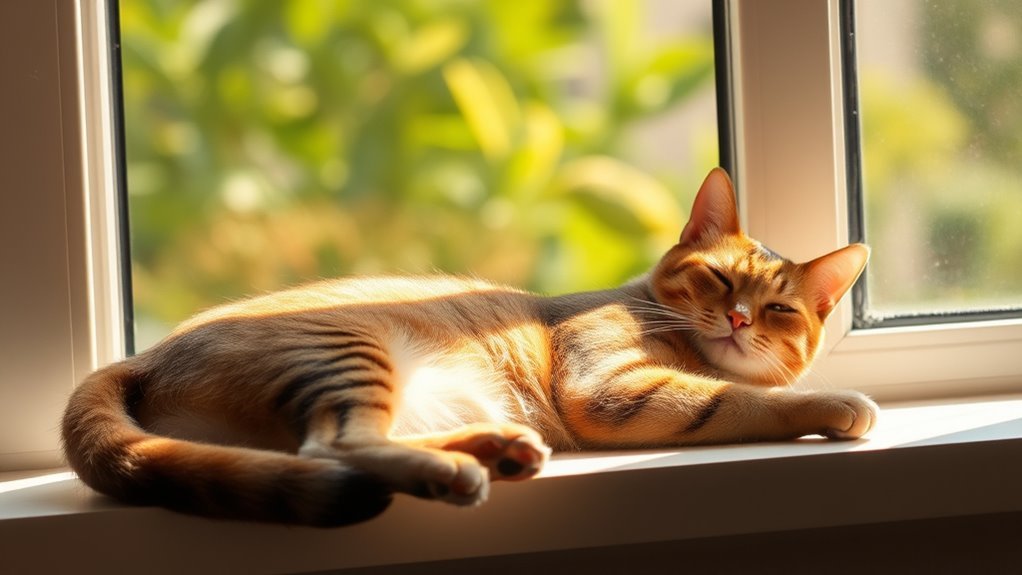
Cats naturally seek warmth because it helps them maintain their ideal body temperature, which ranges from 101°F to 102.5°F.
Understanding the essential temperature range for cat comfort is vital to keeping your feline friend happy, especially during warm weather. Here’s what you should know:
Knowing your cat’s comfort temperature range is key to their happiness and health.
The ideal temperature for cat comfort indoors is between 70°F and 80°F, providing a cozy environment.
Temperatures below 50°F can cause discomfort and health risks like hypothermia.
Cats prefer warm spots to help regulate their body temperature naturally.
Prolonged exposure to temperatures above 85°F risks overheating and heatstroke.
How Cats Regulate Their Body Temperature
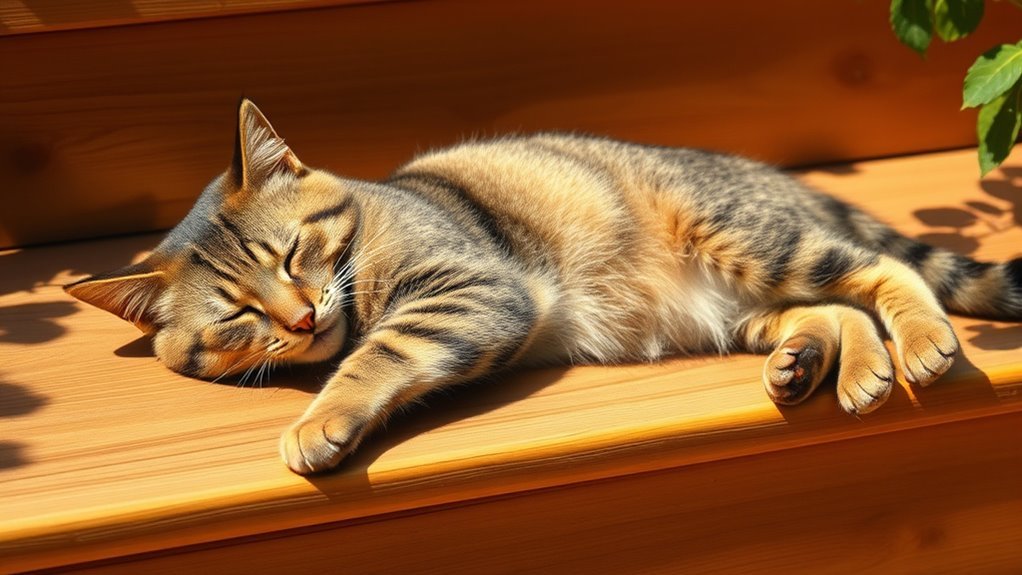
Because they have minimal sweat glands, cats rely on behaviors like sunbathing, curling up, and seeking warm spots to regulate their body temperature.
Their body temperature normally ranges from 100.5°F to 102.5°F, which is higher than humans, so they naturally prefer warmth.
Instead of sweating, cats use behavior to manage their temperature, such as slowing down activity or grooming themselves to cool off.
Their paw pads have some sweat glands, but this plays a minor role.
Cats also instinctively seek shade or cool surfaces when they need to avoid overheating.
These behaviors help cats maintain a stable body temperature, reflecting their evolutionary background from desert environments where regulating heat was essential for survival.
Understanding these behavior patterns helps you support your cat’s comfort.
Signs Your Cat Is Feeling Too Hot
You’ll want to watch for signs like excessive panting, drooling, or your cat seeking cool spots when they’re too hot.
Behavioral changes such as lethargy or loss of appetite can also signal overheating.
If you notice vomiting, seizures, or collapse, get your cat to a vet immediately.
Recognizing Overheating Symptoms
When your feline friend starts panting or drooling excessively, it’s a clear sign that their body is struggling to cope with the heat.
Recognizing overheating symptoms early can prevent serious health issues. Watch for these key signs:
- Rapid breathing and excessive drooling, since cats rarely pant normally.
- Lethargy or weakness, often paired with seeking cool or shaded spots.
- Red gums and a rapid heartbeat, which may indicate dangerous heatstroke.
- Uncoordinated movements, vomiting, seizures, or collapse, signaling critical overheating.
If you notice any of these, act quickly to cool your cat and consult a vet.
Monitoring your cat’s body temperature and behavior helps you catch overheating before it becomes severe.
Behavioral Changes When Hot
Although cats usually handle heat better than many animals, they show clear behavioral changes when they get too hot.
When hot weather makes cats feel uncomfortable, you’ll notice signs that your cat is trying to cool down or avoid heat.
These behavioral changes help you spot when your pet is overheating before it becomes serious.
| Behavioral Change | What It Means |
|---|---|
| Less active | Your cat is conserving energy |
| Seeking cool surfaces | Trying to lower body temperature |
| Excessive panting | Abnormal sign of overheating |
| Curling tightly | Reducing heat exposure |
Watch for these signs that your cat is feeling too hot.
This way, you can help them stay safe and comfortable.
Immediate Heatstroke Indicators
If your cat starts panting heavily or acting unusually lethargic, these could be immediate signs that they’re overheating.
When warm weather hits, recognizing heatstroke early is vital.
Here are key signs your cat may be too hot:
- Rapid or heavy panting, which is unusual for cats.
- Lethargy, weakness, or lack of interest in activities.
- A body that feels warm to the touch, along with red or swollen gums.
- Severe symptoms like wobbly walking, vomiting, seizures, or collapse.
If you notice any of these signs your cat is showing, act quickly.
Heatstroke worsens fast, so get veterinary help immediately to protect your feline friend.
Always make certain your cat stays cool and hydrated during warm weather.
Risks of Overheating and Heatstroke in Cats
If your cat starts panting or seems unusually lethargic, these could be warning signs of heatstroke.
You’ll want to act fast by moving them to a cooler area and gently applying cool water.
Don’t wait—getting your cat immediate veterinary care can save their life.
Heatstroke Warning Signs
When your cat shows signs like rapid breathing or lethargy, it could be suffering from heatstroke.
Overheating can quickly raise your cat’s body temperature above the safe limit, so recognizing signs of heatstroke is vital.
Watch closely for these warning signs:
- Rapid breathing or panting (which is abnormal for cats)
- Lethargy and weakness
- Vomiting, drooling, or glazed eyes
- Uncoordinated movements, seizures, or collapse
A body temperature above 102°F suggests heat stress, and over 105°F is a medical emergency.
If you notice any of these signs of heatstroke, don’t wait—your cat needs immediate veterinary care to prevent serious organ damage or death.
Being alert to overheating helps you protect your feline friend during warm weather.
Immediate Cooling Actions
Although overheating can happen quickly, you can take immediate steps to cool your cat and reduce the risk of heatstroke.
First, move your cat to a shaded area where the temperature is lower. This simple cooling measure helps prevent further heat buildup.
Next, apply cool, damp towels to your cat’s body—avoid ice-cold water or ice packs, as they can cause shock.
Offer small amounts of cool water to keep your cat hydrated, but don’t force it if your cat is vomiting or unresponsive.
Keep a close eye on your cat’s condition, and seek prompt veterinary care to prevent serious complications.
Acting quickly with proper cooling measures can make all the difference in protecting your cat from heatstroke.
Creating a Safe and Cozy Environment for Warmth
Since cats naturally seek out warmth, you can create a safe and cozy environment by providing sunlit perches, heated beds, and soft blankets.
To maintain a warm environment your cat will love, consider these steps:
- Keep indoor temperatures between 70°F and 80°F to ensure a cozy environment.
- Place insulated shelters or heated pads in quiet areas for extra warmth.
- Offer a variety of resting spots, including sunlit windowsills and shaded corners.
- Balance warm and cool areas to help your cat regulate its body temperature comfortably.
Outdoor Exposure: Managing Heat Risks
Because outdoor cats instinctively seek shade and cool surfaces in warm weather, you should provide them with shaded, well-ventilated shelters and plenty of fresh water to prevent heat stress and dehydration.
Temperatures above 85°F can quickly cause discomfort and raise the risk of heatstroke, especially for active outdoor cats or those with dark fur that absorbs more heat.
Make sure shaded spots are easily accessible throughout the day, and regularly refill water bowls to keep your cat hydrated.
Keep a close eye on signs of overheating, like excessive panting or lethargy, and bring your cat indoors if you notice these symptoms.
Managing outdoor exposure carefully helps keep your feline friend safe and comfortable during hot weather.
Psychological Benefits of Warmth for Cats
You’ll notice your cat seeks out warm spots because that heat offers comfort and a sense of security.
Warmth helps lower their stress levels and promotes relaxation, making them feel more at ease.
When your cat basks in warmth, it supports their psychological well-being and keeps them calm.
Comfort and Security
How does warmth affect your cat’s sense of comfort and security?
Warmth plays a vital role in providing your cat with psychological comfort and a feeling of safety.
When your cat curls up in a warm spot, it’s not just about physical heat but a deep sense of security that promotes relaxation.
Here’s why warmth matters:
- Cats associate warmth with comfort and shelter, creating a secure environment.
- Warm resting areas fulfill their instinctive need for cozy, safe spaces.
- Seeking sunny or heated spots mimics their natural habitats, boosting comfort.
- This sense of security reduces anxiety, allowing your cat to relax fully.
Stress Reduction Effects
While cats naturally seek warmth, this behavior does more than just keep them cozy—it substantially reduces their stress levels.
When you provide your cat with warm spots, you offer them comfort and a safe environment that lowers anxiety.
Warmth helps decrease cortisol, the stress hormone, promoting relaxation and improving mood.
This psychological benefit enhances your cat’s overall happiness and can reduce stress-related behaviors.
| Benefit | Explanation |
|---|---|
| Stress Reduction | Warmth lowers cortisol, easing anxiety |
| Comfort | Warm spots create a secure, soothing space |
| Relaxation | Cats feel calmer and more peaceful |
| Emotional Well-being | Warmth boosts mood and happiness |
| Behavioral Improvement | Less stress leads to fewer stress-induced issues |
Warmth and Relaxation
Because cats instinctively seek warmth, providing cozy, heated spots helps them feel secure and relaxed.
You can enhance your cat’s relaxation by offering warmth in these ways:
- Place heated beds in quiet, sunny areas to create a cozy retreat.
- Encourage your cat to nap near sunlit windows for natural warmth.
- Use soft blankets or pads that retain heat, boosting comfort.
- Avoid cold drafts or chilly floors that may cause stress.
Warmth isn’t just physical—it triggers psychological comfort rooted in your cat’s wild ancestry, where heat meant safety.
When your cat feels cozy and warm, you’ll notice less anxiety and more contentment.
When to Seek Veterinary Help for Heat-Related Issues
If your cat shows signs like excessive panting, vomiting, or lethargy during hot weather, you should seek veterinary help immediately.
These symptoms could indicate heatstroke, a serious condition that requires prompt attention. Other signs of distress include glazed eyes, rapid heartbeat, difficulty breathing, or seizures.
Dehydration is another critical issue to watch for, often accompanying heat-related illnesses.
If your cat suddenly behaves abnormally, becomes unresponsive, or persistently seeks heat sources, contact your vet without delay.
Early intervention can prevent complications and ensure your cat recovers quickly. Remember, heat-related problems can escalate fast, so don’t hesitate to get professional help if you notice any concerning symptoms in warm weather.
Your vigilance could save your cat’s life.
Tips for Keeping Your Cat Comfortable During Warm Weather
Protecting your cat from heat-related issues starts with creating a comfortable environment during warm weather.
To keep your cat’s body temperature stable and comfortable, follow these tips:
- Provide shaded, cool spots like tiled floors or use fans to help your cat cool down.
- Ensure constant access to fresh, cool water; water fountains can encourage hydration.
- Avoid leaving your cat in parked cars or outdoors during peak heat hours (10 am to 3 pm) to prevent overheating.
- Offer cool, breathable bedding and limit outdoor activity during the hottest parts of the day.
Frequently Asked Questions
Do Cats Like Being in Hot Weather?
You’ll find cats enjoy warm weather but not extreme heat.
They’ll seek cozy spots between 70°F and 80°F.
But when it gets too hot for comfort, they avoid overheating by finding shade or cooler places.
Do Cats Prefer Heat or Cold?
When you see your cat curling up on a sunny windowsill, you know they prefer heat over cold.
They naturally seek warmth to stay comfortable, avoiding chilly spots that can make them shiver or feel uneasy.
It’s quite common to find them basking in the sun, soaking up those rays.
After all, who wouldn’t want to be cozy and warm?
What Temperature Is Too Hot for a Cat?
You should consider temperatures above 85°F (29°C) too hot for your cat.
Prolonged heat over 90°F (32°C) risks heatstroke.
What Is the 3-3-3 Rule for Cats?
The 3-3-3 rule means you keep your new cat in a small space for 3 days.
Then, you slowly introduce bigger areas over the next 3 weeks.
This approach helps them adjust without stress and feel safe in their new home.
Conclusion
Cats crave cozy corners and sun-soaked spots, savoring the soothing sensation of steady, snuggly warmth.
While they naturally nestle near heat, you should stay sharp for signs of stress from soaring temperatures.
Safeguard your furry friend by supplying shade, sipping water, and steering clear of scorching sun.
By balancing brightness and breezes, you’ll help your cat comfortably conquer the climate.
It’s all about keeping their contentment and curiosity clear and carefree!
In conclusion, cats do enjoy warm weather, but it’s essential to ensure their comfort.
Providing shade, fresh water, and monitoring their behavior can help prevent heat-related stress.
By creating a cozy environment that balances warmth with cooling breezes, you can keep your cat happy and healthy during the warmer months.
Remember, your furry friend relies on you to make their sunny days enjoyable!