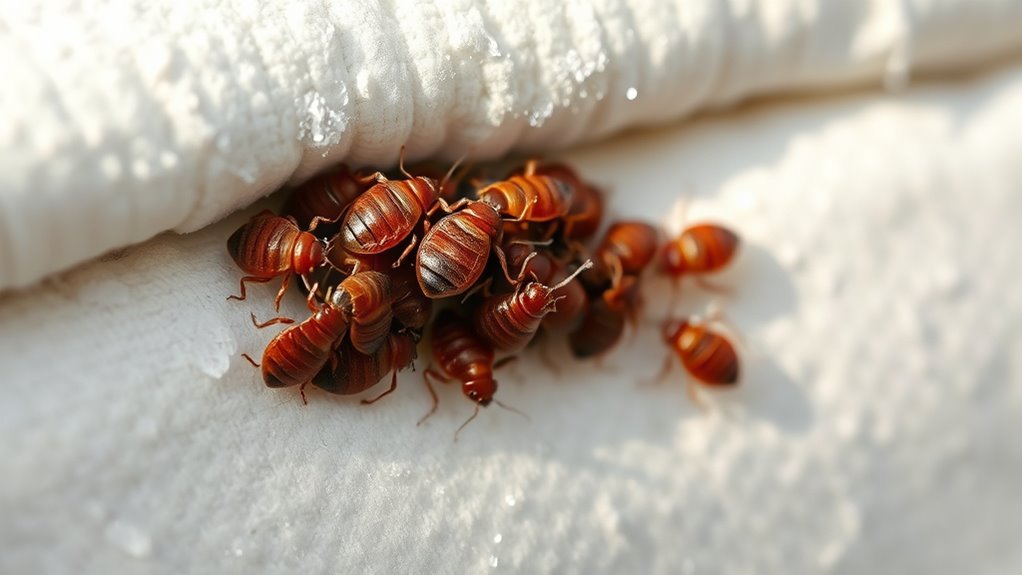
Do Bed Bugs Survive Cold Weather and How to Kill Them
Bed bugs can survive cold weather, especially indoors, because your home’s warmth keeps them active year-round.
Simply relying on outdoor cold won’t kill them, since they hide in cracks and insulated spots.
To effectively kill them, you need sustained freezing at or below 0°F for several days or heat treatments that raise temperatures above 119°F for a set time.
Proper control takes more than just low temperatures—there’s more to uncover about keeping these pests away.
Can Bed Bugs Live in Cold Temperatures?
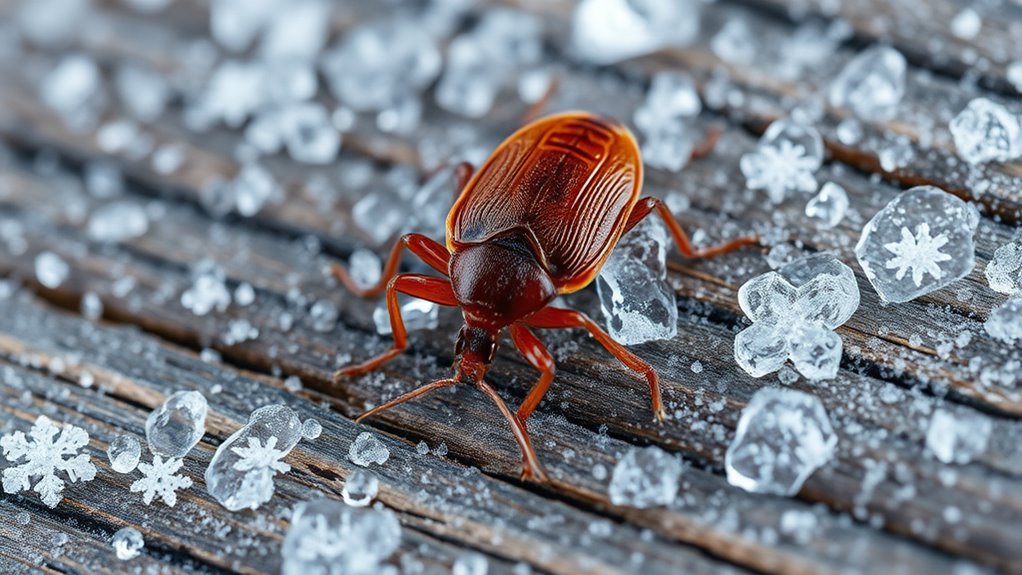
Although cold temperatures can slow them down, bed bugs can survive in surprisingly low temperatures.
You might think freezing bed bugs is easy, but they endure cold temperatures as low as -13°F (-25°C) briefly because their bodily fluids resist freezing.
However, surviving extreme cold depends on duration. To effectively kill bed bugs and their eggs, you need prolonged exposure to temperatures below 0°F (-18°C) for at least four days.
Effective bed bug eradication requires keeping temperatures below 0°F for at least four days.
Simply encountering cold weather or short bursts of freezing isn’t enough to eliminate them.
Since bed bugs prefer warm, moist indoor environments, they remain active unless subjected to sustained extreme cold.
How Cold Affects Bed Bug Survival
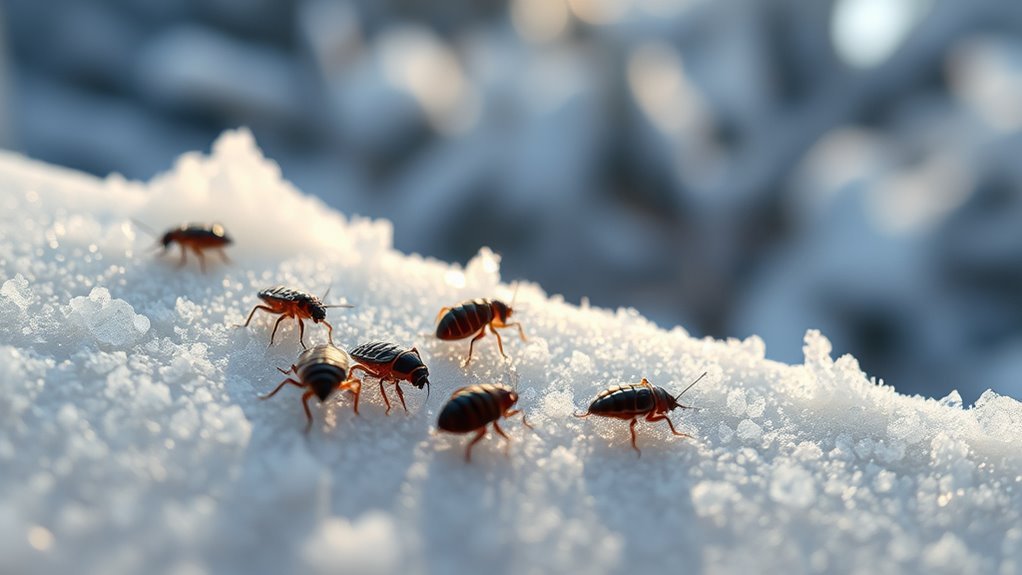
When temperatures drop below 46°F (8°C), bed bugs start to struggle. If they face 14°F (-10°C) or colder for several days, most won’t survive.
Bed bug survival depends heavily on how long they’re exposed to cold temperatures near or below the freezing point. While some bed bugs can endure brief spells as low as -13°F by lowering bodily fluids, prolonged exposure to freezing conditions is usually lethal.
To effectively kill bed bugs, cold treatment requires maintaining 0°F (-18°C) or lower for at least four days. This ensures all life stages perish.
Keep in mind, outdoor freezing rarely works since ambient temperatures don’t stay consistently cold enough. Understanding how cold affects bed bugs helps you choose proper cold treatment to eliminate infestations.
Why Bed Bugs Don’t Die Off Naturally in Winter
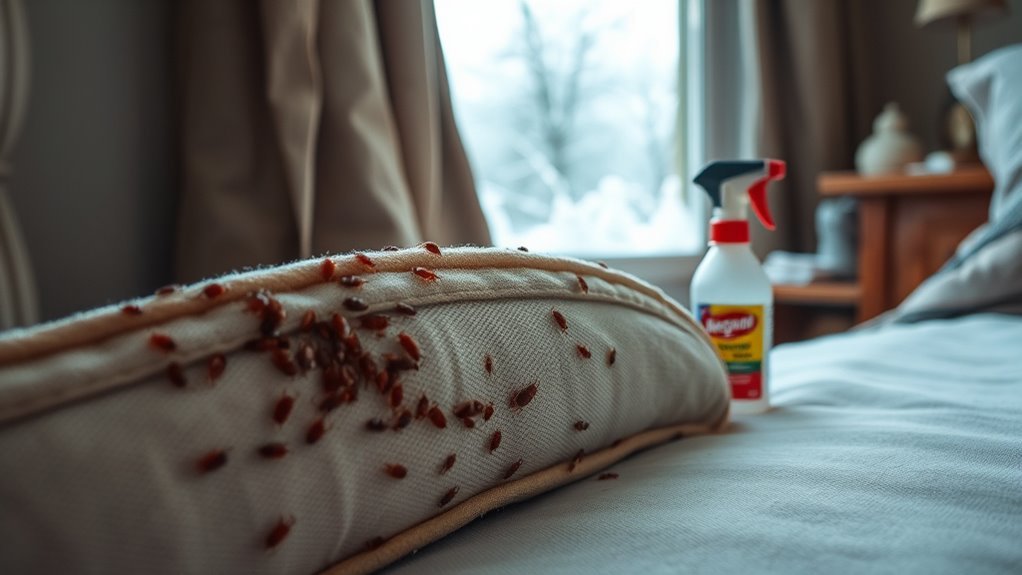
You might think winter would wipe out bed bugs, but indoor warmth keeps them safe and active.
Since your home stays heated, bed bugs continue feeding and reproducing without pause.
This steady environment stops winter from naturally controlling their population.
Indoor Warmth Protection
Because indoor heating keeps your home warm, bed bugs don’t face the natural cold that would normally reduce their numbers in winter.
This indoor warmth creates a stable environment where bed bugs find perfect shelter in cracks, furniture, and behind baseboards.
Thanks to insulation and consistent heat, these pests avoid the extreme cold that could kill them.
Since they don’t need to endure harsh outdoor temperatures, bed bug survival rates stay high throughout the year.
To effectively eliminate them, you’ll need targeted heat treatment that raises temperatures beyond what typical home heating offers.
Understanding how indoor warmth protects bed bugs helps you recognize why they persist in winter and why professional heat treatments are essential to control and eradicate infestations.
Continuous Reproduction Cycle
Although cold weather slows many pests, bed bugs keep reproducing indoors throughout winter since they never truly hibernate.
Their continuous reproduction cycle thrives in stable indoor temperatures where they feed regularly on blood.
Unlike other insects, bed bugs don’t die off naturally with the season; they remain hidden in cracks and furniture close to you.
This seasonal survival strategy means you must stay vigilant with infestation control year-round, not just in warm months.
| Factor | Explanation |
|---|---|
| Reproduction Cycle | Continuous, fueled by regular blood meals |
| Indoor Temperatures | Consistently warm, enabling activity |
| Seasonal Survival | No dormancy, active all year |
| Habitat | Cracks, furniture, and wall voids indoors |
| Infestation Control | Needed year-round due to constant reproduction |
Effectiveness of Freezing as a Bed Bug Control Method
You need to freeze bed bugs at 0°F (-18°C) for at least four days to kill all life stages effectively.
However, most household freezers can’t maintain that temperature long enough or deep enough to guarantee complete eradication.
Understanding these temperature requirements and practical limits is key before relying on freezing as a control method.
Freezing Temperature Requirements
When you freeze bed bugs, you need to maintain temperatures at or below 0°F (-18°C) for at least four days to kill all life stages, including eggs.
This freezing temperature is critical because bed bugs can survive short cold exposures. So, only prolonged cold treatment ensures effective bed bug eradication.
To kill bed bugs thoroughly, the entire infested item must reach and hold this temperature, especially the core.
While home freezers might work if they consistently stay below 0°F, they don’t always maintain this level long enough.
Specialized methods, like liquid CO2 snow, deliver rapid freezing that reliably kills bed bugs without damaging belongings.
Practical Freezing Limitations
Meeting the required freezing temperatures is only part of the challenge in using cold to eliminate bed bugs.
You must guarantee the entire infested item, especially its core, stays below 0°F (-18°C) for at least four days.
Household freezers often can’t maintain these cold temperatures uniformly, limiting freezing’s effectiveness.
Also, improper sealing exposes bed bugs to temperature fluctuations and moisture, reducing treatment success.
Professional treatments rely on specialized equipment to overcome these limitations.
| Factor | Impact on Freezing Effectiveness |
|---|---|
| Freezer Temperature | Often not cold enough or consistent |
| Duration of Exposure | Needs at least 4 days below -18°C |
| Item Sealing | Airtight bags prevent temperature shifts |
| Equipment Used | Specialized gear ensures reliable cold |
Understanding these treatment limitations helps you decide if freezing fits your bed bug control plan.
Heat Treatments for Eliminating Bed Bugs
How can you effectively eliminate bed bugs without chemicals?
Heat treatments offer a reliable solution. By raising temperatures to at least 119°F (48°C), you ensure adult bed bugs die.
Heating above 125°F (52°C) targets their eggs. Pest control services use specialized equipment to heat entire rooms to around 135°F (57°C) for 20-30 minutes, guaranteeing no bed bugs survive—even those hidden in cracks.
Unlike cold weather, which often fails to maintain lethal temperatures consistently, heat treatments provide controlled, uniform warmth that’s lethal to all life stages of bed bugs.
You can also wash bedding and clothing in hot water at 130°F or higher, then dry on high heat to kill bugs on personal items.
DIY heat treatments aren’t recommended due to temperature inconsistencies, so professional assistance is best.
Common Hiding Spots for Bed Bugs During Cold Months
Although temperatures drop outside, bed bugs stay close to you by hiding in warm indoor spots.
You’ll find their preferred hiding spots in mattress seams, box springs, and upholstered furniture near where you sleep or rest.
They squeeze into cracks and crevices like bed frame joints, headboards, and behind picture frames.
Bed bugs also lurk behind baseboards, electrical outlets, and wall trim, where indoor warmth lingers.
Even stored belongings like clothing and luggage kept inside warmer rooms serve as convenient shelters.
| Location Type | Examples | Reason for Hiding |
|---|---|---|
| Mattress & Furniture | Mattress seams, upholstery | Close to host, warmth retained |
| Structural Cracks | Bed frame joints, crevices | Small, hidden spaces |
| Wall Areas | Baseboards, outlets, trim | Stable warmth, out of sight |
| Stored Items | Clothing, luggage | Warm indoor storage |
| Behind Frames | Picture frames, headboards | Dark, tight spaces |
Signs of a Bed Bug Infestation in Winter
Since bed bugs stay active indoors during winter, you might notice signs of an infestation despite the cold outside.
Look for itchy bites on your skin, especially after sleeping.
Check your bedding for small dark droppings, blood smears, or shed skins—these are clear signs bed bugs are present.
Tiny white eggshells near mattress seams or cracks around your sleeping area also indicate an infestation.
Bed bugs often hide behind headboards and inside upholstered furniture during winter, so inspect these spots closely.
Additionally, a musty odor in your bedroom can signal a significant bed bug infestation.
Preventing Bed Bug Infestations During Winter Travel
When you travel during winter, you need to be extra cautious about bed bugs hiding in hotel mattresses and furniture.
These pests can survive cold conditions by sheltering in cracks and crevices, making infestations hard to spot.
Before settling in, inspect mattress seams and furniture thoroughly.
Don’t place your luggage on beds or upholstered surfaces; keep bags elevated to avoid contact with bed bugs.
Use protective plastic covers on your suitcases to prevent hitchhiking.
After your trip, vacuum your luggage, wash clothes in hot water, and heat-treat bags to kill any pests.
If you spot bed bugs, report them to hotel management immediately and consider changing rooms to reduce the risk of spreading the infestation during your winter travel.
Professional Bed Bug Treatment Options and Benefits
Handling bed bugs during winter travel can be challenging.
But professional treatment options offer effective solutions to eliminate these pests completely.
Certified Pest Management experts employ advanced cold treatments, like freezing infested items at -30°F, and heat treatments reaching 119°F to kill all bed bug life stages, including eggs.
They use specialized equipment such as CO2 snow and industrial heaters to target hidden pests in cracks, wall voids, and furniture.
This thorough bug treatment approach ensures no bed bug problem goes unnoticed or untreated.
Professionals also combine temperature methods with residual pesticides for maximum effectiveness while ensuring your safety.
Plus, follow-up inspections reduce the risk of re-infestation, giving you peace of mind and a pest-free home throughout winter and beyond.
Frequently Asked Questions
How Long Does It Take to Kill Bed Bugs in a Cold?
It takes at least four days at 0°F (-18°C) to kill bed bugs completely.
You’ll need to guarantee the item’s core stays that cold the whole time.
Otherwise, freezing may take even longer.
What Kills Bed Bugs Instantly?
Picture steam swirling at 180°F, instantly scorching bed bugs and eggs on contact.
You can also zap them with heat over 119°F.
Or, use liquid CO2 snow—it freezes and kills those pests immediately.
What Cold Temperature Kills Bed Bugs?
You need temperatures at or below 0°F (-18°C) for at least four days to kill bed bugs completely.
Colder temps, like -30°F (-34°C), can kill them faster.
But remember, prolonged exposure is key to success.
What Do Bed Bugs Hate the Most?
You’ll find that bed bugs hate extreme cold, strong chemical odors, and intense light or heat the most.
Using diatomaceous earth or natural repellents like neem oil can help you keep them away effectively.
Conclusion
Just like a stubborn winter frost that won’t vanish with the first chill, bed bugs cling on through cold spells, hiding in shadows and cracks.
But you hold the warmth—the power of heat treatments and careful prevention—to melt away their grip.
Don’t let these tiny invaders turn your home into a cold war zone.
Act decisively, and you’ll bring back comfort and peace, thawing out the menace for good.
In conclusion, bed bugs can indeed survive cold weather, but you have effective strategies to eliminate them. By utilizing heat treatments and maintaining preventive measures, you can ensure that these pests don’t disrupt your home.
Stay vigilant during colder months, and don’t hesitate to act if you suspect an infestation. By taking timely action, you’ll restore your home’s comfort and keep bed bugs at bay. Remember, warmth is your ally in this battle!