Can You Stain Wood in Cold Weather?
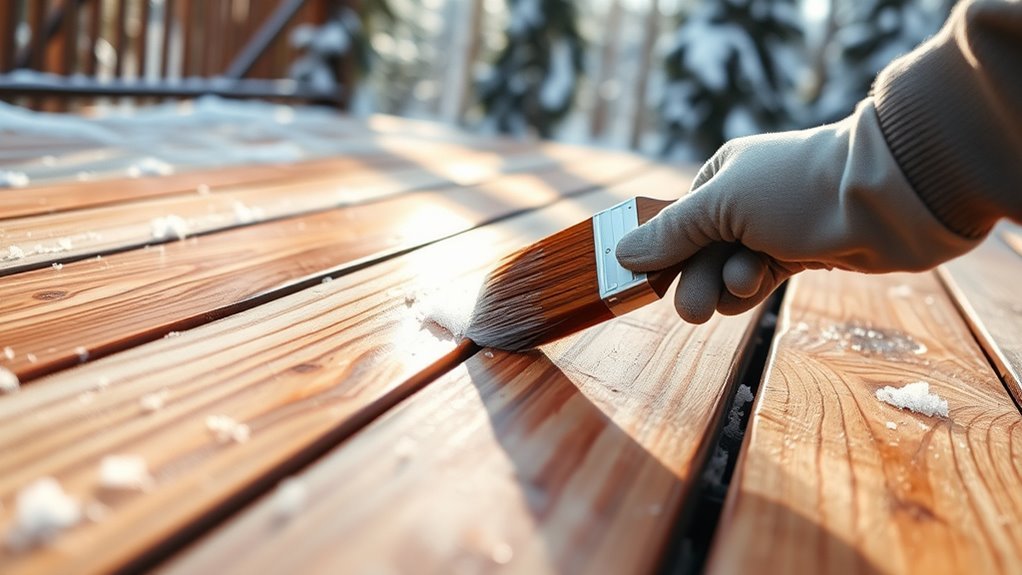
You can absolutely stain wood in cold weather, but there are a few important things to keep in mind.
For proper adhesion and drying, it’s crucial to maintain a temperature between 50°F and 90°F.
Oil-based stains tend to perform better in temperatures below 50°F, while water-based stains can struggle a bit in the cold.
To ensure the best results, prepare the wood by warming it up and applying thin coats. This approach helps prevent any uneven finishes from forming.
Patience is vital, as drying times can slow down significantly in colder conditions.
Also, be mindful of safety when using heaters to warm the space.
If you really want to achieve the best results, there’s a bit more to consider when staining in chilly weather.
Best Temperature Range for Staining Wood
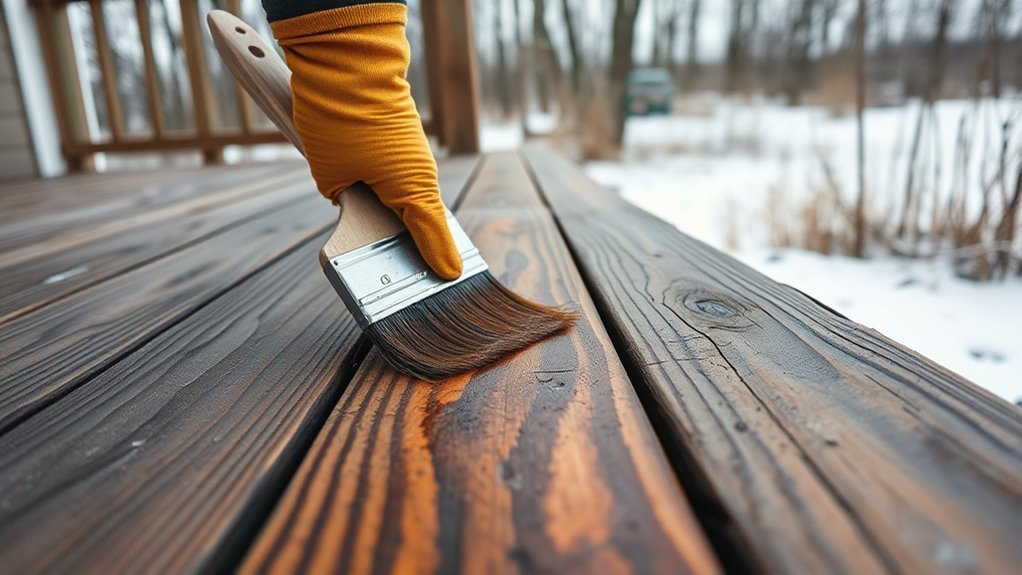
Although you can technically stain wood in a variety of temperatures, the best results come when you work between 50°F and 90°F (10°C to 32°C).
For optimal staining, work in temperatures between 50°F and 90°F for even absorption and drying.
This ideal temperature range ensures the stain absorbs evenly and dries properly.
When the weather dips below 50°F, staining wood becomes tricky because cold temperatures slow drying and may prevent the stain from penetrating fully.
On the other hand, if it’s hotter than 90°F, the stain can dry too quickly, causing streaks and poor adhesion.
For perfect staining, aim for about 70°F, which balances proper curing and appearance.
Types of Wood Stains Suitable for Cold Weather
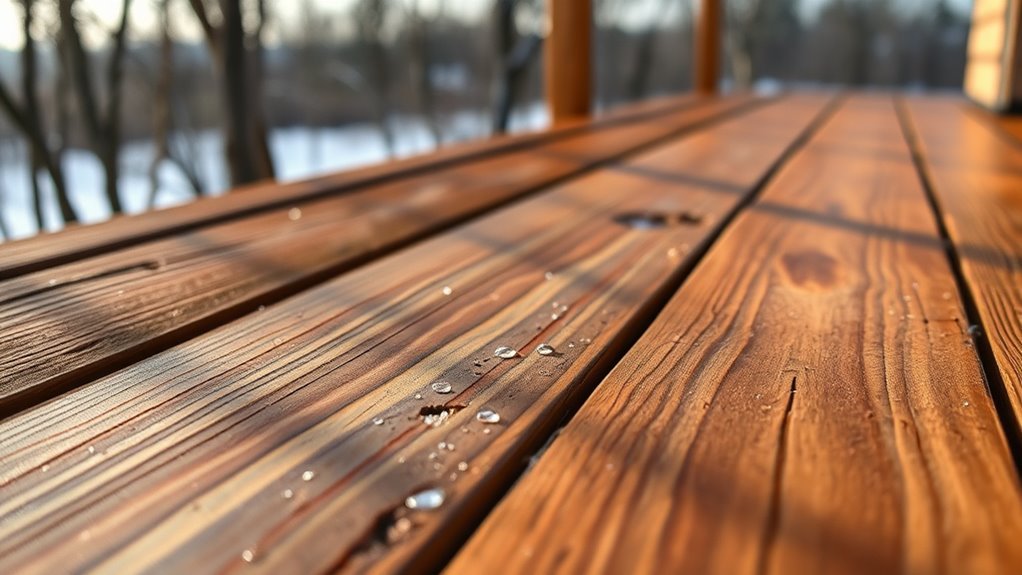
When staining wood in cold weather, you’ll want to choose an oil-based stain because it dries well even at temperatures as low as 35°F.
Water-based stains don’t perform as reliably since they depend on water evaporation, which slows or freezes in the cold.
You can also find cold-weather stain formulas designed to cure effectively below the usual 50°F threshold.
Oil-Based Stain Benefits
Because oil-based stains penetrate deeply into wood fibers, they perform exceptionally well in cold weather.
You’ll find that an oil-based stain resists freezing temperatures and can be applied even when it’s as cold as 35°F.
Unlike water-based options, oil stains don’t rely on water evaporation to dry, so their drying time isn’t profoundly affected by low temperatures.
This slower curing process actually improves absorption and adhesion, giving you more working time to ensure even coverage.
When you use oil-based stains in cold weather, they bond well with the wood, resulting in a durable, long-lasting finish.
Water-Based Stain Limitations
Water-based stains struggle to perform well in cold weather and often need temperatures above 50°F to bond and absorb properly.
If you apply water-based stains in colder temperatures, you risk adhesion problems because the stain won’t cure correctly.
Cold temperatures can cause the drying time to either drag on or, paradoxically, dry too quickly, leading to uneven color and finish issues.
Freezing conditions can halt the curing process altogether, increasing the chance of peeling or cracking later.
To avoid these issues, always check the temperature for staining and avoid applying water-based stains below the recommended range.
Otherwise, you might end up with a finish that lacks durability and requires redoing sooner than expected.
Cold-Weather Stain Formulas
Although staining wood in cold weather presents challenges, choosing the right stain formula can make all the difference.
Cold-weather stain formulas, especially oil-based stains, perform well at temperatures as low as 35°F.
Unlike water-based stains, they don’t rely on evaporation to dry. This allows the stain to fully cure even in cold conditions.
As a result, it improves adhesion and durability during the staining process.
| Stain Type | Temperature for Staining Wood |
|---|---|
| Oil-Based Stains | Effective down to 35°F |
| Water-Based Stains | Struggle below 50°F |
| Cold-Weather Formulas | Enhanced penetration and drying |
Using oil-based or specialized cold-weather products guarantees your stain cures properly.
This helps prevent issues caused by low temperatures.
How Cold Weather Affects Wood Stain Performance
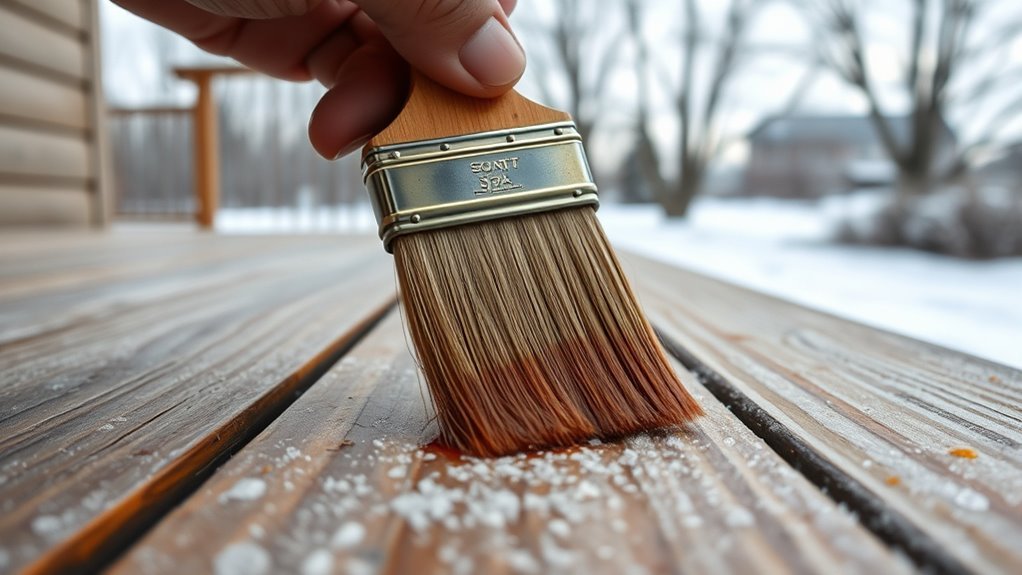
When temperatures drop below 50°F, you’ll notice wood stain takes much longer to dry and cure. This can disrupt your project timeline.
Cold weather impacts stain performance in several ways, mainly by slowing drying time and altering wood absorption.
These temperature effects can cause uneven coverage and surface issues.
Here’s how cold weather affects your wood stain:
- Stain penetration slows down, leading to blotchy or patchy finishes.
- Freezing conditions may cause the stain to delaminate, peeling or cracking off the wood.
- Water-based stains struggle more with bonding, while oil-based stains resist cold weather delays better.
Understanding these factors helps you manage stain performance effectively during chilly conditions.
Preparing Wood for Staining in Cold Conditions
Cold temperatures can seriously affect how well your stain adheres and dries, but proper preparation can help you avoid common issues like blotchy finishes or peeling.
To prepare wood for staining in cold weather, start by making certain the surface is clean, dry, and free of dust or debris.
Temperature control is vital—warm the wood to at least 50°F using a space heater or infrared lamp before stain application.
If you’re working indoors, pick a heated, enclosed space like a garage to maintain consistent warmth.
Avoid staining if the ambient temperature dips below 50°F or if rain or freezing weather is expected within 48 hours.
Also, pre-warm your stain containers by placing them in warm water or bringing them indoors to ensure smooth flow and better penetration during staining in cold conditions.
Techniques for Applying Stain in Low Temperatures
Before you start staining, make sure the wood surface is clean and dry to help the stain absorb properly.
Keep your workspace warm with heaters or tarps to maintain at least 50°F. This prevents the stain from thickening or freezing.
Applying thin coats will speed up drying and give you a smoother finish even in cold weather.
Preparing Wood Surfaces
Although low temperatures can complicate staining, you can still achieve a smooth finish by properly preparing the wood surface.
Successful wood surface preparation in cold weather focuses on maximizing stain absorption and ensuring the wood is ready to accept the finish.
Follow these steps:
- Make sure the wood is a clean, dry surface, free from dust, dirt, or moisture to promote even stain absorption.
- Warm the wood to at least 50°F using a space heater or heat gun. This helps the stain penetrate and cure properly.
- Apply thin coats of stain evenly with a brush or sprayer suited for cold conditions. This prevents blotchiness and speeds up drying.
Controlled Heating Use
When you apply stain in low temperatures, using controlled heating techniques can make all the difference in achieving a durable, even finish.
You can raise the ambient temperature around your wood by using heat lamps or space heaters, ideally keeping it between 50-90°F.
This helps the stain cure properly without risking it to dry too quickly, which can lead to uneven results.
To maintain consistent warmth, consider tarping or enclosing your work area, preventing heat loss during application and drying.
Building a temporary heated enclosure, like a plastic tent with a heat source, creates a controlled environment that supports better stain penetration.
Just be sure to apply heat gradually and carefully, so you avoid damaging the wood or causing uneven drying while ensuring a smooth, long-lasting finish.
Thin Coat Application
Since cold weather slows drying, you should apply thin coats of stain to guarantee better penetration and faster curing.
Thin coats reduce drying time issues and prevent moisture from getting trapped, which helps avoid uneven finishes or delamination.
For effective stain application in low temperatures, follow these tips:
- Use a brush or sponge to control the amount of stain, avoiding excess buildup that prolongs drying time.
- Allow each thin coat to dry completely before applying the next to prevent blotchiness.
- Maintain a warm environment, like a heated garage or heat lamps, to speed up drying and improve stain absorption.
Managing Drying and Curing Times in Cold Weather
Because cold weather can double the drying and curing times of wood stain, you need to adjust your expectations and plan accordingly.
When temperatures dip below 50°F, stain won’t properly adhere, and drying slows as evaporation decreases. This can lead to uneven finishes or peeling later.
To manage this, aim to maintain the ambient temperature between 50-90°F during and after application.
Using oil-based stains helps since they rely on solvent evaporation and resist freezing better in cold conditions.
If possible, cautiously use space heaters or heat lamps to boost temperature and speed drying, but always prioritize safety.
Patience is key—allow extra time for both drying and curing to ensure the stain bonds deeply and lasts despite the cold.
Tips for Protecting and Maintaining Stained Wood in Cold Climates
Although cold temperatures challenge the durability of stained wood, you can protect and maintain it effectively with the right approach.
When you stain in cold weather, it’s crucial to consider the temperature and weather forecast to guarantee proper application and longevity.
Here are three key tips to help you maintain your wood in cold weather:
- Use high-quality, cold-weather-rated stains and sealants to improve adhesion and resistance against moisture and UV damage.
- Regularly inspect and reapply protective finishes, especially before harsh weather arrives, to keep the wood sealed and durable.
- Store stained wood indoors or in heated enclosures during freezing temperatures to prevent cracking and uneven curing.
Taking these steps can make a big difference in how your stained wood holds up over time!
Frequently Asked Questions
What Happens if You Stain Below 50 Degrees?
If you stain below 50 degrees, the stain dries slowly, causing uneven color and poor adhesion.
You’ll likely see peeling or cracking, making the finish less durable.
This can ruin your wood’s appearance over time.
Is October Too Late to Stain a Deck?
October can be too late to stain your deck if temperatures drop below 50°F.
Check local forecasts and aim to stain during warmer daytime hours.
Using oil-based stains can help improve absorption and drying for a lasting finish.
Does It Hurt Wood Stains to Freeze?
Yes, it does hurt wood stains to freeze;
it thickens, clumps, and separates them.
This damages their chemical makeup,
and reduces adhesion and durability.
So, you should keep stains above freezing
to maintain their quality and effectiveness.
Where to Stain Wood in Winter?
You should stain wood in a heated garage or enclosed space where temperatures stay between 50°F and 90°F.
If you’re working outdoors, pick the warmest part of the day.
Also, make sure to protect the wood from moisture and drafts.
Conclusion
You might worry that cold weather will ruin your staining project, but with the right approach, it won’t.
Imagine a chilly morning where, despite the frost, your wood takes on a rich, even color that lasts through harsh winters.
By choosing suitable stains, prepping properly, and adjusting your technique, you can achieve beautiful results even in low temperatures.
Don’t let cold stop you—your wood can look stunning year-round.
In conclusion, staining wood in cold weather is absolutely possible!
By selecting the right products and adapting your methods, you can create a beautiful finish that withstands the elements.
So, embrace the chill and get started on your staining project; your wood deserves to shine, no matter the season!