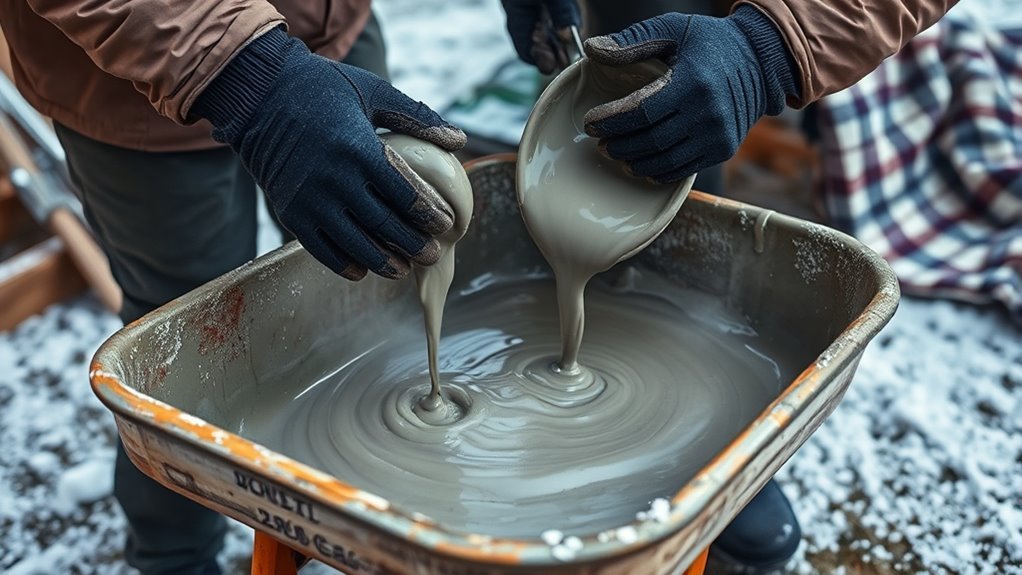
10 Essential Tips You Should Know to Pour Concrete in Cold Weather
When pouring concrete in cold weather, it’s essential to take specific precautions to ensure successful curing and durability. Using a cold-weather mix with accelerators and air-entraining agents is a must.
Additionally, preheating your water and aggregates can significantly improve the pour’s effectiveness. Make sure to clear your site of any ice or snow before you begin.
Scheduling your pour for the warmest part of the day helps as well. Protect the fresh pour with insulating blankets or heated enclosures to retain warmth.
Also, avoid pouring on frozen ground to prevent complications. Using temperature sensors to monitor the curing process is crucial for achieving optimal strength and durability.
Finally, always plan for extended curing times in cold conditions.
Keep following for detailed tips to help your concrete cure perfectly in these chilly circumstances!
Understand the Impact of Cold Weather on Concrete
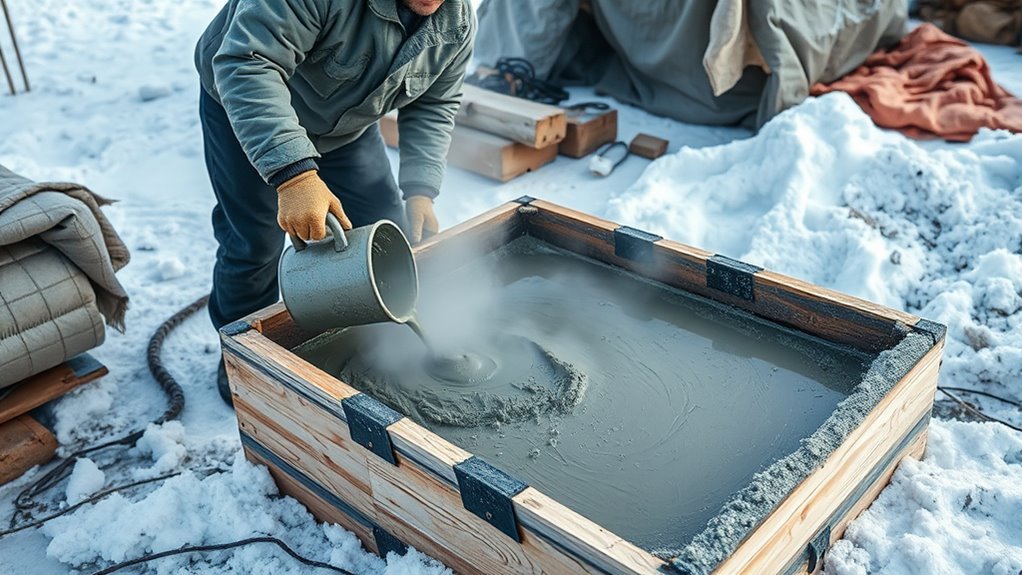
When temperatures drop below 40°F, it’s important to understand that cold weather significantly slows down the curing process of concrete. This slowdown can compromise the strength and durability of your project.
Cold weather slows concrete curing, risking the strength and durability of your project.
In cold weather, the hydration process may even come to a halt, putting your project at risk. If freezing occurs within the first 24 hours, you could lose up to 50% of your concrete strength by the time you reach the 28-day mark.
Moreover, the risk of freezing increases surface damage, leading to issues like cracking and scaling due to thermal stress and rapid moisture loss.
To protect your concrete, managing the temperature is essential. You’ll want to use heating methods and insulation to create an ideal curing environment.
Without proper care, the cold can severely impact your concrete’s structural integrity and longevity. So, be proactive in taking necessary precautions!
Choose the Appropriate Concrete Mix for Low Temperatures
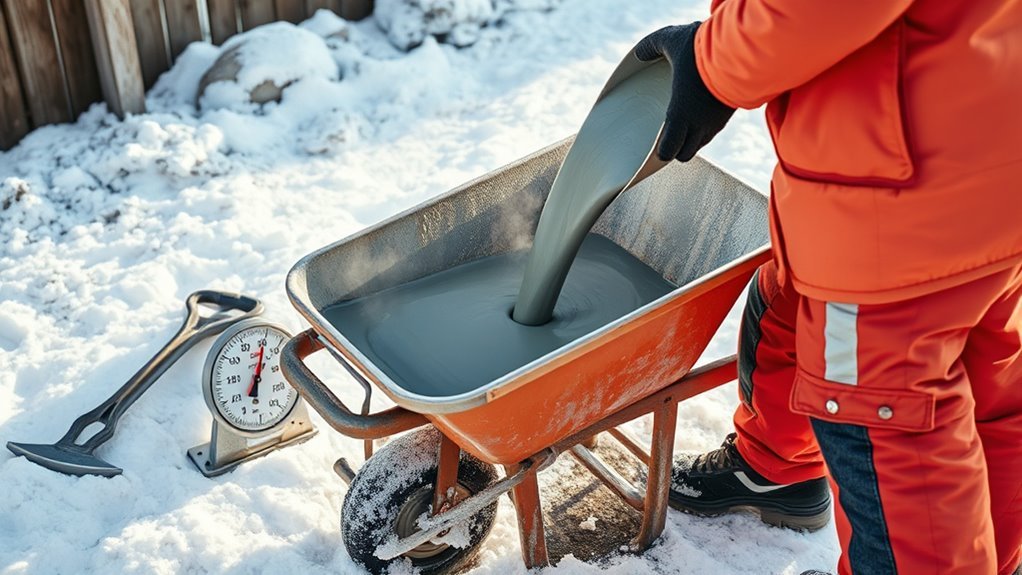
Although cold weather poses unique challenges, choosing the right concrete mix can help you achieve strong, durable results.
When working in low temperatures, opt for cold weather concrete mixes designed with accelerators to speed up setting and air-entraining agents that improve freeze-thaw resistance.
Use a concrete mix design featuring Type III Portland cement and a minimum compressive strength of 4,000 psi to ensure early strength.
Increase cement content by roughly 100 pounds per cubic yard to generate additional heat during curing.
Avoid fly ash or slag cement since they set slower and reduce heat, which can weaken early strength.
Preheat Materials and Prepare the Site Properly
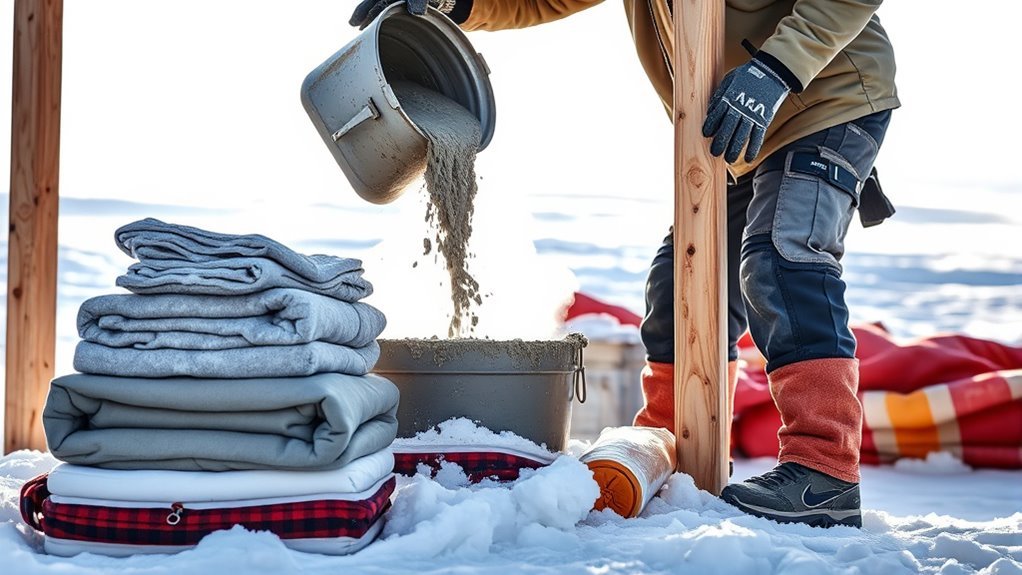
To keep your concrete from freezing too quickly, start by warming your water to about 140°F and your aggregates to around 180°F before mixing.
Make sure you clear the site of any ice, snow, or standing water to prevent cold spots and dilution.
Finally, insulate the ground and protect the area from wind to maintain steady temperatures throughout the pour.
Warm Water and Aggregates
Two key steps you should take to guarantee successful cold weather concrete pours are preheating your water and aggregates and preparing the site properly.
Preheating warm water to about 140°F and aggregates to around 180°F helps maintain the concrete mix temperature. This prevents early freezing and promotes proper hydration.
By doing this, you assure your concrete gains strength effectively despite the cold.
Store these ingredients in heated or insulated areas before mixing to avoid temperature loss.
Additionally, removing ice and snow from the site prevents water contamination. This keeps the mix consistent.
By carefully preheating materials and clearing the site, you minimize thermal shock and support uniform curing.
This is vital for achieving durable, high-quality concrete in freezing conditions.
Clear and Insulate Site
Maintaining the right temperature for your water and aggregates sets the stage, but you also need to clear and insulate the site to protect your concrete from cold exposure.
Start by removing snow, ice, and standing water. This ensures proper site preparation and avoids cold spots that weaken concrete.
Prepare the ground to be dry, thawed, and free of cold pockets. This provides stable support for your project.
Use tarps, windbreaks, or temporary enclosures to shield the area from wind and moisture. This enhances insulation and cold weather protection.
Store tools and materials indoors or in heated spaces to maintain temperature control. This prevents cooling that could affect concrete quality.
Prioritizing these site conditions guarantees your concrete cures effectively despite frigid temperatures.
Schedule Your Concrete Pour for Optimal Daytime Temperatures
Although cold weather can complicate concrete pouring, you can minimize risks by scheduling your pour during mid-morning or early afternoon when temperatures reach their peak.
This timing takes advantage of the warmest daytime temperatures, helping prevent early freezing and promoting better curing. Always check weather conditions ahead and plan your pour on days when temperatures stay above 50°F (10°C).
Avoid pouring late in the day or when forecasts predict a drop below 40°F (4.5°C), as this can compromise the concrete’s strength. If weather conditions are unpredictable or colder than expected, extend your pouring time to maintain critical temperature thresholds.
Use Accelerating Admixtures to Speed Up Setting
When pouring concrete in cold weather, you can speed up the setting process by using accelerating admixtures like calcium chloride.
These admixtures reduce concrete setting time by boosting the hydration rate, which is vital for early strength development in cold weather concrete.
By incorporating up to 2% calcium chloride, you help your mix resist freezing during the critical early curing phase.
Pairing accelerating admixtures with Portland cement Type III further enhances the initial set without compromising durability.
This approach shortens curing times and guarantees your project progresses faster despite low temperatures.
Using the right dosage of accelerators lets you maintain control over the concrete setting time, making cold weather pours more reliable and efficient.
Embracing accelerating admixtures is a smart step to safeguard your work when temperatures drop.
Maintain Proper Concrete Temperature During Curing
If you want your concrete to cure properly in cold weather, keep its temperature above 40°F (5°C) for at least 48 hours after pouring.
Maintaining the right concrete temperature during curing is essential to ensure full hydration and strength development.
Use temperature sensors to monitor the concrete’s warmth and avoid freezing, which can stop curing and weaken your project.
Here’s how to maintain ideal curing conditions:
- Use infrared thermometers or SmartRock® sensors for real-time temperature monitoring.
- Avoid letting concrete temperature drop below 25°F (-4°C).
- Maintain temperature above 40°F (5°C) during the critical curing time.
- Gradually reduce temperature to prevent thermal cracking.
- Employ insulating blankets to help retain heat without rapid cooling.
Proper temperature control guarantees consistent strength and durability in cold weather.
Protect Fresh Concrete With Insulating Blankets or Heated Enclosures
To protect your fresh concrete, you’ll want to use insulating blankets or heated enclosures that keep temperatures above 40°F during the first 24 hours.
Choose the right type of insulation based on your environment and monitor temperatures regularly to maintain consistent curing conditions.
Types of Insulation
Since cold temperatures can quickly compromise fresh concrete, you’ll want to use insulating blankets or heated enclosures to maintain a consistent warmth of at least 50°F (10°C) during the essential first 24 to 48 hours.
Choosing the right type of insulation is crucial. Insulating blankets trap the heat generated during curing, while heated enclosures create a controlled environment shielding concrete from harsh weather.
Opt for high-quality insulation with a high R-value to maximize thermal retention and minimize heat loss. Proper coverage ensures the concrete cures fully, even in freezing conditions.
Consider these insulation types:
- Fiberglass insulating blankets
- Polyethylene foam blankets
- Heated enclosures with electric or propane heaters
- Reflective insulation layers
- Multi-layer insulation systems combining blankets and enclosures
Temperature Maintenance Strategies
When you pour concrete in cold weather, maintaining a consistent temperature above 40°F during the first 24 to 48 hours is essential for proper curing.
To achieve effective temperature maintenance, use insulating blankets or thermal blankets to cover the fresh concrete. These can raise the surface temperature by 10-20°F, helping prevent freezing.
Heated enclosures or temporary heaters keep the ambient air warm around the concrete, promoting hydration and strength development.
Proper insulation also minimizes heat loss caused by wind and drafts, ensuring stable curing conditions.
Continuously monitor the concrete temperature with infrared or digital sensors so you can adjust insulation or heating as needed.
Duration of Protection
Although insulating blankets and heated enclosures provide essential protection for fresh concrete in cold weather, you need to keep them in place for at least 24 to 72 hours after pouring to prevent freezing.
Extending the protection duration beyond this initial period helps guarantee proper curing and maximizes concrete strength.
In extreme cold, maintain insulation throughout the entire curing period, which can last 14 to 28 days.
Continuous coverage retains heat generated during hydration, vital for freezing prevention and durability.
Keep in mind:
- Minimum 24-72 hours protection duration after pouring
- Extend coverage up to 7 days for better curing
- Use heated enclosures in severe cold
- Maintain insulation during the entire curing period if needed
- Proper duration ensures long-term concrete strength and durability
Avoid Pouring on Frozen or Wet Ground
If you pour concrete on frozen or wet ground, you risk uneven settlement and cracking as the soil thaws and shifts.
Avoid laying concrete over frozen or wet ground because cold weather concreting on these surfaces compromises the slab’s strength.
Excess ground moisture from snow or saturated soil reduces hydration, weakening the concrete and prolonging curing times.
This can lead to poor bonding between the slab and soil, causing future structural issues.
Before you start, verify proper ground thawing and drying to create a stable base.
Taking these steps helps prevent surface defects and ensures your concrete cures evenly and gains maximum durability despite cold conditions.
Always check soil conditions and wait for ground moisture to dissipate for a solid, lasting foundation.
Use Real-Time Temperature Monitoring Tools
Ensuring your concrete stays above 40°F during curing is essential to prevent freezing and strength loss.
Using temperature sensors for real-time monitoring helps you maintain ideal curing conditions for cold weather concrete. These tools provide continuous data so you can act quickly if temperatures drop, protecting strength development.
With real-time temperature monitoring tools, you can:
- Track concrete temperature continuously to avoid freezing.
- Receive alerts to adjust heating or insulation promptly.
- Ensure curing conditions meet project specifications.
- Improve quality control through accurate data.
- Minimize risks of costly curing failures and safety issues.
These tools really make a difference in managing your concrete projects effectively!
Plan for Extended Curing Time in Cold Conditions
Because cold temperatures slow the hydration process, you need to plan for an extended curing time to help your concrete reach full strength.
In cold weather, concrete requires at least 20 days of curing above 50°F to achieve maximum strength.
Extending the curing duration offsets the slowed chemical reactions caused by low temperature, preventing strength loss.
To maintain consistent curing temperature over this period, use insulated blankets or heated enclosures.
Avoid removing forms too early—wait at least five days or more to ensure structural integrity.
Regularly monitor the concrete temperature with tools like SmartRock® sensors to track curing duration and avoid freeze damage.
Frequently Asked Questions
Can I Reuse Concrete Leftover From a Cold Weather Pour?
You can’t reuse leftover concrete from a cold weather pour because it starts to set and lose strength quickly.
Instead, mix only what you need to make certain your project stays strong and durable.
How Does Cold Weather Affect Concrete Color and Finish?
Cold weather can dull your concrete’s color and make the finish rougher, like a winter frost on a windowpane.
You’ll want to protect it well to keep the surface smooth and the color vibrant despite the chill.
What Safety Precautions Should Workers Take in Freezing Temperatures?
You should wear insulated gloves, layered clothing, and non-slip boots to stay warm and safe.
Keep hydrated, take breaks indoors, and watch for signs of frostbite or hypothermia while working in freezing temperatures.
Are There Specific Tools Recommended for Cold Weather Concrete Work?
Yes, you should use insulated blankets, heated enclosures, and portable heaters to keep concrete warm.
Also, consider using warm water mixers and temperature monitoring tools to guarantee proper curing in cold weather conditions.
How Long Should I Wait Before Removing Forms in Cold Weather?
You should wait at least 48 to 72 hours before removing forms in cold weather,
but it depends on the concrete’s strength.
Use a maturity meter or test to guarantee it’s adequately cured to avoid damage.
Conclusion
Pouring concrete in cold weather is like nurturing a seed through a harsh winter—you need patience, the right care, and protection to help it grow strong.
By choosing the right mix, warming your materials, and shielding your pour from the chill, you guarantee your concrete sets just right despite the cold.
Keep a close eye on temperatures and give your work the time it needs to cure.
With these steps, your project will weather the frost and stand solid.
In conclusion, pouring concrete in cold weather requires special attention.
Using the correct mix, warming your materials, and protecting your pour are essential to ensure a successful outcome.
By monitoring temperatures and allowing adequate curing time, you can achieve durable concrete that withstands harsh conditions.
Embrace these tips, and your winter projects will thrive!