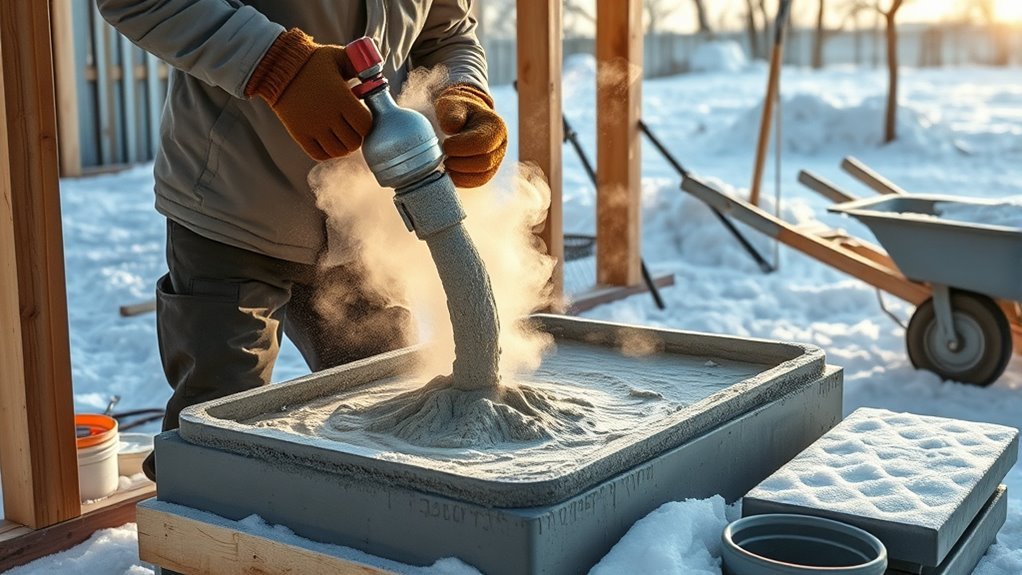
How You Lay Concrete in Cold Weather Step by Step
To lay concrete in cold weather, you’ll need to take some special precautions to ensure a strong and durable pour. The process begins with preparing the ground properly, which means removing any ice and warming the soil to above 40°F.
Next, it’s essential to warm your water and aggregates to a temperature between 50-60°F before mixing them with air-entrained concrete and cold-weather admixtures. This step is crucial for achieving the right consistency and strength in your pour.
Once you’re ready, pour the concrete quickly to avoid any complications. After pouring, cover the surface with insulated blankets or utilize heaters to maintain curing temperatures above 50°F.
Regularly monitor the temperature and protect the site from wind and moisture, as these factors can negatively impact the curing process.
Don’t forget to keep your crew safe by ensuring they have proper gear and taking necessary breaks.
By following these steps, you can confidently guarantee a strong, durable concrete pour even in cold conditions.
Preparing the Ground and Site for Cold Weather
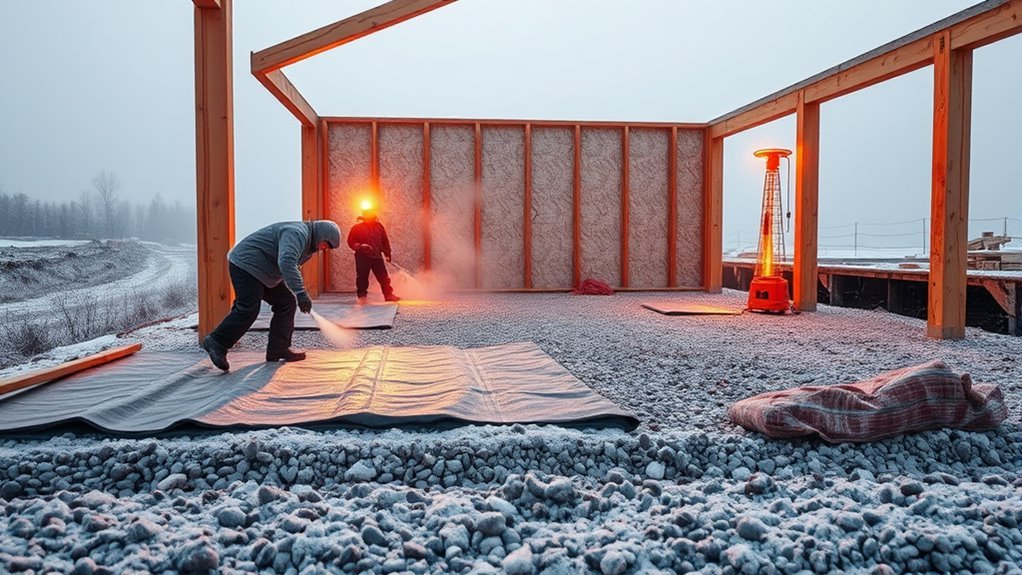
Before you pour concrete in cold weather, make sure the ground temperature is at least 40°F to prevent freezing during curing.
Start your site preparation by removing all snow, ice, and standing water. This helps avoid pouring onto frozen or compacted ground.
If you encounter frozen soil, thaw it using ground heating methods like heated glycol hoses, heated blankets, or ground-warming equipment.
Applying insulation, such as black plastic, helps maintain soil warmth and prevents heat loss.
Confirming a stable base is vital, so verify the ground remains above freezing throughout the curing period, typically 24-48 hours.
Proper ground temperature control and thorough snow removal will protect your concrete from damage and ensure a solid, durable foundation despite cold weather conditions.
Selecting and Preparing Concrete Materials
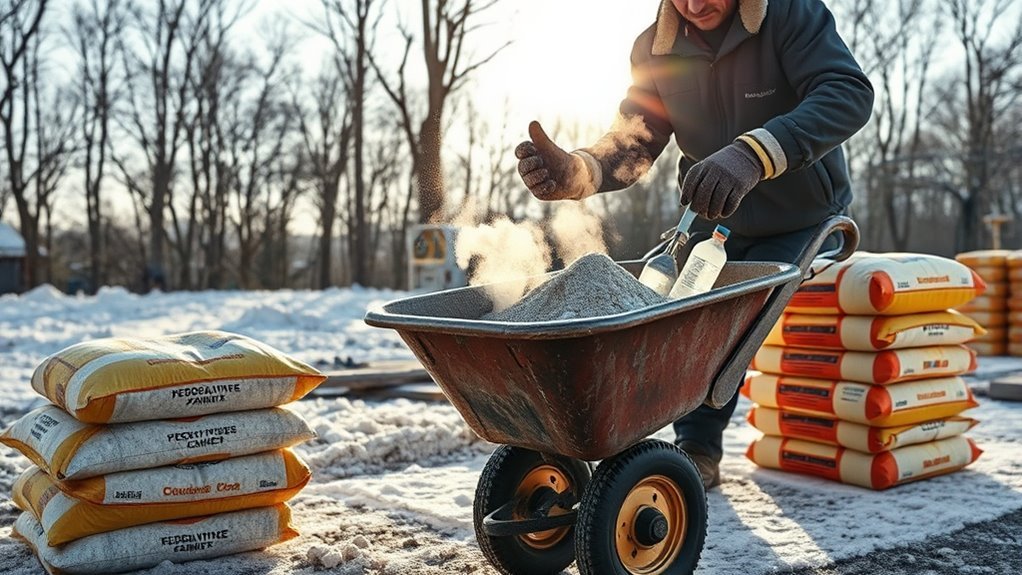
When working in cold weather, you’ll want to choose high-quality, air-entrained concrete with at least 4,000 psi strength to withstand freeze-thaw cycles.
Select a concrete mix with a low water-to-cement ratio and minimal slump to reduce bleeding and improve durability.
Choose a concrete mix with low water-to-cement ratio and minimal slump for better durability and less bleeding.
Incorporate cold-weather admixtures like accelerators and air-entraining agents for enhanced setting time and freeze-thaw protection.
Store all materials—water, aggregates, and cement—in insulated or heated areas to prevent freezing.
Maintaining water temperature and mix temperature between 50°F and 60°F ensures proper curing temperature.
Additionally, use insulation during storage and transportation to protect the concrete mix from cold exposure.
Proper material storage and preparation help maintain workability and strength, ensuring your concrete can handle harsh winter conditions without compromising integrity.
Warming Concrete Components Before Mixing
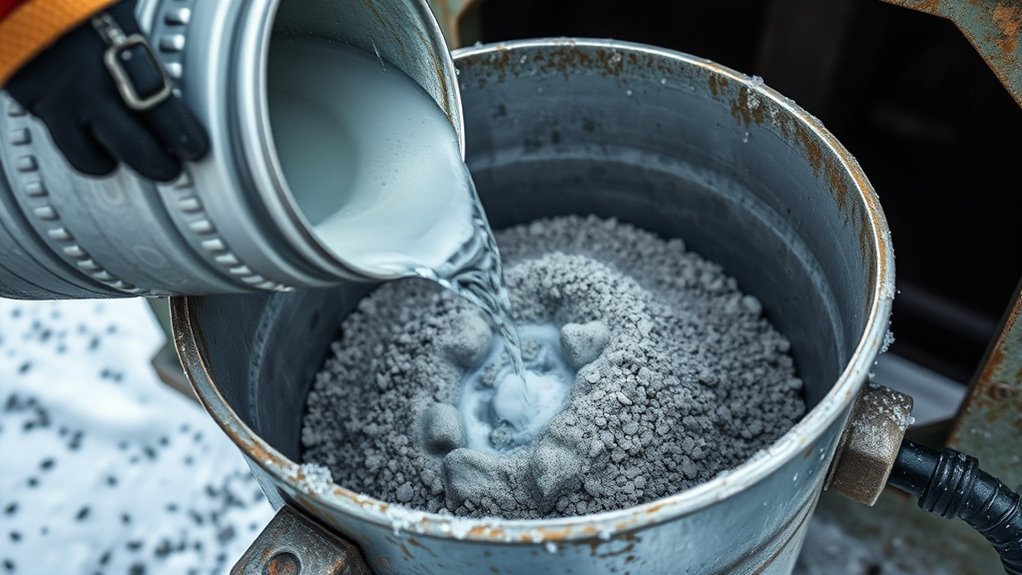
Before you mix your concrete, make sure to preheat the water to around 140°F and the aggregates to about 180°F to keep the mix warm.
Keep your cement and dry materials in heated storage to prevent freezing or moisture loss.
Using heated transport or insulation will help maintain these temperatures until you’re ready to pour.
Preheat Water and Aggregates
Since cold temperatures can severely slow down concrete curing, you should preheat water and aggregates to keep the mix warm during preparation.
Preheat water to about 140°F (60°C) and warm aggregates to roughly 180°F (82°C) using heaters or insulated storage.
These heating materials help maintain concrete temperature above 50°F (10°C) during concrete mixing, which is essential for cold weather concrete.
Using warm aggregates and preheated water reduces the risk of freezing and cold spots in the mix.
This approach accelerates the hydration process, promoting early strength development despite low temperatures.
Incorporating these cold weather precautions guarantees your concrete cures properly, avoids delays, and achieves the desired durability.
Proper warming materials are key to successful concrete placement and performance in chilly conditions.
Material Temperature Management
Although cold weather poses challenges, you can manage material temperatures effectively by warming concrete components before mixing.
Proper thermal management ensures your cold weather concrete maintains workability and strength.
To control material temperature effectively, follow these steps:
- Preheat water to about 140°F and warm aggregates to around 180°F. This helps maintain a consistent temperature during concrete mixing.
- Store cement, sand, and gravel in warm, dry environments to prevent premature cooling or freezing. This will help preserve ideal ambient temperature conditions.
- Use heated equipment such as mixers and chutes, and incorporate admixtures like accelerators to sustain thermal stability throughout mixing and pouring.
Pouring Concrete Efficiently in Cold Conditions
To pour concrete efficiently in cold conditions, you need to control the temperature carefully using insulated blankets or heated enclosures.
Adding accelerants and extra cement helps speed up the setting process, ensuring early strength development.
Keep a close eye on the concrete’s temperature to prevent freezing and maintain proper curing.
Temperature Control Methods
When pouring concrete in cold weather, you’ll need to act quickly and keep the mix warm to guarantee proper curing.
Effective temperature control is key to maintaining the ideal concrete temperature throughout the curing process. Here’s how you can manage it:
- Use insulation blankets or heated enclosures immediately after placement to retain thermal mass and protect against low ambient temperatures.
- Monitor concrete temperature regularly with an infrared thermometer, ensuring it stays above 50°F (10°C) for proper curing.
- Protect the site from wind and moisture using windbreaks and cold weather protection methods to prevent heat loss and freezing.
Combining these concrete heating techniques ensures the curing process proceeds smoothly, even in chilly conditions.
Accelerating Concrete Set
Keeping your concrete warm during curing sets the stage for faster setting times in cold weather.
To accelerate concrete setting, use chemical accelerants like calcium chloride or non-chloride alternatives, which speed hydration and reduce set times.
Choose Type III cement combined with air-entraining admixtures to promote early strength gain and boost freeze-thaw resistance.
Increasing cement content by about 100 pounds per cubic yard generates more heat during concrete curing, further accelerating the process.
Maintain temperature control by pouring during the warmest part of the day.
Using heated enclosures, insulated blankets, or supplemental heat helps keep concrete above 50°F.
These steps ensure cold weather concrete cures efficiently, minimizing delays and enhancing durability in freezing conditions.
Using Accelerators and Adjusting Mix for Cold Weather
Although cold weather slows concrete curing, you can speed up the process by using chemical accelerators like calcium chloride or non-chloride alternatives.
These help boost hydration and early strength in cold weather concrete.
To maximize your mix adjustment, follow these steps:
- Use Type III cement, known for its finer grind and higher early strength, to promote faster concrete setting.
- Reduce the water-to-cement ratio to enhance early strength and lower porosity, improving durability at low curing temperatures.
- Increase cement content by up to 100 pounds per cubic yard to generate more heat during curing.
Combining accelerators with proper insulation ensures the curing temperature stays ideal.
This helps your concrete gain strength faster despite the cold.
Protecting and Maintaining Temperature During Curing
Since cold temperatures can severely hinder concrete curing, you’ll need to protect your pour and maintain its temperature above 50°F (10°C) to make certain of proper strength development.
Use insulated blankets or heated enclosures to prevent freezing and ensure moisture retention with damp coverings.
Continuously perform temperature monitoring to keep curing temperature stable. Waterproof coverings shield against water and wind, protecting fresh concrete from heat loss.
| Method | Purpose | Tips |
|---|---|---|
| Insulated blankets | Maintain curing temperature | Cover immediately after pouring |
| Heated enclosures | Provide supplemental heat | Use warmers safely |
| Waterproof coverings | Protect concrete from moisture loss | Apply over blankets |
| Temperature monitoring | Ensure ideal curing temp | Use infrared or dial thermometers |
Following these steps guarantees your concrete cures properly despite cold weather.
Ensuring Worker Safety During Cold Weather Pouring
When pouring concrete in cold weather, you must prioritize worker safety.
Ensure everyone wears layered, insulated clothing and proper protective gear like gloves, hats, and waterproof boots to prevent cold stress and frostbite.
Follow these steps for effective cold weather safety and worker protection:
- Implement a strict work/rest schedule that limits cold exposure and provides breaks in heated shelters or warm environments.
- Train workers on OSHA cold stress guidelines. It’s crucial to educate them on hypothermia prevention and frostbite awareness.
- Equip all personnel with appropriate personal protective equipment to minimize health risks during pouring.
Frequently Asked Questions
How to Lay Concrete in Cold Weather?
You’ll thaw and warm the ground, use heated water and aggregates, and pour quickly.
Then, cover the concrete with insulated blankets.
Keep temperatures above 40°F and monitor closely to guarantee proper curing during cold weather conditions.
What’s the Coldest Temperature You Can Lay Concrete At?
You can lay concrete as cold as 25°F (-4°C) if you prevent freezing during the first 24 hours.
Below 20°F (-6.5°C), you’ll need special mixes or heating to guarantee proper curing and strength.
It’s important to take these precautions to ensure the concrete sets correctly.
Otherwise, you may face issues with durability and performance down the line.
What Do You Put in Concrete to Keep It From Freezing?
You don’t just pour plain concrete in freezing temps; you add calcium chloride and air-entraining agents.
These chemicals speed curing and create tiny air bubbles, helping your concrete resist freezing and cracking during early strength gain.
What Happens if You Pour Concrete on Frozen Ground?
If you pour concrete on frozen ground, it won’t bond properly, causing weak spots and cracks.
The cold soil absorbs heat, slowing curing and risking structural failure.
You’ll end up with uneven, less durable concrete.
Conclusion
Pouring concrete in cold weather might seem intimidating, but with the right preparation and care, it’s just as manageable as in warmer months.
While freezing temperatures threaten to slow you down, warming materials and protecting your pour keep progress steady.
You’ll balance patience with urgency, ensuring the mix sets properly despite the chill.
By staying vigilant and using smart techniques, you turn cold challenges into solid, lasting results every time.
—
In conclusion, laying concrete in cold weather can be successfully accomplished with the right strategies.
Key techniques like warming materials and providing adequate protection for your pour are essential.
With a blend of patience and attention to detail, you can achieve a strong, durable result even when the temperatures drop.
So, embrace the cold with confidence, knowing that your careful preparation will lead to solid outcomes.
Remember, cold weather doesn’t mean you can’t pour concrete; it just requires a bit more planning!