How Can You Get a Sore Throat From Cold Weather?
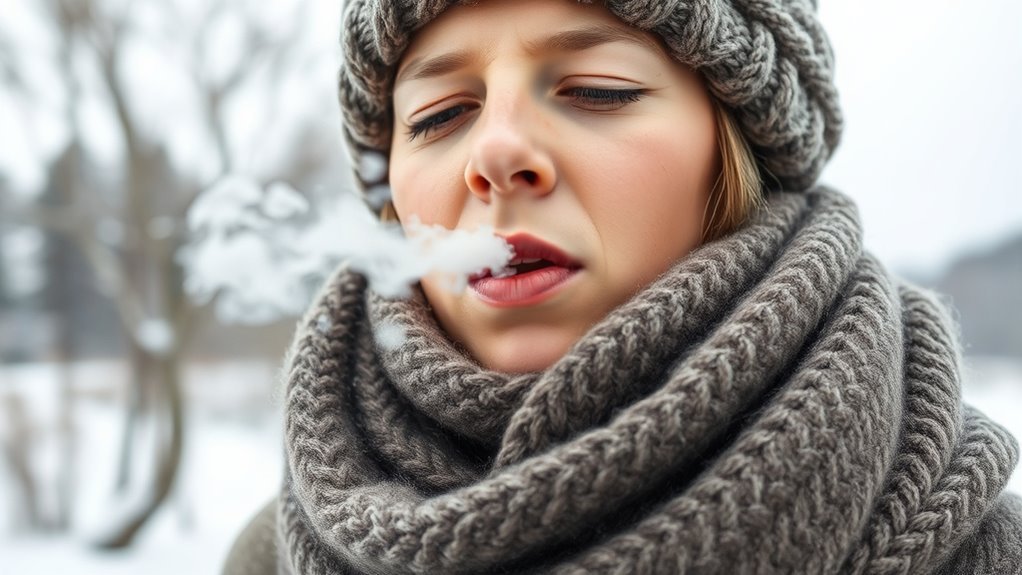
You can get a sore throat from cold weather because breathing in cold, dry air dries out your throat’s moisture, leaving it irritated and inflamed.
When the air is cold and dry, it reduces mucus production, which normally protects and lubricates your throat.
Mouth breathing and indoor heating can make things worse by further drying your tissues.
If you want to understand the causes, symptoms, and what you can do to protect and soothe your throat, there’s more to contemplate.
The Effect of Cold Air on Throat Moisture
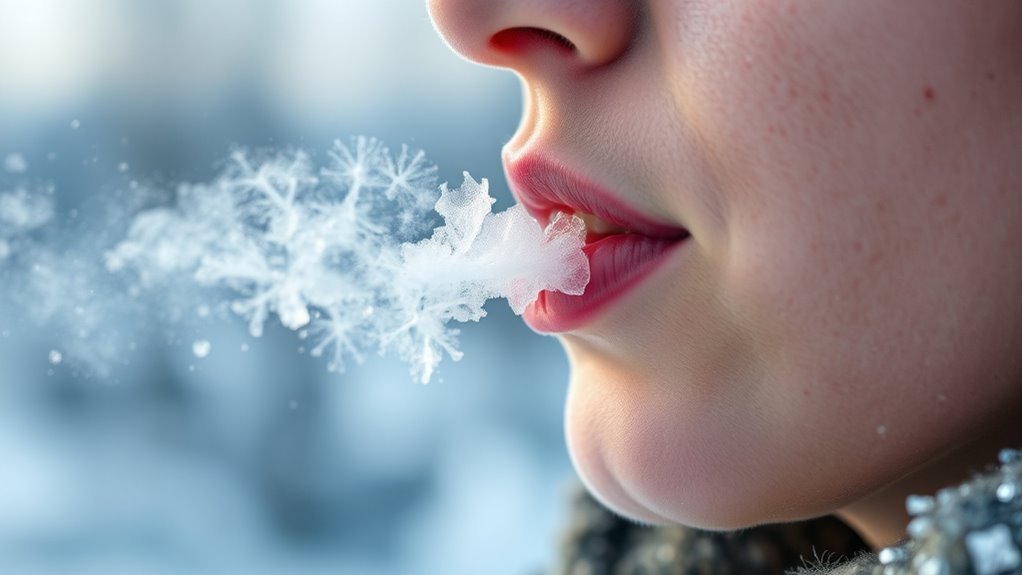
When you breathe in cold air, especially during winter, the dry conditions quickly sap moisture from your throat’s mucous membranes.
This moisture loss reduces the natural lubrication that keeps your throat comfortable and protected.
Cold air is typically low in humidity, so it decreases the production of mucus, which normally shields and moistens your throat tissues.
Cold, dry air lowers mucus production, reducing natural moisture and protection in your throat tissues.
As a result, you experience throat dryness, making the lining more vulnerable to discomfort.
The overall drop in humidity disrupts your throat’s natural moisture balance, leaving it less able to defend against environmental stress.
How Dryness Leads to Throat Irritation
As cold air dries out your throat, the lack of moisture sets the stage for irritation.
Dry air, which is common in cold weather, reduces humidity levels both indoors and outdoors. This causes your throat’s mucous membranes to lose moisture, leading to irritation in several ways:
- Dry air strips the protective moisture from your throat lining.
- Lower humidity makes throat tissues dry, inflamed, and sensitive.
The lack of moisture hampers mucus production, reducing natural lubrication.
Prolonged exposure causes the throat lining to become scratchy and sore.
When humidity drops, your throat becomes vulnerable to discomfort and irritation.
Understanding these effects helps you take steps to protect your throat during cold, dry weather.
The Role of Mucus in Throat Protection
Although cold weather can be harsh on your throat, mucus plays a fundamental role in protecting it by trapping germs and irritants before they cause harm.
This sticky layer forms a barrier that supports your immune system, preventing infections and reducing irritation.
However, cold air thickens mucus, making it less effective at clearing pathogens.
When mucus becomes too viscous, it can’t trap and flush out germs properly, increasing your throat’s vulnerability.
Additionally, mucus keeps your throat tissues hydrated, which is essential to prevent dryness and irritation caused by the cold.
Common Symptoms of Cold Air-Induced Throat Discomfort
When you breathe in cold air, your throat can quickly feel dry and irritated.
You might notice scratchiness, soreness, or even a mild cough as your throat reacts to the chill.
These symptoms are common and usually improve with simple care like staying hydrated.
Dryness and Irritation
If you spend time in cold weather, you’ll notice your throat often feels dry and irritated.
That dryness and irritation come from cold air, which usually lacks moisture.
When you breathe in this dry, cold air, it pulls moisture from the mucous membranes lining your throat.
This moisture loss leads to dryness and irritation, making your throat feel uncomfortable.
Here’s what happens:
- Cold air dehydrates throat tissues, causing dryness.
- Mucus thickens without enough humidity, reducing protection.
- The throat lining becomes inflamed due to dryness.
- Sensitive nerve endings react, increasing irritation.
Understanding this can help you take steps to keep your throat moist and reduce discomfort in cold weather.
Scratchiness and Soreness
Since cold air lacks humidity, it quickly dries out the mucous membranes in your throat.
This causes a scratchy, sore feeling.
When you breathe in cold air, moisture evaporates from your throat tissues.
This leads to a dry throat and irritation.
The dryness thickens the mucus that usually protects your throat.
That makes it harder to keep the area comfortable.
As a result, the small nerve endings in your throat become more sensitive.
This increases that scratchy sensation and soreness.
Unlike infections, this irritation from cold air doesn’t come with swelling or redness.
But it still feels uncomfortable.
Understanding these symptoms helps you recognize that cold air alone can cause throat discomfort without any illness.
Taking steps to protect your throat can reduce this common cold weather effect.
Mild Coughing Effects
Although cold weather often brings a dry, scratchy throat, it can also trigger a mild cough by irritating your airway nerves.
The dry air reduces humidity in your throat, causing throat irritation that sparks a reflexive cough. You might notice this mild cough persists without other symptoms like fever.
To manage these mild coughing effects, try these tips:
- Warm the air around you to soothe your throat irritation.
- Use a humidifier to add moisture and reduce dry air’s impact.
- Avoid prolonged exposure to cold, dry air to prevent worsening cough episodes.
- Drink warm fluids to keep your throat hydrated and calm the cough reflex.
Differentiating Between Cold Air Irritation and Infection
When you experience a sore throat in cold weather, you can usually tell whether it’s caused by dry air or an infection by paying attention to accompanying symptoms.
Cold air irritation typically causes localized dryness and scratchiness without systemic signs like fever or body aches.
Cold air usually leads to dry, scratchy throats without fever or overall body pain.
If your throat feels dry but improves after drinking water or using a humidifier, cold air is likely the culprit.
On the other hand, an infection often brings swollen glands, white patches, severe pain, or persistent discomfort.
Infections like strep throat or the flu also come with additional symptoms such as fever and pus, which you won’t see with simple cold air irritation.
Recognizing these differences helps you decide when to seek medical care versus when to simply hydrate and rest.
How Mouth Breathing Exacerbates Throat Dryness
If you breathe through your mouth during cold weather, you expose your throat to dry, unfiltered air that can quickly sap moisture from its tissues.
Mouth breathing bypasses your nasal passages, which normally warm and humidify the air, leading to increased dryness.
Here’s how mouth breathing worsens throat dryness in cold weather:
- Cold, dry air directly contacts your throat, causing moisture loss in its tissues.
- Reduced saliva flow limits natural lubrication and protective mucus in your throat.
- Dryness makes your throat more susceptible to irritation, soreness, and inflammation.
- Prolonged mouth breathing can cause persistent scratchiness and increase vulnerability to infection.
Avoiding mouth breathing in cold weather helps keep your throat moist and less prone to discomfort.
Impact of Indoor Heating on Throat Health During Winter
Breathing through your mouth in cold weather isn’t the only way your throat can dry out; indoor heating plays a big role too.
Indoor heating systems often lower humidity levels drastically, producing dry air that dehydrates the mucous membranes in your throat.
This dryness causes throat irritation, making your throat feel scratchy and sore.
When you spend extended time in heated environments, the nerve endings in your throat become more sensitive, worsening discomfort.
The continuous circulation of dry air indoors intensifies this effect, especially during winter months.
While you might not notice it immediately, the drying impact of indoor heating can markedly affect your throat health.
It can contribute to soreness and irritation that mimic cold symptoms even when you’re just trying to stay warm.
Preventative Measures to Protect Your Throat in Cold Weather
Although cold weather can harshly dry out your throat, you can take simple steps to protect it.
Follow these key preventative measures:
- Use a humidifier indoors to maintain humidity levels between 40-60%. This helps prevent dryness caused by cold air.
- Stay hydrated! Drink plenty of water and warm liquids like herbal teas with honey and lemon. These can really soothe your throat.
- When you go outside, cover your mouth and nose with a scarf or mask. This reduces inhaling cold, dry air that can irritate your throat.
- Don’t forget about good respiratory hygiene. Wash your hands regularly and try to avoid touching your face. These practices can lower your risk of infections.
Home Remedies to Soothe a Cold Air-Induced Sore Throat
When cold air leaves your throat feeling sore and dry, you can turn to several effective home remedies to find relief.
Drinking warm liquids like herbal tea with honey soothes your throat, while gargling saltwater reduces inflammation.
Using a humidifier adds moisture to the air, preventing dryness.
Sucking on throat lozenges stimulates saliva, keeping your throat moist.
Inhaling steam hydrates throat tissues and eases discomfort.
| Remedy | How It Helps | Tips |
|---|---|---|
| Warm herbal tea | Soothes irritated throat | Add honey for extra relief |
| Saltwater gargle | Reduces inflammation | Gargle 2-3 times daily |
| Humidifier | Adds moisture to dry air | Use in bedroom while sleeping |
| Throat lozenges | Stimulates saliva production | Choose sugar-free options |
| Steam inhalation | Hydrates throat tissues | Breathe deeply for 5-10 minutes |
When to Consult a Healthcare Professional for Throat Issues
If your sore throat sticks around for more than a week or gets worse despite home care, it’s time to see a healthcare professional.
You should also get help right away if you have trouble swallowing, breathing, or severe pain.
Watch for signs like high fever, white patches, or swollen glands, as these could mean an infection that needs medical treatment.
Persistent Symptoms Warning
Since sore throats often improve with home care, you might not worry at first.
But you should see a healthcare professional if your symptoms last more than a week or get worse.
Persistent symptoms could signal complications beyond a simple viral infection.
Here’s when to seek medical advice:
- Your sore throat persists beyond seven days despite home remedies.
- You notice white patches, swollen glands, or severe pain—signs of bacterial infections.
- You develop a fever lasting several days or body aches alongside throat pain.
- You experience worsening symptoms that interfere with daily activities or breathing.
Don’t disregard these warning signs.
Early evaluation helps prevent complications and ensures appropriate treatment, especially when home care isn’t enough.
Difficulty Swallowing Signs
Although a sore throat often clears up on its own, difficulty swallowing can signal a more serious problem that needs prompt medical attention.
If you experience difficulty swallowing along with a sore throat, especially after exposure to cold weather, don’t ignore it. Persistent or worsening symptoms may indicate infections like strep throat or other underlying issues.
Seek help if swallowing problems come with chest pain, fever, or trouble breathing—these require immediate care.
Also, if you notice neck swelling or lumps, consult a healthcare professional promptly.
When throat pain and difficulty swallowing last more than a week or interfere with eating and drinking, it’s time to get evaluated.
Cold weather may trigger discomfort, but ongoing swallowing difficulties should never be dismissed.
Infection Indicator Symptoms
Recognizing signs that point to an infection can help you decide when to seek medical care for a sore throat.
Not all sore throats require a doctor’s visit, but certain symptoms suggest infections that need professional attention.
Watch for these key signs:
- White patches, persistent fever, or swollen glands, which may indicate bacterial infections.
- Body aches, chills, or fatigue, often signaling viral infections.
- Symptoms worsening despite home care or lasting more than a week.
- Difficulty swallowing, breathing, severe pain, rash, ear pain, or unexplained weight loss.
If you notice any of these symptoms alongside your sore throat, don’t hesitate to consult a healthcare professional to get the right diagnosis and treatment.
Frequently Asked Questions
Is It Normal to Have a Sore Throat During Cold Weather?
Yes, it’s normal to get a sore throat during cold weather because dry, cold air irritates your throat.
Just make sure to stay hydrated and use a humidifier.
If it persists, see a doctor.
How Do You Get Rid of a Sore Throat From Weather Change?
Like a warm blanket on a chilly night, drinking herbal tea with honey soothes your throat.
You’ll want to use a humidifier, gargle salt water, and stay hydrated.
Avoid mouth breathing, and dress warmly outdoors.
How to Cure Throat Pain in Winter?
You can cure throat pain in winter by staying hydrated, using a humidifier, and sipping warm liquids.
Avoid irritants like smoke and allergens.
Breathe through your nose, and see a doctor if pain persists or worsens.
What Is a Sudden Onset Sore Throat?
Ever felt your throat scratchy out of nowhere?
A sudden onset sore throat hits quickly, usually from infections or irritants.
You’ll notice sharp pain, often with cough or fever, signaling your body’s quick inflammatory response.
Conclusion
You might not realize it, but cold air can dry out your throat, making it up to 30% more likely to feel irritated or sore.
When the air is cold and dry, your throat loses moisture, reducing its natural protection and causing discomfort.
To avoid this, keep hydrated and use a humidifier indoors.
Taking these simple steps can help you prevent that annoying sore throat during chilly weather.
Staying comfortable all winter long is achievable with a little care.
So, remember to drink plenty of fluids and maintain humidity levels in your home.
This way, you can protect your throat and enjoy the cold season without the discomfort of a sore throat.
By being mindful of your environment and hydration, you can make winter a more pleasant experience.