What Causes Nose Bleeds in Cold Weather?
You’re more likely to get nosebleeds in cold weather because dry air and indoor heating strip moisture from your nasal lining, making blood vessels fragile and prone to breaking.
Cold temperatures and low humidity dry out your nasal tissues, increasing the chance of irritation and bleeding.
Activities like forceful nose blowing or picking can worsen this.
If you want to understand why these factors matter and how to protect yourself, keep exploring these insights.
Understanding Epistaxis and Its Prevalence
Why do nosebleeds seem more common in the winter?
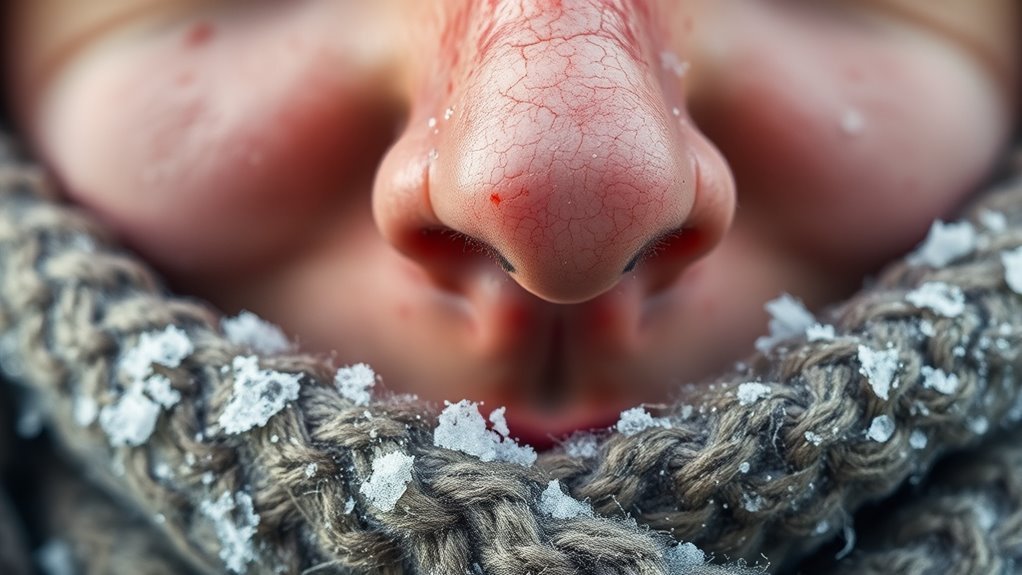
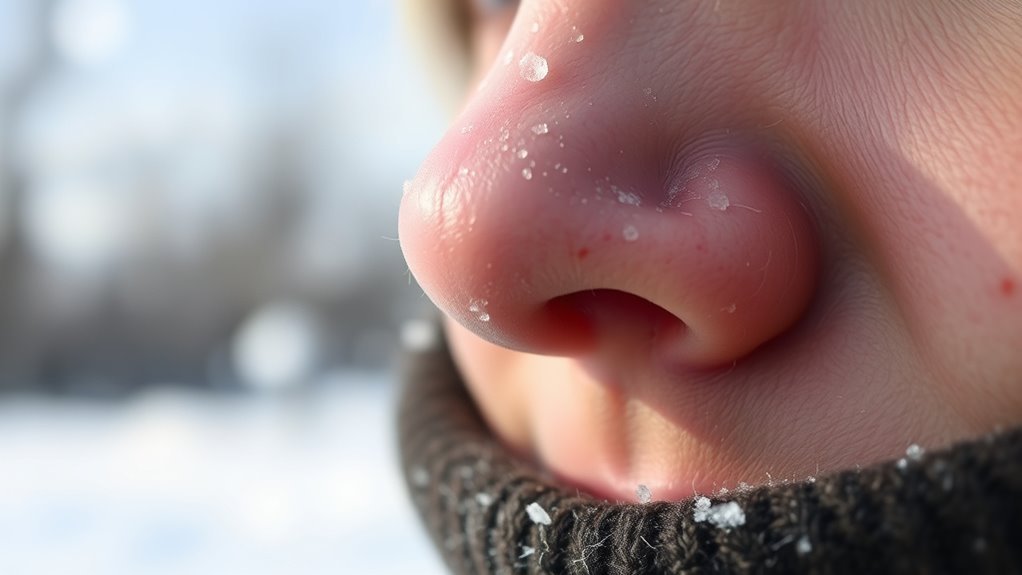
You’re more likely to experience epistaxis because cold weather dries out your nasal mucosa, the delicate tissue lining your nasal passages.
Cold weather dries out the delicate nasal mucosa, increasing the risk of nosebleeds.
This dryness weakens the nasal lining, making tiny blood vessels more fragile and prone to rupture.
In fact, about 60% of people will have at least one nosebleed in their lifetime, and many notice a spike during the winter months.
The anterior part of your nose, especially the nasal septum, is where most nosebleeds start.
When the nasal mucosa dries and irritates, it increases the chance of these blood vessels breaking.
Understanding how dryness and cold air impact the nasal lining helps explain why nosebleeds become so frequent when winter arrives.
How Cold Weather Affects Nasal Blood Vessels
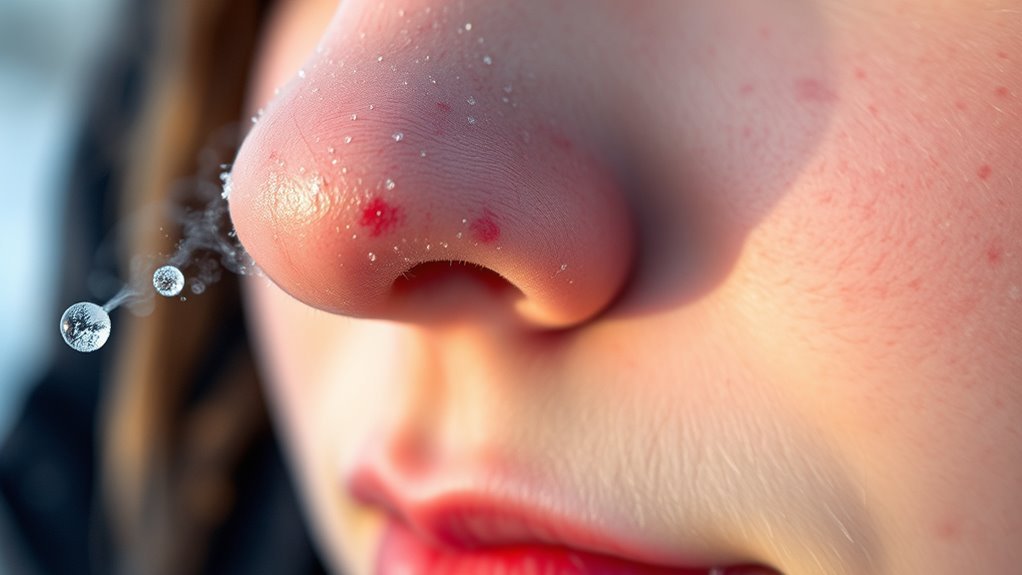
The dryness that affects your nasal mucosa in cold weather directly impacts the tiny blood vessels inside your nose.
Reduced humidity and dry air strip moisture from your nasal mucosa, leaving dry nasal tissues behind.
These fragile vessels become prone to blood vessel rupture, increasing your chance of nosebleeds.
Cold weather accelerates this drying process, damaging the delicate lining and weakening blood vessels.
| Factor | Effect on Nasal Blood Vessels |
|---|---|
| Cold Weather | Reduces moisture, dries nasal mucosa |
| Dry Air | Dries nasal tissues, weakens vessels |
| Reduced Humidity | Increases fragility, risk of rupture |
Understanding these effects helps you protect your nasal health during winter’s harsh conditions.
Common Triggers for Nosebleeds During Winter
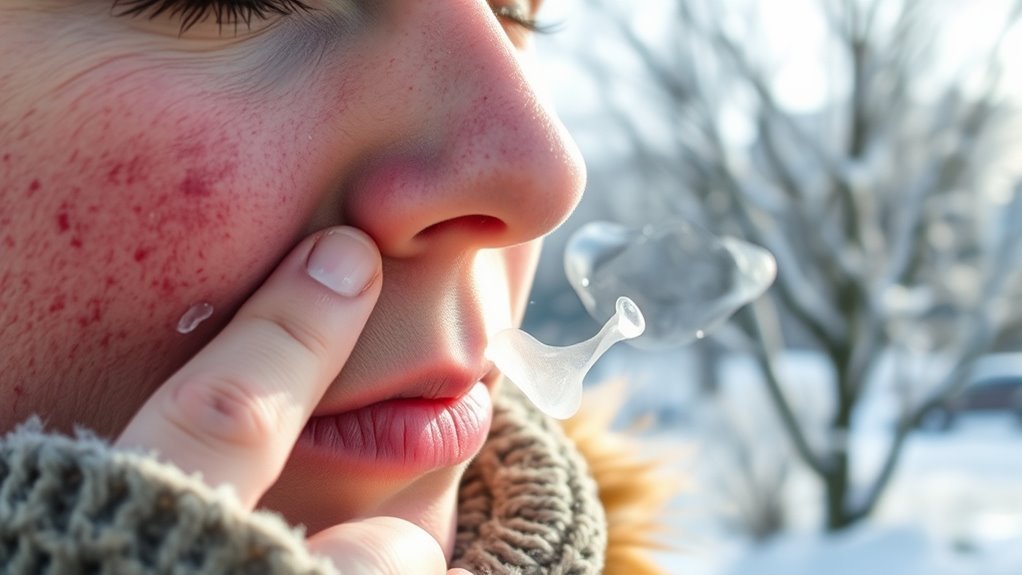
You’ll notice that dry indoor air and chilly outdoor temperatures can really dry out your nasal passages.
This dryness makes your blood vessels fragile, increasing the chance of nosebleeds.
Understanding these triggers can help you take steps to protect your nose during winter.
Dry Indoor Air
When indoor air turns cold during winter, it often becomes very dry. This dryness strips moisture from your nasal passages, making blood vessels more vulnerable to cracking.
As a result, this dry indoor air reduces moisture in your nasal mucosa, leading to nasal dryness that weakens the delicate nasal tissues.
Heating systems lower indoor humidity levels, sometimes dropping below 20%. This worsens the drying effect on your nasal membranes.
When your nasal passages aren’t moist enough, tiny blood vessels can easily rupture, which can lead to nosebleeds.
To protect yourself, consider using humidifiers to add moisture back into the air. This helps keep your nasal passages moist.
You might also want to apply nasal lubricants like petroleum jelly. They can shield your nasal membranes from dryness caused by low humidity.
Managing dry indoor air is key to preventing those uncomfortable nosebleeds during winter.
Cold Air Effects
Indoor heating can dry out your nasal passages, but cold outdoor air plays an equally important role in causing nosebleeds during winter.
Cold air holds less moisture, which leads to dryness in your nasal mucosa.
This dryness makes the nasal linings fragile and prone to cracking.
When the air causes this dryness, the tiny blood vessels inside your nose become vulnerable and can easily rupture.
As these fragile tissues break, bleeding occurs, resulting in nosebleeds.
The seasonal cold air not only dries out your nasal passages but also irritates them, increasing the risk of damage.
Understanding how cold air affects your nasal mucosa helps you take steps to protect your nose and reduce the frequency of nosebleeds during winter months.
Recognizing Symptoms and Risk Factors in Cold Conditions
Although cold weather brings a crisp freshness, it also dries out your nasal passages, making the delicate blood vessels inside your nose more vulnerable to damage.
Nasal dryness caused by low humidity and cold air dehydrates your nasal mucosa, weakening these fragile blood vessels.
When nasal tissues become too dry, small ruptures can trigger bleeding episodes.
Using indoor heating worsens this effect by further drying your nasal passages.
If you have seasonal allergies or respiratory infections, your nasal tissues are already irritated, increasing your risk.
People with pre-existing nasal or blood clotting issues should be especially cautious during cold weather.
Recognizing symptoms like frequent nosebleeds or persistent nasal dryness can help you understand your risk and take steps to protect your sensitive nasal blood vessels.
Effective First Aid for Cold Weather Nosebleeds
If you experience a nosebleed in cold weather, sit down and lean forward while firmly pinching the soft part of your nose for 10 to 15 minutes.
This first aid step helps apply pressure to the blood vessels, allowing the blood to clot and stopping nasal bleeding.
Avoid lying down or leaning back, as blood can run down your throat, causing nausea or choking.
To further reduce bleeding, place an ice pack or cold compress across the bridge of your nose.
Applying a cold compress to your nose helps constrict blood vessels and reduce bleeding effectively.
The cold constricts blood vessels and eases a dry nose.
Stay calm, and try not to talk or swallow excessively.
Once the bleeding stops, don’t blow or pick your nose for several hours to prevent re-bleeding and ensure proper healing.
Strategies to Prevent Nosebleeds in Dry, Cold Environments
To prevent nosebleeds in dry, cold environments, you’ll want to keep the air inside your home humidified and your nasal passages well-moisturized.
Staying hydrated and using saline sprays or gels can protect your nasal tissues from drying out.
Also, be gentle with your nose to avoid any trauma that could trigger bleeding.
Humidify Indoor Air
A humidifier can make a big difference in preventing nosebleeds during cold weather by keeping the indoor air moist.
When you use a humidifier, it increases moisture levels in the indoor air, which helps stop your nasal mucosa from drying out and cracking.
Maintaining humidity between 30% and 50% reduces nasal dryness and lowers your risk of a dry nose leading to bleeding.
Placing humidifiers in bedrooms and living areas during winter ensures your nasal passages stay well hydrated.
To get the best results, regularly clean your humidifier to avoid mold buildup.
You can also combine humidification with nasal sprays to provide extra moisture.
This helps keep your nasal tissues healthy and reduces the chances of nosebleeds in cold, dry environments.
Hydrate Nasal Passages
Keeping indoor air moist with a humidifier supports your nasal passages, but directly hydrating the inside of your nose also plays a key role in preventing nosebleeds.
Using saline nasal sprays 2-3 times daily keeps your nasal mucosa moist, reducing dryness caused by dry air.
Applying petroleum jelly inside your nostrils protects nasal tissues from cracking.
Drinking plenty of water combats dehydration, helping maintain moisture from within.
Here’s a quick guide to hydrate your nasal passages effectively:
| Action | Benefit |
|---|---|
| Saline nasal sprays | Keeps nasal mucosa moist |
| Petroleum jelly/ointment | Prevents mucosal cracking |
| Use a humidifier | Maintains moisture in dry air |
| Drink 64+ oz water daily | Hydrates nasal tissues internally |
| Avoid nose picking/blowing | Protects fragile nasal blood vessels |
Avoid Nasal Trauma
Although cold, dry air can make your nasal passages more fragile, you can prevent nosebleeds by avoiding trauma to your nose.
Nasal trauma irritates delicate blood vessels, increasing bleeding risk.
To protect your nose and throat during cold weather, follow these tips:
- Avoid forceful nose blowing and nose picking, which can damage fragile blood vessels.
- Wear protective headgear during outdoor activities to prevent nasal injuries from impacts.
- Apply a thin layer of petroleum jelly or nasal ointments inside your nostrils to reduce nasal dryness.
- Manage allergies and infections promptly to minimize irritation that leads to bleeding.
Frequently Asked Questions
Is It Normal to Get Nosebleeds in Cold Weather?
Yes, it’s normal to get nosebleeds in cold weather.
Your nasal passages dry out from cold air and indoor heating, which makes blood vessels more prone to cracking.
Just keep them moist to reduce bleeding chances.
How to Cure Nose Bleeding in Winter?
To cure winter nosebleeds, gently pinch your nostrils and lean forward.
Applying a cold compress can also help reduce bleeding.
Using a humidifier and saline spray is great for keeping your nose moist.
Don’t forget to apply petroleum jelly as well!
Staying hydrated is important too, as it helps keep your nasal passages from drying out.
Lastly, try to avoid any trauma to your nose to prevent future bleeds.
Is Nosebleed a Warning?
Yes, a nosebleed can be a warning sign.
If you experience frequent or severe nosebleeds, especially in cold weather, you should see a doctor.
This can help check for underlying health issues or environmental factors causing damage.
What Does It Mean When Only One Nostril Bleeds?
When only one nostril bleeds, it usually means a localized issue like a broken blood vessel, nasal trauma, or irritation.
If it keeps happening, you should see a doctor to rule out serious problems.
Conclusion
When cold weather bites, your nose’s delicate blood vessels can crack like dry earth, causing those sudden nosebleeds you dread.
You can’t always control the chill, but you can protect yourself by staying hydrated, using a humidifier, and gently caring for your nose.
Remember, a little prevention goes a long way in keeping your nose calm and bleed-free, even when winter’s icy grip tries to steal your comfort.
So, make sure to drink plenty of water to keep your mucous membranes moist.
Using a humidifier adds moisture to the air, which can help prevent those pesky nosebleeds.
And don’t forget to handle your nose gently; avoid picking or blowing it too hard.
In conclusion, staying hydrated, using a humidifier, and gentle nose care are key to preventing nosebleeds in cold weather.
By taking these simple steps, you can enjoy winter without the worry of unexpected nosebleeds.