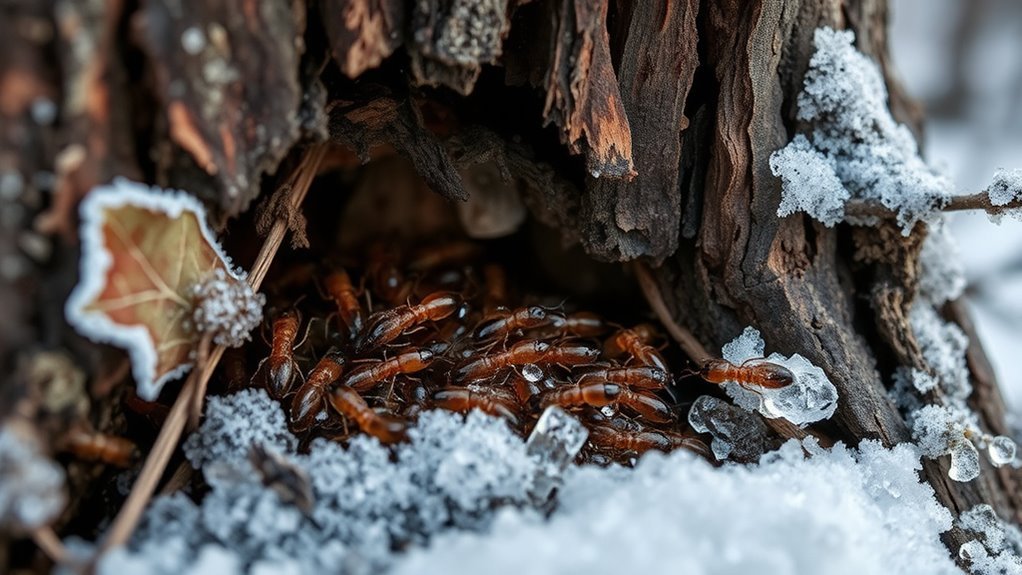
Can Termites Survive Cold Weather?
Yes, termites can survive cold weather by digging below the frost line where the soil stays warmer.
Even during winter, subterranean termites remain active underground, while drywood termites hide inside heated homes.
They slow down but keep feeding and damaging wood, often without you noticing.
Termites use mud tubes and hidden tunnels to shield themselves from the cold.
If you want to understand how they adapt and how to spot or stop them in winter, keep exploring these insights.
Termite Activity During Cold Months
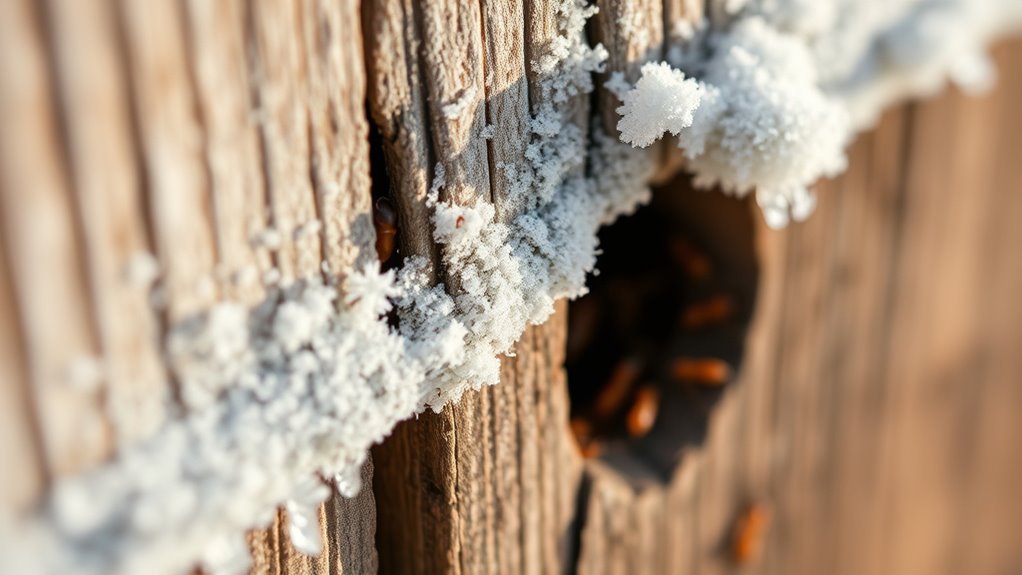
Although termites slow down in colder months, they remain active beneath the surface.
You might think cold temperatures stop termite activity, but subterranean termites dig deeper into the soil to reach warmer, more stable layers below the frost line.
This lets them continue feeding and moving, just at a reduced pace.
If you spot mud tubes, hollow wood, or discarded wings during winter, these are signs termites haven’t stopped their work.
However, when temperatures drop below 25°F for long periods, exposed termites risk dying.
Still, subterranean termites shield themselves underground, avoiding lethal cold.
Understanding this helps you realize that termite damage can continue even in winter, so don’t assume cold weather means your home is safe from these persistent pests.
How Termites Adapt to Low Temperatures
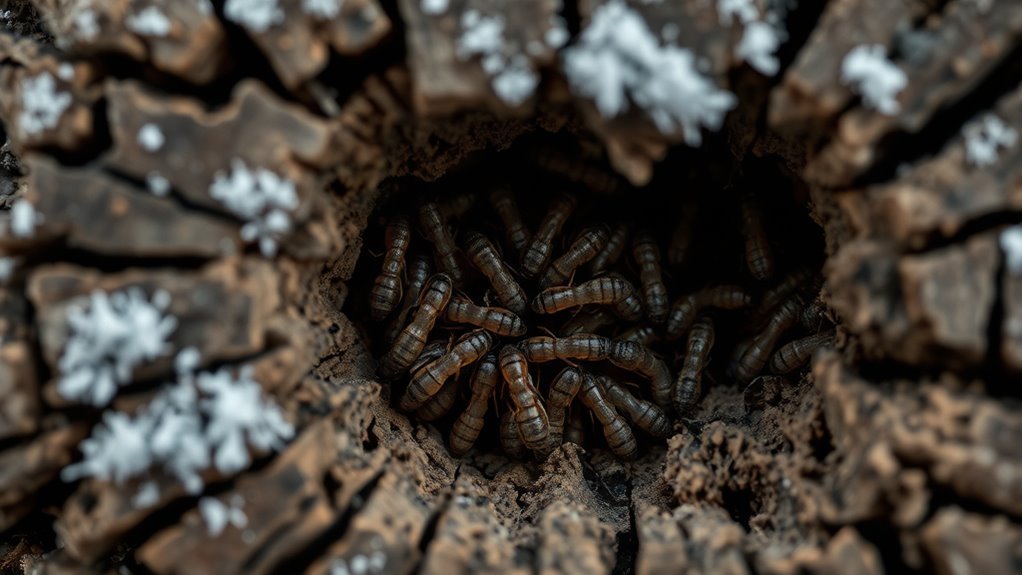
When temperatures drop, termites adjust their behavior to survive the cold rather than hibernate like some other insects.
You’ll notice subterranean termites dig deeper into the soil, reaching layers where the temperature stays warmer beneath the frost line.
This helps them survive harsh winters underground.
Drywood termites, on the other hand, often take refuge inside heated structures where the temperature remains stable, allowing them to stay active.
Termites reduce their movement and stay within their tunnels, feeding and reproducing in these protected environments.
Termites limit movement, remaining inside tunnels to feed and reproduce in safe, sheltered spaces.
Because termites are cold-blooded, their activity strongly depends on the surrounding temperature, so finding insulated or underground shelter is essential for them to survive freezing conditions.
Without these adaptations, most termites would not make it through the winter.
Winter Damage Caused by Termites
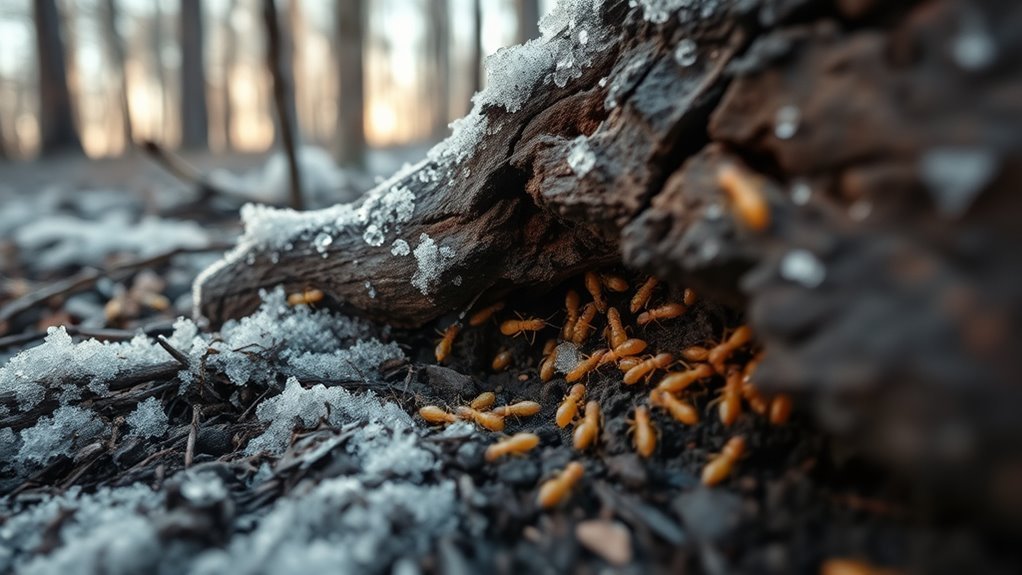
How do termites manage to cause damage even in the coldest months?
Subterranean termites burrow below the frost line, where temperatures stay stable. This allows termite activity in winter to continue.
They feed on wood underground, causing winter damage that often goes unnoticed until spring.
Drywood termites inside your heated home also keep feeding, hollowing out beams and weakening structures.
If you ignore signs of termite activity in winter, you risk costly repairs later.
| Termite Type | Winter Habitat | Winter Damage Effect |
|---|---|---|
| Subterranean termites | Below frost line | Hidden wood damage underground |
| Drywood termites | Heated indoor areas | Hollowed-out wooden beams |
| Both | Moisture-prone wood | Compromised framing |
Stay alert to prevent severe winter damage from termites.
Common Entry Points for Winter Infestations
You’ll want to check areas where wood touches the soil, as termites often use these spots to enter your home during winter.
Look for protective mud tubes on exterior walls, which subterranean termites build to travel safely in cold weather.
These tubes are key signs that termites have found a way inside despite the chill.
Soil-to-Wood Access
Because subterranean termites rely on soil contact, they exploit any cracks or gaps where wood meets the ground to enter your home.
These insects use the soil as their primary highway, constructing mud tubes from the soil up to your foundation’s wooden structures.
These tubes protect them from cold weather and predators while keeping humidity levels stable.
Termites often find entry points around the foundation where wood is close to or touching the soil, including gaps near utility pipes or poorly sealed basement walls.
During winter, they dig deeper below the frost line to reach warmer soil, maintaining their access routes.
If you spot mud tubes or soil-infused wood near your foundation, it’s a strong sign that termites have established tunnels to invade your home this winter.
Protective Mud Tubes
When temperatures drop, subterranean termites build protective mud tubes to travel safely between their colony and food sources.
These mud tubes are narrow, tunnel-like structures made from mud, fecal matter, and saliva.
They shield termites from the cold and predators, keeping them active during winter.
You should check common areas where mud tubes appear:
- Along foundation walls where soil meets the structure.
- On basement floors near wood in contact with the ground.
- Around wooden beams or siding vulnerable to termite entry.
Fresh, undisturbed mud tubes signal active termite activity, even in cold months.
Since these tubes serve as primary entry points into your home, inspecting and treating them is essential to prevent winter infestations.
Identifying Signs of Termites in Winter
Although termites are less active in cold weather, you can still spot clear signs of their presence during winter.
Look for mud tubes on exterior walls or foundations—these indicate subterranean termite activity.
Mud tubes on walls or foundations reveal subterranean termite presence even in colder seasons.
Tap wood surfaces; hollow sounds often mean internal termite damage.
Check near windows or vents for discarded wings, a sign of recent termite swarming.
You might also find small pellet-like droppings called frass close to wood structures, which point to drywood termites.
Keep an eye out for bubbling or peeling paint, as termites feeding just beneath the surface can cause this during colder months.
Recognizing these signs of termites in winter helps you address infestations early, even when termite activity slows down.
Effective Prevention and Control Strategies
You’ll want to start with regular inspections to catch termite activity early, especially during winter.
Keeping your home dry and sealing entry points helps prevent termites from getting inside.
When necessary, professional treatments like soil barriers or bait stations offer strong protection year-round.
Winter Termite Prevention
How can you effectively prevent termites from damaging your home during winter?
Since termites survive by burrowing below the frost line or staying inside heated structures, winter inspections become essential.
You want to catch any signs of activity before they cause serious damage.
Here’s what you should focus on:
- Schedule regular winter inspections to identify termite presence early.
- Control moisture levels by fixing leaks and ensuring proper drainage to make your home less inviting.
- Remove wood debris and keep areas around your foundation dry and well-ventilated to disrupt termite tunnels and mud tubes.
Inspection and Detection
Since termites can remain hidden inside walls and structures, regular inspections become essential for early detection and control.
You should detect termites by looking for mud tubes, hollow wood, and discarded wings, especially after warm or humid periods.
Regular inspections help reveal entry points and structural damage before it worsens.
Combining visual checks with bait stations boosts detection accuracy.
Professionals use moisture meters and infrared cameras to find hidden colonies, improving your chances of catching infestations early.
| Inspection Method | What to Look For | Best Time for Inspection |
|---|---|---|
| Visual Inspection | Mud tubes, discarded wings | After warm or humid weather |
| Moisture Meter | High moisture areas | Year-round |
| Infrared Camera | Hidden colonies | During regular inspections |
| Bait Stations | Termite activity | Continuous monitoring |
Professional Treatment Options
Although termites remain active during colder months, professional treatments provide effective prevention and control year-round.
You can rely on these targeted methods to keep your property safe, no matter the season.
Here’s what professionals use:
- Liquid soil barriers create a protective chemical layer in the soil around your home, blocking termites from reaching wood sources.
- Baiting systems involve strategically placed bait stations that attract termites, enabling experts to monitor and eliminate colonies early.
- Regular inspections by licensed professionals ensure early detection and timely application of treatments tailored for seasonal changes.
Frequently Asked Questions
What Cold Temperature Kills Termites?
Temperatures below 25°F (-4°C) usually kill termites if they’re exposed long enough.
Drywood termites die within hours below freezing.
On the other hand, subterranean termites can’t survive several days under 20°F (-6°C).
Stay aware!
What Do Termites Hate the Most?
You’d think termites hate cold the most, but actually, they detest dry, harsh sunlight and vibrations.
Can You Kill Termites by Freezing Them?
You can kill termites by freezing them, but only if you maintain subfreezing temperatures long enough to reach the entire colony.
Short cold spells usually don’t work, so professional freezing treatments are more effective.
Do Termites Go Away in Winter?
Termites don’t disappear, don’t hibernate, and don’t vanish in winter.
Instead, they burrow deeper, stay warmer, and keep feeding inside.
You’ll still need to watch for damage and manage infestations year-round, even in cold months.
Conclusion
Just like hardy explorers braving the Arctic chill, termites find ways to survive cold weather by retreating deep into insulated wood or soil.
You might think winter naturally halts their damage, but these resilient pests can still invade your home when you least expect it.
Stay vigilant by sealing entry points and spotting early signs—remember, even the coldest winters can’t stop termites from marching onward if you don’t act first.
In conclusion, termites are tough little creatures that adapt to cold conditions by hiding in warm places.
Even during winter, they can wreak havoc in your home if you’re not careful.
So, take proactive steps to protect your property. Regular inspections and sealing potential entry points are key to keeping these pests at bay, ensuring they don’t surprise you when the weather warms up.