How Termites Live in Cold Weather and Protect Your Home
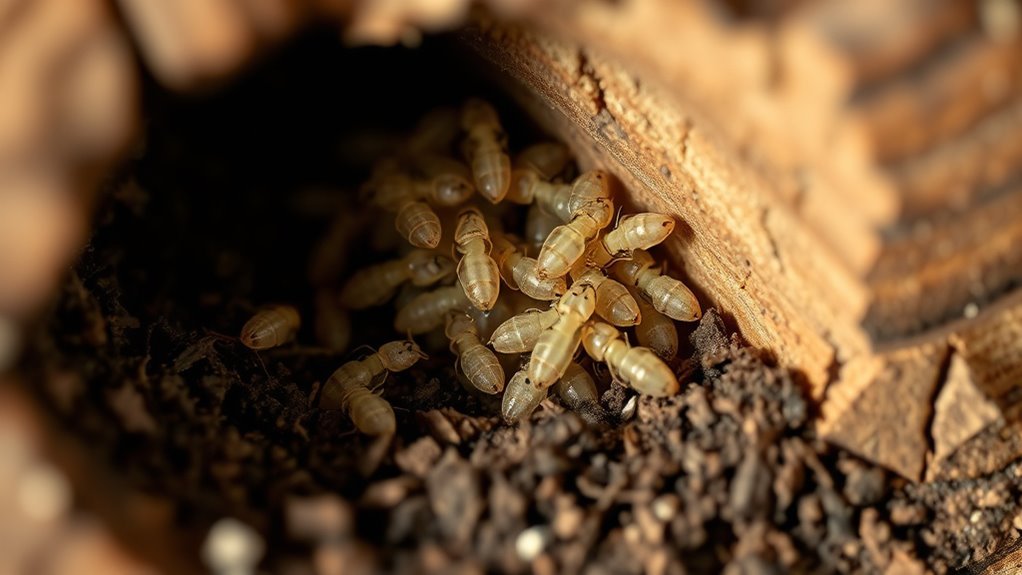
Termites are surprisingly resilient creatures and can stay active even in cold weather. They dig deeper underground to find warmer soil below the frost line, allowing them to thrive year-round.
Within these tunnels, termites continue to feed, reproduce, and repair their nests. This means they can cause significant damage to your home—even during winter months.
It’s essential to watch for signs of their presence, like mud tubes, wood damage, and small gaps near foundations that could provide them entry.
Taking proactive steps now can help protect your home from these unwelcome guests. Understanding their winter behavior can reveal even more strategies to safeguard your property against termite infestations.
Stay vigilant and keep your home safe!
How Termites Adapt to Cold Weather
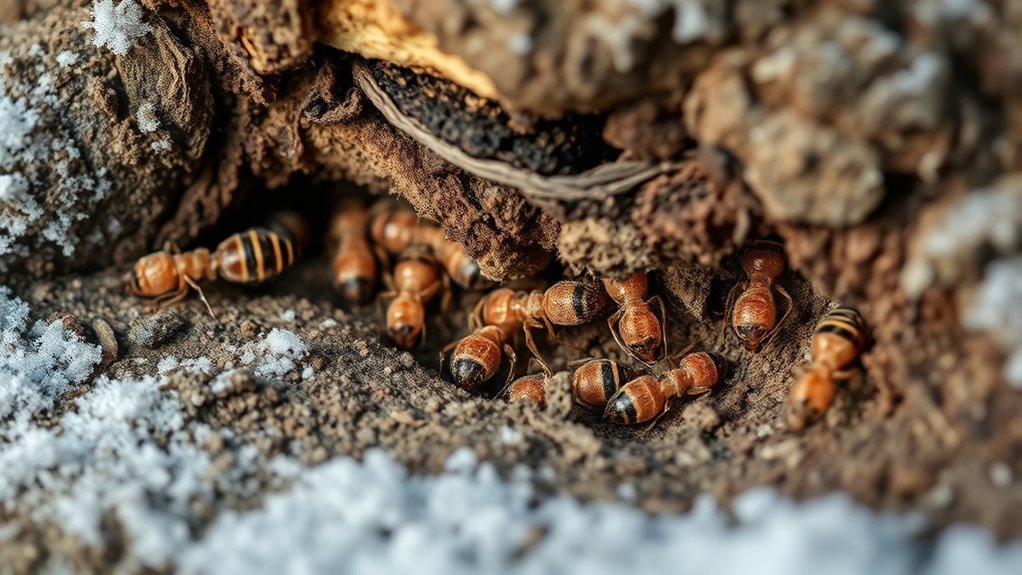
Although temperatures drop, termites don’t hibernate; instead, they adapt their behavior to stay active year-round.
Subterranean termites, for example, dig deeper into the soil to reach warmer layers below the frost line, helping them survive harsh winter temperatures.
This termite behavior lets them maintain activity in winter without freezing. They reduce movement and stay within protected underground tunnels, where temperatures remain stable.
By adapting to cold temperatures this way, termites continue feeding, reproducing, and repairing their nests even during winter.
Their ability to adjust to colder conditions by moving deeper into the soil and staying underground ensures the entire colony survives until warmer weather returns.
Understanding how termites adapt helps you recognize the risks they pose to your home year-round.
Winter Signs of Termite Activity
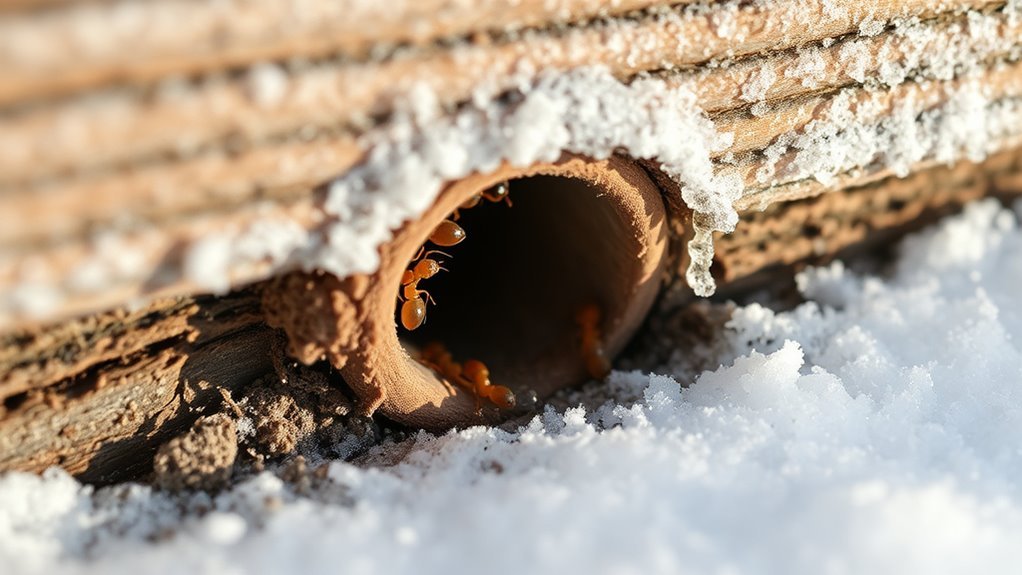
How can you tell if termites are active around your home during winter?
Look for winter signs like mud tubes on exterior walls, foundations, or crawl spaces—these are clear pathways termites use to access food sources.
Check for wood damage or hollow-sounding wood, which signal ongoing termite activity causing structural damage.
You might also spot discarded termite wings near windows, doors, or light fixtures, indicating recent swarm activity from nearby termite colonies.
Small, dark droppings near entry points further suggest they’re feeding inside.
Warped or buckled door and window frames can also result from internal termite damage during colder months.
The Impact of Winter on Termite Behavior
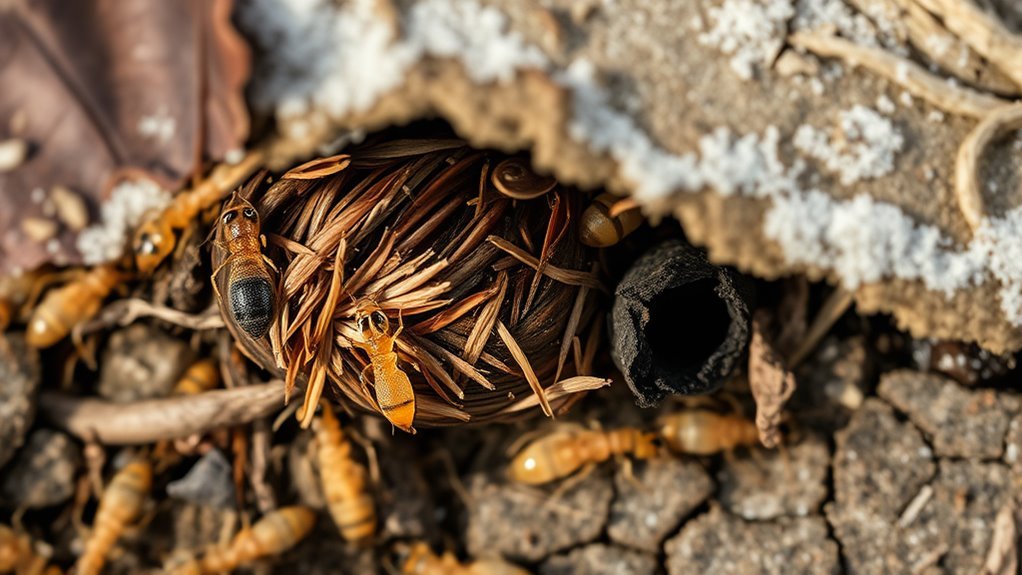
Recognizing winter signs of termite activity helps you stay alert.
But understanding how cold weather affects termite behavior gives you deeper insight into their persistence.
During winter, termites remain active by burrowing deeper underground, where the soil stays warmer.
This showcases typical underground termite behavior.
Unlike other insects, termites survive cold weather without hibernating.
They continue to feed and repair tunnels.
Drywood termites winter inside heated homes, benefiting from stable temperatures that allow them to expand colonies year-round.
Although the effects of cold on termites slow their activity, they don’t stop completely.
This makes signs of termites in winter subtle but present.
For effective termite control during winter, you need to understand these behaviors.
This knowledge helps you better protect your home from termites year-round.
Common Winter Entry Points for Termites
When cold weather drives termites to seek shelter, they exploit common entry points like cracks in your foundation, gaps around pipes, and poorly sealed windows or doors.
You’ll want to watch for foundation gaps and siding damage, especially near the base of your home, as these create easy access for termites.
Wood structures in soil contact or stored close to your house are prime targets, allowing subterranean termites to build mud tubes as protected pathways indoors.
Moisture from leaks or excess water softens wood and soil, making it easier for termites to invade.
Even sealed windows can’t stop termites if nearby cracks or gaps exist.
Strategies to Prevent Winter Termite Infestations
Although termites retreat from the cold, they still find ways to invade your home during winter.
To prevent winter termite infestations, you need to make your home resistant by sealing cracks and gaps around windows, doors, and foundation walls.
Termite activity in winter doesn’t stop entirely, as termites stay active seeking warmth and moisture.
Control moisture by fixing leaks, improving drainage, and ensuring proper ventilation to reduce attraction.
Regularly inspect for mud tubes and other signs of termites, like damaged wood or discarded wings.
These signs help you catch infestations early and minimize damage caused by termites.
Finally, schedule professional termite inspections during winter to detect and address issues before they worsen.
This gives you peace of mind throughout the cold season.
When and Why to Seek Professional Termite Help
Taking preventative steps at home is important, but knowing when to call in professional termite help can make a big difference during winter.
Winter infestations often go unnoticed because termite activity slows. However, experts can spot subtle signs of damage like mud tubes or hollow wood that you might miss.
Scheduling a termite inspection ensures early detection, especially since termites adapt by staying active indoors or underground.
Scheduling inspections helps catch termites early as they stay active indoors or underground during winter.
Prompt termite treatment by pest control specialists prevents minor issues from turning into costly repairs, safeguarding your property protection.
Regular professional termite inspections provide ongoing protection year-round, keeping your home safe even in cold weather.
Don’t wait for visible damage—seek professional termite help to catch infestations before they escalate and maintain your home’s integrity through every season.
Frequently Asked Questions
Will Cold Weather Kill Termites?
Cold weather won’t kill termites outright because they move deeper underground or into heated spaces.
You can’t rely on cold snaps alone to protect your home; termites adapt and stay active despite low temperatures.
What Is the Biggest Enemy of Termites?
You’d think termites fear fire or chemicals, but their biggest enemy is actually freezing cold.
When temperatures drop, their fragile mud tubes collapse, cutting off food.
What Is a Termite’s Worst Enemy?
A termite’s worst enemy is extreme cold.
When temperatures drop below 25°F for long, termites can’t survive.
What Temperature Kills Termites in the House?
Think of 25°F as the icy gatekeeper; when your home’s temperature drops below this, termites can’t survive.
You can’t just freeze them out indoors, though—they thrive in warmth, so keep vigilant to protect your castle.
Conclusion
Now that you know termites can survive cold weather by burrowing deep or staying active indoors, it’s clear they’re tougher than you might think.
Did you know termites cause over $5 billion in property damage annually in the U.S. alone? That’s a staggering figure!
That’s why protecting your home year-round is essential.
Keep an eye out for winter signs and seal common entry points.
If you suspect an infestation, don’t hesitate to call a professional.
They’re your best defense against these persistent pests.
In conclusion, understanding how termites adapt to cold weather is crucial for homeowners. Regularly check your property for signs of these pests and ensure your home is sealed against entry.
Taking proactive steps can save you from costly damages.
Don’t let termites ruin your peace of mind—invest in prevention today!