How to Help Succulents Survive Cold Weather
To help your succulents survive cold weather, it’s essential to take some precautionary steps. Tender varieties should be moved indoors before frost sets in.
Place them in bright, indirect light with temperatures between 50-60°F.
When it comes to watering, do so sparingly and only when the soil is completely dry. This helps prevent root rot, which can be a real issue in colder months.
For outdoor succulents, using frost cloths can provide an extra layer of protection.
Additionally, ensure they are in well-draining soil topped with mulch to shield their roots from harsh conditions.
If you notice any damaged leaves, remove them promptly to keep the plant healthy.
It’s also crucial to avoid extreme temperature shifts, as this can stress the plants.
Understanding your plant’s hardiness and adjusting care accordingly as temperatures drop can truly make a difference—so explore effective ways to protect and revive your beloved succulents!
Understanding Frost and Its Impact on Succulents
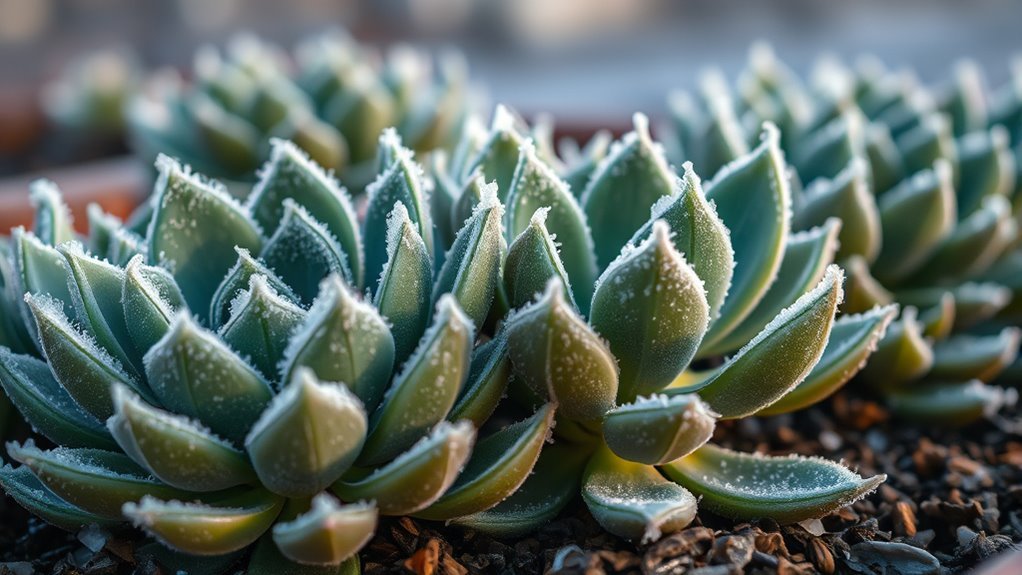
Although many succulents can handle temperatures just above freezing, frost occurs when the temperature hits 32°F (0°C).
Many succulents tolerate near-freezing temps, but frost begins at 32°F (0°C) and poses serious risks.
This causes water inside their cells to freeze, which can seriously damage or even kill the plant.
When frost forms, ice crystals rupture the succulent’s delicate cell walls.
This leads to mushy, blackened leaves and stems.
If you leave your succulents exposed during cold snaps, the freezing moisture inside their tissues can cause irreversible damage or death.
While some succulents tolerate brief cold spells, prolonged frost exposure overwhelms their defenses.
Understanding how frost impacts succulents helps you recognize when to protect them.
Keeping an eye on temperature drops and knowing your plants’ cold tolerance ensures your succulents survive harsh conditions without suffering from frost damage.
Identifying Hardy vs. Tender Succulent Varieties
Recognizing how frost affects your succulents sets the stage for knowing which varieties can handle cold weather and which need extra care.
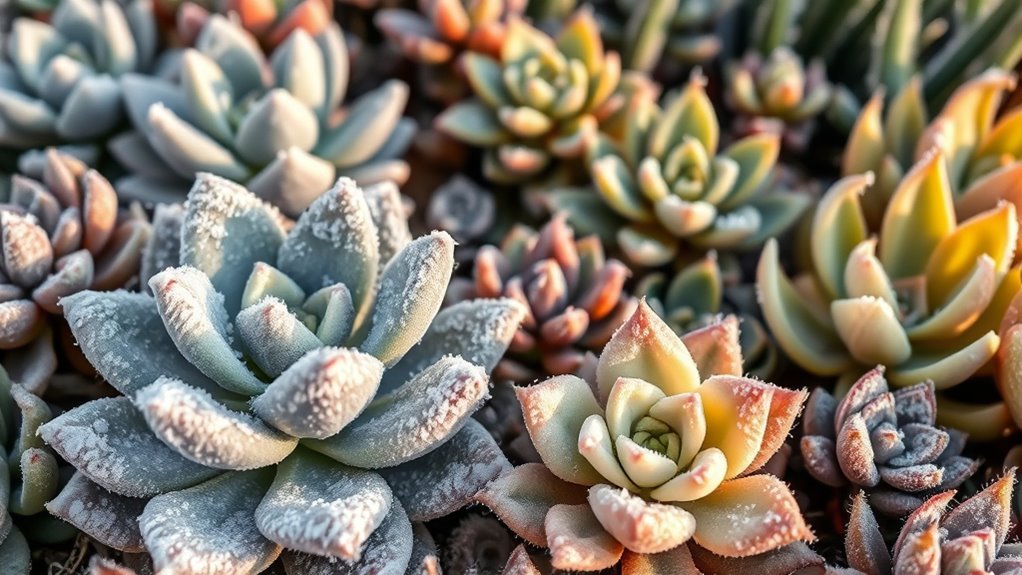
Hardy succulents like Sempervivum, Sedum, and some Aloe species have thick leaves and roots that provide excellent cold tolerance. They can survive temperatures as low as -20°F (-29°C).
In contrast, tender succulents such as Aeoniums, Lithops, and many Echeveria types have thinner leaves. This makes them vulnerable to freezing, so they require indoor protection during winter.
To identify your plants’ cold tolerance, use the USDA Plant Hardiness Zone map. It helps match succulent varieties to your local climate.
Regional Considerations for Outdoor Succulent Care
When you care for succulents outdoors, your region’s climate plays a crucial role in their winter survival.
In colder areas, use well-draining soil and add ground cover like mulch to prevent frost damage.
Coastal regions with mild winters often need little protection.
Knowing local frost dates helps you decide when to act.
| Region Type | Winter Care Tips |
|---|---|
| USDA Zones 4+ | Hardy succulents survive with well-draining soil |
In colder climates, cut back plants and cover them with leaves or mulch.
For coastal California, minimal protection is needed, but make sure to avoid frost damage.
In inland areas, use frost cloths and ensure you have proper ground cover and drainage.
Adjust your care based on these regional needs to keep your succulents healthy through winter.
Preparing Succulents for Winter Conditions
As temperatures approach freezing, you’ll want to move your succulents indoors to protect them from the cold.
Before relocating, water them thoroughly and guarantee their soil drains well to prevent rot.
Taking these steps will help your plants stay healthy throughout winter.
Timing Indoor Transition
Although succulents thrive outdoors during warmer months, you’ll need to bring them inside before the first frost hits.
This usually happens in late September, depending on your USDA hardiness zone.
Proper timing for the indoor shift is essential to protect your outdoor succulents from cold damage.
About 2-3 days before moving them indoors, water your succulents lightly.
This helps avoid excess moisture that could cause root rot.
Also, clean off any dead leaves, debris, and pests to reduce the risk of disease once they’re inside.
After relocating, place your succulents in bright, indirect light near south-facing windows.
If natural light is insufficient during winter, consider using grow lights.
By carefully managing the timing of the indoor transition, you’ll ensure your succulents stay healthy.
They’ll be ready to flourish again come spring!
Soil and Drainage
To prepare your succulents for winter, you’ll want to focus on soil and drainage to prevent water buildup and root rot.
Use pots with drainage holes to allow excess water to escape. Consider covering these holes with mesh tape or cheesecloth to keep your soil mix in place while maintaining airflow.
Choose a well-draining soil mix designed for succulents, like sandy cactus mix or a blend of potting soil with coarse sand or perlite.
Avoid heavy, clay-based soils that trap moisture and increase rot risks during cold, damp months.
To further improve drainage, elevate your potted succulents on small mounds or berms. This ensures water doesn’t pool around the roots.
Proper draining soil and pots with drainage are key to keeping your succulents healthy all winter.
Pre-Move Watering
Before you move your succulents indoors for the winter, water them thoroughly about two to three days in advance. This helps them handle the stress of relocation.
This pre-move watering guarantees their soil is well-hydrated but not soggy.
Avoid watering immediately before moving, as damp soil can cause root rot in cooler, less ventilated environments.
When the soil feels just slightly dry, water lightly to maintain hydration without over-soaking.
After moving indoors, if your succulents look dry, rehydrate the soil gently with collected rainwater to support healthy adaptation.
| Step | Importance |
|---|---|
| Water 2-3 days prior | Ensures soil hydration and stress aid |
| Avoid immediate water | Prevents rot in cooler, moist conditions |
| Soil dryness check | Maintains ideal hydration balance |
| Use rainwater | Promotes gentle rehydration indoors |
| Ensure drainage | Prevents excess moisture retention |
Protecting Succulents From Frost Damage
When temperatures fall below 32°F, frost can damage your succulents by freezing the water inside their cells. This freezing causes the cell walls to rupture.
Protecting succulents from frost damage means acting quickly. Move sensitive varieties like Aeoniums indoors or to a greenhouse before frost arrives.
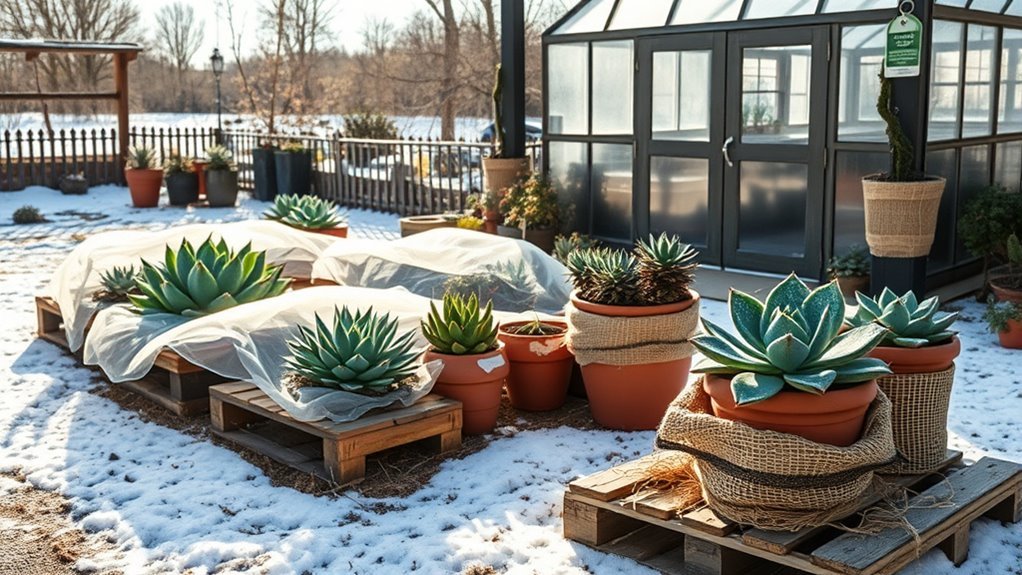
Use frost cloths or blankets to provide temporary insulation during cold nights. But don’t rely on them long-term in severe climates.
For outdoor plants, cover them with natural materials such as leaves or straw. This adds insulation and keeps frost from reaching vulnerable tissues.
After a frost event, check your succulents closely. Remove any damaged or mushy parts to prevent rot and encourage healthy regrowth.
Watering Practices During Cold Weather
Although your succulents need less water during cold weather, you should still monitor their soil carefully.
Water only when it’s completely dry to prevent root rot.
Always water succulents only when the soil is fully dry to avoid root rot.
Typically, watering every 4-6 weeks is enough since most succulents enter dormancy and require less moisture.
When you do water, soak the soil thoroughly, then let it dry out completely before the next watering.
Avoid watering if temperatures drop below 50°F or if the soil feels damp.
This increases the risk of frost damage and root rot.
If the topsoil or moss looks dry, rehydrate it slowly.
Just make sure excess water drains away to keep roots healthy.
Proper watering practices during cold weather help your succulents survive harsh conditions without stress.
Choosing the Right Containers and Soil for Winter
Selecting the right containers and soil plays a crucial role in helping your succulents thrive during winter.
Choose containers with drainage holes, like terra cotta or ceramic pots, to prevent waterlogging and encourage airflow around roots.
Avoid heavy glass planters as they retain moisture and limit drainage.
Line the pot’s bottom with mesh tape or cheesecloth to keep soil in place while allowing excess water to drain freely.
Use well-draining soil formulated for succulents, typically mixed with sand, perlite, or pumice, to reduce moisture retention in cold months.
Elevate containers on plant risers or mounds to improve drainage further and prevent standing water, which can cause root rot.
These steps ensure your succulents get the right balance of moisture and air during winter.
Indoor Overwintering Strategies for Tender Succulents
To keep your tender succulents thriving indoors, make sure they get at least 8 hours of bright, indirect sunlight near a south-facing window.
It’s really important to keep the temperature steady between 50-60°F.
Avoid placing them near heat sources or drafts, as that can harm them.
Water sparingly, only when the soil is completely dry.
Using well-draining soil is also crucial to prevent root rot.
Optimal Indoor Lighting
When you bring tender succulents indoors for the winter, providing essential lighting is vital to keep them healthy and prevent stretching.
Succulents indoors need at least 8 hours of bright, indirect sunlight daily to avoid etiolation and promote strong growth.
Placing your indoor succulents near south-facing windows helps maximize natural light during shorter winter days.
If sunlight isn’t enough, supplement with full-spectrum grow lights for 12 to 16 hours daily, especially for low-light tolerant varieties.
And don’t forget to rotate your plants weekly! This ensures even light exposure and prevents uneven stretching of stems and leaves.
Controlled Temperature Settings
Along with providing proper lighting, maintaining stable temperature settings plays a big role in keeping your tender succulents healthy indoors.
You should keep the indoor temperature between 50°F and 60°F to prevent cold stress.
Use a thermostat to monitor and regulate the room’s temperature, avoiding sudden fluctuations that can harm your plants.
Place your succulents away from radiators, space heaters, and drafts to maintain a controlled environment.
If indoor temperatures drop below 50°F, supplement with a heated mat or a space heater equipped with a thermostat for precise control.
Regularly check the temperature with a thermometer to ensure your succulents stay within the safe range.
Watering and Soil Care
Although succulents need less water during winter dormancy, you still have to water them carefully to avoid root rot.
Water only when the soil is completely dry, usually every 4-6 weeks.
Use well-draining soil with coarse sand or perlite and containers with drainage holes to prevent soggy soil.
Avoid overwatering, even if the succulent looks shriveled.
Moisture in cold conditions encourages rot.
Water deeply but infrequently, letting the top inch of soil dry out before rehydrating.
| Task | Recommendation | Reason |
|---|---|---|
| Watering | Every 4-6 weeks | Prevents root rot |
| Soil Type | Well-draining mix | Allows excess moisture out |
| Pot Selection | Drainage holes required | Avoids soggy soil |
| Soil Moisture | Keep slightly dry | Prevents overwatering |
Recognizing and Managing Winter Dormancy
Since succulents slow their growth and reduce water needs during winter, you’ll need to adjust your care routine to match their dormant state.
Recognizing dormancy is key; you’ll notice many succulents stop producing new leaves and may shed lower foliage.
Recognizing dormancy is essential as many succulents halt new leaf growth and shed lower leaves during winter.
Some types, like Sedum and Sempervivum, die back above ground but regrow in spring from their roots.
During winter dormancy, their metabolic activity drops, so cut back on watering to prevent root rot.
Avoid fertilizing until growth resumes, as nutrients aren’t needed.
By understanding these signs and adjusting watering needs accordingly, you’ll help your succulents stay healthy through cold months.
Properly managing winter dormancy guarantees they survive until warmer weather encourages new growth again.
Tips for Reviving Succulents After Frost Exposure
After frost exposure, start by carefully evaluating the damage to your succulent.
Let it dry out before trimming away any mushy or blackened tissue to encourage healthy regrowth.
Then, move your plant to a warmer spot and hold off on watering for a few days unless it looks dry.
Assess Frost Damage
How can you tell if your succulent has suffered frost damage?
Look closely for dark, mushy spots where ice expansion has caused cell rupture. This damaged tissue often signals frost damage.
Before doing anything, let these areas dry out and form a callous, which can take days to weeks.
Here’s what you should check:
- Presence of soft, discolored patches indicating cell damage
- Darkened, mushy leaves or stems from ice expansion
- Drying and callousing of affected areas before intervention
- Signs of rot developing if damaged tissue isn’t removed
Once you identify the frost damage and allow callousing, you can carefully prune away the damaged tissue.
This will help your succulent recover and prevent further issues.
Recovery Care Steps
Once you’ve let frost-damaged areas dry and formed a callous, it’s time to focus on helping your succulent recover.
Start by removing all mushy or rotted tissue with sterilized scissors to prevent infection.
After trimming, allow the cut areas to callous over for several days or weeks before watering again; this reduces the risk of rot.
When reintroducing your succulent to outdoor conditions, do it gradually.
Avoid direct sunlight at first to prevent shock.
Water sparingly, only when the soil is completely dry, so the roots can bounce back.
Keep a close eye on new growth, and protect your plant from future cold snaps using frost cloths or by moving it indoors.
These recovery steps will help your succulent bounce back from frost damage effectively.
Frequently Asked Questions
How Do I Keep My Succulents Alive in the Winter?
You should bring frost-sensitive succulents indoors before freezing.
Reduce watering to once every 4-6 weeks and keep the soil dry.
Also, cover outdoor plants with frost cloths or blankets during cold snaps to prevent damage and root rot.
How Cold Is Too Cold for Succulents?
Back in the days of knights and castles, you’d know succulents start suffering below 32°F.
You shouldn’t let temperatures drop below 28°F for soft types, or they’ll die.
Hardier ones can handle colder, but watch out below 0°F.
What Do You Do if Your Succulents Get Too Cold?
If your succulents get too cold, move them indoors or to a warmer spot.
Remove damaged leaves and let the wounds dry.
Avoid watering until they recover.
Also, cover outdoor plants with frost cloths during cold snaps to protect them.
Why Do You Put Cinnamon on Succulents?
You put cinnamon on succulents because it prevents infections and speeds healing by drying wounds.
Its natural antifungal properties protect cuts from rot and mold, helping your plants recover faster after pruning or damage.
Using cinnamon is a simple yet effective way to care for your succulents!
Conclusion
You can help your succulents survive cold weather by understanding frost and its risks.
Choosing hardy varieties or protecting tender ones is also essential.
Preparing soil and containers wisely will make a difference.
Don’t forget to move plants indoors when needed!
You can monitor dormancy and manage damage carefully.
Reviving your plants requires patience and care.
By acting thoughtfully and planning ahead, you can ensure your succulents thrive.
Responding promptly to changing conditions is key to their survival despite the chill.
In conclusion, protecting your succulents from cold weather involves understanding their needs and taking proactive steps.
By selecting the right varieties, preparing their environment, and being attentive to their condition, you’ll help them flourish even in winter.
With a little effort and care, your succulents can not only survive but thrive in the cold!