How Do Roaches Survive Cold Weather?
You might wonder how roaches survive cold weather.
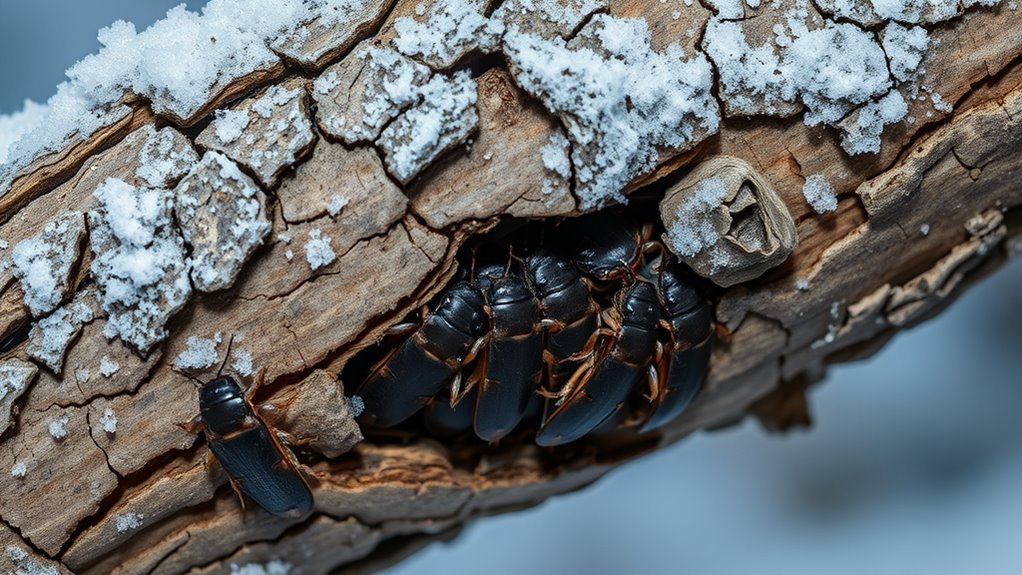
These resilient insects adapt by slowing their activity and metabolism, entering a hibernation-like state when temperatures drop below 44°F.
To escape the harsh cold, roaches seek shelter indoors, hiding in dark, warm spots like wall voids, cracks, or near appliances.
While adult roaches struggle to endure prolonged freezing conditions, their eggs are more resilient and can withstand short cold spells.
As temperatures rise, these eggs hatch, allowing the roach population to rebound.
If you’re curious about their winter habits and want to know how to keep them out of your home, there’s plenty more to uncover!
Cockroach Behavior During Cold Weather
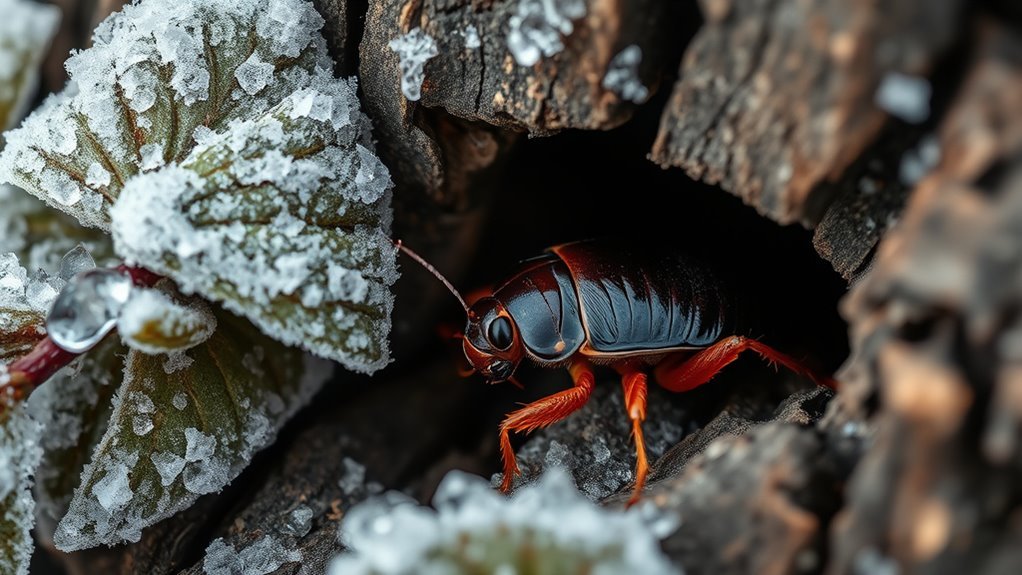
When temperatures drop below 44°F, cockroaches enter diapause, a hibernation-like state that slows their metabolism and activity.
You’ll notice a shift in cockroach behavior as they seek shelter from cold temperatures by hiding in wall voids, cracks, and behind appliances.
Their activity levels drop markedly, and reproduction slows to conserve energy.
Some species show greater tolerance, like Oriental cockroaches, which prefer damp, insulated hiding spots that help them endure colder conditions longer.
Cockroaches rely heavily on indoor environments since these spaces provide the warmth and protection necessary for survival.
Understanding these patterns helps you identify where cockroaches are most likely to shelter during winter and why their activity decreases, adapting cleverly to the challenges cold weather presents.
Temperature Thresholds for Cockroach Survival
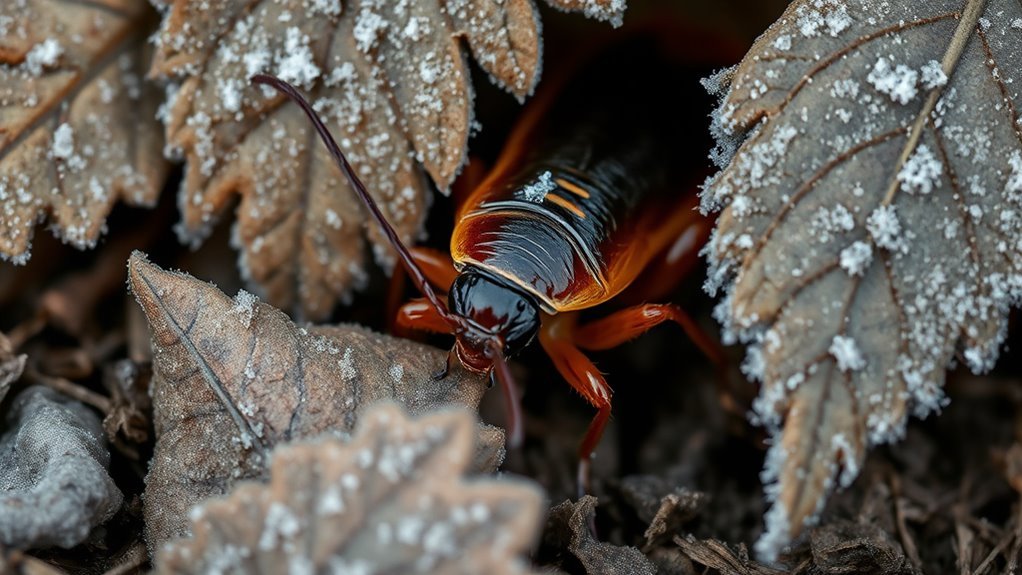
Although cockroaches adapt to colder weather by seeking shelter, their survival depends heavily on temperature thresholds.
You should know that adult cockroaches rarely survive prolonged exposure below 15°F (-9°C). Extreme cold below 0°F (-18°C) is usually fatal.
Eggs show better cold resistance, surviving short spells above freezing.
Species variation plays a big role—Oriental cockroaches tolerate colder temps better than German or American types.
When temperature drops below 40°F (4°C), cockroaches seek indoor warmth to boost seasonal survival.
| Temperature Range | Impact on Adults | Impact on Eggs |
|---|---|---|
| Above 40°F (4°C) | Active and mobile | Normal development |
| 32°F-40°F (0-4°C) | Reduced activity | Survive short spells |
| 15°F-32°F (-9-0°C) | Risky, limited survival | Usually safe |
| Below 15°F (-9°C) | Low survival chances | Risk increases |
| Below 0°F (-18°C) | Lethal to most species | Very low survival |
Cockroach Eggs and Cold Resistance
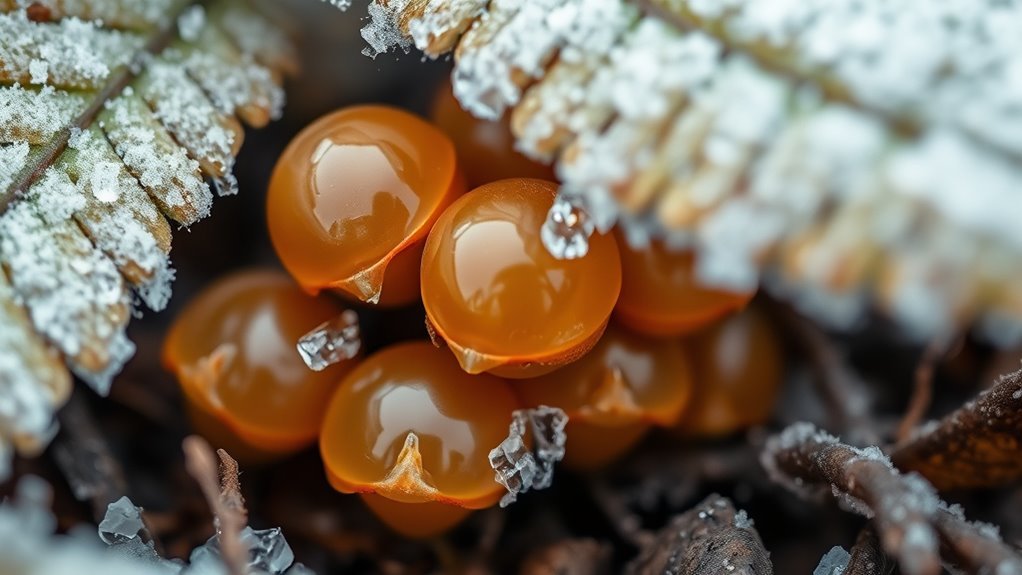
You might be surprised to learn that cockroach eggs are tougher against cold than adult roaches.
However, they still can’t handle long spells below 50°F.
Most eggs won’t survive freezing temperatures under 32°F, though some species manage brief cold snaps.
If the eggs make it through winter, their hatching can trigger infestations once warmer weather returns.
Egg Cold Tolerance
Cockroach eggs withstand cold better than adults, but they still can’t handle extreme temperatures.
Their egg resilience allows them to survive mild cold temperatures, helping with winter survival, but they have clear limits on cold tolerance.
When you consider egg cold tolerance, keep in mind:
- Most cockroach eggs can’t survive prolonged cold exposure below 50°F (10°C), which lowers hatch rates.
- Some species tolerate short periods at freezing (32°F or 0°C), yet extended exposure harms development.
- Temperatures above freezing generally don’t threaten eggs, letting them survive mild winters until spring warmth triggers hatching.
Understanding these temperature thresholds helps explain how cockroach eggs persist through cold spells.
But they remain vulnerable to harsher conditions that reduce their chances of hatching successfully.
Survival Temperature Thresholds
Eggs show greater cold resistance than adult roaches, but they still face strict survival temperature limits.
Most cockroach eggs can’t survive prolonged cold below 32°F (0°C). While short-term exposure to freezing temperatures may not kill all eggs, extended periods of cold drastically reduce egg survival.
You should know that temperature thresholds vary by species, with some eggs tolerating cold temperatures better than others. However, freezing temperatures generally remain a critical barrier.
Once temperatures rise after winter, surviving eggs hatch, signaling improved environmental conditions.
Understanding these temperature thresholds helps explain why cockroach populations decline during harsh winters but rebound as the weather warms.
If you want to control infestations, recognizing how cold impacts egg survival is key to timing your efforts effectively.
Hatching and Infestation
Although cold temperatures can kill many adult roaches, their eggs often survive hidden in cracks or furniture, waiting for warmer weather to hatch.
Cockroach eggs show notable cold resistance compared to adults, but most can’t endure extended exposure below 32°F (0°C).
Their egg cases, or oothecae, survive short cold spells and hatch once temperatures rise, sparking new infestations.
Species variation plays a key role; for example, Oriental cockroach eggs tolerate cold better than German cockroach eggs.
Here’s what you should know about hatching and infestation:
- Cockroach eggs typically die after prolonged exposure to temperatures under 50°F (10°C).
- Eggs often remain concealed during winter, aiding winter survival.
- Hatching occurs in spring or summer, leading to renewed infestation cycles.
Understanding this helps you anticipate and control cockroach problems effectively.
Common Winter Hiding Places for Cockroaches
When winter hits, cockroaches look for warm indoor shelters like wall voids, behind baseboards, and inside cabinets to stay cozy.
You’ll often find them hiding near appliances like stoves and microwaves, where the heat keeps them comfortable.
Knowing these spots can help you spot and prevent infestations during cold months.
Indoor Shelter Spots
Since cockroaches can’t tolerate cold weather, they seek out warm, hidden spots inside your home to survive the winter.
They find shelter in various indoor environments that provide warmth and protection from the cold.
These winter shelter spots include:
- Wall voids and cracks and gaps around windows or doors, offering tight hiding spots away from drafts.
- Cluttered spaces like basements, crawlspaces, and under sinks, where darkness and dampness create perfect conditions.
- Warm sheltered areas near appliances, though we’ll explore these in detail later.
It’s important to know where they like to hide so you can take steps to keep them out!
Warm Appliance Hiding
If you want to keep cockroaches out during winter, pay close attention to your appliances.
Cockroaches seek warmth and often hide inside insulated appliances like refrigerators, stoves, and microwaves. They squeeze through small gaps around seals, vents, and wiring to find a refuge where the heat generated maintains a survivable temperature.
This warmth prevents them from freezing and slows their metabolism, allowing them to stay dormant until conditions improve. Because appliances provide consistent heat, they become prime winter shelters for these pests.
To reduce the chances of cockroaches using your appliances as hiding spots, make sure to keep them clean and properly sealed.
Tightening seals and eliminating gaps around your appliances limits their access to these warm refuges, helping you control infestations during cold weather.
Impact of Climate on Cockroach Activity in Winter
Although cold weather slows them down, cockroaches adapt by reducing activity and seeking shelter in wall voids or other protected spots to conserve energy.
The impact of climate on cockroach activity in winter is significant, as cold temperatures force them into dormancy or hibernation.
You’ll notice:
- Below 44°F, cockroach activity and reproduction slow dramatically, aiding winter survival.
- Many species can’t withstand long-term freezing below 15°F, pushing them indoors to find warmth.
- Cockroach eggs show more cold resistance but usually don’t survive extended freezing.
Indoor warmth in mild climates means cockroaches can remain active year-round, unaffected by outdoor temperature impact.
Understanding these patterns helps you grasp how cockroaches survive and adapt during harsh winters without relying solely on their egg resistance.
Effective Winter Prevention Strategies
To keep cockroaches from invading your home during winter, you need to block their entry points and eliminate their attractants.
Start by sealing cracks and covering gaps around doors, windows, and foundations.
Install door sweeps to further block common entry points.
Maintaining cleanliness is key to reducing attractants.
Make sure to remove food crumbs and fix leaks that create damp hiding spots.
Controlling humidity also helps prevent infestations.
| Winter Prevention Task | Purpose |
|---|---|
| Sealing cracks & cover gaps | Block roach entry points |
| Install door sweeps | Prevent roaches from slipping in |
| Reduce attractants | Eliminate food & water sources |
Taking these steps will markedly reduce roach activity and keep your home pest-free all winter long.
Professional Pest Control Solutions for Cold Seasons
While sealing entry points and maintaining cleanliness can substantially reduce roach activity during winter, you might still face challenges that require expert help.
Professional pest control experts identify cockroach species and their hiding spots to tackle winter infestations effectively.
They use targeted baits and residual insecticides combined with sealing entry points to block cold-weather entry.
By intervening early, professionals eliminate eggs, adults, and hidden populations, preventing severe infestations inside your home.
Here’s what professional pest control offers for cold seasons:
- Customized treatment plans ensuring long-term protection
- Environmentally safe methods targeting all cockroach life stages
- Regular inspections to monitor and prevent winter infestations
Trusting professional pest control helps safeguard your space from roaches seeking warmth during cold months.
Frequently Asked Questions
What Temperature Is Too Cold for Roaches?
You’ll find temperatures below 15°F (-9°C) too cold for roaches since they can’t survive long exposure.
Anything under 45°F (7°C) is generally lethal to adults, so cold weather really limits their survival chances.
Why Should You Never Kill a Cockroach?
Imagine smashing one cockroach only to summon an entire army.
Killing them releases pheromones that attract more roaches.
You’ll spread bacteria, worsen infestations, and push survivors to hide.
This makes your pest problem even harder to solve.
Can Cockroaches Survive the Freezing Cold?
No, cockroaches can’t survive freezing cold for long.
They’ll seek warmth indoors because prolonged exposure to freezing temperatures kills them and their eggs.
How Long Does It Take for Cold to Kill Cockroaches?
Think of cold as a ruthless winter king—cockroaches usually can’t survive his icy reign beyond a few hours,
sometimes just minutes below 32°F.
You’ll see them perish faster the colder it gets.
Stay cozy!
Conclusion
As winter’s chill wraps around your home like a heavy blanket, roaches don’t simply disappear—they find cozy nooks to wait it out.
By understanding their clever hiding spots and temperature limits, you can spot where they might be nesting in the cold.
Don’t let these resilient pests turn your winter into a restless night.
Take action now with smart prevention and professional help to keep your space warm, safe, and roach-free all season long.
In conclusion, even in cold weather, roaches can survive by finding sheltered areas in your home.
Being proactive with prevention strategies and seeking professional pest control can make a huge difference.
Stay vigilant to protect your home from these persistent pests and ensure a comfortable winter.