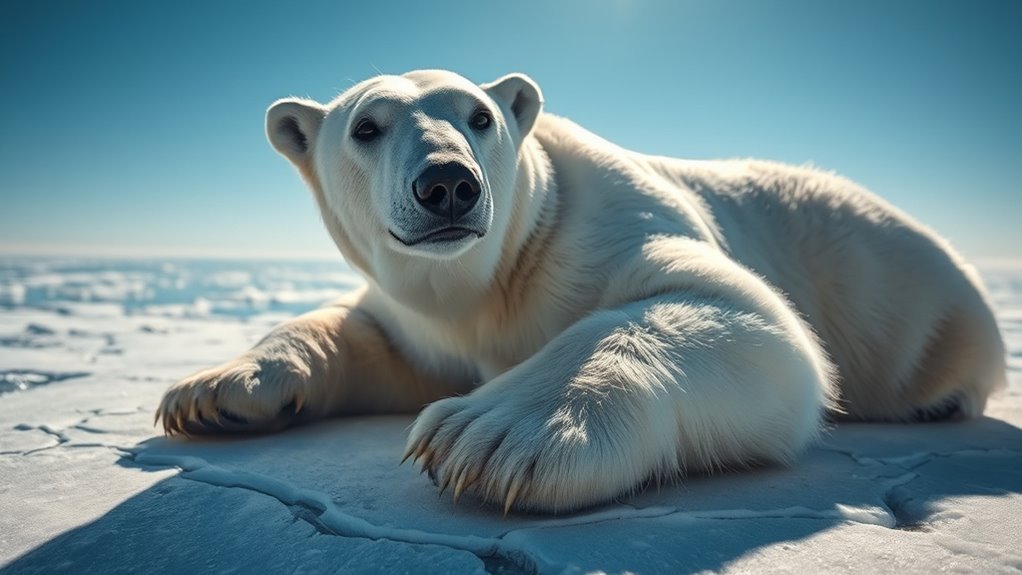
How Do Polar Bears Survive Hot Weather?
You’ll see polar bears handle hot weather by seeking shade, shedding some of their thick fur, and spreading out on cool ground or mud.
They often dip into water—streams, ponds, or coastal areas—to cool off. Their large paws help dissipate heat, and they reduce activity during the hottest parts of the day.
These clever tactics let them stay comfortable despite rising temperatures.
There’s even more to discover about how they adapt and survive in summer conditions.
Cooling Strategies Used by Polar Bears in Warm Conditions
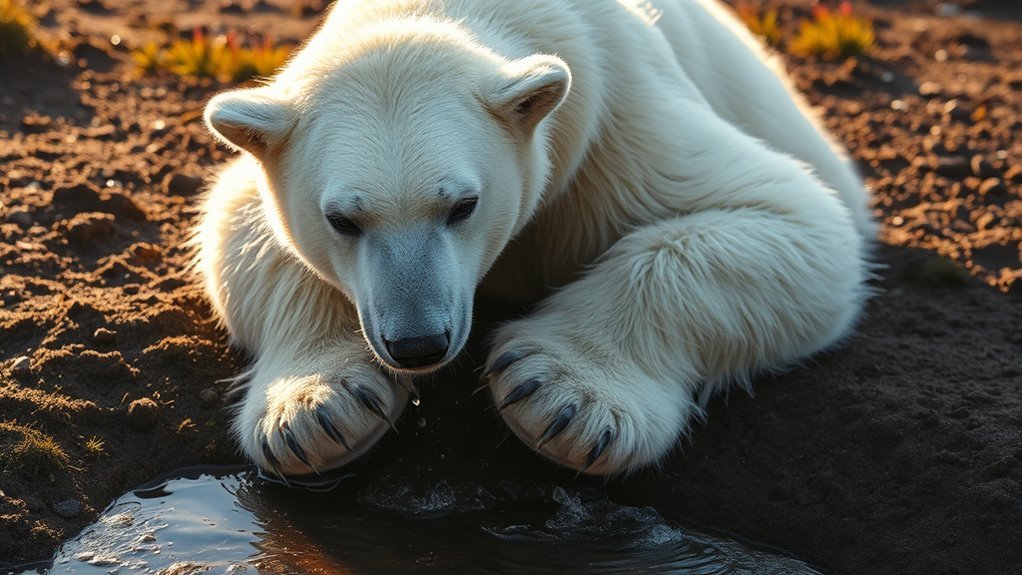
When polar bears face warm weather, they actively seek shade under trees, rocks, or other structures to lower their body temperature.
Since sea ice is melting due to climate change, polar bears spend more time on land, making shade essential for their thermoregulation.
With melting sea ice, polar bears rely on shade more than ever to regulate their body temperature.
You’ll notice they shed dense underfur in summer to help dissipate heat.
They also use their large paws to spread their bodies on cool surfaces like damp earth or mud, which helps cool them down.
If you watch closely, you’ll see them swim in streams, ponds, or coastal waters, taking advantage of their excellent swimming skills to stay cool.
Diving into icy pools or breaking ice blocks also helps polar bears manage heat during warmer conditions, adapting skillfully despite a changing Arctic environment.
Physical Adaptations That Help Polar Bears Regulate Heat
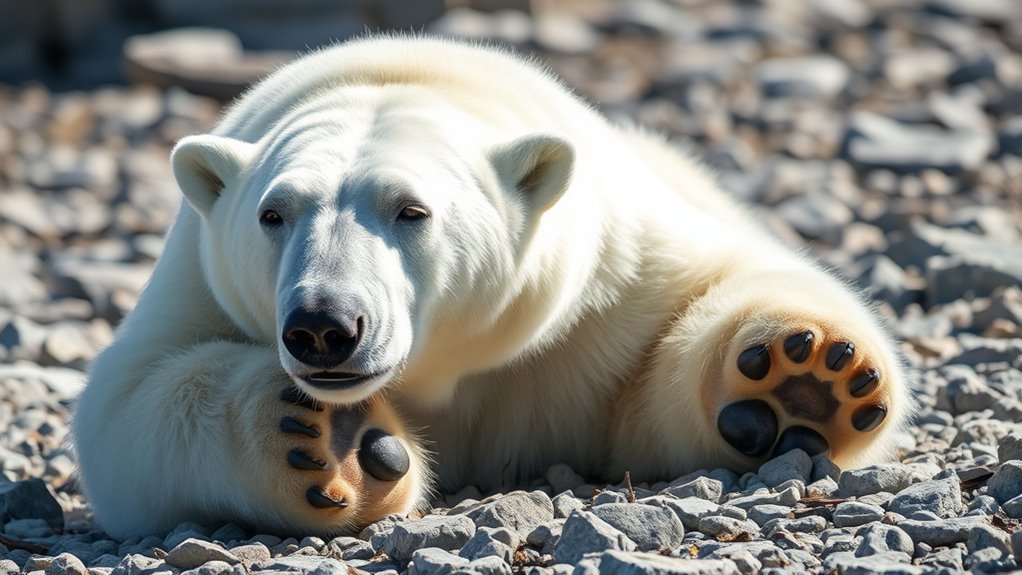
Although polar bears are built for cold climates, they possess remarkable physical adaptations that help them regulate heat during warmer conditions.
You might be surprised how polar bears spend their time managing body temperature despite their thick fur. Key adaptations include:
- Dense undercoats and hollow guard hairs trap air for insulation but also allow heat dissipation.
- Black skin beneath their fur absorbs solar heat, aiding in temperature control.
- Large paws with specialized blood vessels act as natural radiators to release excess heat.
These features work together so you can understand how polar bears balance warmth and cooling.
Shedding dense underfur during hot weather further reduces insulation, helping them stay comfortable.
These physical traits enable polar bears to survive and adapt when temperatures rise.
Behavioral Changes During Hot Weather
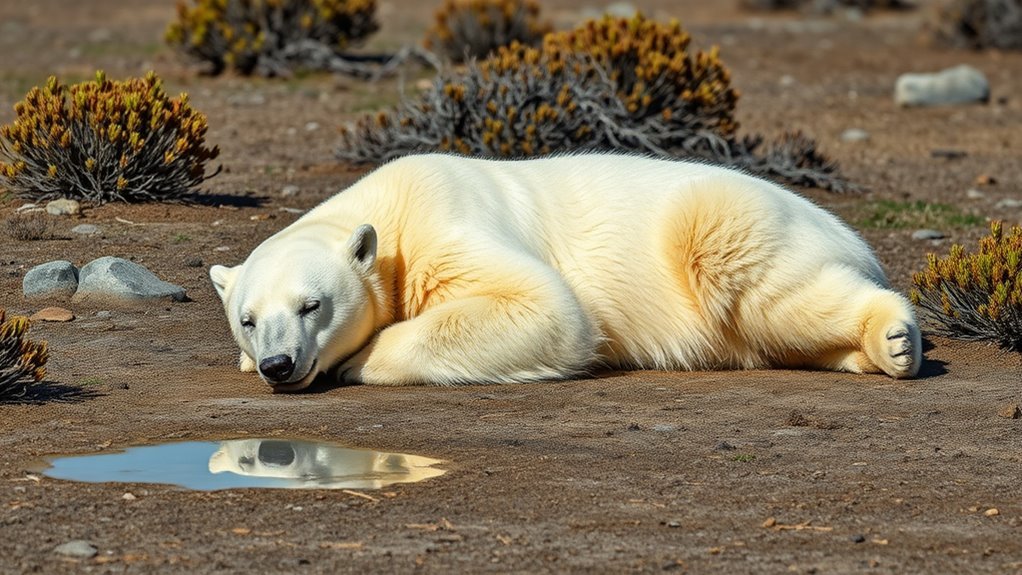
When the temperature rises, you’ll notice polar bears slow down to avoid overheating.
They often find shade under trees or rocks to stay cool and save energy.
Watching how they adjust their behavior helps you understand their survival strategies during hot weather.
Reduced Activity Periods
Since polar bears generate a lot of body heat, they reduce their activity during hot weather to stay cool.
You’ll notice they often rest for longer periods, which helps minimize heat production and conserve energy.
When you observe them, they might:
- Lie down for extended times to avoid overheating.
- Limit movement to cooler parts of the day, reducing exertion.
- Spread out on cool surfaces like damp earth to dissipate heat.
Seeking Shade Spots
Along with cutting back on their activity, polar bears change where they spend their time to beat the heat.
You’ll find them seeking shade under trees, rocks, or man-made structures, helping them conserve energy and avoid overheating.
They often spend longer resting in these cooler spots, sometimes lying on damp earth or mud to dissipate heat.
While they don’t have air-conditioned indoor spaces, natural shade and water dips act like nature’s cooling system.
| Shade Spot | Benefit | Behavior |
|---|---|---|
| Trees | Shade & Cooling | Spend longer resting |
| Rocks | Cool Surface | Lie stretched out |
| Man-made Structures | Shelter | Rest during hottest hours |
| Damp Earth/Mud | Heat Dissipation | Spread out bodies |
| Water Sources | Lower Body Temp | Dip to cool off |
Role of Water in Polar Bear Thermoregulation
Although polar bears have thick fur and fat to insulate them, they rely on water to keep cool during hot weather.
In Western Hudson Bay, where summer temperatures can rise, these bears use water to regulate their body heat effectively.
You’ll notice they:
- Swim using their large, paddle-shaped paws to dissipate excess heat.
- Immerse themselves in streams, ponds, or coastal waters to lower their core temperature.
- Wade in water to stay comfortable when the sun feels too strong.
Impact of Climate Change on Polar Bear Summer Habits
As climate change accelerates, you can see how polar bears struggle with longer summers and less sea ice.
Earlier ice melt and delayed formation force them onto land for extended periods, cutting off access to their primary prey—seals.
This means you’ll notice polar bears fasting longer, leading to significant weight loss and lower energy reserves.
Rising Arctic temperatures, especially in areas like Hudson Bay, push summer conditions beyond what they’ve historically endured.
You’ll understand that with sea ice shrinking, polar bears’ hunting opportunities shrink too, increasing starvation risks.
This extended fasting also harms reproduction, threatening their population’s future.
Regional Variations in Summer Behavior of Polar Bears
You’ll notice that polar bears behave differently depending on where they live and how much sea ice remains in summer.
In some regions, they stick to the ice to hunt seals.
While in others, melting ice forces them onto land to find alternative food.
Understanding these regional differences helps you see how sea ice conditions shape their survival strategies.
Geographic Behavior Differences
When summer arrives, polar bears adjust their behavior depending on where they live in the Arctic.
You’ll notice that their survival strategies vary widely across regions:
In the North American High Arctic, bears keep hunting on year-round ice or glacier fjords with little change.
In places like Norway, Russia, and Alaska, some bears stay on drifting sea ice hunting seals, while others forage on land or scavenge marine mammals.
In Central and Eastern Canada, bears face complete sea ice melt, forcing them ashore.
There, they either fast or hunt land prey depending on availability.
You’ll also find Western Hudson Bay bears fasting through summer.
Pregnant females trek inland and lose fat daily.
These geographic differences shape how polar bears cope with the heat and scarce resources.
Sea Ice Impact
How does sea ice shape polar bears’ summer behavior across different Arctic regions?
In the North American High Arctic, where sea ice lasts year-round, you’ll find polar bears actively hunting seals even in summer, with little change to their habits.
But in places like Alaska, Russia, and Arctic Norway—the Divergent Ice Ecoregion—melting ice forces bears to adapt.
Some stay on drifting ice, traveling long distances across ice floes. Meanwhile, others head onshore, scavenging stranded whales or hunting seals near land.
In the Seasonal Ice Ecoregion, such as central and eastern Canadian Arctic, sea ice melts completely during summer.
This pushes bears ashore where they often fast or search for terrestrial prey.
Insights From Monitoring and Tracking Polar Bears in Summer
Although polar bears thrive in cold environments, tracking data reveals they actively adjust their behavior to cope with summer heat.
You’ll see that they reduce their activity and seek shade to avoid overheating. Monitoring shows they often cool off by entering streams or ponds, which helps regulate their body temperature.
However, spending more time on land due to melting sea ice forces them to rely on less energy-efficient terrestrial behaviors, leading to weight loss.
Here are key insights from tracking polar bears in summer:
- They shed dense fur and increase blood flow to their paws to dissipate heat.
- Their energy expenditure rises when active in heat, impacting survival.
- Water bodies become critical cooling spots during hot days.
These behaviors highlight their remarkable adaptation but also their vulnerability.
Frequently Asked Questions
What Temperature Is Too Hot for a Polar Bear?
You’ll find temperatures above 50°F (10°C) too hot for polar bears, causing heat stress.
When it’s over 60°F (15°C), they risk overheating, so they seek shade or cooler spots to stay safe and comfortable.
What Is the 3 Bear Rule?
The 3 Bear Rule means you should keep your distance if you see three bears together.
Stay calm, back away slowly, and avoid eye contact to stay safe and prevent provoking them.
How Can Polar Bears Survive in Warm Weather?
You might think polar bears can’t handle heat, but they shed fur, seek shade, and swim to cool off.
Coincidentally, just like you grab a cold drink on hot days, they find ways to chill.
Can a Polar Bear Survive in the Summer?
Yes, a polar bear can survive in summer by seeking shade, swimming to cool off, and reducing activity.
But you should know that prolonged heat stresses them. This can cause weight loss and threaten their survival if temperatures stay high too long.
Conclusion
Just like a ship steering uncharted seas, you can see how polar bears skillfully adapt to the warmth.
They use clever cooling tricks and smart behaviors to stay comfortable.
Their physical traits and love for water act as shields against heat.
Yet climate change challenges their survival like an unpredictable storm.
By tracking their summer journeys, you gain a glimpse into their resilience.
This reminds you that even the mightiest must adapt to thrive in shifting worlds.
In conclusion, polar bears have developed unique strategies to cope with warmer temperatures. Their ability to cool down and their dependence on water play crucial roles in their survival.
However, with climate change posing significant threats, it’s vital to monitor their adaptations and movements.
Understanding how these magnificent creatures navigate their increasingly challenging environment showcases their resilience and the urgent need for conservation efforts.