What Happens If Polar Bears Live in Warm Weather?
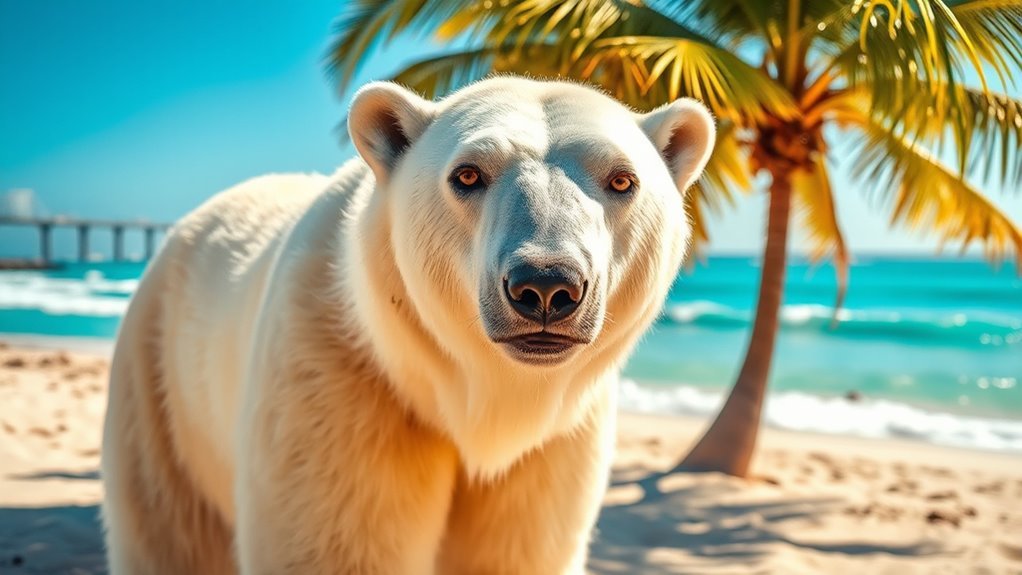
If polar bears live in warm weather, they lose their icy hunting grounds, making it harder to catch seals and stay healthy.
You’d see them spending more time on land, wandering farther for scarce, low-calorie foods like berries.
Unfortunately, these foods can’t meet their energy needs.
As a result, their bodies struggle, leading to weight loss and reduced survival rates.
Though some genetic changes may help, these adaptations might not keep up with the rapid climate shifts we’re witnessing.
It’s crucial to understand how these challenges shape their future and the overall health of their populations.
The impact of warmer weather on polar bears is a pressing issue that highlights the urgency of addressing climate change.
By exploring these challenges, we can gain insights into the fate of these magnificent creatures.
Effects of Sea Ice Loss on Polar Bear Habitat
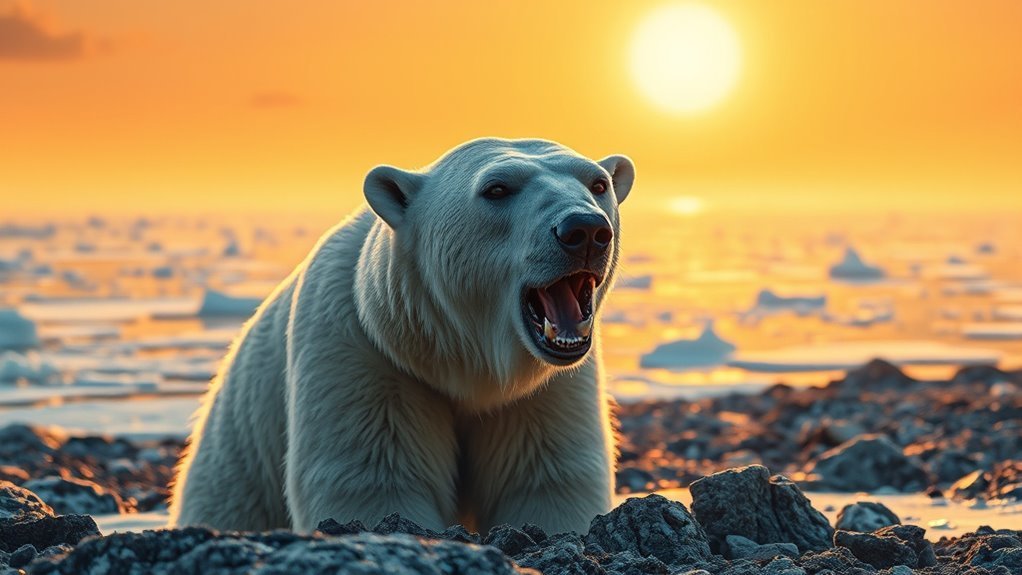
As sea ice disappears, polar bears lose their main hunting grounds, making it tougher for them to catch seals and survive.
You’ll see that sea ice loss, driven by climate change, directly reduces polar bear habitat across the Arctic.
Melting sea ice means fewer platforms for hunting, leading to food scarcity that affects their weight and reproductive success.
This habitat reduction shortens their hunting season, forcing polar bears to endure longer fasting periods.
You might notice polar bear populations shrinking as their environment shrinks, putting them at greater risk.
The decline in sea ice also forces bears to travel farther and expend more energy just to find food, worsening their chances of survival.
In short, the loss of sea ice critically threatens polar bear survival by eroding the very foundation of their Arctic life.
Behavioral Changes When Polar Bears Spend More Time on Land
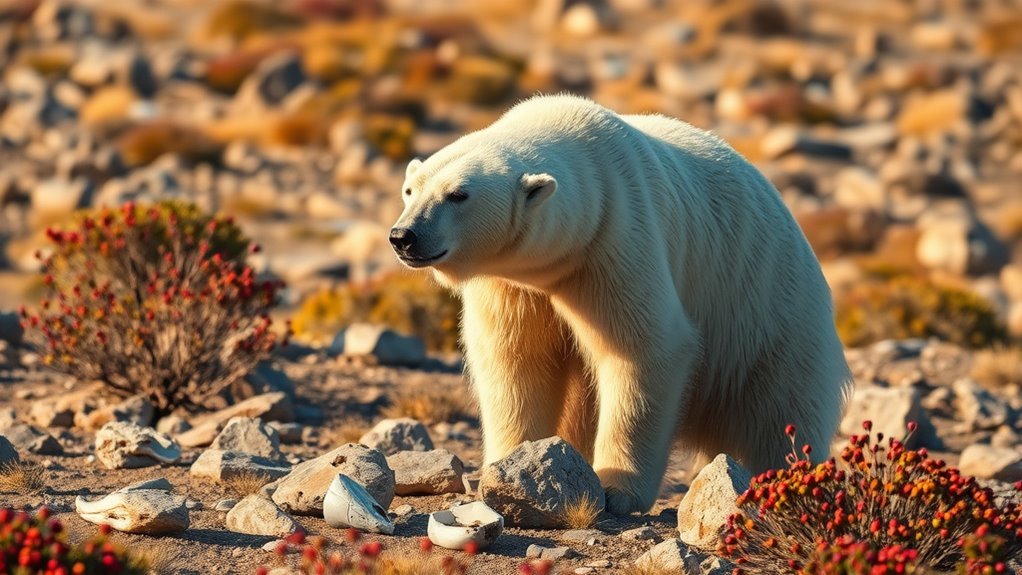
When polar bears spend more time on land because of melting sea ice, they change their behavior markedly.
You’ll notice that polar bears shift from hunting seals to foraging terrestrial foods like berries and bird eggs.
This change reflects behavioral changes driven by food scarcity, as land-based foods aren’t as calorie-rich.
Because of this, polar bears often face weight loss and longer fasting periods.
You might also observe them traveling greater distances—sometimes up to 330 km—to find suitable habitat and resources.
Spending more time on land increases human-bear interactions, which raises safety concerns for both bears and Arctic communities.
Additionally, these behavioral changes negatively impact reproduction since bears can’t build the fat reserves they need for mating and raising cubs without the sea ice and its marine prey.
Nutritional Challenges of Terrestrial Diets
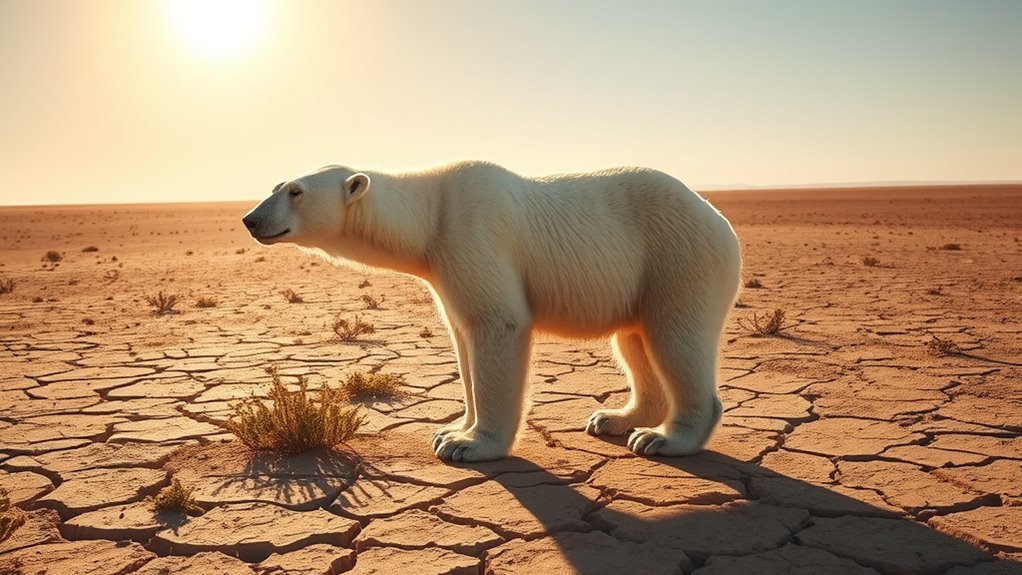
How do polar bears cope with the nutritional challenges posed by a terrestrial diet?
When forced onto land, you’d find polar bears facing serious energy deficits because terrestrial diets—berries, birds, and eggs—offer far fewer calories than their usual high-fat seal prey.
To meet their energy needs, they’d have to consume large amounts of these low-calorie foods, which is tough and often insufficient.
This shift leads to weight loss, threatening polar bear nutrition and overall health.
Over time, this energy gap could reduce reproductive success and cub survival rates, especially as climate warming pushes bears off sea ice for longer periods.
With terrestrial food sources unable to fully replace the energy seals provide, polar bears risk starvation if they stay ashore more than 180 days.
This situation highlights the harsh nutritional challenges of life away from the ice.
Genetic Adaptations to Warmer Arctic Conditions
Why are polar bears showing rapid genetic changes in warmer Arctic regions?
DNA sequencing reveals increased activity of transposons—”jumping genes”—which promote swift genetic adaptation by altering gene expression patterns.
As climate change warms their Arctic habitat, environmental stress triggers these transposons to move, reshaping gene activity linked to metabolism, aging, and stress response.
This evolution helps polar bears adjust to new diets, shifting from high-fat seals to more plant-based foods.
You can see how gene expression changes enhance fat processing, supporting survival in less icy, warmer environments.
These genetic shifts driven by environmental stress exemplify how polar bears undergo rapid adaptation, using molecular mechanisms like transposons to cope with the challenges climate change poses to their traditional Arctic lifestyle and diet.
Future Outlook for Polar Bear Populations in a Changing Climate
As global temperatures keep rising, you’ll see polar bear habitats shrinking dramatically. Sea ice is projected to decline by up to half by 2050.
Rising global temperatures could halve polar bear sea ice habitat by 2050.
Climate change drives sea ice melting, reducing the Arctic habitat that polar bears rely on for hunting seals. This leads to food scarcity, causing weight loss and lower reproductive success, which fuels population decline.
Some polar bears show genetic adaptations to warming temperatures, especially in less icy regions. However, these changes may not keep pace with habitat loss.
Genetic diversity plays a vital role in their survival strategies, yet ongoing warming threatens it. Without effective conservation efforts addressing climate change, the future outlook for polar bear populations looks grim.
Their survival in a rapidly changing Arctic remains uncertain.
Frequently Asked Questions
Can Polar Bears Survive Warm Weather?
You can’t expect polar bears to survive well in warm weather.
Their thick fur and fat make them overheat, which can reduce hunting opportunities.
This leads to weight loss and health issues, threatening their survival over time.
What Happens if a Polar Bear Gets Too Hot?
If a polar bear gets too hot, you’ll see it panting, seeking shade, or cooling in water.
But it can still suffer heat stress, dehydration, and reduced hunting ability.
This puts its health and survival at risk in warmer conditions.
What Will Happen to Polar Bears if Their Habitat Gets Warm?
If their habitat warms, you’ll see polar bears struggle to find food, lose weight, and face lower reproduction rates.
They’ll spend more time on land, risking starvation and population declines due to shrinking sea ice.
What Do Polar Bears Do When in Heat?
When you see a polar bear in heat, it seeks cool shade, rests under a sparse tree, and slows its steps.
You’ll notice it conserving energy, avoiding the sun’s harsh glare to stay just cool enough.
Conclusion
If polar bears had to live in warm weather, you’d see big changes in how they behave and survive.
Their icy home melting means they’d spend more time on land, struggling to find the right food.
While some might adapt genetically, it’s an uphill battle.
You’d be watching a bear trying to fit a square peg in a round hole—nature’s way of showing that not all creatures can easily switch gears in a changing world.
In conclusion, if polar bears were forced to adapt to warm climates, their survival would be severely challenged.
The loss of ice habitats and the search for food would create a struggle for these magnificent creatures.
Ultimately, the polar bear’s fate would highlight the critical impact of climate change on wildlife, reminding us of the importance of preserving their natural habitats.