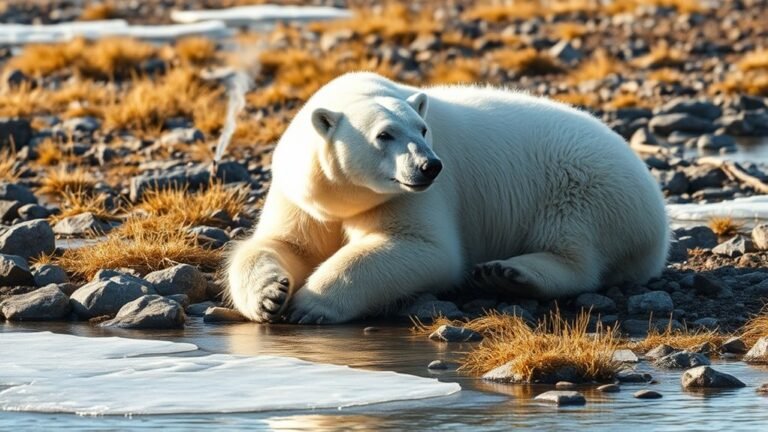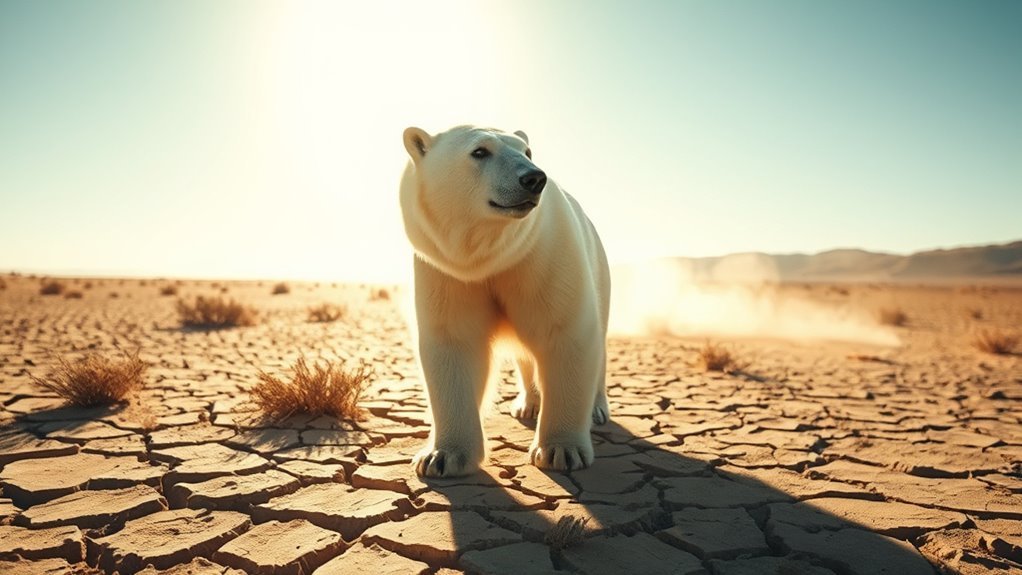
Can Polar Bears Live in Hot Weather?
You can’t keep polar bears healthy in hot weather because their dense fur and thick fat trap heat, perfect for icy Arctic conditions but dangerous in warmth.
Their black skin absorbs sunlight, making overheating worse. They rely on cold water and snow to cool down—options scarce in hot climates.
They can’t shed heat effectively, leading to stress and health problems outside cold environments.
Discover how their unique adaptations both help and hinder them beyond the Arctic.
Polar Bears’ Natural Arctic Adaptations
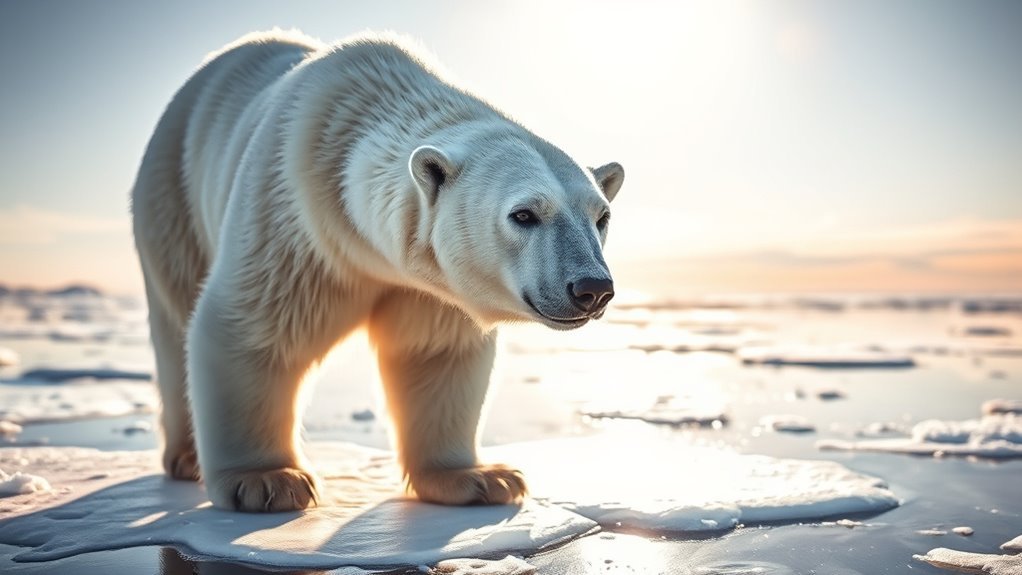
Although polar bears are famously adapted to the Arctic’s freezing conditions, you might not realize just how specialized their bodies are.
Polar bears rely on unique adaptations to survive on Arctic sea ice, where temperatures plummet. Their dense undercoats and hollow guard hairs trap air, providing critical insulation against the cold.
Beneath their fur, black skin absorbs and retains heat from the weak Arctic sun. Their small ears and short tails reduce heat loss, while their large paws help them move efficiently on ice and in water.
These features work together, allowing polar bears to maintain body heat and thrive in one of Earth’s harshest environments.
Without these adaptations, they wouldn’t withstand the extreme cold of their natural habitat.
The Role of Fur and Fat in Temperature Regulation
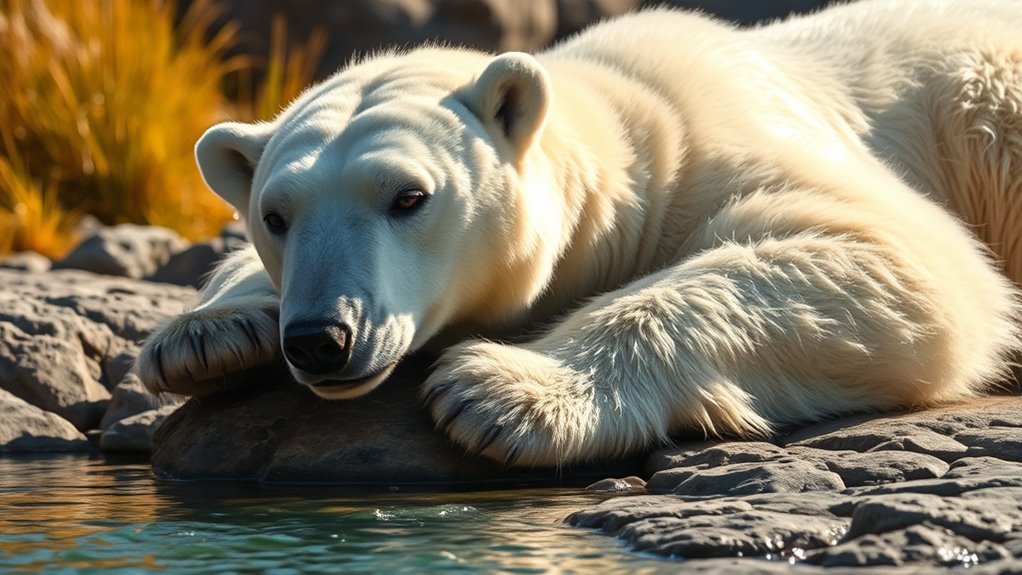
Polar bears depend on their fur and fat to regulate body temperature in the Arctic’s extreme cold.
Polar bears rely on thick fur and fat layers to stay warm in the Arctic’s freezing temperatures.
You’ll find they have two layers of fur that work together to trap air and nearly eliminate heat loss.
These layers of fur look white but are actually transparent, reflecting light to blend with their snowy environment.
Underneath that, a thick layer of fat, up to 11.4 cm thick, insulates their bodies, keeping them warm even in freezing water.
Their black skin beneath the fur absorbs solar heat, adding another layer of warmth.
The hollow guard hairs in their fur trap air, forming a barrier that insulates without causing overheating.
These features are perfectly suited for cold climates but make it tough for polar bears to handle lasting heat.
How Polar Bears Stay Cool in Their Native Habitat
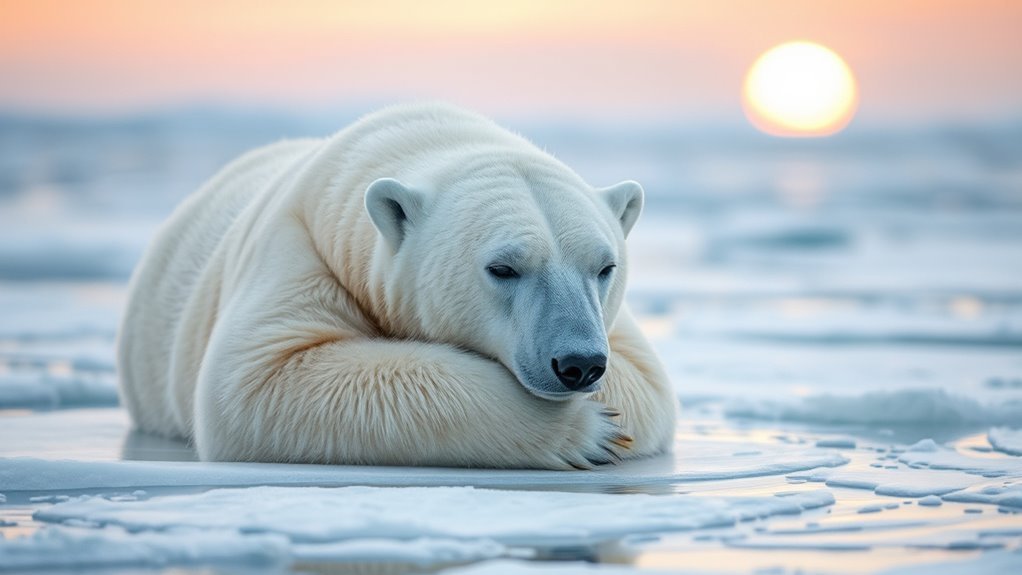
When temperatures rise above freezing, you’ll often find these bears cooling off by diving into icy waters or resting on sea ice to avoid overheating.
Polar bears are built with guard hairs that trap air, helping adult polar bears prevent heat loss in cold but also allowing them to beat the heat when needed.
Their black skin absorbs sunlight efficiently, aiding in temperature regulation. Adult male polar bears, with their considerable size, manage energy expenditure carefully by swimming—polar bears are designed for swimming, which helps them shed excess heat.
Bears exhibited in the wild have shown behaviors like digging shaded dens in snow to stay cool.
These adaptations ensure polar bears survive in their harsh environment while keeping their body temperature balanced despite occasional warmth.
Challenges Polar Bears Face in Warmer Environments
You might think that the same traits helping these bears stay cool in the Arctic would protect them in warmer climates, but that’s not the case.
Polar bears have thick fur, a fat layer, and small ears designed to conserve heat, not dissipate it.
Their dense fur traps air for insulation, which causes overheating when temperatures rise above freezing.
In the wild, polar bears cool off by swimming in icy water or digging into snow, options unavailable in hot environments.
When temperatures climb above 21.1°C (70°F), polar bears experience heat stress because they can’t adjust physiologically to the heat.
In captivity, exposure to high heat and humidity can trigger severe health problems like fur loss and behavioral issues.
These challenges make hot weather extremely tough for polar bears.
Behavioral Plasticity and Limitations on Land
Although these bears have shown remarkable behavioral plasticity by foraging on land-based foods like berries and scavenged carcasses, you’ll find that this adaptability can’t fully make up for the loss of their high-energy marine diet.
Polar bears on land burn five times more calories when active, yet terrestrial foods provide lower calories, leading to weight loss during extended land stays.
| Activity Level | Calorie Burn Rate | Food Source Energy |
|---|---|---|
| Sedentary | Low | Low (berries) |
| Active | High | Moderate (carcasses) |
| Extended Land | Weight loss | Insufficient |
| Marine Diet | Prime | High (seals) |
| Adaptability | Partial offset | Limited |
You’ll see that behavioral flexibility helps but can’t prevent energy deficits on land.
Physiological Limits to Heat Tolerance in Polar Bears
Because polar bears evolved with dense fur, hollow guard hairs, and a thick fat layer for insulation, they can’t effectively release heat in warm weather.
These adaptations, great for Arctic survival, become liabilities when temperatures rise.
You should know that polar bears face serious physiological limits to heat tolerance, including:
- Thick fur and fat up to 11.4 cm trap heat, preventing efficient cooling.
- Black skin absorbs solar radiation, increasing overheating risk above freezing.
- They can’t acclimate to hot climates due to fixed cold-adapted traits.
When temperatures exceed 21.1°C (70°F), polar bears risk heat stress since their bodies aren’t built to dissipate heat.
In their natural Arctic environment, behaviors like swimming help cool them down, but such options aren’t available in hot weather, making survival challenging.
Captivity Concerns in Tropical and Temperate Climates
You’ll notice that keeping polar bears in tropical or temperate zoos creates serious habitat challenges that affect their health and behavior.
The heat causes stress and physical problems because their bodies aren’t built for warm climates.
Without natural cooling options, they often develop abnormal behaviors that signal distress in captivity.
Habitat Unsuitability Effects
When polar bears live in tropical or temperate climates, their bodies struggle to handle the heat, causing serious stress and health issues.
You’ll notice that their thick fur and fat layers, perfect for Arctic cold, trap heat instead of releasing it. Without access to icy water or sea ice, polar bears can’t cool down naturally.
In captivity, enclosures often don’t meet their complex needs, making matters worse.
You should understand these key habitat unsuitability effects:
- Heat retention from fur and fat causes overheating.
- Lack of cold water environments prevents natural cooling behaviors.
- Small, barren enclosures in zoos fail to simulate Arctic conditions.
These factors combine to make tropical and temperate habitats unsuitable for polar bears, affecting their well-being markedly.
Stress and Health Issues
The unsuitable habitat conditions don’t just affect polar bears’ comfort—they directly impact their health and behavior, especially in captivity.
When kept in tropical or temperate climates, polar bears often suffer from severe heat stress. Their thick fur, dense undercoat, and fat layers trap heat, making it hard to cool down.
You’ll notice signs like panting, fur loss, muscle atrophy, and footpad ulcers, all indicating their bodies can’t handle the warmth.
Without sea ice or cold water to swim in, polar bears can’t regulate their temperature properly.
This constant heat stress leads to high inactivity and weakens their immune systems, causing serious health problems.
Ultimately, polar bears in these unsuitable environments tend to live shorter, more stressful lives than their Arctic counterparts.
Behavioral Challenges in Captivity
Although polar bears have evolved to thrive in frigid Arctic conditions, living in tropical or temperate captivity creates unique behavioral challenges you might notice.
Polar bears struggle to regulate their body temperature due to their dense fur and fat, making it hard to stay cool. This leads to stress and unusual behaviors you could observe, such as:
- Excessive panting and pacing as they try to deal with heat stress.
- Increased swimming attempts to mimic natural cooling, despite warmer water.
- Restlessness or repetitive behaviors stemming from frustration and lack of appropriate enrichment.
These behaviors highlight how captivity outside cold climates prevents polar bears from expressing natural habits like digging in snow or swimming in icy water.
Without proper cooling environments, their welfare and longevity are seriously at risk.
Zoo Strategies for Keeping Polar Bears Comfortable
You’ll find that zoos use clever cooling techniques like climate-controlled habitats and chilled pools to keep polar bears comfortable.
They also provide enrichment activities such as ice puzzles and frozen treats to help regulate body temperature naturally.
Plus, thoughtful enclosure design with shade and ventilation plays a big role in managing heat stress.
Cooling Techniques in Zoos
When polar bears face warmer temperatures in zoos, caretakers take special measures to keep them cool and comfortable.
You’ll notice that many facilities use climate-controlled indoor enclosures with air conditioning to prevent heat stress. Polar bears also benefit from access to large, chilled pools where they can swim or bathe to regulate their body temperature.
To further enhance comfort, zoos implement additional cooling techniques such as:
- Providing fogger systems and fans to improve airflow and lower ambient temperatures.
- Offering shaded areas and encouraging swimming behaviors for natural cooling.
- Supplying frozen treats and ice blocks with fish to keep polar bears both cool and mentally stimulated.
These strategies ensure polar bears stay healthy and comfortable, even in warmer climates.
Environmental Enrichment Methods
Alongside cooling techniques, zoos focus on environmental enrichment to keep polar bears comfortable and engaged in warmer climates.
You’ll find that offering ice treats like frozen melons and pumpkins encourages polar bears to forage naturally while helping to lower their body temperature.
Zoos also provide enrichment activities such as chasing floating toys or pouncing on ice-filled barrels, which simulate Arctic hunting behaviors and keep polar bears physically active and mentally stimulated.
Creating shaded outdoor zones equipped with misting systems or foggers lets polar bears enjoy cooler microclimates, reducing heat stress.
Additionally, regularly lowering pool water temperatures and increasing environmental complexity ensures polar bears remain comfortable and healthy, even in hot weather.
These enrichment methods play a crucial role in supporting polar bears’ well-being outside their natural cold habitats.
Temperature and Habitat Control
Although polar bears thrive in Arctic cold, zoos employ precise temperature and habitat control to keep them comfortable in warmer climates.
Since polar bears can suffer heat stress above 21.1°C (70°F), facilities use innovative methods to mimic their natural environment and prevent overheating.
You’ll notice these strategies:
- Climate-controlled indoor enclosures and shaded outdoor spaces to regulate temperature.
- Cooling features like chilled pools (around 50°F/10°C), misters, and fans to provide relief.
- Access to ice or frozen treats that encourage natural behaviors and help polar bears cool down.
Impact of Climate Change on Polar Bear Habitat and Survival
Because Arctic sea ice has been shrinking by about 13% each decade, polar bears are losing the essential habitat they rely on to hunt and survive.
As the ice melts earlier and forms later, you’ll notice polar bears spending more time on land, away from their primary prey, seals.
This limits access to the high-fat blubber they need for energy, especially during summer.
Longer land stays lead to higher starvation risks and lower reproduction rates.
If warming continues, polar bear habitats will vanish, threatening their survival.
| Impact | Effect on Polar Bears | Consequence |
|---|---|---|
| Shrinking Sea Ice | Reduced hunting grounds | Starvation risk |
| Early Melt/Delayed Freeze | More time on land | Less energy intake |
| Habitat Loss | Impaired breeding/migration | Population decline |
Frequently Asked Questions
How Hot Is Too Hot for a Polar Bear?
You’ll find polar bears struggling above freezing temperatures, especially around 21.1°C (70°F).
They quickly overheat because their thick fur and fat are meant for cold, so anything warmer puts their health at serious risk.
What Is the 3 Bear Rule?
The 3 Bear Rule means you must provide polar bears with enough space, natural enrichment, and climate control.
This guarantees they can behave naturally and avoid stress, keeping them healthy and comfortable in captivity.
Would a Gorilla Beat a Polar Bear?
You might think a gorilla could win due to its strength and aggression,
but a polar bear’s size, claws, and hunting skills give it an edge.
Still, such a fight is extremely unlikely in nature.
Are Polar Bears Going to Go Extinct in 2026?
You won’t see polar bears go extinct in 2026,
but nearly 30% of their population could vanish without action.
You’ve got to support climate efforts now to keep these majestic creatures from disappearing forever.
Conclusion
You might think polar bears could just shrug off the heat like a sunny day breeze, but nope—they’re basically Arctic superheroes built for ice, not sweat!
Their thick fur and fat act like a cozy winter blanket, turning hot weather into a nightmare.
So, if you ever imagine a polar bear lounging on a tropical beach, think again—they’d be melting faster than an ice cube in the desert.
Keep them cool, or they’re toast!
In conclusion, polar bears are not equipped to handle hot weather at all. Their adaptations for cold climates make warm temperatures extremely uncomfortable and dangerous for them.
It’s crucial to protect their natural habitats and ensure that they remain in cooler environments. By understanding their needs, we can help preserve these magnificent creatures and their icy homes.