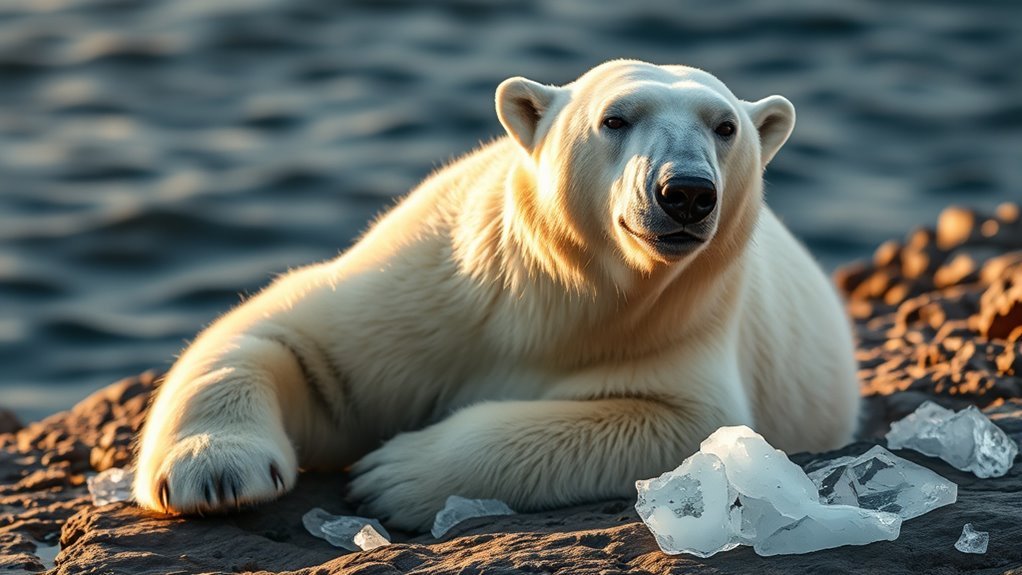
How Do Polar Bears Survive Warm Weather?
You might wonder how polar bears cope with warmer weather as climate change affects their icy habitats.
These incredible animals have developed various strategies to survive in rising temperatures. They adjust by seeking shade, plunging into icy water, and chewing on ice to cool down.
As the sea ice melts, their diet shifts from primarily hunting seals to scavenging on whale carcasses, bird eggs, and land animals like reindeer.
They increasingly rely on tundra and coastal areas for food, but hunting becomes tougher, and denning sites are scarcer.
Interestingly, genetic changes also play a role in their adaptation.
If you want to understand their remarkable survival skills further, there’s plenty more to explore!
Behavioral Adaptations to Rising Temperatures
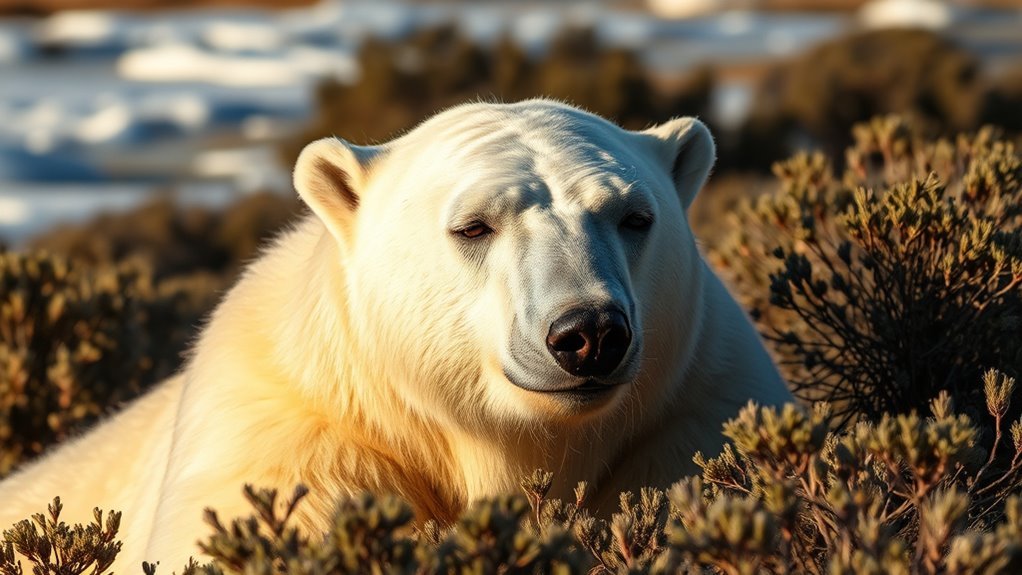
Although polar bears are built for icy environments, they’ve developed clever behaviors to stay cool as temperatures rise.
When the weather warms up, polar bears plunge into icy pools or seek shade to regulate their body temperature.
You might notice them chewing on ice or other objects, which helps dissipate excess heat and keeps them comfortable.
In zoos, caretakers provide air-conditioned spaces and water features that mimic these natural cooling strategies.
You can see how polar bears actively adapt by swimming and using ice to manage heat.
This shows their resilience despite being creatures of the cold.
These behavioral adaptations are essential for polar bears to cope with changing climates and maintain their well-being in warmer conditions.
Changes in Diet and Foraging Strategies
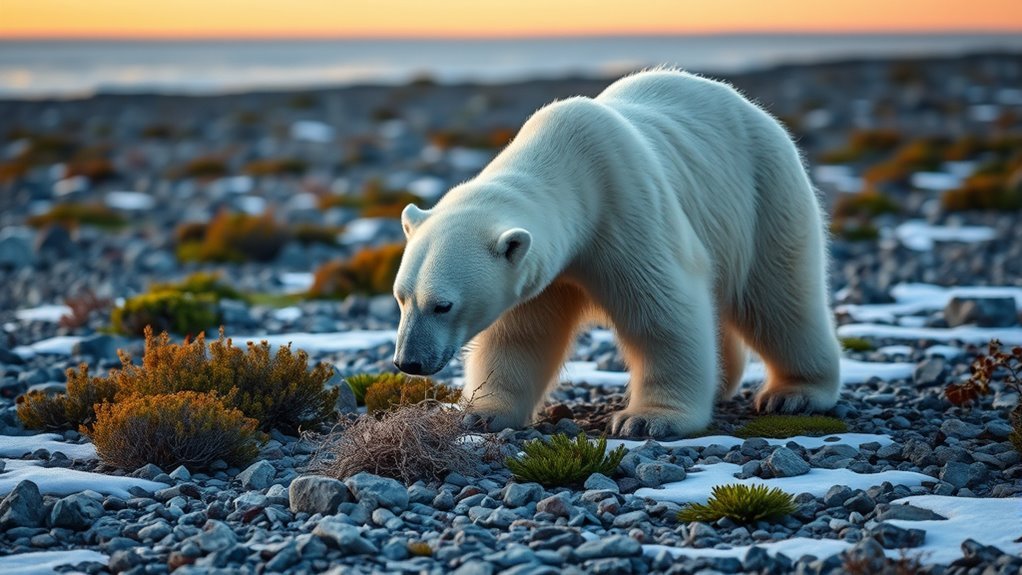
As Arctic sea ice continues to shrink, polar bears have had to change what and how they eat to survive.
With less sea ice, their main prey—seals—become harder to catch, so polar bears adapt by shifting their foraging strategies.
You’ll notice them scavenging more, feeding on whale carcasses, sea duck eggs, and even reindeer.
Climate change causes earlier ice melts and later freezes, forcing these predators to spend more time searching for alternative food sources.
This diet shift is a vital adaptation that helps polar bears cope with the loss of their traditional hunting grounds on the Arctic sea ice.
Use of Terrestrial Habitats During Ice-Free Periods
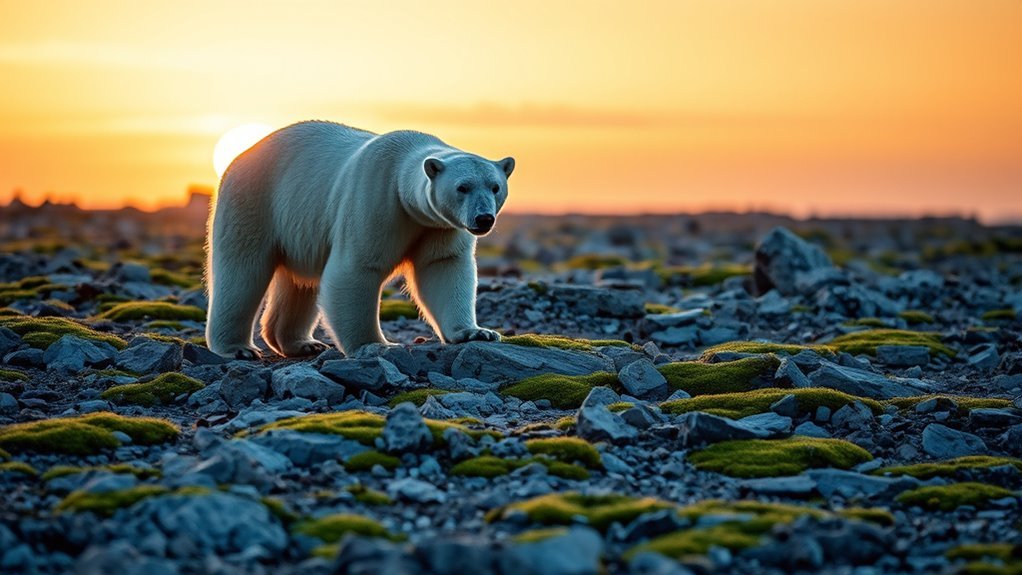
When sea ice disappears, you’ll find polar bears moving onto land habitats like tundra and coastal areas to hunt alternative food sources.
They often scavenge on carcasses and adjust their behavior to survive these ice-free periods.
However, this shift can increase encounters between humans and bears, raising important safety concerns.
Land Habitat Utilization
Because sea ice melts for longer periods each year, polar bears spend more time on land, especially in tundra and coastal areas.
You’ll notice that their land habitat utilization has increased as the ice-free season extends.
On land, polar bears rest and reduce the energy spent swimming between ice floes.
They rely heavily on stored fat reserves to survive since hunting seals becomes difficult without ice.
During these times, you might see them scavenging bird eggs or reindeer carcasses, making use of available resources.
By adapting their behavior to use terrestrial habitats more efficiently, polar bears manage to endure warmer conditions.
Understanding their land habitat utilization helps explain how they survive when their traditional sea ice environment disappears.
Alternative Food Sources
Many polar bears turn to alternative food sources during ice-free periods, foraging on land to meet their energy needs.
When the ice melts, you’ll find them hunting reindeer, scavenging sea duck carcasses, or raiding bird nests for eggs.
They even scavenge whale carcasses that wash ashore, making the most of whatever’s available.
This switch to terrestrial habitats isn’t just opportunistic—it’s a crucial survival strategy as their primary prey, seals, become harder to catch without ice.
By tapping into these alternative food sources, polar bears adapt to warmer weather and longer ice-free seasons, maintaining their energy balance.
You can see how important these food shifts are, helping polar bears endure changing environments when their usual hunting grounds disappear.
Human-Bear Interactions
As sea ice disappears, polar bears increasingly roam onto land, seeking food in terrestrial habitats.
This shift leads to more frequent human-bear interactions as bears scavenge human food waste and hunt terrestrial animals like reindeer.
You’ll notice that these interactions can spark conflicts, putting both bears and local communities at risk.
Understanding the risks and behaviors helps manage these encounters safely.
| Activity | Impact on Humans |
|---|---|
| Scavenging food waste | Increased nuisance |
| Preying on terrestrial animals | Threat to livestock/wildlife |
| Extended land stays | Higher encounter rates |
Impact of Sea Ice Loss on Hunting Techniques
As sea ice disappears, you’ll notice polar bears struggle to hunt their usual prey on stable platforms.
They’re forced to swim longer distances and turn to alternative foods like whale carcasses and bird eggs.
These changes make hunting harder and push bears to adapt their strategies just to survive.
Hunting Challenges Without Ice
When sea ice disappears, polar bears lose their main platforms for hunting seals. This makes it much harder to catch their primary prey.
Without stable ice, you’ll see bears forced to swim longer distances, which burns more energy. This lowers their chances of a successful hunt.
The reduction in ice cover also shortens the time they can wait at seal breathing holes. This cuts down on feeding opportunities.
These hunting challenges without ice mean polar bears struggle to maintain their body condition. This ultimately threatens their survival.
You can imagine how tough it becomes to rely on traditional hunting techniques when the environment changes so drastically.
The loss of sea ice fundamentally disrupts how polar bears hunt, forcing them to adapt or face serious consequences.
Alternative Food Sources
The shrinking sea ice forces polar bears to rethink their hunting habits and look beyond seals.
With traditional hunting grounds disappearing, you’ll see them turning to alternative food sources to survive.
Extended fasting periods and longer swims make seal hunting tougher, so they adapt by exploring new options.
You might notice polar bears:
- Scavenging whale carcasses washed ashore
- Eating sea duck eggs from coastal nests
- Preying on reindeer and other land animals
- Foraging near human settlements for scraps
- Innovating new strategies as seal access declines
These shifts show how polar bears respond to sea ice loss by diversifying their diet.
Relying on alternative food sources helps them meet energy needs in warmer, changing environments where traditional hunting is no longer enough.
Denning Challenges in Warmer Winters
How exactly do warmer winters threaten polar bears during their vital denning period?
You face serious denning challenges as reduced snow and ice limit suitable sites, forcing you to den in less optimal locations.
These conditions increase the risk of den collapses, directly endangering your cubs and lowering reproductive success.
Milder winters also shorten the denning season, causing you to emerge earlier.
This disrupts the timing needed to match cub rearing with prey availability.
And this mismatch can reduce your cubs’ chances of survival.
With more frequent den collapses and diminished habitat, your ability to reproduce and raise young effectively takes a hit.
These denning challenges pose a significant threat to your population growth in a warming climate.
Physiological Traits Supporting Heat Regulation
Although polar bears are built for cold climates, you possess unique physiological traits that help regulate your body temperature in warmer weather.
These adaptations allow you to manage heat effectively despite your Arctic origins. Your dense undercoat and hollow guard hairs trap air, providing insulation in cold but also aiding heat dissipation when it’s warm.
Beneath your fur, thick black skin absorbs solar heat, balancing temperature fluctuations. Your large, wide paws not only support movement but also reduce heat buildup.
Here are key physiological traits supporting your heat regulation:
- Dense undercoat and hollow guard hairs for insulation and cooling
- Thick black skin that absorbs solar heat
- Large paws that minimize heat retention
- Ability to plunge into icy water to cool off
- Behavioral adaptations like chewing ice and swimming
Genetic Responses to Climate Change
Your body’s physiological traits help manage heat, but your survival also depends on changes happening deep within your genes.
Polar bears exhibit remarkable genetic responses to climate change, adapting to warmer Arctic conditions by altering genes linked to heat stress, metabolism, and aging.
Researchers from the University of East Anglia found that different polar bear populations show DNA modifications at varying rates.
This reflects rapid genetic adaptation to their specific environments.
These genetic shifts help polar bears cope with reduced sea ice and dietary changes caused by climate warming.
By rewiring their DNA, they improve their chances of survival despite melting ice and rising temperatures.
Understanding these genetic responses to climate change reveals how polar bears are evolving on a molecular level to face new environmental challenges.
Conservation Efforts and Future Outlook
Since polar bears face mounting threats from climate change, you can play a role in supporting conservation efforts designed to protect their future.
The conservation of nature is vital for maintaining polar bear habitats and ensuring their survival.
You can contribute by understanding and promoting key strategies, such as:
- Supporting the Circumpolar Action Plan (CAP) that unites Arctic nations for habitat protection.
- Advocating for climate change mitigation to reduce greenhouse gas emissions.
- Encouraging ongoing scientific research to update population data and adapt conservation plans.
- Promoting measures that reduce human-wildlife conflicts to safeguard polar bear health.
- Raising awareness about the urgency of preserving sea ice and Arctic ecosystems.
Every action counts, and together, we can make a difference!
Frequently Asked Questions
Can Polar Bears Survive in Warm Weather?
You can’t say polar bears thrive in warm weather, but they do survive by cooling off in icy water and shade.
You’ll notice they need access to cool spots since their thick fur can cause overheating otherwise.
How Does a Polar Bear Survive Its Climate?
Imagine you’re a polar bear in summer—you’d survive your climate by resting in shade, diving into icy water, and slowing down activity.
These behaviors help you regulate your body temperature and avoid overheating in warmer weather.
Staying cool is essential for your survival!
How Do Polar Bears Not Freeze After Swimming?
You don’t freeze after swimming because your thick fat insulates you, trapping heat.
Your dense fur holds air, and your black skin absorbs sunlight, keeping you warm even in icy water after a swim.
Why Can’t Polar Bears Survive Without Ice?
You can’t expect polar bears to survive without ice because they rely on it to hunt seals, rest, and breed.
Without ice, they struggle to find food, maintain body heat, and conserve energy.
This puts them at risk of starvation and decline.
Conclusion
You’ve seen how polar bears persist, pivoting practices and patterns to survive sizzling seasons.
From foraging on fresh food to finding footholds on land, these fierce fighters face fading ice with fierce fortitude.
Their physiological prowess and genetic grit give them a fighting chance.
But future fortunes depend on your dedication to conservation.
So, what can we do?
Stay strong, stay steady, and support solutions to secure a safer, cooler sanctuary for these spectacular survivors.
By raising awareness and advocating for climate action, we can help protect their habitats.
Together, we can ensure that polar bears continue to thrive in the wild, despite the warming challenges they face.
Every action counts, and your commitment to conservation makes a difference in their survival.
Remember, it’s not just about the bears; it’s about preserving our planet for future generations too.