How Do Penguins Live in Hot Weather?
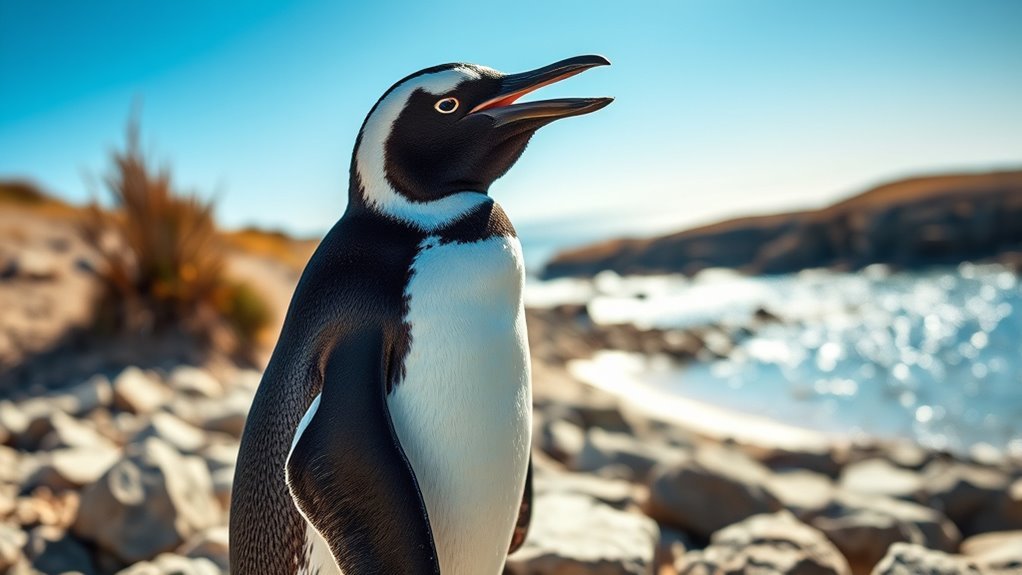
If you wonder how penguins survive hot weather, they use smart body tricks and behaviors to stay cool.
Their thinner feathers and exposed ankles help shed heat, while blood flow to their feet works like a natural radiator.
They employ various techniques to regulate their body temperature. For instance, they pant and hold their flippers out to increase airflow.
Seeking shade becomes crucial, and they often stand or lie flat on cool surfaces to escape the heat.
Nesting in shaded spots also protects them and their chicks from the scorching sun.
Dive deeper, and you’ll uncover even more clever ways penguins beat the heat.
From unique adaptations to behavioral strategies, these fascinating birds have mastered the art of cooling down in challenging environments.
Physical Adaptations for Heat Regulation
Although penguins are often associated with cold climates, those living in hot weather have developed unique physical adaptations to stay cool.
Penguins in hot climates have evolved special features to keep their cool despite the heat.
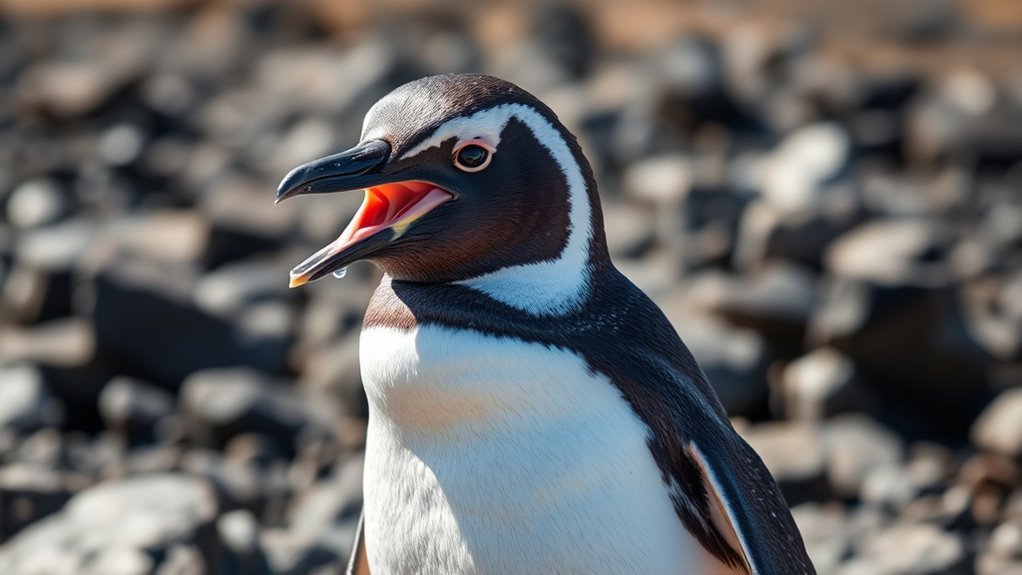
You’ll notice they have fewer and thinner feathers, especially around their face and ankles, which helps shed excess heat.
During hot periods, they actually shed facial feathers to boost heat loss and better regulate their body temperature.
Their white facial feathers and exposed ankles reflect sunlight, reducing heat absorption.
Additionally, penguins can shed down feathers and adjust blood flow to their feet, using them like radiators to release heat.
These changes in feathers and blood flow work together to keep their body temperature stable.
This allows penguins to thrive even when the weather heats up considerably.
Behavioral Strategies to Avoid Overheating
Physical adaptations like shedding feathers and adjusting blood flow help penguins manage heat internally, but their behavior plays a big role too.
When the heat builds up, penguins pant and hold their flippers out to boost airflow, letting evaporation cool their body.
You’ll see them shedding facial feathers during hot spells, which helps release excess heat more efficiently.
To avoid overheating, they often seek shade or nest in cool crevices, shielding themselves from direct sunlight.
Juvenile penguins might lie flat on the ground or stand in water, using conduction to lower their body temperature.
These behavioral strategies work together with their physical traits to keep their body heat in balance, letting penguins thrive even when the sun blazes overhead.
The Role of Penguin Feet in Cooling
How do penguins keep cool when the sun turns up the heat?
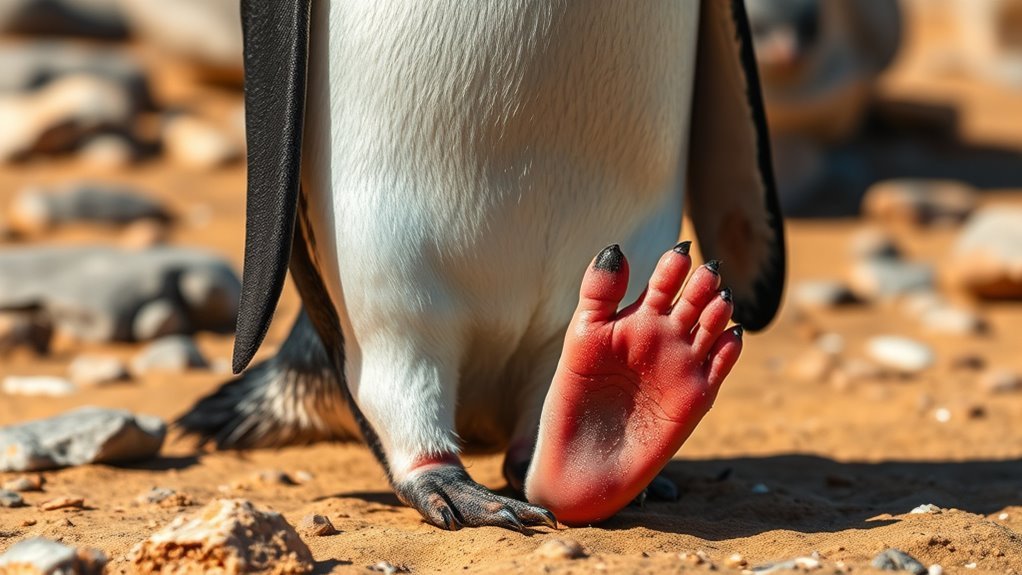
They rely heavily on their feet as natural radiators. Unlike the rest of their body, their feet are exposed, making them perfect for releasing excess heat.
Penguins use their exposed feet as natural radiators to effectively release excess body heat.
When it gets hot, penguins increase blood flow to their feet by dilating blood vessels, allowing heat to escape into the environment.
You might notice their feet turn rosy after swimming in warm water—that’s increased blood flow working to cool them down.
To maximize cooling, penguins often stand with feet spread apart or lie flat on the ground, enhancing heat transfer.
Their blood vessels can also constrict to conserve heat when needed, making their feet a clever, built-in cooling system essential for surviving warm weather.
Nesting Habits in Warm Environments
Penguins don’t just cool down through their feet—they also choose nesting spots that help them beat the heat.
When you observe penguins in warm climates, you’ll notice they pick nesting sites in shaded crevices or under rocks to avoid direct sunlight. This careful choice supports thermoregulation by reducing exposure to extreme heat.
Often, these sites are near water or cooler microclimates, providing a natural cooling effect during breeding.
You’ll also see parent penguins sheltering their chicks under their bodies or shading them with flippers, protecting the young from overheating.
These nesting habits, combined with behavioral strategies like standing in water or laying flat, show how penguins adapt their environments and actions to maintain safe body temperatures in hot weather.
Galápagos Penguins: A Case Study in Heat Tolerance
You’ll find that Galápagos penguins have unique physical features like fewer feathers and thinner fat to handle the heat.
They also use behaviors such as panting and flipper spreading to keep cool.
But with rising temperatures, their survival faces new climate-related challenges.
Unique Physical Adaptations
Although most penguins thrive in icy climates, the Galápagos penguin has evolved unique physical traits to handle the heat.
You’ll notice they have fewer and thinner feathers, allowing more body heat to escape. During hot spells, they even shed facial feathers to boost cooling.
Their white facial feathers and featherless ankles reflect sunlight, helping reduce heat absorption.
Here’s a quick look at their adaptations:
| Adaptation | Purpose | Effect on Body Heat |
|---|---|---|
| Thin, sparse feathers | Increase heat dissipation | Lower body heat retention |
| Feather shedding | Boost heat loss during heat | Improved temperature control |
| Featherless ankles | Reflect heat and cool feet | Enhanced heat reflection |
These adaptations let you see how they survive warm climates without overheating.
Behavioral Cooling Strategies
When temperatures soar, Galápagos penguins rely on clever behaviors to stay cool.
These behavioral cooling strategies include nesting in shaded volcanic crevices, which shelter them from direct sunlight and help them avoid overheating.
You’ll notice they shed facial feathers during hot spells, allowing excess body heat to escape and keeping their internal temperature stable.
To cool down, they stand in water or lie flat on the ground, using their surroundings to regulate body heat.
They also increase blood flow to their feet, acting like natural radiators that release heat efficiently.
Surprisingly, their molting and breeding cycles adjust based on environmental cues, helping them conserve energy and stay warm during cooler times.
These smart behaviors make living in the heat possible for these unique penguins.
Climate Impact Challenges
As temperatures rise and weather patterns shift, Galápagos penguins face growing challenges in managing heat stress.
Climate change intensifies heat exposure, pushing their adaptations to the limit. You’ll see these penguins rely heavily on behavioral and physical traits, but extreme conditions threaten their survival.
| Challenge | Adaptation | Impact of Climate Change |
|---|---|---|
| Intense sunlight | Shedding facial feathers | Increased heat absorption |
| High temperatures | Nesting in shaded crevices | Reduced available cool shelter |
| Heat stress | Panting and posture changes | Higher energy expenditure |
| Warmer ocean waters | Thinner fat, fewer feathers | Altered food availability |
Understanding these climate impact challenges helps you appreciate how fragile their balance is amid global warming.
Impact of Climate Change on Penguin Thermoregulation
Because climate change raises sea temperatures and disrupts cold currents, penguins face growing challenges in regulating their body heat.
Their thick layer of fat, once perfect for insulation, now traps unwanted heat as their environment warms. Melting sea ice also reduces breeding grounds and food sources, forcing penguins to adapt quickly.
You’ll notice penguins coping by:
- Seeking shade or cooler microhabitats to avoid overheating.
- Adjusting their activity patterns to cooler parts of the day.
- Modifying their feather density or shedding some feathers for better heat dissipation.
These shifts show how climate change alters penguins’ thermoregulation, threatening their survival.
You can see how vital it is to protect their environment to help maintain the delicate thermal balance they depend on.
Heat-Related Challenges for Penguin Chicks
You’ll notice penguin chicks struggle with heat because their down feathers trap warmth more easily.
To stay cool, they often lie flat on the ground or stand in water.
These simple behaviors help them manage their body temperature despite their vulnerable insulation.
Vulnerability of Down Feathers
While adult penguins manage heat with fewer feathers and thinner fat layers, penguin chicks face greater risks due to their dense, insulating down feathers.
These fluffy coverings trap heat, making chicks especially vulnerable to heat stress.
You’ll notice that although down feathers are excellent for warmth, they aren’t as helpful in hot weather.
In fact, their insulation can cause problems if the feathers get wet or muddy, leading to heat regulation issues.
To understand this better, consider these points:
- Down feathers trap heat, which increases the risk of overheating.
- Wet or muddy down can cause chicks to lose heat unpredictably.
- Chicks depend on parental shelter and behavioral strategies to avoid heat stress.
Because of this vulnerability, managing heat is a critical challenge for penguin chicks.
Cooling Behaviors in Chicks
When the sun beats down, penguin chicks use several clever behaviors to keep cool despite their heat-trapping down feathers.
These juvenile penguins often lay flat on the ground or stand in water to dissipate excess heat. They also shelter under their parents’ bodies or stay close to shaded areas, avoiding direct sunlight to reduce temperature stress.
Their large feet act as natural radiators, helping release excess heat efficiently. When temperatures rise considerably, juvenile penguins may shed facial feathers to boost heat loss and cool down faster.
These cooling behaviors are essential because their soft down feathers trap heat, making them vulnerable to overheating.
Conservation Efforts Addressing Rising Temperatures
As temperatures rise, conservationists have stepped up efforts to help penguins survive the heat.
You can see how targeted conservation programs are making a real difference by creating cooler, safer environments.
They’ve built artificial nests shaded by natural materials or carved from volcanic rock to improve breeding success despite warmer conditions.
Key strategies include:
- Constructing artificial shaded nesting sites to reduce heat exposure
- Removing invasive predators like rats and cats to protect eggs and chicks
- Using unique chest spot patterns to identify and monitor individual penguins
These efforts help maintain penguin populations by addressing the direct threats of rising temperatures and environmental stress.
Monitoring and Research on Penguin Heat Adaptation
Conservation efforts rely heavily on detailed monitoring and research to understand how penguins cope with heat.
By tracking behavior changes—like lying flat or swimming—researchers gather data on penguins’ cooling strategies.
Noninvasive techniques, such as analyzing unique spot patterns, allow continuous health monitoring without stressing the animals.
Artificial nests made from lava rocks are also tested to boost breeding success under warmer conditions.
| Monitoring Method | Purpose | Key Finding |
|---|---|---|
| Spot Pattern Analysis | Health & response tracking | Identifies stress signals |
| Behavior Observation | Cooling strategy assessment | Swimming helps heat relief |
| Blood Flow Recording | Temperature regulation | Feet blood flow varies with heat |
This ongoing monitoring reveals how penguins physiologically adapt to rising temperatures over time.
How Penguins Balance Aquatic and Terrestrial Temperature Stress
Although penguins thrive in cold climates, they’ve developed clever ways to manage heat when temperatures rise.
Banded penguins expertly balance aquatic and terrestrial temperature stress through adaptive thermoregulation strategies.
When on land, they increase blood flow to their feet, radiating excess heat. In water, they cool down efficiently by lying flat or swimming, using the aquatic environment as a heat sink.
To manage temperature stress, you’ll notice banded penguins:
- Shed facial feathers and flatten their bodies on cool surfaces to boost heat loss.
- Stand in water or lie on the ground to leverage environmental cooling.
- Adjust blood vessel dilation in their legs and feet to either conserve or release heat.
These tactics help them maintain a stable body temperature despite fluctuating conditions.
Frequently Asked Questions
Can Penguins Survive in Hot Weather?
Yes, penguins can survive in hot weather by regulating their body temperature through behaviors like seeking shade, panting, and spreading their flippers.
You’ll see them shedding feathers and using specialized blood flow to avoid overheating.
It’s pretty interesting how they adapt, isn’t it?
What Do Penguins Do When They Get Hot?
When penguins get hot, they let off steam by panting and spreading their flippers.
They’ll also cool down by laying flat, seeking shade, or shedding feathers—
doing whatever it takes to keep their cool under the sun.
What Animal Can Survive Extreme Heat?
You can survive extreme heat like the Sahara Desert monitor lizard by burrowing and using specialized kidneys.
Camels handle heat with thick coats and water conservation.
Fennec foxes use large ears and nighttime activity to stay cool.
What Kind of Penguins Live in the Heat?
Picture sleek Galápagos penguins basking near volcanic rocks under the blazing sun.
You’ll find these unique birds thriving in tropical heat, adapting with thin feathers and shaded nests.
They prove that penguins aren’t just cold-weather creatures.
Conclusion
Imagine a Galápagos penguin standing calmly under the blazing sun, its feet pressed against cool volcanic rocks—nature’s own air conditioner.
Just like this penguin, you adapt and find your own ways to stay cool when life heats up.
Penguins remind you that with the right strategies and resilience, you can thrive even in the toughest conditions.
So, keep adjusting and stay strong, no matter how hot things get.
In conclusion, just as Galápagos penguins find ways to cope with the heat, you too can develop your strategies for resilience.
Whether it’s finding cool spots, staying hydrated, or taking breaks, remember that adapting is key.
Stay strong and keep striving, because like the penguins, you can flourish even when the temperature rises.