How Peacocks Survive in Cold Weather
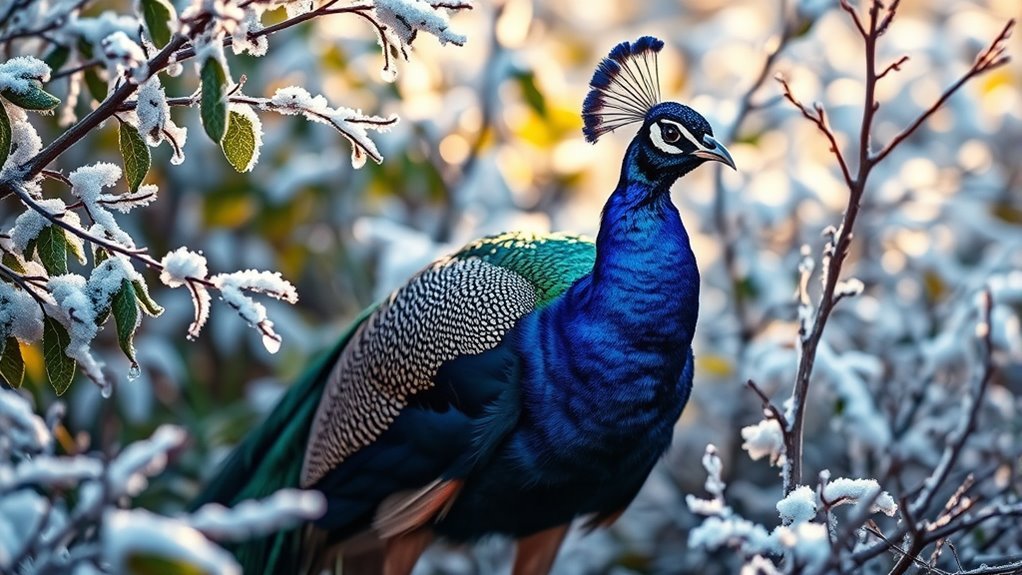
You can help peacocks survive cold weather by understanding their natural adaptations and needs. These stunning birds rely on their dense feathers, large tail fans, and head crests to trap heat and block wind.
Peacocks prefer elevated, protected roosts and insulated shelters with dry bedding to stay warm.
It’s crucial to ensure their water doesn’t freeze and to provide high-energy food.
During colder months, they also reduce their activity to conserve heat.
Learning about these behaviors and shelter designs can make cold survival much easier for your birds.
By creating an optimal environment, you can help ensure that your peacocks remain comfortable and healthy despite the chill.
Peafowl’s Natural Cold Weather Adaptations
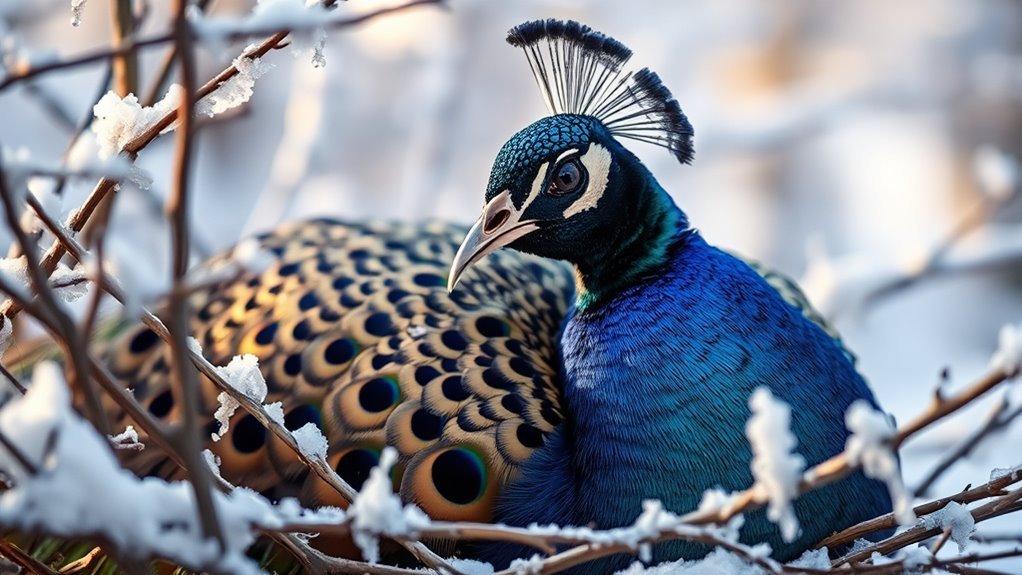
Although peafowl aren’t native to cold climates, they can tolerate low temperatures and snow when you provide adequate shelter and protection from wind and drafts.
Peafowl withstand cold and snow with proper shelter shielding them from wind and drafts.
Their dense, layered feathers offer excellent insulation, trapping body heat to keep them warm during chilly spells.
You’ll notice peafowl often tuck their feet and beak into their feathers to conserve warmth and reduce heat loss.
By seeking shelter in elevated spots like roosts or tree branches, they avoid the colder ground and reduce frostbite risks.
These natural cold weather adaptations, combined with proper shelter, enable peafowl—including India Blue and its mutations—to show remarkable resilience in winter.
Understanding these traits helps you support their survival when temperatures drop.
Preferred Shelter and Roosting Habits in Winter
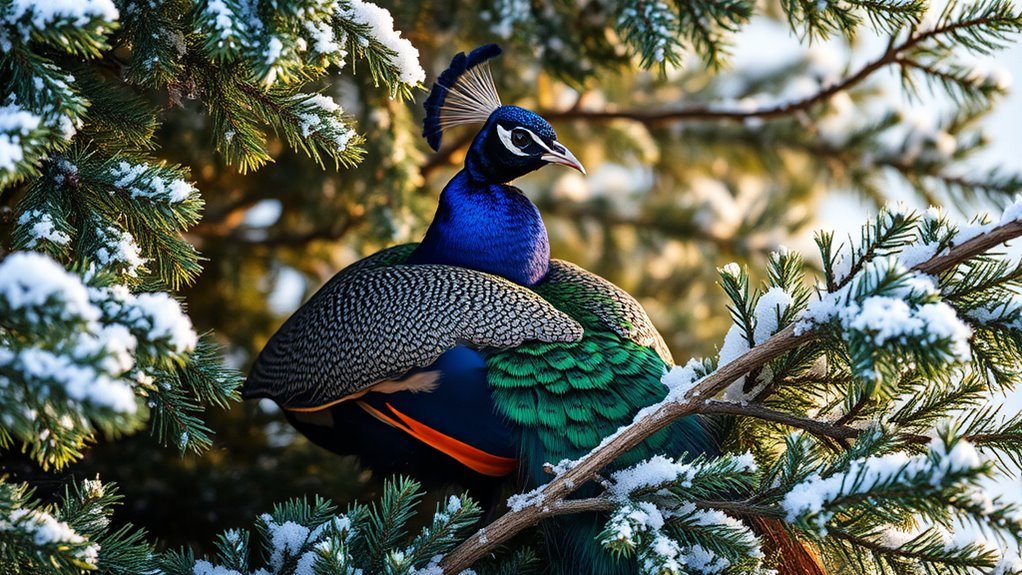
When winter arrives, peacocks choose to roost high in trees or on elevated perches. This helps them stay away from the cold ground and potential predators.
You’ll often find them tucking their feet and beak into their feathers while roosting, which helps conserve precious body heat.
In extreme cold or snowstorms, they seek shelter inside enclosed, draft-free coops or barns for added warmth and protection.
Providing natural perches made from felled trees or sturdy structures helps peacocks perch comfortably. This also reduces the risk of frostbite.
When temperatures drop considerably, expect peacocks to spend more time inside their shelters, especially at night. This behavior helps them maintain body warmth.
Understanding their preferred shelter and roosting habits is key to ensuring they survive and stay healthy during harsh winters.
Behavioral Changes During Cold Spells
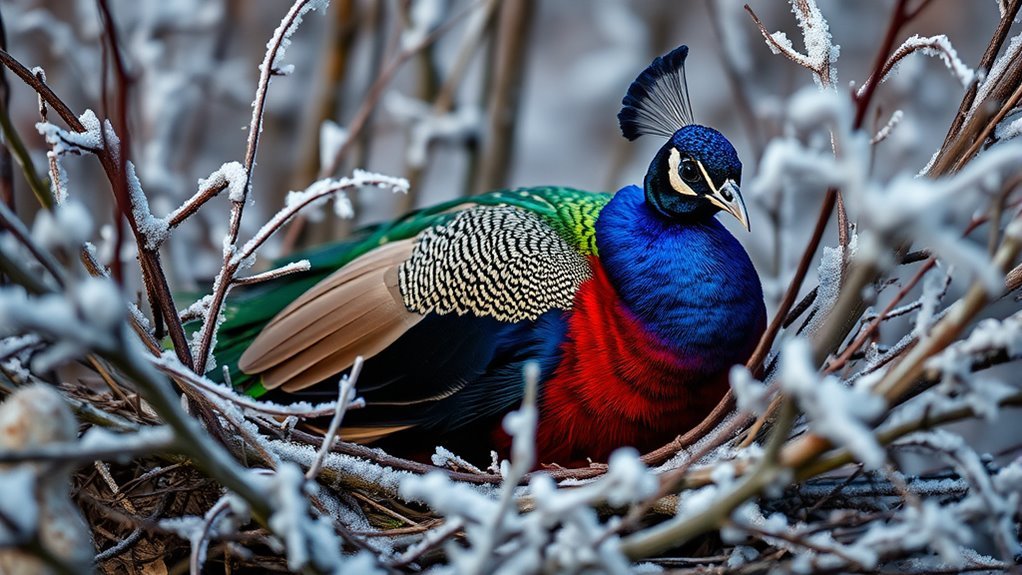
When cold spells hit, you’ll notice peacocks quickly seek shelter to stay warm and avoid harsh conditions.
They often tuck in and choose elevated perches to keep off the cold ground.
However, some peacocks still brave the outdoors, showing their natural adaptability in freezing weather.
Shelter-Seeking Habits
Since cold spells bring harsh weather, peacocks actively seek shelter in coops or barns to stay warm.
You’ll notice their behavior changes as they minimize outdoor activity and stay close to sheltered areas.
Their perching habits also adapt; they prefer higher spots to avoid cold ground and snow.
Peafowl tuck their feet and beaks into their feathers to conserve heat, showing how shelter and perching complement their survival strategy.
| Shelter Location | Perching Behavior | Heat Conservation Method |
|---|---|---|
| Coop or barn | Perch higher on trees | Tuck feet and beak into feathers |
| Near sheltered areas | Avoid cold ground | Reduce outdoor activity |
| Elevated structures | Stay close to shelter | Body tucked under feathers |
Outdoor Perching Patterns
Although many peacocks prefer to perch inside shelters during cold spells, some Java Green peafowl continue resting outdoors regardless of temperature.
When you observe their outdoor perching patterns in cold weather, you’ll notice interesting behaviors showing how adaptable they are.
They tuck their feet and beak into their feathers to conserve warmth.
In extreme cold, they seek higher or sheltered perches to avoid snow and wind.
Some even sit directly on snow-covered branches, with snow resting on their backs.
These behaviors highlight the Green Peafowl’s resilience.
Despite harsh winter conditions, you’ll find a subset maintains outdoor perching, proving their ability to survive and thrive in cold weather without always relying on shelter.
Managing Water and Feeding in Freezing Conditions
How can you guarantee your peacocks stay healthy during freezing weather?
Birds would struggle without proper care, so managing water and feeding is essential.
To keep water from freezing, bring buckets indoors overnight or use heated waterers designed for outdoor enclosures.
Elevate water containers off the ground and place them in sheltered spots to slow freezing.
Check and replace frozen water 2-3 times daily to ensure your peacocks stay hydrated.
Feeding extra high-calorie food helps them generate the body heat needed to endure cold spells.
When you open a new account with Peacock Passion, you’ll find tailored feed options that support winter health.
Impact of Snow and Ice on Peacock Care
You’ll need to clear heavy snow drifts regularly to keep peacock pens accessible and safe.
Frozen water buckets mean you’ll have to bring water indoors or replace it often to keep your birds hydrated.
Plus, managing access to shelter and outdoor perches becomes essential to prevent stress and injury during icy conditions.
Snow Obstruction Challenges
When snow drifts pile up to four feet, they block your access to peacock pens and make daily care a real challenge.
Thick layers of snow and ice cover pathways, forcing you to dig through just to reach the birds.
These obstructions slow down essential tasks and can even isolate peacocks from their outdoor areas temporarily.
To manage these challenges, focus on:
- Clearing snow and ice regularly to maintain safe, accessible pathways.
- Monitoring peacock movement to ensure they’re not trapped or stressed.
- Taking extra care when handling frozen water sources to prevent injuries.
Frozen Water Solutions
Although winter’s chill brings beautiful snow, it also causes water buckets to freeze quickly.
This forces you to check and replace your peacocks’ water daily to keep them hydrated.
Thick layers of ice make changing water challenging, so you might consider using heated water bowls or submersible heaters to prevent freezing.
Clearing snow and ice from outdoor water sources is essential to maintain accessibility.
Regularly monitoring water temperature and availability helps you avoid dehydration and frostbite, common risks during cold spells.
By ensuring your peacocks always have fresh, unfrozen water, you protect their health and well-being throughout winter.
Taking these steps prevents complications linked to frozen water and supports your peacocks’ survival during harsh, icy conditions.
Access and Shelter Management
How do you maintain safe access to your peacocks during heavy snowfall?
Snow drifts up to four feet can block access, so you need to dig through snow regularly to reach your birds.
Clearing pathways to their pens is essential for daily care and health checks.
Managing shelter means protecting peacocks from icy exposure by moving them indoors during cold spells.
Also, freezing water buckets require you to store water indoors or replace it frequently.
Here are three key steps for access and shelter management:
- Clear snow around enclosures daily to prevent buildup and ensure safe passage.
- Provide indoor shelter or windbreaks to shield peacocks from harsh weather.
- Keep water accessible by preventing ice formation with indoor storage or frequent refills.
Differences in Cold Tolerance Among Peacock Varieties
Because peacock varieties differ markedly in their ability to withstand cold, understanding these differences can help you provide better care during winter.
India Blue peacocks handle cold better, especially with proper shelter.
In contrast, Java Green peafowl are more vulnerable and need extra warmth or shelter when temperatures drop.
White peacocks share the India Blue’s hardiness, but their light feathers make them prone to frostbite, so watch them closely.
Peacocks living in colder regions like Michigan or Ontario naturally grow thicker feathers, boosting their cold resistance.
Selectively bred varieties often display behaviors like seeking shelter more actively, which improves their chances in harsh weather.
Knowing these distinctions allows you to tailor care and environment to each variety’s needs, ensuring their survival through winter’s challenges.
Experiences From Peafowl Keepers in Cold Climates
You’ll find that many peafowl keepers rely on sturdy, draft-free shelters and plenty of straw bedding to keep their birds warm through harsh winters.
Feeding practices also play a key role, with regular fresh water and supplemental feed helping peacocks maintain their strength.
Let’s explore how these strategies, along with natural behaviors, help peafowl survive cold climates.
Winter Adaptation Strategies
When temperatures plunge to -30°F, peafowl keepers in cold climates rely on well-designed shelters to help their birds endure the harsh conditions.
You’ll want to focus on key winter adaptation strategies to protect your peafowl effectively:
- Ensure your coop is large, draft-free, and well-ventilated, with plenty of straw bedding to keep birds warm and dry.
- Check and replenish fresh water multiple times daily to prevent dehydration and ice buildup, which can harm their health.
- Provide ample outdoor space with natural perches, so your peafowl can bask in the sun and find shelter, reducing stress and frostbite risks.
It’s essential to stay proactive during these cold months to ensure the well-being of your birds!
Shelter and Feeding Practices
Although cold climates pose significant challenges, peafowl keepers have developed effective shelter and feeding practices to help their birds thrive through winter.
You’ll want to provide a large, insulated shelter or heated coop that shields peafowl from snow, wind, and freezing temperatures.
Keep bedding dry with straw or hay to insulate and prevent frostbite on their feet and combs.
Make sure water doesn’t freeze by bringing it inside overnight and checking it multiple times daily during cold spells.
Feeding a high-calcium, protein-rich diet supports their energy needs and helps maintain body heat.
If your birds are older and well-acclimated, giving them access to outdoor perches and natural sunlight can improve their cold tolerance.
These steps ensure your peafowl stay healthy and comfortable throughout harsh winters.
Physical Features That Aid in Cold Survival
Because peacocks face chilly conditions, their physical features play a crucial role in keeping them warm.
You’ll notice their dense, layered feathers act like natural insulation, trapping heat close to their bodies.
Their large, fan-shaped tail feathers also help by blocking wind chill, creating a cozy shield.
Plus, the corona, or crest on their head, provides extra warmth for their skulls.
Here are three key features that help peacocks survive the cold:
- Dense feathers that insulate against low temperatures.
- Large tail feathers that trap heat and protect from wind.
- The head crest, which offers added warmth.
These adaptations keep peacocks comfortable and protected when the temperature drops.
Importance of Shelter Design for Winter Protection
Proper shelter design plays a vital role in keeping peacocks safe and comfortable during winter.
You should guarantee the shelter is enclosed and draft-free but still allows adequate ventilation to prevent moisture buildup.
Adding straw bedding provides essential insulation, keeping the interior warm.
Use wide, flat perches—like 2x4s laid flat—to reduce frostbite risk on their feet.
Make sure your peacocks have easy access to food and water.
Also, plan to prevent freezing by using heated water containers if needed.
Position the shelter in a dry, protected area away from wind and snow to maintain their health.
Seasonal Activity Patterns and Cold Weather Response
Ensuring a well-designed shelter sets the stage for how peacocks behave during cold weather.
A well-designed shelter is essential for supporting peacock behavior in cold weather.
When temperatures drop, you’ll notice peacocks reduce their activity and mostly stay inside their shelter to conserve heat.
They prefer higher perches, like tree tops or elevated structures, to avoid cold drafts and ground chill. At night or in harsh conditions, they retreat indoors for extra protection.
To help you understand their seasonal behavior, here are three key points:
- Peacocks tuck their beaks and sit on their feet to minimize heat loss.
- Their activity peaks during milder daytime hours but declines markedly in extreme cold.
- They seek elevated roosts to stay warmer and safer from cold ground exposure.
Understanding these patterns helps you provide the best care during winter.
Frequently Asked Questions
How Do Small Birds Not Freeze in Winter?
You stay warm in winter by fluffing your feathers to trap heat.
Roosting in sheltered spots, reducing activity to save energy, and sometimes entering torpor during cold nights also help.
Your metabolism and feather growth keep you cozy too.
It’s all about those survival strategies!
How Cold Is Too Cold for Peacock Bass?
When water dips below 60°F, it’s like a warning bell for your peacock bass—they start slowing down,
risking cold shock below 55°F.
You’ll need to keep their environment warm to keep them thriving.
Conclusion
You might be surprised to learn that peacocks can tolerate temperatures as low as 20°F when they have proper shelter and care.
By understanding their natural adaptations and adjusting their environment—like providing insulated roosts and ensuring accessible food and water—you can help these beautiful birds thrive even in freezing conditions.
With the right attention, you’ll see your peafowl stay active and healthy all winter long.
This really proves just how resilient they are!
In conclusion, peacocks are surprisingly hardy creatures that can withstand cold weather with the right support. Providing insulated shelters, along with consistent access to food and water, is essential for their well-being.
By taking these steps, you can ensure that your peafowl not only survive but thrive during the winter months. So, embrace the challenge of caring for these stunning birds in chilly temperatures, and witness their incredible adaptability firsthand!