Can Fleas Survive Cold Weather?
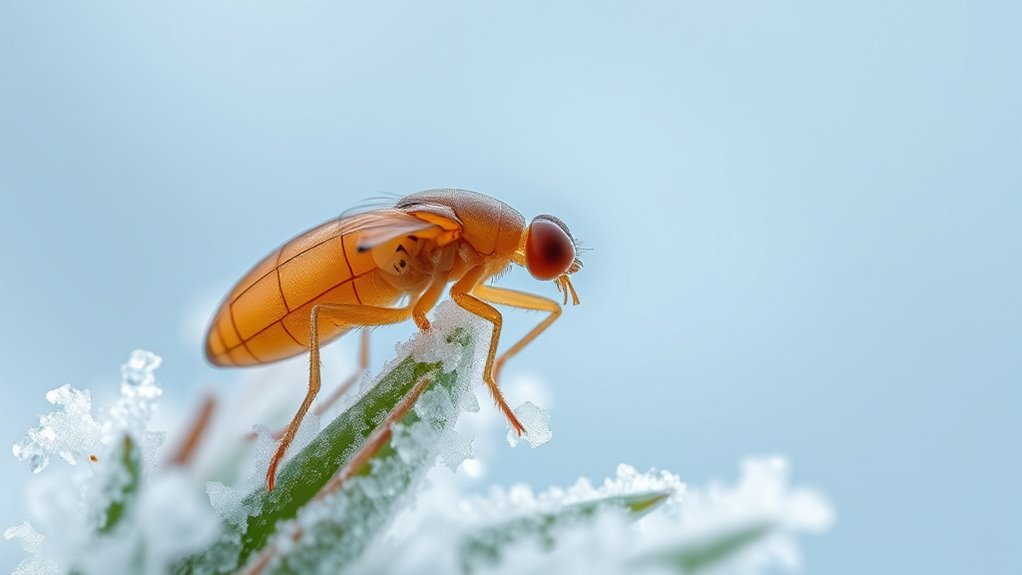
Yes, fleas can survive cold weather by hiding indoors where it’s warm. They can also enter dormant stages like eggs, larvae, or pupae outdoors until temperatures rise.
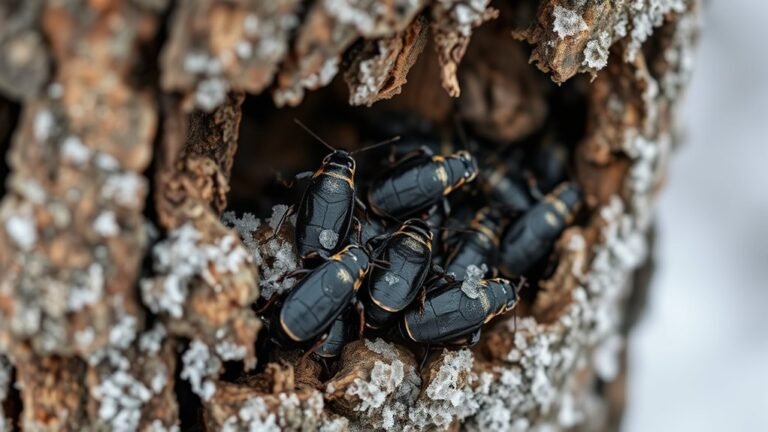
While adult fleas usually can’t last long in freezing conditions, they find sheltered spots like animal burrows to help them persist.
This means your home and pets can harbor fleas year-round. So, cold months don’t guarantee relief from these pesky pests.
If you want to understand how fleas manage to survive winter and what you can do to prevent infestations, keep exploring!
The Flea Life Cycle and Winter Dormancy
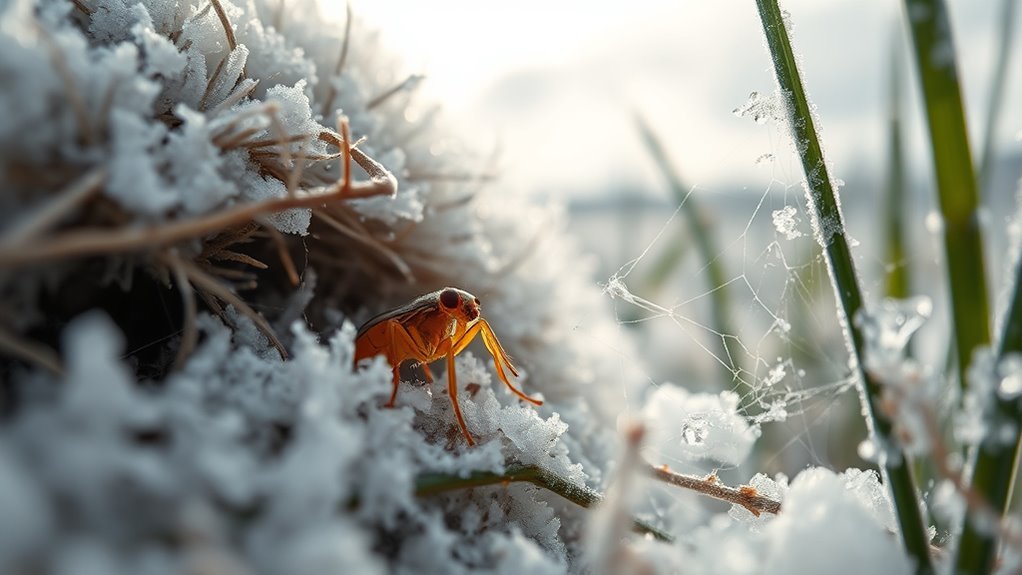
Although cold weather poses challenges, fleas have adapted their life cycle to survive winter dormancy.
You’ll find that the flea life cycle includes four stages: flea eggs, larvae, pupae, and adult fleas, each with unique survival strategies during winter.
Flea eggs can remain dormant and hatch anytime when conditions improve, so cold temperatures don’t stop them.
The larvae don’t need blood meals and hide in debris, making it easier for them to survive during winter.
Flea pupae can stay inside their cocoons for months, waiting patiently for warmth before emerging.
Adult fleas are tough, too—they can live up to 100 days without feeding if left undisturbed.
Understanding these stages helps you see why fleas are so resilient through winter dormancy.
How Fleas Adapt to Cold Temperatures
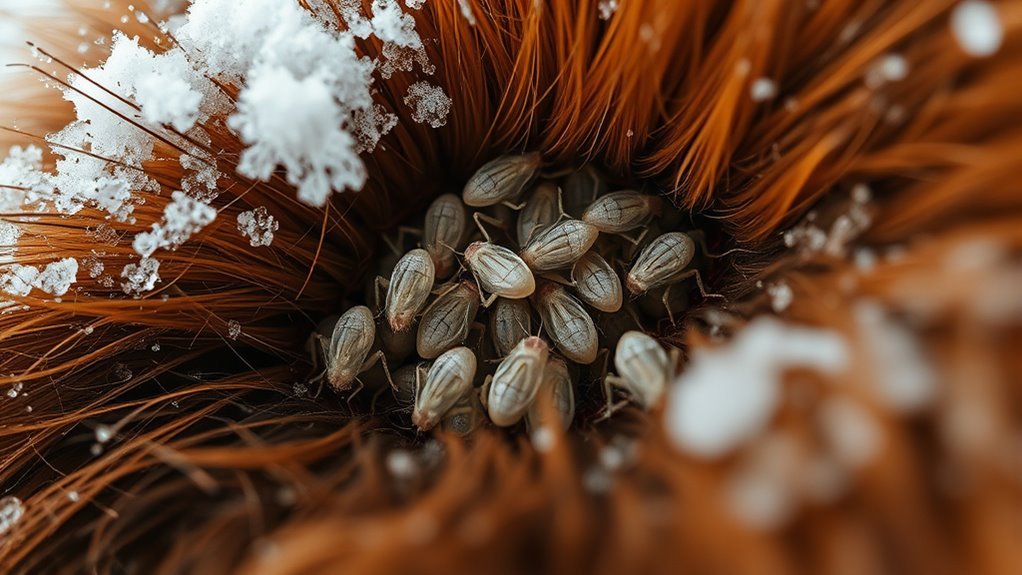
When temperatures drop, fleas survive by seeking warmth in protected places like indoors, animal dens, or beneath snow where the cold is less severe.
You’ll find that flea eggs and larvae can remain dormant in these sheltered spots, resisting cold temperatures better than adult fleas.
These immature stages stay inactive for weeks or months, waiting for conditions to improve before hatching.
Adult fleas, being more vulnerable, rely on finding warmth from hosts or indoor environments to avoid freezing.
Fleas in cocoons can pause development for up to 30 weeks at moderate temperatures, enhancing their survival chances.
The Role of Indoor and Outdoor Environments in Flea Survival
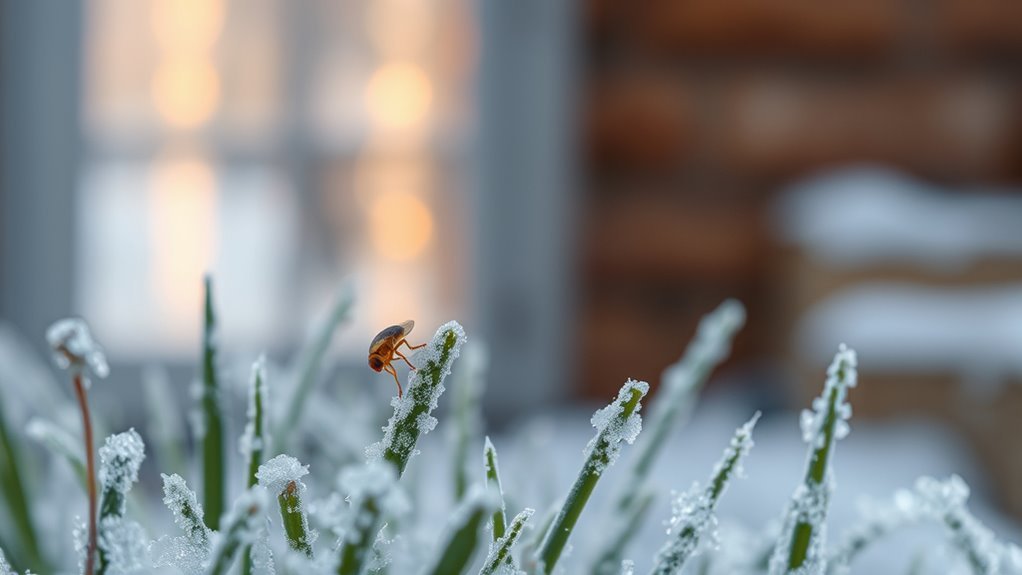
Fleas rely heavily on their surroundings to survive cold weather, and the differences between indoor and outdoor environments play a big role in their survival rates.
In indoor environments, temperatures usually stay above 46°F, allowing fleas to survive indefinitely if a host is around.
You’ll find them hiding in carpets, bedding, and other insulated habitats that keep them warm during winter months.
Outdoor temperatures can drop below freezing for extended periods, killing most adult fleas.
However, fleas can survive by staying in outdoor shelters like animal burrows or dens, where insulated habitats and body heat protect them.
Wildlife also carries fleas into yards year-round, making flea survival outdoors possible despite harsh cold.
Understanding these environments helps you manage fleas effectively during winter.
How Extended Freezing Affects Flea Populations
Since adult fleas can’t survive more than a few days in freezing temperatures, extended cold spells substantially reduce their numbers outdoors.
However, flea pupae are much hardier and can endure extended cold weather inside their cocoons, sometimes for up to a year.
This resilience affects the flea life cycle and winter flea infestation risks. Here’s what you should know about how extended freezing impacts flea populations:
- Adult fleas typically die after about 5 days below 32°F.
- Flea survival drops drastically after 10-20 days of freezing temperatures between 33°F and 46°F.
- Flea pupae can survive long cold periods, allowing populations to rebound.
- Outdoor fleas often find shelter in warm nests or burrows to survive extended cold weather.
Understanding these points helps explain why freezing alone doesn’t guarantee complete flea control.
The Connection Between Fleas and Intestinal Parasites in Winter
While cold weather can reduce adult flea populations outdoors, it doesn’t eliminate all risks to your pet’s health.
Even during winter, fleas can survive in protected areas like pet bedding, continuing their flea life cycle as eggs are laid indoors.
Meanwhile, intestinal parasite eggs, such as roundworms and tapeworms, persist in the outdoor environment year-round, regardless of temperature.
Your pet risks infection not only from fleas acting as intermediate hosts but also by walking on or ingesting contaminated soil.
A winter flea might be less active outside, but the threat of intestinal parasites remains.
Effective Flea Prevention Strategies for Cold Months
You can’t skip flea prevention just because it’s cold outside—fleas survive indoors and in sheltered outdoor spots year-round.
Treating both your pets and their environment consistently helps stop fleas from making a comeback.
Let’s explore the best ways to protect your home and pets during the cold months.
Year-Round Prevention Importance
Even in cold weather, fleas can thrive indoors where it’s warm and sheltered.
So, you need to maintain year-round prevention.
Fleas can survive winter by hiding in your indoor environment, especially in your pet’s bedding, continuing their flea life cycle.
To protect your pets, follow these steps for year-round flea prevention:
- Use veterinarian-approved flea treatments consistently, regardless of the season.
- Regularly vacuum floors, carpets, and furniture to remove flea eggs and larvae.
- Wash your pet’s bedding frequently in hot water to kill any hidden flea eggs.
- Consult your vet to tailor a prevention plan that fits your climate and home conditions.
Ignoring these steps can let fleas persist, making infestations harder to control during the cold months.
Keep your furry friends safe and comfortable all year long!
Indoor and Outdoor Treatments
Since indoor temperatures usually stay above 46°F, fleas can survive and reproduce inside your home throughout the cold months.
To combat this, you’ll want to use indoor treatments like sprays and essential oils that target flea eggs and larvae.
Don’t forget to wash pet bedding regularly in hot water to remove any hidden pests.
Outdoor treatments help reduce flea populations lurking in your yard.
Combining these methods with year-round prevention products offers the best defense.
| Treatment Type | Key Action |
|---|---|
| Indoor treatments | Kill eggs, larvae, and pupae |
| Outdoor treatments | Reduce fleas in yard environment |
| Pet bedding | Wash in hot water frequently |
| Temperature | Maintain consistent warmth indoors |
| Year-round prevention | Use products consistently |
Why Year-Round Flea Protection Is Essential
Although cold weather can reduce flea activity outdoors, these pests often survive indoors or in sheltered areas.
Cold weather may slow fleas outside, but they thrive indoors or in sheltered spots year-round.
This makes year-round flea protection essential. Fleas complete their life cycle inside warm indoor environments, with flea eggs, larvae, and pupae persisting through winter.
To protect your pet’s health and prevent infestations, follow these key steps:
- Use flea treatments consistently throughout the year, regardless of season.
- Treat both your pet and indoor environments to interrupt the flea life cycle.
- Regularly clean bedding and vacuum carpets to remove flea eggs and larvae.
- Monitor your pet for signs of fleas even during colder months.
Year-round prevention guarantees fleas don’t rebound when temperatures rise, keeping your home and pets safe all year long.
Frequently Asked Questions
How Cold Is Cold Enough to Kill Fleas?
You need temperatures below 32°F (0°C) for at least five days to kill fleas effectively.
Remember, repeated hard freezes help, but flea eggs and pupae often survive brief cold spells.
Will Cold Weather Kill off Fleas?
Think of fleas as uninvited guests who can’t brave a harsh winter storm.
Yes, cold weather will kill off fleas, but only if it’s freezing long enough.
Otherwise, they’ll hide in cozy spots and survive your icy attack.
Will Fleas in the House Die in Winter?
No, fleas in your house won’t die in winter because they hide in warm spots like carpets and furniture.
They survive indoors where temperatures stay warm, so you’ll need to keep treating and cleaning year-round to control them.
Will Fleas Die if My House Is Cold?
No, fleas won’t necessarily vanish if your house is chilly.
They thrive in warm, hidden habitats like carpets and bedding, so unless temperatures drop drastically and stay low, those pesky parasites persist.
This means they can continue to pose problems persistently.
Conclusion
So, can fleas really survive cold weather? Absolutely—they’re tougher than you might think.
They find ways to stay active indoors or go dormant outdoors until warmth returns.
That’s why you can’t just let your guard down when temperatures drop.
By staying proactive with year-round flea prevention, you protect your home and pets from these persistent pests and the parasites they carry.
Don’t wait for an infestation to start—take action now!
Keeping fleas at bay is essential, no matter the season.
Remember, even in the cold, fleas can still pose a threat.
So, invest in preventative measures and ensure your living space remains flea-free.
Stay vigilant, and you’ll safeguard your home and pets from these unwanted intruders.
Taking the right steps now can save you from a much bigger problem later on.
Stay flea-free year-round!