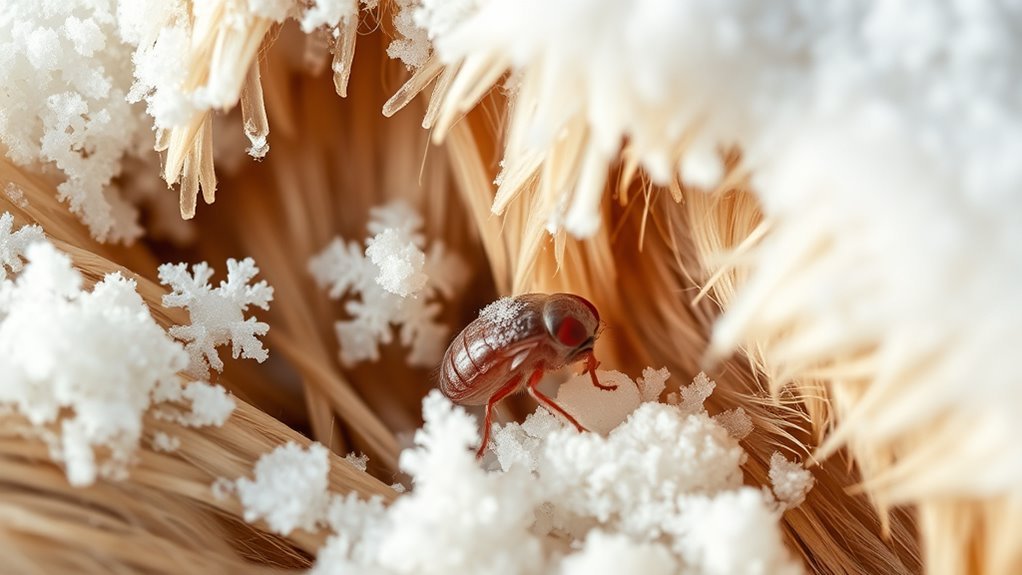
How Do Fleas Live in Cold Weather?
You might think fleas disappear in cold weather, but that’s a common misconception.
These pesky pests actually survive by hiding in warm indoor spots like carpets, pet bedding, and even in the cracks of your home.
When outdoors, fleas cling to wildlife hosts such as raccoons and squirrels, which provide both shelter and body heat.
Their eggs and pupae can remain dormant through freezing temperatures, ready to hatch as soon as it warms up again.
It’s important to note that fleas stay active indoors year-round, so keeping up with prevention is key.
There’s plenty more to know about how they thrive through winter, and being informed can help you keep your home flea-free.
Flea Life Cycle and Winter Survival
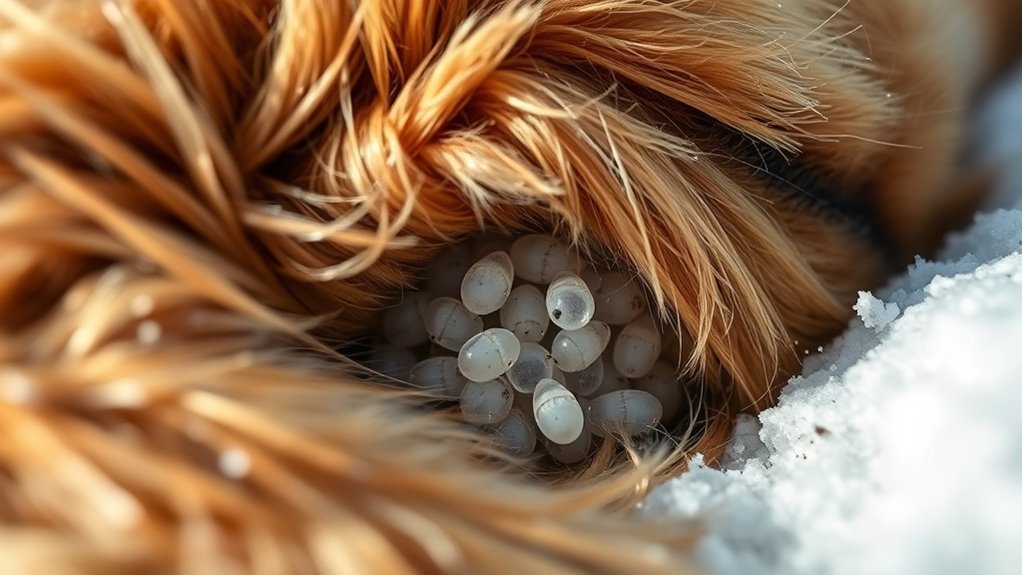
Although cold weather can be harsh, fleas have adapted to survive winter in various stages of their life cycle.
You’ll find that flea eggs and larvae can survive indoors in protected environments where temperatures stay above freezing. This allows the flea life cycle to continue even during winter.
Flea pupae, wrapped in cocoons, are especially resilient. They can remain dormant for several months or up to a year, waiting for the right environmental triggers like warmth, movement, or increased CO₂ to hatch.
While adult fleas may struggle outside in freezing temperatures, those on your pets or inside warm indoor environments can persist year-round.
Understanding these stages is key to grasping how fleas manage winter survival despite cold conditions.
How Fleas Find Shelter During Cold Months
When temperatures drop, fleas look for warm places to hide, like inside your home or on your pets.
You might not realize it, but wildlife nests and outdoor burrows also provide cozy shelters for them.
Warm Indoor Hiding
Since fleas can’t survive the cold outdoors, they seek warmth inside your home, especially in cozy spots like carpets, pet bedding, and upholstered furniture.
This warm indoor hiding ensures flea survival through winter by providing insulated areas with steady indoor warmth.
Fleas often hide in cracks, crevices, and under baseboards, where temperatures remain above freezing.
Your pet’s fur and bedding offer both shelter and blood meals, making pet bedding a prime flea refuge.
Fleas can also stay dormant inside cocoons for months, waiting for signs of warmth or movement before becoming active again.
To summarize, fleas rely on:
- Soft, insulated areas like carpets and upholstery
- Pet bedding for shelter and nourishment
- Cracks and crevices that retain warmth
- Consistent indoor warmth from heating systems
Wildlife and Outdoor Nests
Even as temperatures drop, fleas find refuge by hitching rides on outdoor animals like raccoons and opossums.
These animals provide them with warm dens, burrows, and nests where they can survive the winter.
These wildlife nests offer essential shelter, creating microclimates that protect fleas from harsh outdoor environments.
You’ll find dormant fleas hiding under leaves or snow near these nests, waiting for warmer days or returning hosts.
This ability to remain inactive yet protected is key to their winter survival.
By staying close to wildlife shelters, fleas maintain access to warmth and food sources without relying solely on indoor spaces.
Understanding how fleas use outdoor environments and wildlife nests helps you see why they persist, even in the coldest months.
Pet Hosts’ Body Heat
Although cold weather drives many pests indoors, fleas rely heavily on the body heat of pets like cats and dogs to survive winter.
Pet hosts’ body heat creates warm spots that keep fleas active despite freezing outdoor temperatures.
When you notice fleas, they often cling to areas where your pet’s body temperature is highest, such as fur or skin folds.
This warmth allows fleas to thrive indoors, even during cold months.
Here’s how fleas use pet hosts’ body heat for survival:
- Locate warm-bodied hosts like cats and dogs.
- Stay in fur or skin folds, where warmth is constant.
- Avoid harsh outdoor temperatures by living in indoor environments.
- Use pet body heat to remain nourished and active throughout winter.
The Role of Indoor Environments in Flea Persistence

When you keep your home warm during winter, fleas can thrive indoors despite the cold outside.
Indoor environments typically maintain a temperature above 46°F, offering the warmth fleas need to survive year-round.
Indoor warmth above 46°F provides the perfect conditions for fleas to thrive all year.
Fleas find shelter in pet bedding, carpets, and furniture, which harbor eggs, larvae, and pupae.
These hidden spots protect flea life stages, allowing them to remain dormant until conditions trigger hatching.
Because of this consistent indoor warmth, fleas complete their lifecycle regardless of freezing temperatures outside.
To control flea persistence, you need to focus on regular cleaning, vacuuming, and treating areas where fleas harbor.
Impact of Freezing Temperatures on Flea Populations
You might think freezing temperatures wipe out fleas, but it usually takes more than a few cold days to kill them off completely.
Fleas living in wildlife or sheltered indoor spots often survive harsh weather.
Understanding how cold affects their mortality helps you manage flea problems better.
Flea Mortality Rates
Even if outdoor temperatures drop below freezing, adult fleas don’t survive long—exposure to temperatures under 32°F (0°C) for five days usually kills them.
Flea mortality rates rise considerably during cold weather, but not all flea stages are equally affected by freezing temperatures. Here’s what you should know:
- Adult fleas typically die after five days of continuous freezing temperatures.
- Flea eggs and larvae can survive better, especially when hidden in protected environments.
- Fleas in the pupal stage remain dormant and can withstand extended cold periods.
- It takes at least two consecutive hard freezes to markedly reduce outdoor flea populations.
Understanding these points helps you grasp why cold weather impacts fleas differently depending on their life stage.
Survival in Wildlife
Cold weather considerably reduces flea numbers outdoors, but fleas find refuge in the warm burrows, nests, and dens of animals like raccoons and possums.
These spots provide an insulated environment where the body heat of outdoor wildlife shields fleas from freezing temperatures.
Flea eggs and larvae tucked in soil or under leaf litter also benefit from this protection, boosting their cold weather survival chances.
While prolonged exposure to temperatures below freezing usually wipes out many fleas, some pupae remain dormant, waiting for warmer days.
When temperatures rise above freezing, fleas become more active, thriving in these sheltered habitats.
Indoor Temperature Effects
Although freezing temperatures outdoors can decimate flea populations, indoor environments protect these pests by maintaining temperatures above 46°F (8°C).
This stable warmth allows fleas to survive and reproduce throughout the year.
When you consider the indoor temperature effects, keep these points in mind:
- Indoor temperatures prevent fleas from freezing, ensuring higher flea survival rates than outdoors.
- The warm environment supports flea eggs, larvae, and pupae, keeping the life cycle active.
- Fleas can remain dormant or active indoors, adapting to the environment without freezing threats.
- Continuous reproduction indoors means flea populations can thrive regardless of harsh outdoor winters.
Flea Activity Levels Throughout Winter
While outdoor flea activity drops markedly as temperatures fall, you’ll find they remain active indoors throughout winter.
Fleas slow down outside in winter but stay active and thriving indoors all season long.
In the protected indoor environment, fleas continue to feed, lay eggs, and develop larvae despite the cold outside.
Flea activity during these winter months doesn’t cease; instead, it shifts to places where warmth and hosts are available.
Eggs and larvae thrive in carpets, pet bedding, and cracks, making it easy for fleas to persist year-round.
Even when adult fleas die off outdoors, indoor conditions allow their life cycle to continue uninterrupted.
Because of this, you must commit to year-round prevention to keep flea populations under control.
Ignoring winter flea activity can lead to infestations that quickly rebound as temperatures rise again.
Risks Posed by Wildlife Carriers in Cold Weather
Since wildlife like raccoons, opossums, and squirrels often seek shelter near your home during winter, they can bring fleas into your yard even when temperatures drop.
These wildlife carriers harbor fleas on their bodies, which survive by feeding on their warm blood.
Their choice of outdoor shelters, such as dens or debris piles, creates ideal spots for flea survival despite cold weather.
Here’s what you should watch for:
- Wildlife hosts provide consistent warmth, allowing fleas to thrive.
- Fleas can transfer from wildlife to your pets or indoor spaces.
- Outdoor shelters near your home increase flea exposure risks.
- Cold weather doesn’t eliminate flea threats if wildlife carriers are present.
Understanding these risks helps you stay vigilant about flea presence year-round.
Effective Year-Round Flea Prevention Strategies
Wildlife can bring fleas into your yard even during colder months.
Fleas can hitch a ride from wildlife into your yard, even during the chilly months.
This makes it important to protect your home and pets year-round.
For effective flea prevention, consistently use veterinarian-recommended treatments like topical solutions, collars, or oral medications.
Regularly vacuum your indoor environment, focusing on carpets, furniture, and pet bedding to remove flea eggs and larvae before they mature.
Don’t forget to wash pet bedding, blankets, and soft toys weekly in hot water to eliminate hidden eggs and larvae.
Treat your home with EPA-approved flea sprays or foggers to target all life stages and prevent re-infestation.
And let’s not overlook outdoor maintenance—trim grass, clear debris, and apply outdoor flea control products.
Combining these steps guarantees thorough year-round flea control, keeping your pets and home flea-free even in cold weather.
Frequently Asked Questions
Will Cold Weather Kill Fleas?
Cold weather can kill fleas if it stays below freezing for several days.
However, you’ll find that eggs and larvae survive in sheltered spots.
Indoors, fleas thrive year-round, so you’ll need to treat infestations properly.
What Will 100% Get Rid of Fleas?
You’ll need thorough cleaning, regular pet treatments, and professional products to get rid of fleas 100%.
Vacuum, wash bedding, apply vet-recommended preventatives, and use EPA-registered sprays to break their life cycle completely and effectively.
What Time of Year Do Fleas Die Off?
Fleas usually die off in late winter or early spring when outdoor temperatures stay above freezing.
If you keep your home warm, indoor fleas might survive longer.
Will Fleas Die if You Freeze Them?
Freezing fleas is like trying to freeze a stubborn ember; you’ll kill many if temperatures stay below 32°F for days.
But some eggs and larvae hide, surviving until warmth returns.
Conclusion
When cold weather hits, fleas don’t just disappear—they curl up like tiny survivors, waiting for warmth.
You might think winter freezes them out, but they find cozy spots indoors or hitch rides on wildlife to keep going.
Fleas slow down but don’t stop, so you’ve got to stay vigilant year-round.
Think of flea prevention as a shield, keeping these persistent pests from sneaking back in when you least expect it.
In cold weather, it’s a common misconception that fleas are gone for good.
However, they adapt and continue to thrive in hidden nooks and crannies.
Taking proactive measures, like using flea treatments and maintaining cleanliness, is essential.
Remember, fleas can be a year-round issue, so don’t let your guard down just because it’s winter.
Stay alert, and protect your home to ensure these pesky invaders don’t return.
In conclusion, understanding how fleas survive in cold weather is crucial for effective flea prevention.
By staying vigilant and using preventive measures, you can shield your home from these resilient pests all year long.