How to Dry Concrete in Cold Weather Step by Step
To dry concrete in cold weather, it’s crucial to ensure that the ground temperature is above 40°F and that it is free of any snow or ice.
Start by using cold-weather mixes that include accelerators and mix them with hot water.
Pour the concrete during the warmest part of the day, and be sure to cover it immediately with insulated blankets to help retain heat.
Additionally, employing portable heaters can help maintain the temperature above 50°F, so keep a close eye on moisture levels regularly.
It’s important to keep the coverings in place until the concrete gains sufficient strength.
By following these steps, you can secure a strong, well-cured finish even in low temperatures.
Stay proactive and monitor conditions closely for the best results!
Preparing the Site and Ground Before Pouring
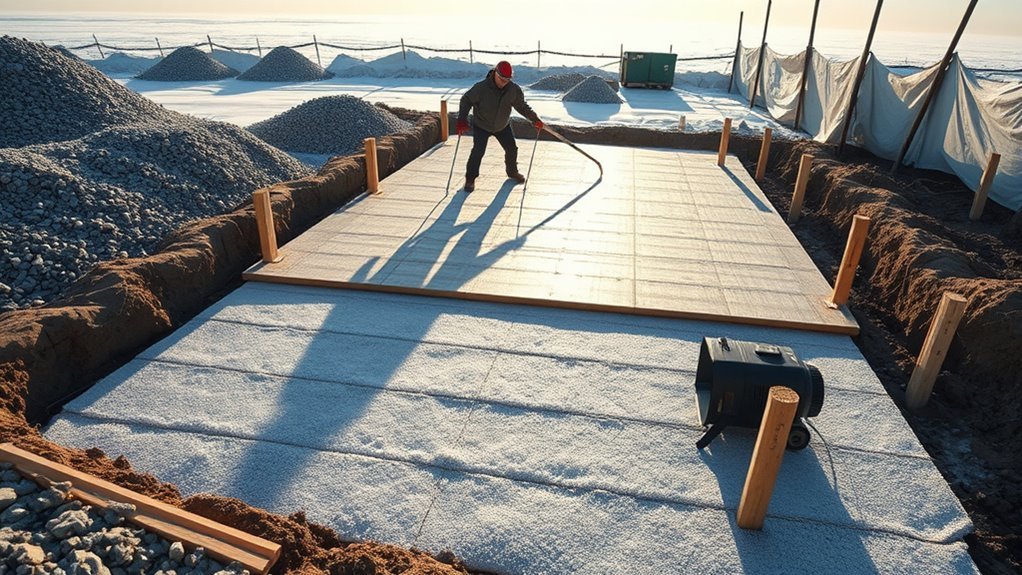
Before you pour concrete in cold weather, make sure the ground temperature is above 40°F. This helps prevent improper bonding and structural issues.
Start your site preparation by removing all snow and ice. It’s important to ensure the area is clear for thorough ground preparation.
If the soil is frozen, you’ll need to thaw it using ground heaters, heated blankets, or black plastic sheeting. This plastic traps heat and promotes thawing.
Maintaining moisture control is crucial! Avoid pouring on wet or frozen subgrade to ensure a dry subgrade for optimal concrete curing.
Apply insulation like black plastic over the thawed ground to keep it from refreezing during and after the pour.
Selecting and Using the Right Materials for Cold Weather
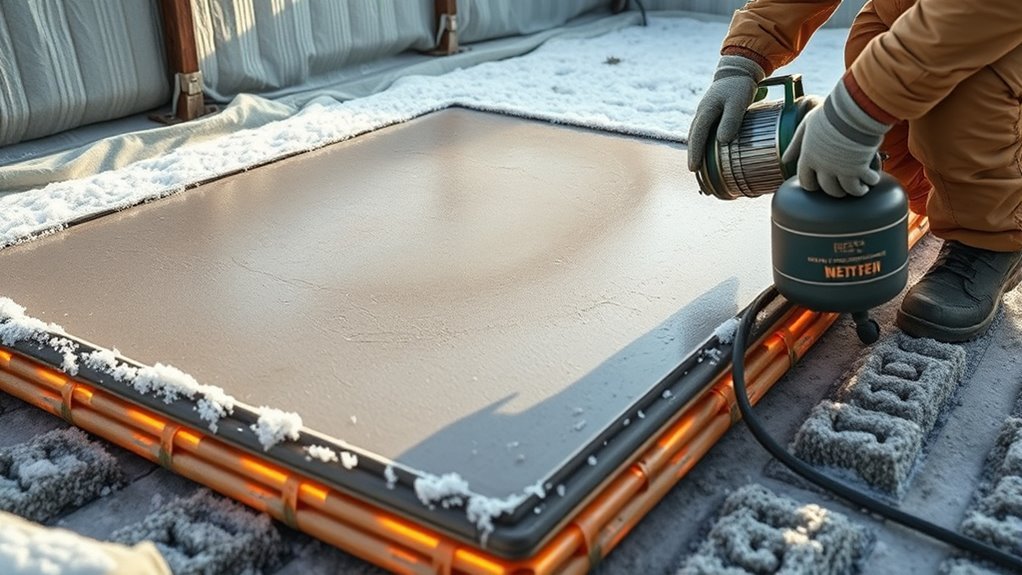
When working in cold weather, choosing the right concrete mix and materials is essential to guarantee proper curing and durability.
You should focus on cold-weather mixes with air-entrainment to boost freeze-thaw resistance in low temperatures.
Here’s what to contemplate:
- Use chemical accelerators like calcium chloride or non-chloride admixtures to speed the curing process and promote early strength.
- Incorporate hot water in the mix to maintain warmth and proper hydration despite the cold.
- Store materials such as cement and aggregates in heated or protected areas to avoid freezing before mixing.
- Apply insulated blankets after pouring to retain heat and support steady curing.
Making these adjustments can really make a difference in your cold-weather projects!
Techniques for Pouring Concrete in Low Temperatures
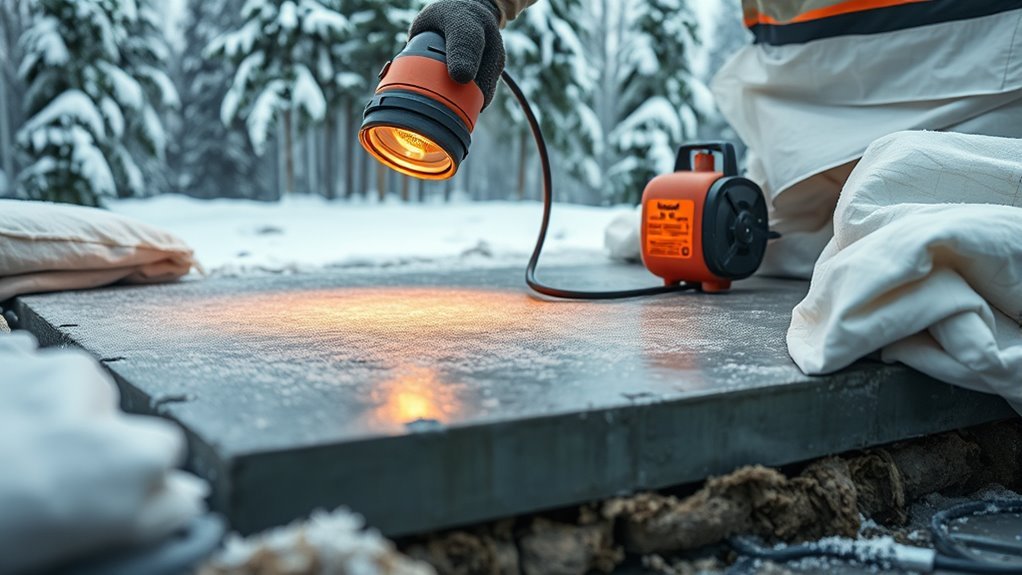
Choosing the right materials sets the stage, but how you pour concrete in cold weather also plays a big role in its strength and durability.
Use heated water in the mix to keep concrete temperature above 50°F.
Also, try to schedule pours during the warmest part of the day.
Protect the concrete immediately after pouring by covering it with insulation blankets or thermal covers to prevent rapid freeze.
You can also employ portable heaters to maintain ideal curing concrete temperatures.
Here’s a quick guide for winter construction:
| Technique | Purpose | Tools/Materials |
|---|---|---|
| Heated water | Elevate mix temperature | Heated water |
| Warmest pour timing | Maximize ambient heat | Scheduling |
| Portable heaters | Prevent temperature drops | Hydronic heaters |
| Insulation blankets | Retain heat during curing | Heated blankets, thermal covers |
| Cold-weather admixtures | Speed setting, improve freeze resistance | Accelerators, air-entraining agents |
Applying Insulation and Thermal Blankets Immediately After Pouring
As soon as you finish pouring, cover the concrete with insulated blankets to trap heat and prevent surface freezing.
Immediate application of thermal blankets is vital for protecting exposed concrete and ensuring proper curing.
Focus on insulation and temperature control by following these steps:
- Extend blankets at least 18 inches beyond the pour edges for full coverage.
- Use blankets with an R-value of 3.0 or higher, depending on temperature.
- Secure blankets tightly to avoid air gaps and wind infiltration that reduce heat retention.
- Keep blankets in place for at least 48 hours or until the concrete achieves 500 psi compressive strength.
Proper blanket placement and covering prevent heat loss and help maintain a stable curing environment.
Using Heaters and Maintaining Proper Ambient Temperatures
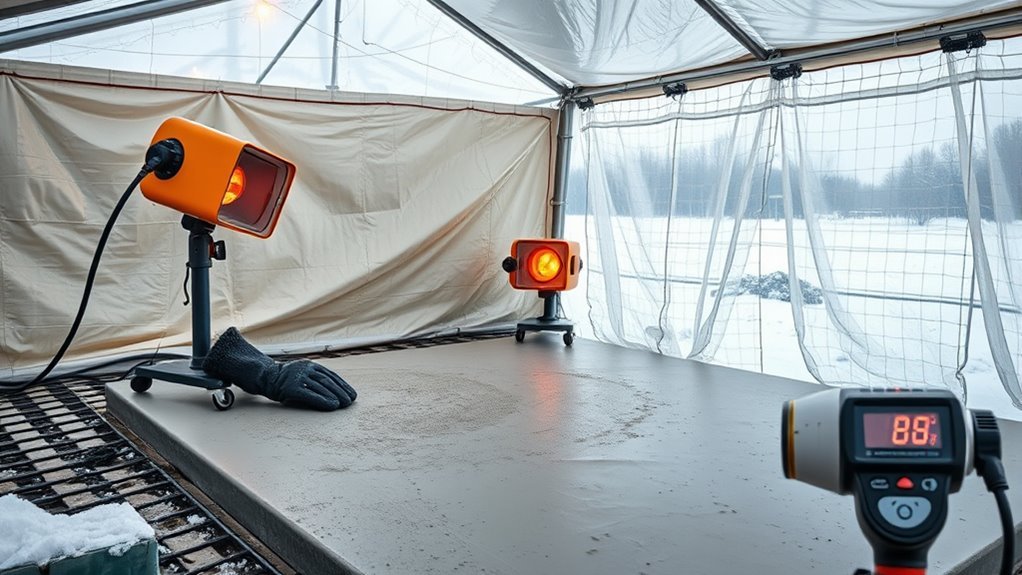
You’ll want to use electric or propane heaters to keep the concrete area at a steady temperature above 50°F.
Setting up heated enclosures with temperature controls helps maintain consistent warmth and prevents freezing.
Make sure to observe the ambient temperature closely to ensure the concrete cures properly.
Heater Types Overview
When curing concrete in cold weather, maintaining the right ambient temperature is essential to prevent freezing and guarantee proper hydration.
Choosing the right heater type helps you control this critical factor. Here are four common heater types for concrete curing:
- Electric heaters, like infrared heaters and forced-air units, quickly raise ambient temperature and are easy to operate.
- Propane or natural gas heaters offer high heat output but require proper ventilation to avoid carbon monoxide risks.
- Hydronic heating systems circulate warm water through pipes or mats, providing even heat and precise temperature control.
- Continuous temperature monitoring with infrared thermometers or embedded sensors ensures ideal conditions for drying.
Selecting the appropriate heater type and monitoring temperature closely ensures effective concrete curing in cold weather.
Ambient Temperature Control
Although cold weather can slow down concrete curing, maintaining proper ambient temperatures guarantees your concrete dries effectively.
Use heated enclosures or curing tents to keep the ambient temperature at least 10°F higher than outside, ensuring consistent temperature regulation.
Employ heat sources like space heaters combined with thermal blankets and insulation to retain warmth around your cold weather concrete.
Circulate air with temperature-controlled fans to avoid cold spots, and regularly conduct temperature monitoring using infrared thermometers or digital sensors.
Gradually reduce heat sources once the concrete gains strength to prevent thermal shock.
Effective temperature control inside curing tents and proper insulation not only accelerates curing but also protects your concrete from cracking.
Monitoring Moisture and Temperature During the Curing Process
Since proper curing depends heavily on maintaining specific moisture and temperature levels, you need to closely monitor these factors throughout the process.
Effective temperature monitoring and moisture content checks are vital to prevent freeze damage during the curing period.
Use these steps:
- Measure internal moisture content non-destructively at 4-8 hours, 24 hours, and regularly using moisture meters like Kett’s HI520-02.
- Continuously track concrete temperature with infrared thermometers and embedded sensors to keep it above 50°F.
- Record all moisture and temperature data to verify ideal conditions for strength development and freeze protection.
- Compare strength tests with maturity sensor data to confirm the concrete reaches 500 psi before removing protective coverings.
Adjust your curing protocol based on these readings to guarantee successful drying and curing in cold weather.
Frequently Asked Questions
How to Dry Concrete in Cold Weather?
You’ll dry concrete in cold weather by keeping it warm with heated blankets or heaters.
Insulating it properly is also essential.
Using plastic covers can help as well, and don’t forget to monitor temperatures closely.
This ensures it cures above 50°F without freezing or overheating.
What Is the Fastest Way to Dry Concrete?
The fastest way to dry concrete is to wrap it like a cozy blanket with heated covers and blast it with space heaters.
This combo speeds up curing, cutting drying time from weeks to just days, keeping strength intact.
Will Concrete Cure at 32 Degrees?
Concrete won’t cure properly at 32°F unless you protect it.
You’ll need insulated blankets, heaters, or enclosures to keep it above freezing.
Otherwise, the curing slows, and the concrete risks cracking or weakening.
What Happens if Concrete Is Allowed to Freeze Within the First 24 Hours?
If concrete takes an unexpected icy nap within 24 hours, you’ll see weakened strength and pesky cracks.
It won’t bounce back fully, so protecting it from freezing early is key to keeping it sturdy and lasting.
Conclusion
Drying concrete in cold weather might seem like a slow, frozen battle against time, but with the right steps, you can turn that chill into your ally.
While the frost tries to halt progress, your careful preparation, insulation, and warmth keep the concrete curing steadily.
It’s a delicate dance between cold and heat, patience and action—showing that even in the harshest conditions, you can achieve solid, lasting results.
Keep at it, and watch your concrete come to life.
—
In conclusion, drying concrete in cold weather requires strategic efforts like insulation and warmth to ensure proper curing.
By understanding the challenges posed by low temperatures, you can effectively manage the drying process.
With patience and the right techniques, you can achieve durable and reliable results, even in the coldest conditions.
Stay proactive, and your concrete will not only set but thrive, paving the way for successful projects ahead.