How Cold Weather Can Give You Headaches and How to Prevent Them
Cold weather can lead to headaches for several reasons. When temperatures drop, your blood vessels narrow and sinus pressure changes, often triggering pain.
Additionally, dry indoor air and dehydration can aggravate these headaches. They irritate your nasal passages and thicken mucus, making discomfort worse.
To prevent these headaches, it’s important to keep your head warm. Dress in layers to retain body heat, and don’t forget to stay hydrated, as this plays a crucial role in overall wellness.
Using a humidifier can also help maintain indoor humidity, which is beneficial during cold months.
Moreover, protecting yourself from rapid temperature and pressure changes can make a significant difference in how you feel.
If you want to dive deeper into why these headaches occur and discover more effective strategies, keep exploring!
How Cold Weather Affects Blood Vessels and Headaches
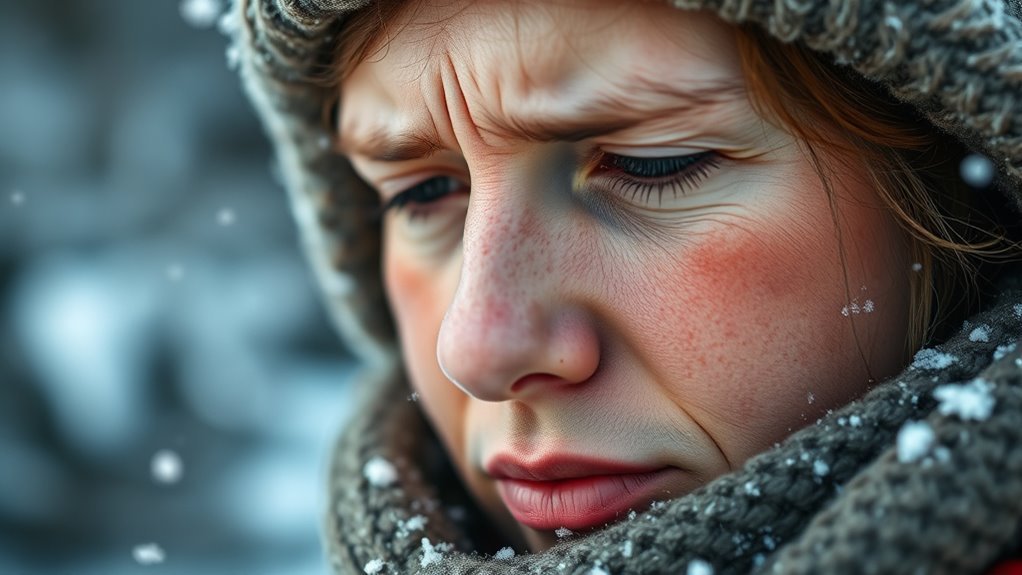
When cold weather hits, your blood vessels in the brain and head constrict to conserve heat.
But this narrowing can trigger tension and headaches.
This vasoconstriction reduces blood flow, increasing pressure and causing head pain.
Sudden temperature changes prompt rapid constriction of blood vessels, often leading to migraine or sinus headache development.
The longer you stay in cold environments, the more intense the constriction becomes.
This raises your risk of headache episodes.
Your body naturally narrows blood vessels to maintain warmth, but this protective response inadvertently contributes to headaches.
Understanding how temperature changes affect blood vessels helps explain why cold weather can bring on head pain.
Recognizing this connection is key to managing and preventing cold-induced headaches effectively.
The Role of Barometric Pressure in Winter Headaches
Although you might not notice it, shifts in barometric pressure during winter storms can directly impact your sinuses and trigger headaches.
Barometric fluctuation causes your sinus cavities to expand or contract, increasing sinus pressure and leading to discomfort.
Low atmospheric pressure often acts as a key migraine trigger by affecting blood vessel dilation.
Rapid pressure changes can heighten sensitivity, especially if you’re prone to winter headaches or migraines.
Keeping an eye on weather forecasts for barometric pressure shifts helps you anticipate these episodes.
By understanding how pressure changes influence your sinuses and headache risk, you can take proactive steps in headache prevention.
Managing exposure and preparing for barometric pressure drops can reduce the intensity and frequency of winter-related head pain.
Dry Indoor Air and Its Impact on Sinus Health
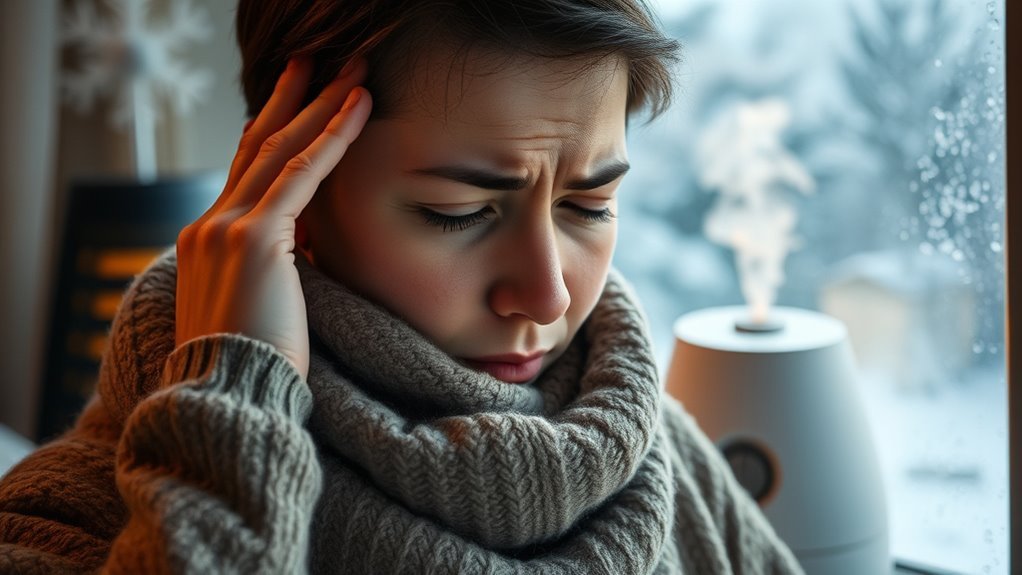
Shifts in barometric pressure aren’t the only factor that can trigger winter headaches; the dry air inside your home plays a significant role as well.
Dry indoor air caused by heating systems lowers humidity levels, leading to dehydration of your nasal passages and mucous membranes.
This lack of moisture thickens mucus in your sinuses, impairing drainage and increasing pressure that triggers sinus headaches.
Additionally, dry air irritates the lining of your nasal passages, causing inflammation and sinus congestion that worsens pain.
When moisture is insufficient, the cilia can’t clear mucus and bacteria effectively, raising the risk of sinus infections and headaches.
Using humidifiers helps maintain ideal humidity levels, preventing sinus dryness and reducing the likelihood of these winter-related sinus health issues.
Common Types of Headaches Triggered by Cold Weather
Cold weather often triggers different types of headaches by affecting the blood vessels and nasal passages in your head and neck.
Vasoconstriction caused by cold air narrows blood vessels, leading to tension headaches.
Cold air causes blood vessels to narrow, triggering tension headaches.
Sudden drops in barometric pressure during winter storms act as headache triggers, often sparking migraines if you’re sensitive.
Dry indoor air from heating systems dries out nasal passages, increasing the risk of sinus headaches.
Temperature fluctuations and changes in humidity can worsen existing headaches or cause new ones.
Exposure to cold without proper head protection tightens vessels in your head and neck, intensifying pain.
Understanding these common headache types and their triggers can help you focus on effective headache prevention this winter season.
Dehydration as a Contributor to Winter Headaches
When temperatures drop, you might not feel as thirsty, but this decreased water intake can lead to dehydration, a common trigger for winter headaches.
Dehydration thickens mucus in your sinuses, causing congestion and sinus pressure, which often results in headaches. Indoor heating also dries out your nasal passages, worsening dehydration-related symptoms.
Even mild dehydration can reduce blood flow to your brain, leading to tension or migraine headaches. To avoid these discomforts, staying hydrated is vital.
Drinking enough water helps thin mucus, relieve sinus pressure, and supports overall headache prevention during winter.
Don’t wait until you feel thirsty; proactively maintain hydration to keep dehydration and its associated headaches at bay throughout the cold season.
Identifying Sinus Headaches Versus Migraines in Winter
Although sinus headaches and migraines can feel similar, you can often tell them apart by their distinct symptoms and causes.
In winter, sinus headaches usually involve sinus congestion, facial pressure, and thick mucus caused by sinus inflammation from cold air. You’ll notice the pain worsen when you press on your face or move around.
Migraines, however, often cause throbbing pain on one side of your head and may come with nausea or visual disturbances. They’re typically linked to changes in barometric pressure and other environmental triggers during winter.
While both cause facial pain, sinus headaches stem from sinus inflammation, and migraines arise from vascular changes.
Recognizing these differences in headache symptoms helps you better understand and address your winter headaches.
Effective Home Remedies for Cold-Related Headaches
Since winter headaches often stem from dry air, muscle tension, and dehydration, you can ease your symptoms with simple home remedies.
Using a humidifier indoors boosts air moisture, soothing dry nasal passages and reducing headache triggers.
Applying a warm compress to your forehead or neck helps relieve sinus pressure and relax tense muscles, offering quick headache relief.
Staying hydrated by drinking warm herbal teas supports your body and prevents dehydration-related headaches.
Wearing hats and scarves keeps your head and neck warm, stopping blood vessels from constricting and decreasing tension headaches.
Finally, practicing relaxation techniques like deep breathing or meditation reduces muscle tension and stress, helping to prevent headaches.
These effective home remedies can markedly ease cold-related headaches and improve your comfort during winter.
Preventive Measures to Reduce Winter Headache Frequency
To reduce winter headaches, make sure you stay hydrated and use a humidifier to keep indoor air moist.
Wearing warm clothing, especially hats and scarves, helps keep your head and neck warm, preventing headache triggers.
These simple steps can considerably lower how often you experience cold-related headaches.
Hydration and Humidity
How can you reduce the frequency of winter headaches through hydration and humidity?
First, focus on proper hydration by drinking at least eight glasses of water daily to avoid dehydration, a common headache trigger.
Dry air in winter can irritate your nasal passages, increasing headache risk.
Using a humidifier indoors boosts indoor humidity, keeping mucous membranes moist and reducing sinus inflammation.
Aim to maintain indoor humidity levels between 30-50% for ideal comfort.
Additionally, consuming warm, hydrating foods like soups and herbal teas can soothe dry nasal passages while increasing fluid intake.
Avoid excessive indoor heating and open windows periodically to balance humidity and prevent headaches.
Warm Clothing Benefits
A key way to reduce winter headaches is by wearing warm clothing that protects your head and neck.
Warm clothing preserves body heat, preventing vasoconstriction—a major cause of tension headaches.
Layered clothing traps heat, stabilizing blood flow and minimizing temperature fluctuations that trigger pain.
Covering your head and neck reduces nerve sensitivity, muscle tightening, and sinus pressure, all linked to headache onset.
| Benefit | Cause Prevented | How Warm Clothing Helps |
|---|---|---|
| Maintains body heat | Vasoconstriction | Insulates head and neck |
| Stabilizes blood flow | Temperature fluctuations | Layered clothing traps heat |
| Reduces nerve pain | Cold sensitivity | Keeps head warm |
| Prevents muscle tension | Muscle tightening | Consistent insulation outdoors |
When to Consult a Healthcare Professional for Winter Headaches
If your winter headaches become severe, frequent, or start affecting your daily life, it’s time to see a healthcare professional.
Watch for warning signs like vision changes, weakness, or confusion, which require urgent attention.
Getting a proper diagnosis can help you find effective treatments and prevent headaches from worsening.
Warning Signs to Watch
When cold weather triggers headaches that become severe, persistent, or disrupt your daily life, it’s a good idea to consult a healthcare professional.
Recognizing warning signs early helps you get the care you need.
Pay attention to:
- Headaches with increased severity or frequency that don’t improve with over-the-counter treatments.
- Persistent headaches occurring more than three times a week or interrupting daily activities.
- New neurological symptoms like vision changes, dizziness, or weakness accompanying your headaches.
- Headaches that wake you from sleep or present differently than usual, especially if you’re older.
These signs indicate it’s time to seek medical advice.
Don’t ignore persistent or severe headaches, as they might signal underlying issues requiring professional evaluation.
Professional Diagnosis Benefits
Since cold weather can trigger various types of headaches, consulting a healthcare professional helps you pinpoint whether sinus issues, migraines, or other conditions are causing your pain.
A professional diagnosis is vital if your headaches become persistent, severe, or disrupt daily life during winter.
It also matters if you notice new neurological symptoms like vision changes or weakness.
Identifying underlying conditions early allows your provider to recommend targeted treatment tailored to your specific triggers.
This approach prevents headaches from worsening and offers personalized strategies to manage pain effectively.
Don’t hesitate to seek medical advice; professional evaluation ensures you get the right care and relief, especially when cold weather complicates your symptoms.
Taking action now can improve your quality of life throughout the colder months.
Frequently Asked Questions
How to Stop Headaches From Cold Weather?
You can stop cold weather headaches by wearing warm hats and scarves, staying hydrated,
using humidifiers, applying warm compresses, and managing stress with deep breathing.
Keep an eye on weather changes to prepare and reduce triggers.
Why Do I Get Bad Headaches in the Winter?
You might think headaches only come from stress, but in winter, cold air tightens blood vessels and dry indoor heat dehydrates you, triggering pain.
Staying hydrated and warm can help you prevent those harsh headaches.
How Do You Treat a Seasonal Headache?
You treat seasonal headaches by avoiding triggers like cold exposure, staying hydrated, and applying warm or cold compresses.
Keep a regular sleep schedule, practice relaxation techniques, and use over-the-counter pain relievers if needed.
These simple steps can make a big difference in managing your headaches.
Conclusion
Cold weather might sneak up and chill more than just your skin—it can trigger headaches that disrupt your day.
But don’t let the cold control you. By staying hydrated, managing indoor air quality, and recognizing your headache type, you can keep those winter pains at bay.
Remember, your body’s signals are like whispers in the cold—listen closely, and you’ll find ways to stay comfortable all season long.
In conclusion, cold weather can indeed lead to headaches, but there are effective ways to prevent them. Staying hydrated is essential, as is ensuring good indoor air quality.
Additionally, paying attention to the type of headache you experience can help you address the issue more effectively. By taking these steps, you can enjoy the winter months without the added burden of headaches. Stay warm and headache-free!