Does Cold Weather Cause Arthritis?
Cold weather doesn’t cause arthritis, but it can certainly amplify existing joint pain and stiffness.
When temperatures drop, the synovial fluid in your joints thickens, blood vessels narrow, and tissue can swell due to pressure changes. This combination can lead to increased discomfort and stiffness in your joints.
If you already have sensitive joints, you might find that the colder months intensify these symptoms.
So, what can you do to ease winter joint pain? Let’s explore some strategies to help you manage discomfort and know when it’s time to seek professional help.
Understanding Arthritis and Its Symptoms
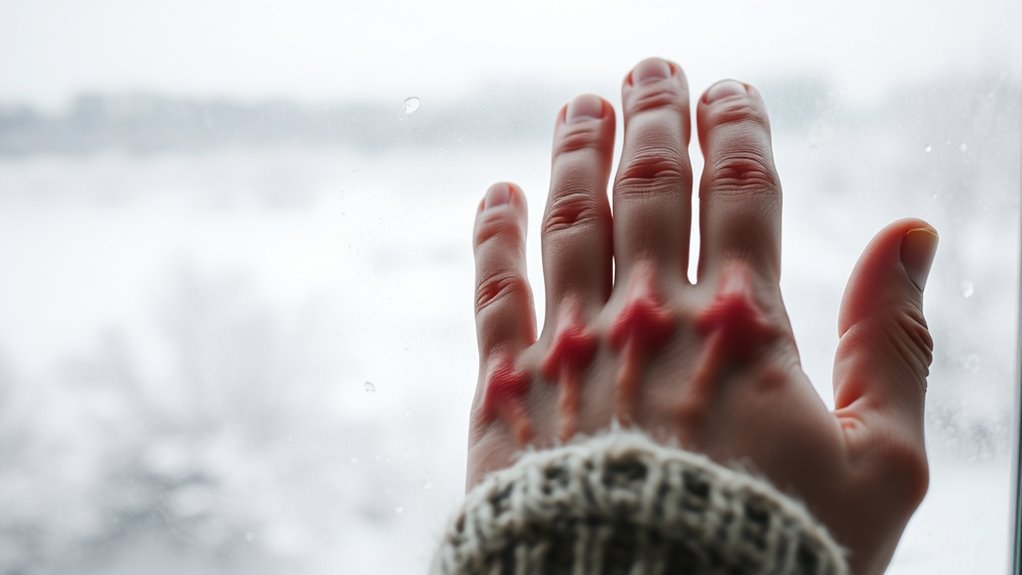
What exactly is arthritis, and how might it affect you?
Arthritis is a term for over 100 joint diseases marked by inflammation, joint pain, and stiffness.
You might experience symptoms like swelling, reduced mobility, or discomfort ranging from mild to severe.
Osteoarthritis involves the breakdown of cartilage, while rheumatoid arthritis is an autoimmune condition attacking your joints.
Although cold weather doesn’t cause arthritis, many people notice their symptoms worsen during chilly, damp conditions.
Changes in barometric pressure and temperature can influence inflammation and joint pain, making your discomfort more noticeable.
Understanding these symptoms helps you manage arthritis better and recognize when to seek treatment, especially as cold weather seems to intensify your joint issues.
How Cold Weather Affects Joint Function
When temperatures drop, the synovial fluid in your joints thickens, making movement feel stiff and uncomfortable.
Cold also narrows your blood vessels, reducing circulation and increasing joint pain.
Plus, changes in barometric pressure can cause your joint tissues to expand or contract, affecting how you feel.
Synovial Fluid Changes
How exactly does cold weather affect your joints?
Cold temperatures increase the viscosity of synovial fluid, making it thicker and less effective at lubricating your joints.
This change leads to greater joint stiffness and reduced mobility, especially if you have arthritis.
As the fluid thickens by up to 20%, you might notice more discomfort and less smooth joint movement.
Fortunately, these changes are temporary but can worsen arthritis symptoms during colder months.
| Factor | Effect in Cold Weather |
|---|---|
| Synovial Fluid | Becomes more viscous |
| Viscosity Increase | Up to 20% |
| Joint Stiffness | Increases |
| Mobility | Decreases |
| Arthritis Symptoms | Worsen due to fluid changes |
Circulation and Temperature
Although cold weather can be harsh on your joints, it primarily affects them by causing blood vessels in your extremities to constrict.
This vasoconstriction reduces blood flow and circulation to your joints, limiting the delivery of oxygen and nutrients essential for joint health.
As circulation decreases in cold temperatures, you may notice increased joint stiffness and discomfort.
Reduced blood flow also means your joint tissues don’t get the support they need, which can exacerbate existing pain and inflammation.
Additionally, colder conditions make synovial fluid thicker, impairing lubrication and further contributing to stiffness.
Understanding how circulation and temperature interact can help you take steps to protect your joints during chilly weather, such as keeping warm and staying active to promote better blood flow.
Barometric Pressure Effects
Cold weather doesn’t just tighten your blood vessels; it also lowers barometric pressure, which can directly impact your joints.
When barometric pressure drops, your joint tissues may expand, causing more discomfort. You might notice joint pain triggered by changes in pressure detected by sensitive joint receptors.
Here’s how barometric pressure affects you:
- Lower pressure leads to joint tissue expansion, increasing pain and stiffness.
- Fluctuations often cause inflammation and swelling inside the joints.
- Rapid pressure drops precede weather changes, correlating with heightened joint pain.
These effects impair joint capsule function, reducing mobility. This makes cold weather especially challenging if you’re prone to arthritis or joint issues.
Staying aware of these changes can help you manage symptoms better during weather shifts.
The Role of Synovial Fluid in Joint Health
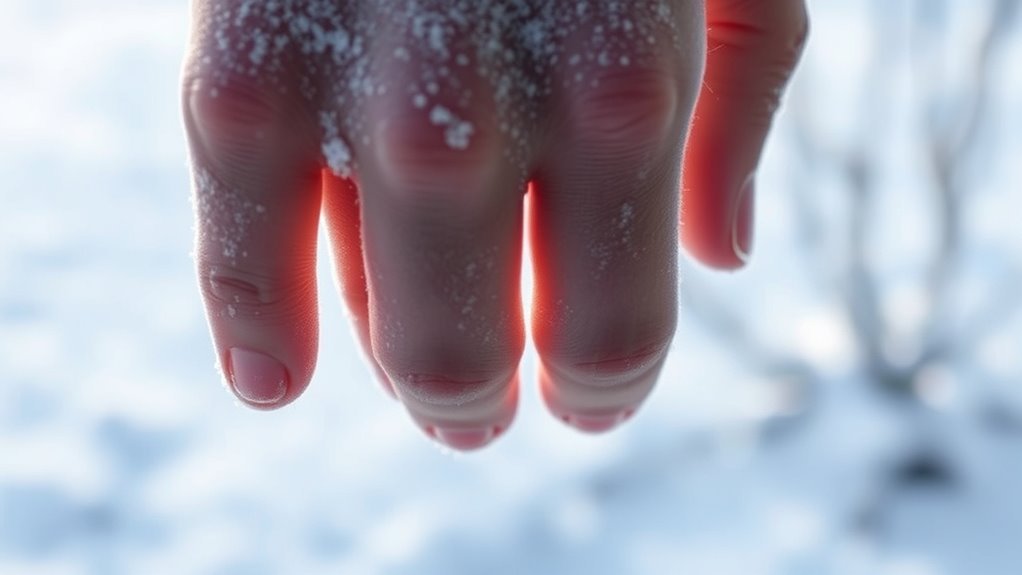
Why does your joint sometimes feel stiffer when temperatures drop?
It’s mainly due to changes in synovial fluid, the thick, lubricating substance inside your joint capsules.
When cold weather hits, this fluid’s viscosity increases, meaning it becomes thicker and less slippery.
This thicker synovial fluid can’t lubricate your joints as effectively, leading to more friction and that familiar joint stiffness.
For people with arthritis, this effect is even more noticeable because their joints are already sensitive and prone to pain.
Proper synovial fluid function is vital for smooth movement and minimizing discomfort.
Impact of Barometric Pressure Changes on Joints
You might notice your joints ache more when the barometric pressure drops during cold weather.
These pressure changes cause joint tissues and surrounding muscles to expand, increasing stress and discomfort.
Understanding how atmospheric shifts affect your pain can help you manage arthritis symptoms better.
Pressure Fluctuations and Pain
Although barometric pressure changes might seem subtle, they can markedly affect how your joints feel if you have arthritis.
When barometric pressure drops during weather fluctuations, your joints often respond with increased discomfort. You might notice heightened joint pain as reduced pressure causes the tissues around your joints to expand.
Swelling in joint capsules can also intensify arthritis symptoms like stiffness and tenderness. Plus, you may experience greater sensitivity in your joints, triggering pain responses during shifts in weather.
These changes mean that your joints detect pressure shifts, and those with arthritis often experience worsened joint discomfort and pain.
Understanding this link can help you better manage your arthritis symptoms during changing weather conditions.
Joint Tissue Expansion
When barometric pressure drops, the tissues around your joints expand, which can increase swelling and discomfort.
This joint tissue expansion happens because lower barometric pressure during cold weather allows the tissues to loosen and swell more easily.
As a result, you might notice more joint swelling and heightened joint pain.
Your joint receptors detect these pressure changes and can trigger pain responses, making your joints feel stiffer or more painful.
The instability caused by this expansion disrupts normal joint function, worsening arthritis symptoms.
Understanding how barometric pressure influences your joints can help you anticipate flare-ups and manage discomfort better during colder months when these pressure shifts are more common.
Atmospheric Influence on Discomfort
Since barometric pressure drops during cold weather, your joint tissues often expand, causing increased pain and stiffness.
These atmospheric changes directly influence how you experience arthritis symptoms, especially joint pain.
Here’s how barometric pressure affects you:
- Lower pressure causes joint capsules and surrounding tissues to swell, increasing discomfort.
- Your joint receptors detect these pressure fluctuations, triggering pain signals in sensitive areas.
- Muscle and tendon swelling around joints worsens, making cold weather particularly challenging.
Understanding this helps you anticipate flare-ups and manage arthritis symptoms better.
When barometric pressure falls, your joints endure more stress, so you might notice heightened pain during colder seasons.
Recognizing the impact of atmospheric changes empowers you to take proactive steps in reducing discomfort and maintaining mobility despite the weather.
Why Cold Weather Can Worsen Arthritis Pain
You might notice your arthritis pain flares up as temperatures drop because cold weather directly affects your joints.
When it’s cold, the synovial fluid in your joints thickens, leading to increased stiffness and discomfort.
Cold weather also constricts blood vessels, reducing blood flow and nutrients to joint tissues, which can heighten joint pain.
Cold weather narrows blood vessels, limiting blood flow and nutrients to joints, increasing pain and discomfort.
Additionally, changes in barometric pressure often accompany cold weather, causing joint tissues to expand or contract, triggering pain responses.
This environment can worsen inflammation in your arthritic joints, making symptoms more intense.
Together, these factors mean that during colder months, you’re more likely to experience increased stiffness, inflammation, and joint pain.
This can make daily activities more challenging.
Other Conditions That Mimic Arthritis Symptoms
Feeling joint pain and stiffness during cold weather might make you suspect arthritis, but other conditions can cause similar symptoms.
It’s important to recognize these to get proper treatment. Here are three common mimics of arthritis symptoms:
- Autoimmune diseases like lupus cause joint inflammation and pain, often alongside other organ issues. This can make them easy to confuse with arthritis.
- Infections such as Lyme disease lead to joint swelling and pain, sometimes with fever and rashes. This can mimic arthritis symptoms as well.
- Connective tissue disorders, including Ehlers-Danlos syndrome, cause joint hypermobility and pain. This can resemble arthritis joint pain quite closely.
Additionally, bursitis and certain cancers can also present arthritis-like symptoms.
Knowing these differences helps you avoid misdiagnosis and manage your condition effectively.
Effective Strategies to Manage Winter Joint Pain
Although cold weather can worsen joint pain, several effective strategies can help you manage discomfort during winter.
Wearing layered clothing keeps your body warm and reduces stiffness.
Staying active with indoor physical activities like yoga or swimming maintains joint mobility without exposure to cold weather.
Heat therapy, such as warm baths or heating pads, eases pain and improves flexibility.
Also, maintaining a healthy weight and ensuring adequate vitamin D intake support joint health during winter.
| Strategy | Description | Benefit |
|---|---|---|
| Layered Clothing | Hats, gloves, scarves | Retains body heat |
| Indoor Exercise | Swimming, yoga, mall walking | Maintains mobility |
| Heat Therapy | Heating pads, warm baths | Relieves joint pain |
| Healthy Diet | Balanced meals, hydration | Reduces joint stress |
| Vitamin D Intake | Supplements or sunlight exposure | Supports joint health |
When to Seek Medical Help for Arthritis Symptoms
When joint pain worsens considerably during cold weather or doesn’t improve with self-care, it’s important to seek medical advice promptly.
You should get medical help if your arthritis symptoms escalate or new problems arise.
Watch for signs that need professional attention:
- Sudden or severe joint swelling, redness, or loss of function.
- Increased stiffness or decreased mobility that affects daily activities.
- Persistent joint pain despite using at-home treatments.
Cold weather can trigger arthritis flare-ups, but you don’t have to suffer in silence.
If joint pain disrupts your life or feels different than usual, consult your healthcare provider.
Early medical help can prevent worsening symptoms and improve your quality of life during winter months.
Don’t hesitate to reach out when arthritis pain becomes overwhelming.
Frequently Asked Questions
Can Arthritis Be Triggered by Cold Weather?
Yes, cold weather can trigger your arthritis symptoms by increasing joint stiffness and pain.
You’ll notice thicker synovial fluid and tissue expansion, which reduce lubrication and cause discomfort.
This makes your joints feel worse during colder months.
What Month Is Worst for Arthritis?
January hits your joints like a thousand icy needles,
making it the worst month for arthritis pain.
You’ll notice stiffness and discomfort peak then,
thanks to cold temperatures and less movement during winter’s grip.
What Are the 5 Worst States for Arthritis?
You’ll find the worst states for arthritis are West Virginia, Mississippi, Alabama, Kentucky, and Arkansas.
These places have high arthritis-related disability rates, likely due to factors like lifestyle, healthcare access, and environmental conditions.
What Are the 5 Worst Foods for Arthritis?
The five worst foods for arthritis are refined sugars, processed carbs, saturated and trans fats, red and processed meats, and alcohol.
Avoiding these can help reduce inflammation and ease your joint pain effectively.
It’s always a good idea to be mindful of what you eat!
Conclusion
You might think cold weather directly causes arthritis, but the truth is more complex—and surprising.
While chilly days can worsen your joint pain and stiffness, they don’t actually create arthritis.
Changes in temperature and pressure affect your joints in ways you might not expect.
So next time your joints ache on a cold morning, remember: understanding these hidden factors can help you manage the pain better than you ever thought possible.
In conclusion, while cold weather doesn’t cause arthritis, it can certainly exacerbate symptoms like joint pain and stiffness.
By recognizing how temperature and pressure influence your body, you can develop strategies to cope with these challenges.
Stay informed and proactive, and you’ll find ways to manage your arthritis effectively, even during those chilly days.