What Causes Headaches in Cold Weather?
You get headaches in cold weather because the cold makes your blood vessels narrow, which changes blood flow and can irritate nerves.
Dry indoor air from heating dries out your sinuses, causing pressure and congestion.
Sudden weather shifts also affect the pressure around your head, making headaches worse.
Plus, less sunlight can disrupt your mood and sleep, adding to the problem.
If you want to understand these causes more deeply and spot the different headache types, there’s more to explore.
Effects of Cold Temperatures on Blood Vessels and Nerves
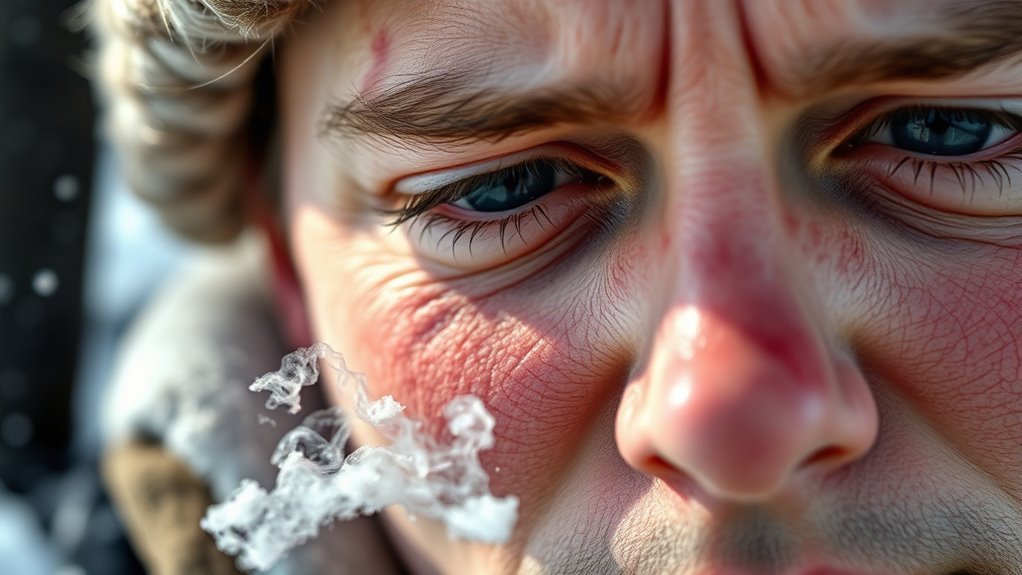
When cold temperatures hit, your blood vessels constrict, which reduces blood flow and raises pressure in your brain.
This vasoconstriction affects not only the blood vessels but also the surrounding nerves, triggering headache pain.
As the temperature drops rapidly, nerve endings in your skin and underlying tissues become activated. This increases nerve sensitivity, making pain signals stronger.
The constricted blood vessels create tension in nearby muscles, adding to discomfort and often causing tension headaches.
You might notice this increased pressure and nerve irritation intensify your headache symptoms during cold weather.
Understanding how cold-induced vasoconstriction and sensitive nerves work together can help you manage and reduce headache pain when the temperature dips.
Role of Dry Air and Indoor Heating in Headache Development
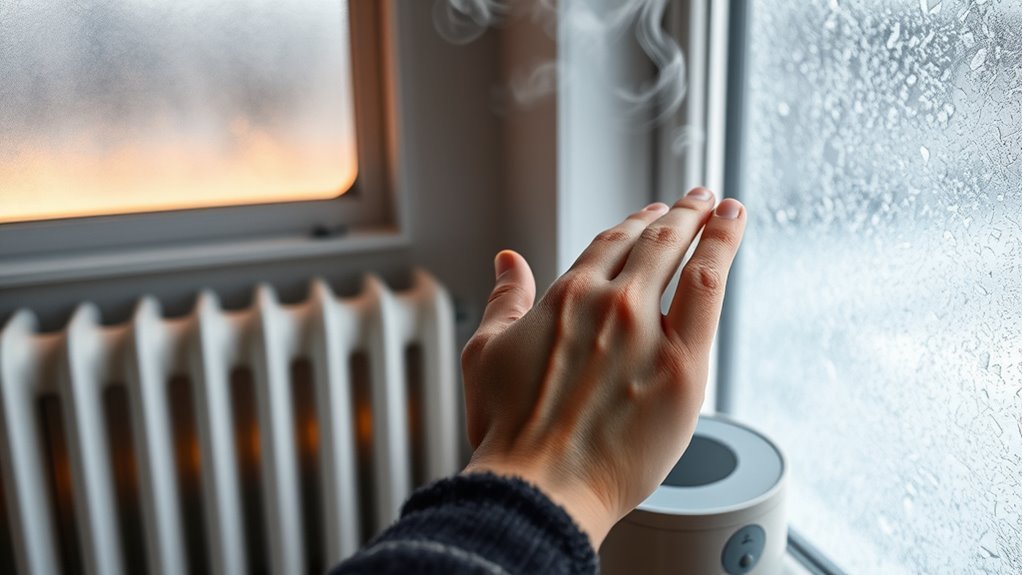
Cold weather doesn’t just tighten your blood vessels and irritate nerves; it also dries out the air inside your home.
Indoor heating lowers humidity levels, causing dry air that dehydrates your mucous membranes.
Indoor heating reduces humidity, drying out mucous membranes and worsening sinus discomfort.
This dryness inflames nasal tissues, leading to thickened passages and impaired mucus drainage, which increases sinus congestion.
The resulting sinus pressure can trigger headaches.
To manage this, consider these tips:
- Use humidifiers to restore moisture and maintain healthy humidity levels.
- Stay hydrated to prevent dehydration of mucous membranes.
- Avoid prolonged exposure to heated indoor environments.
- Gently clear nasal passages to reduce congestion and irritation.
Impact of Weather Changes and Barometric Pressure on Headaches
Although weather changes might seem subtle, they can directly impact your headaches by altering barometric pressure.
In cold weather, barometric shifts cause your sinus cavities to expand, increasing sinus congestion and triggering sinus headaches.
When atmospheric changes lead to sudden pressure drops, you might notice a rise in headache severity.
These weather fluctuations affect the pressure within your sinuses, making headaches more likely.
Additionally, cold air constricts blood vessels, and combined with low barometric pressure, this can worsen tension headaches.
Understanding how barometric pressure acts as a headache trigger helps you anticipate and manage symptoms during colder months.
Influence of Reduced Sunlight and Seasonal Factors on Headache Frequency
Since shorter daylight hours in winter disrupt your circadian rhythms, you may experience an increase in headache and migraine frequency.
Reduced sunlight lowers serotonin levels, affecting your mood and making you more vulnerable to headache triggers.
Seasonal Affective Disorder (SAD) often strikes during the winter months, further raising headache risk.
Changes in sleep patterns due to less daylight can lead to sleep deprivation or irregularity, which also contribute to headaches.
Additionally, stress levels tend to rise when sunlight decreases, compounding the problem.
To better manage this seasonal headache increase, consider these factors:
- Sunlight reduction affecting serotonin and mood
- Disrupted circadian rhythms altering sleep patterns
- Seasonal Affective Disorder intensifying headache susceptibility
- Heightened stress during shorter daylight hours
Recognizing these links helps you address headache triggers tied to winter’s seasonal changes.
Common Symptoms and Types of Cold Weather Headaches
You might notice different kinds of headaches as the temperature drops, each with its own set of symptoms.
In cold weather, tension headaches often arise from vasoconstriction and muscle tension in your neck and scalp.
Sinus headaches are common too, triggered by nasal congestion and increased sinus pressure due to dry, chilly air.
Seasonal headaches can worsen with weather changes, especially when barometric pressure drops, which may also intensify migraines.
Typical symptoms include throbbing head pain, facial pressure, scalp tenderness, and nasal congestion.
Recognizing whether your head pain stems from muscle tightness, sinus issues, or migraine-related factors can help you address it effectively.
Understanding these types and symptoms lets you manage cold weather headaches better and prepare for seasonal triggers.
Frequently Asked Questions
How to Get Rid of a Headache From Cold Weather?
To get rid of a cold weather headache, apply a warm compress.
Staying hydrated is also important, so make sure to drink plenty of water.
Wearing a hat can help keep your head warm and reduce discomfort.
Using a humidifier can add moisture to the air, which is beneficial in dry conditions.
Lastly, practicing relaxation techniques can ease pain and reduce tension quickly and effectively.
Is It Common to Get Headaches When It’s Cold?
Isn’t it just perfect that cold weather loves giving you headaches?
Yes, it’s common. Your blood vessels tighten, sinuses get irritated, and pressure changes trigger those unwelcome pain episodes.
Cold can really mess with you!
Conclusion
You might not realize it, but when cold weather hits, your blood vessels tighten.
At the same time, dry indoor air steals moisture from your skin and nerves.
Shifting barometric pressure and less sunlight can also trigger headaches without warning.
So, if you notice headaches popping up whenever winter arrives, it’s no coincidence. Your body’s reacting to a perfect storm of cold-related changes.
Knowing this can help you take steps to prevent those painful episodes.
In conclusion, headaches during cold weather can stem from various factors like tightened blood vessels, dry air, and fluctuating barometric pressure.
By understanding these triggers, you can be proactive in managing your symptoms and reducing the frequency of winter headaches.
Take care of your hydration and monitor weather changes to keep those headaches at bay.