How Do Cockroaches Survive Cold Weather?
You’ll find that cockroaches survive cold weather by seeking warmth indoors, where they find shelter, food, and water.
They slow their metabolism to conserve energy, entering a dormant state to ride out the chill.
Most can’t survive long below 15°F, but indoor warmth keeps them alive through winter.
Different species tolerate cold differently, and their eggs withstand the cold better too.
If you want to understand their survival tricks and how to keep them out, keep exploring further.
Why Cockroaches Seek Warmth During Cold Weather
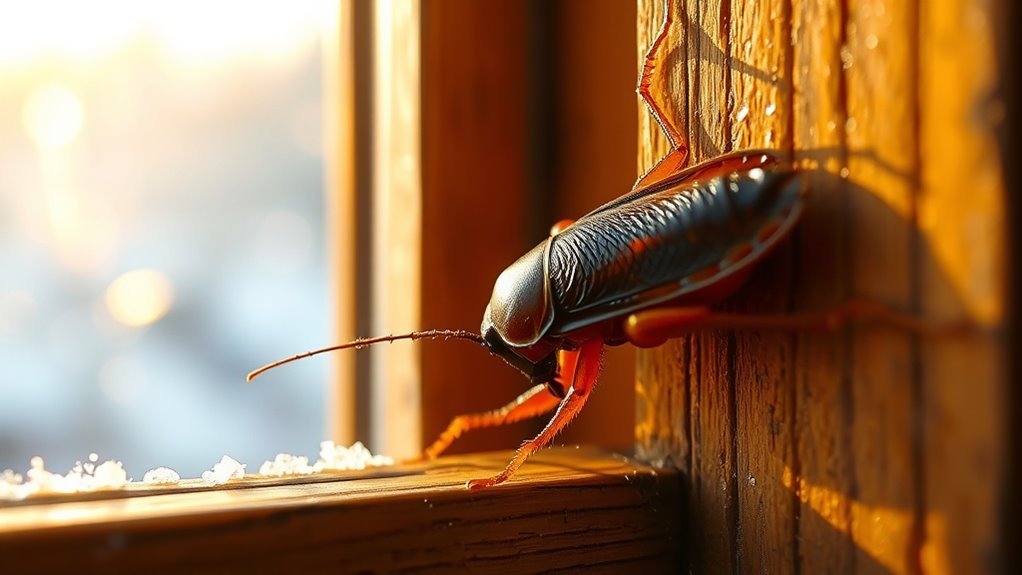
Because cockroaches are cold-blooded, they can’t generate their own heat and must rely on external warmth to stay alive.
When temperatures drop, you’ll notice cockroaches actively seek refuge in warmer indoor spots like heated homes, appliances, or plumbing areas.
They’re drawn to these cozy places because warmth is essential for maintaining their bodily functions.
Without it, cockroaches can’t survive winter’s chill.
As outdoor conditions become too harsh, they migrate indoors to find steady heat sources.
Understanding this behavior helps you see why cockroaches tend to appear more during colder months—they’re simply following their instinct to stay warm and survive.
Metabolic Changes in Cockroaches During Winter
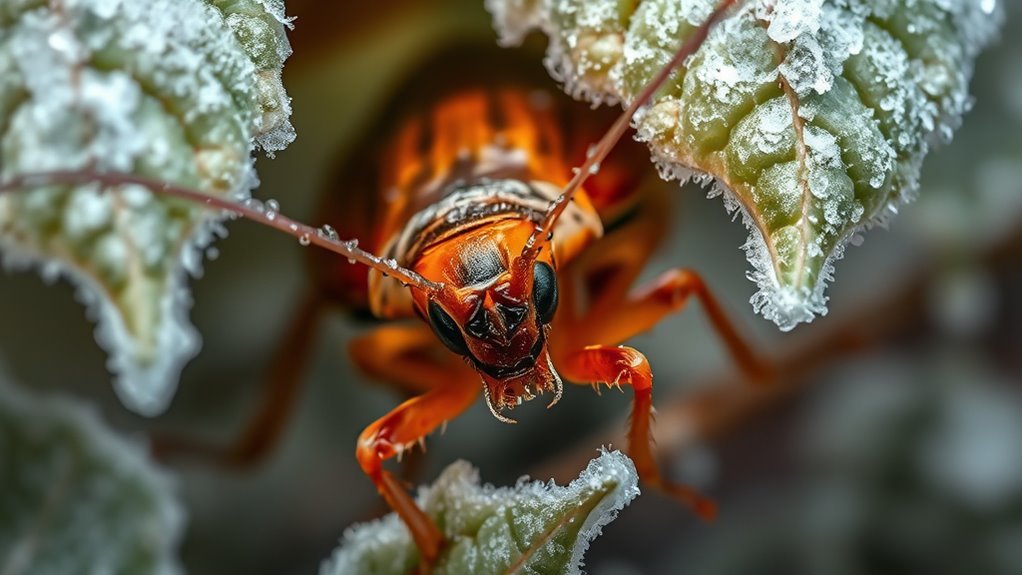
Although cockroaches seek warmth to survive winter, they also undergo significant metabolic changes to cope with the cold.
You’ll notice they enter a state called diapause, where their metabolic slowdown nearly halts all energy-consuming processes. This physiological change reduces their activity and reproductive rates, conserving essential resources.
Enzymatic activity decreases, enhancing their cold tolerance and allowing them to endure prolonged cold periods without expending much energy.
Reduced enzymatic activity boosts cold tolerance, enabling cockroaches to survive extended chilly conditions with minimal energy use.
These metabolic adaptations help cockroaches survive harsh temperatures, especially when they find sheltered indoor environments.
By slowing down their metabolism and entering diapause, cockroaches efficiently manage limited energy reserves, ensuring they stay alive until warmer conditions return.
Understanding these changes reveals how resilient cockroaches truly are during winter months.
Common Hiding Places for Cockroaches in Cold Seasons
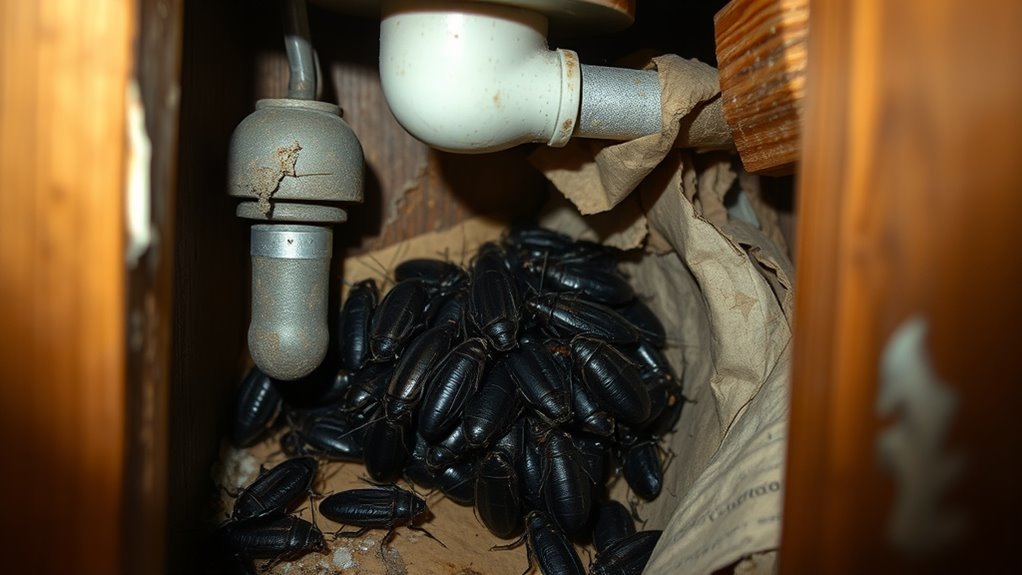
When temperatures drop, you’ll often find cockroaches seeking warm indoor shelters to stay safe.
They hide in hidden kitchen corners like behind appliances, inside cabinets, and under sinks where warmth and moisture are consistent.
Knowing these common spots helps you spot and prevent their winter hideouts.
Warm Indoor Shelters
If you want to spot where cockroaches hide during cold weather, start by checking warm indoor areas like wall voids, behind baseboards, and inside cabinets.
These warm indoor shelters provide essential refuge inside when temperatures drop. Cockroaches also seek hiding spots near heat-generating appliances and insulated plumbing to survive the chill.
| Location | Reason for Shelter | Typical Hiding Spots |
|---|---|---|
| Wall voids | Warm, protected from cold | Inside walls, behind drywall |
| Appliances | Generate heat | Ovens, refrigerators, heaters |
| Plumbing areas | Moist, insulated environment | Pipes, under sinks |
| Cracks & crevices | Shielded from drafts | Around windows, doors, foundations |
Hidden Kitchen Corners
Beyond the warm indoor shelters like wall voids and appliances, cockroaches also favor hidden kitchen corners during cold weather.
You’ll often find them behind appliances, under cabinets, or in cracks near counters where warmth, moisture, and food residues accumulate.
These spots provide ideal winter shelter for cockroaches seeking survival.
Cracks and gaps around baseboards and appliances act as entry points, allowing cockroaches easy access to these cozy hiding places.
To keep your kitchen cockroach-free, focus on controlling these entry points by sealing gaps and maintaining cleanliness.
Regularly clean crumbs, spills, and moisture buildup in corners, drawers, and beneath sinks to reduce cockroach attraction.
Effective winter control depends on identifying and managing these common kitchen hiding spots to prevent infestations.
Survival Limits: Temperature Thresholds for Cockroaches
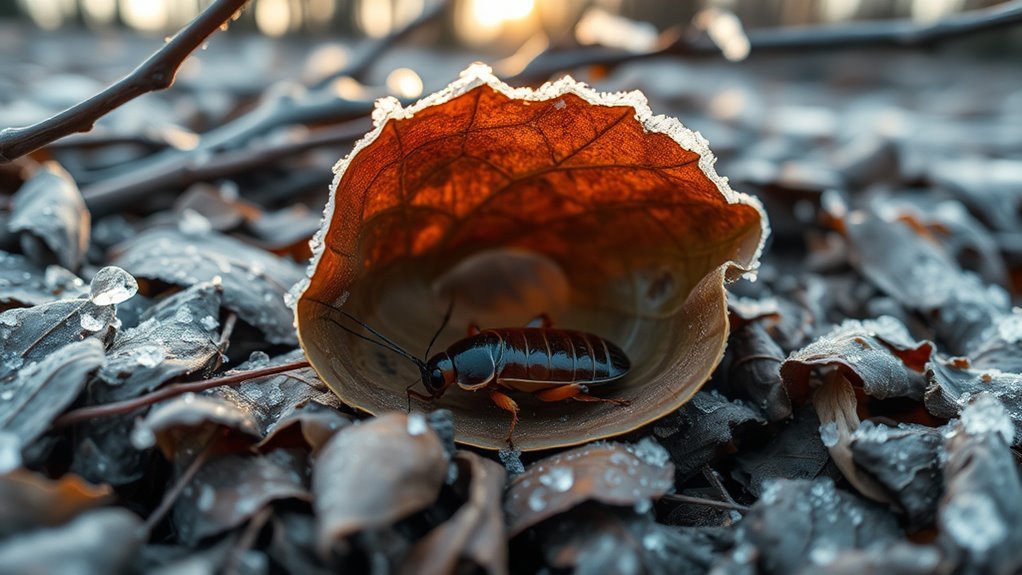
Although cockroaches can tolerate brief dips in temperature, most adults won’t survive prolonged exposure below 15°F (-9°C).
These temperature thresholds mark a critical survival limit during cold weather. Freezing temperatures near or below this point typically prove fatal to adult cockroaches.
While eggs are somewhat more cold-tolerant, they still can’t withstand long periods below freezing. When temperatures hover around 32°F (0°C), cockroach activity may pause, but they rarely die if they find shelter.
To guarantee cockroach survival during winter, they usually seek indoor spaces where temperatures stay above 44°F (7°C). Cold weather above 15°F can suppress growth and reproduction but won’t eliminate established populations.
Understanding these temperature thresholds helps explain why cockroaches persist despite harsh winters.
Differences in Cold Tolerance Among Cockroach Species
Understanding how cold affects cockroaches means looking at how different species handle low temperatures.
German cockroaches, for instance, show low cold tolerance and rarely survive prolonged exposure below 15°F.
Because of this, they rely heavily on survival strategies like seeking indoor warmth to stay alive during winter.
In contrast, American cockroaches tolerate slightly colder conditions but still prefer to find warmth indoors as temperatures drop.
Oriental cockroaches display greater cold tolerance and can survive in damp, cool environments year-round.
This shows different survival strategies compared to German cockroaches.
These differences in cold tolerance largely stem from each species’ native habitat and adaptation to temperature changes.
Knowing these distinctions helps you understand why some cockroaches thrive indoors during winter while others handle the cold better outdoors.
The Role of Cockroach Eggs in Winter Survival
When temperatures drop, cockroach eggs play a crucial role in ensuring the species’ survival through winter.
These eggs, enclosed in a protective casing called the ootheca, offer greater cold resistance than adult cockroaches.
While most cockroach eggs can’t endure extreme cold, they tolerate brief exposure to temperatures as low as 32°F (0°C).
The ootheca provides insulation, helping the eggs survive during chilly spells.
This cold resistance means the eggs remain viable through winter, even when conditions aren’t ideal for adults.
They typically hatch in spring or summer, guaranteeing the next generation’s winter survival.
How Human Environments Facilitate Cockroach Winter Survival
You might not realize it, but your home provides cockroaches with the warmth they need to survive winter.
With indoor heating keeping temperatures steady, these pests stay active even when it’s freezing outside.
Plus, easy access to food and water inside your house helps them thrive all season long.
Indoor Warmth Advantages
Because human homes stay warm even in the coldest months, cockroaches can keep moving and breeding instead of going dormant.
Indoor warmth from heated spaces like kitchens and basements creates microclimates that suit their survival.
Appliances such as water heaters and radiators emit heat, attracting cockroaches seeking refuge.
Additionally, insulated hiding spots like wall voids and ceiling cavities maintain stable temperatures, protecting them from the cold outside.
| Source of Warmth | Description | Benefit to Cockroaches |
|---|---|---|
| Heated Spaces | Kitchens, basements | Constant warmth |
| Appliances | Water heaters, radiators | Localized heat sources |
| Insulated Hiding Spots | Wall voids, ceiling cavities | Stable, protected microclimates |
These factors combine to allow cockroaches to thrive indoors during winter.
Food and Water Access
Where do cockroaches find enough food and water to survive winter indoors?
You might not realize it, but your kitchen and pantry offer endless food sources like crumbs, spills, and stored supplies that attract them.
Water is just as accessible through leaky pipes, sinks, and appliances, providing essential hydration when outdoor sources dry up.
Cockroaches exploit clutter and hidden areas, such as cabinets and wall voids, as sheltered spots rich in food and water.
This clutter creates secret pathways and reservoirs that help them persist throughout cold months.
Because human environments consistently supply both food and water, cockroaches don’t need to venture outside, making your home an ideal refuge during winter.
Effective Strategies to Prevent Winter Cockroach Infestations
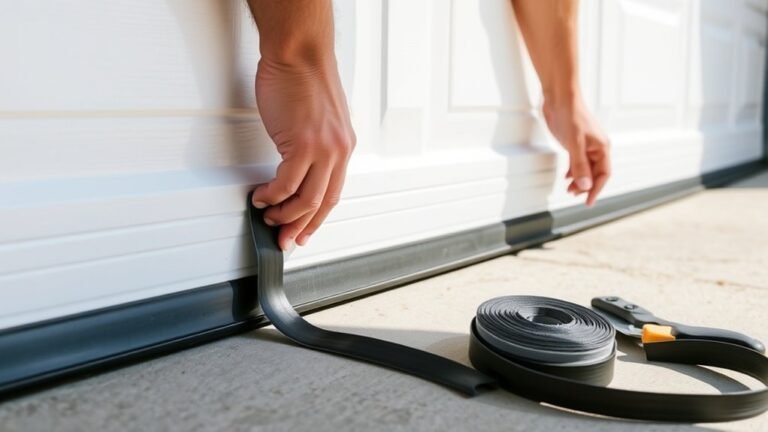
Although cockroaches seek warmth during winter, you can keep them out by sealing gaps around windows, doors, and foundations.
Sealing these gaps is your first line of defense to prevent infestations.
Next, reduce indoor moisture by fixing leaks and using dehumidifiers since cockroaches thrive in damp environments.
Keeping your home clean is also crucial. Regularly remove crumbs, spills, and food debris to eliminate their food sources.
Store food in airtight containers and declutter storage areas to minimize hiding spots.
Finally, consider scheduling professional pest control treatments before winter arrives.
Experts can identify and eliminate hidden cockroach populations effectively, helping you maintain a pest-free home throughout the cold months.
Taking these steps will greatly reduce the chances of a winter cockroach infestation.
Frequently Asked Questions
How Cold Is Too Cold for Cockroaches?
You’ll find cockroaches can’t handle temperatures below 15°F for long; adults usually die after a few hours.
Eggs tolerate cold better but won’t survive consistent freezing below 32°F, so colder than that is too cold.
Why Should You Never Kill a Cockroach?
Like trying to catch smoke, you shouldn’t kill a cockroach because it won’t end the infestation.
You’ll just scatter survivors, risking more pests, health hazards, and hidden colonies thriving beyond your sight and reach.
Will Freezing Kill a Cockroach?
Yes, freezing will kill a cockroach if it’s exposed to temperatures below 32°F for several hours.
You’ll find adult cockroaches more vulnerable.
However, eggs might survive brief freezes but not prolonged cold.
What Temperature Is Needed to Kill Cockroaches?
Imagine icy winds biting fiercely; to kill cockroaches, you’ll need temperatures below 0°F (-18°C) for several hours.
Anything warmer just slows them down, so freeze them thoroughly to guarantee they don’t survive.
Conclusion
When cold weather strikes, cockroaches become like tiny soldiers seeking shelter and warmth to survive the harsh battle of winter.
You’ll notice they slow down, hiding in cozy corners and human-made nooks where temperatures stay just right.
Understanding their survival tricks helps you stay one step ahead.
By sealing cracks and keeping your home inhospitable, you can prevent these pests from invading your space.
With these strategies, you can stop cockroaches from turning your winter into their warm refuge.
Keeping your home clean and well-sealed is key to ensuring that cockroaches don’t find a place to hide.
Remember, a little prevention goes a long way in maintaining a pest-free environment during the colder months.
So, take action now and protect your home from these resilient invaders!