How to Help Chickens Survive Cold Weather
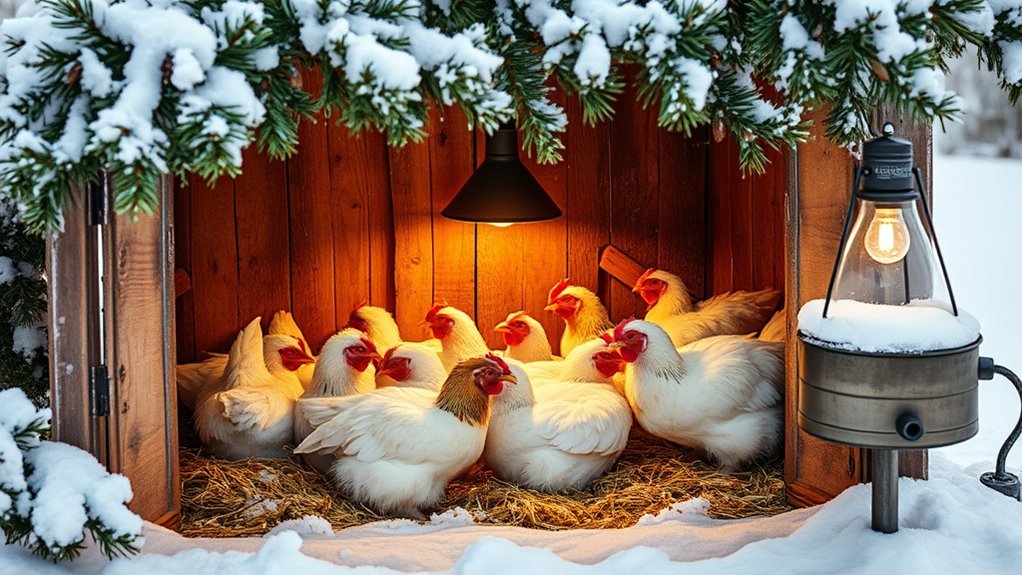
To help your chickens survive cold weather, it’s crucial to take a few key steps to ensure their comfort and health during the winter months. Proper insulation of their coop is essential, along with sealing any drafts that could let in cold air.
Maintaining proper ventilation is also important, as it helps reduce moisture without chilling the chickens.
Using heated waterers or insulated containers can keep their water unfrozen, which is vital for their hydration.
Additionally, increasing their feed will provide them with extra energy to stay warm.
Opt for cold-hardy breeds that have smaller combs to limit the risk of frostbite.
Providing supplemental lighting in the coop can also support winter laying, keeping your flock productive.
Lastly, keeping their environment dry, clean, and predator-proof will significantly improve their overall comfort and health throughout the winter season.
Keep going to discover additional tips and strategies!
Preparing and Insulating the Chicken Coop
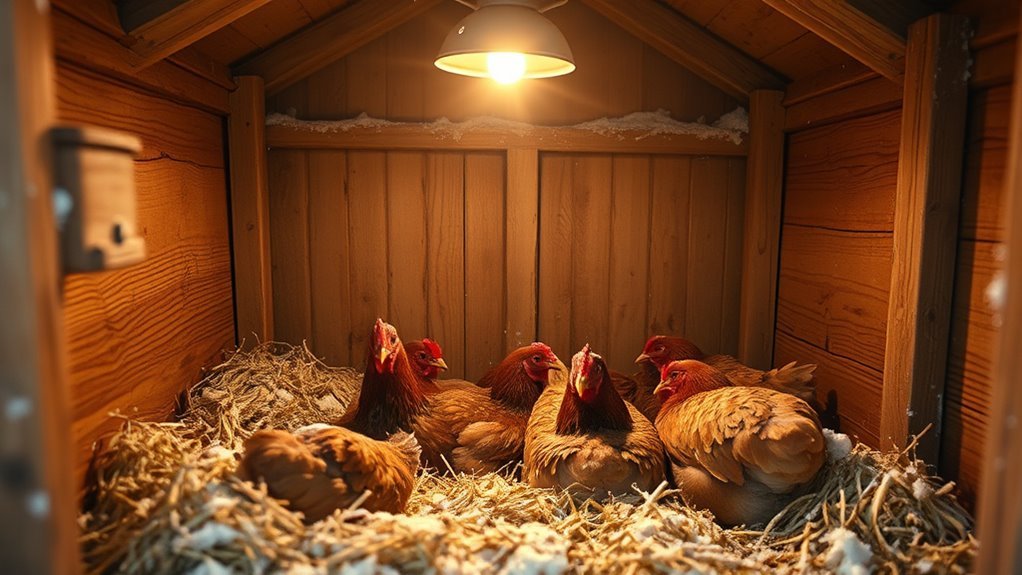
When preparing your chicken coop for cold weather, focus on insulation and sealing to keep the heat in and the cold out.
Start by insulating the coop ceilings with materials like Poly-Iso or foam panels.
Begin winterizing by insulating your chicken coop ceiling with Poly-Iso or foam panels for effective warmth retention.
Avoid fiberglass to prevent health risks.
Use weather-resistant roofing materials, such as metal or heavy-duty tarp, to maintain heat and keep moisture out.
Seal all cracks, holes, and gaps around windows, doors, and vents with caulk or weatherstripping to stop drafts.
Insulate the walls either inside or outside, and be sure to cover the insulation with safe materials like cardboard or plywood to protect against moisture and predators.
While ensuring proper ventilation, add high and low vents covered with hardware cloth.
This will allow airflow without creating cold drafts, balancing heat retention and air quality in your coop.
Managing Ventilation to Prevent Moisture and Drafts
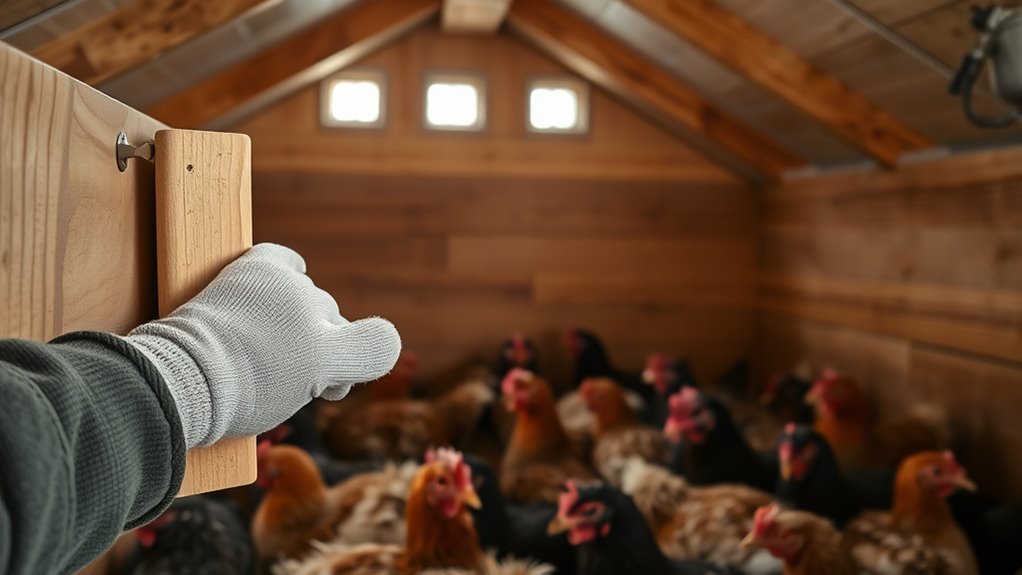
You need to balance ventilation with warmth to keep your chickens comfortable during winter.
Properly placed vents can prevent drafts while allowing fresh air to circulate and reduce moisture buildup.
Let’s explore how to manage airflow without chilling your flock.
Balancing Ventilation and Warmth
Although keeping your chickens warm is essential during cold weather, you can’t sacrifice proper ventilation without risking moisture buildup and frostbite.
To balance ventilation and warmth, maintain at least ¼ square foot of ventilation per bird to ensure adequate airflow in the coop.
Install vents high and low to promote cross-ventilation while preventing cold drafts from blowing directly on your chickens.
Cover openings with hardware cloth to keep predators out and minimize drafts.
Adjust ventilation seasonally by closing some vents to reduce airflow when temperatures drop, but monitor humidity and condensation regularly.
Proper insulation helps retain warmth, but you must still allow fresh air to circulate to prevent moisture accumulation.
Managing airflow carefully keeps your chickens comfortable and healthy throughout winter.
Draft Prevention Techniques
Since cold drafts can harm your chickens even as you maintain ventilation, preventing them is essential for coop comfort.
You want to balance airflow with insulation to keep the coop warm without trapping moisture.
Managing drafts means controlling where cold air enters while ensuring fresh air circulates.
Try these draft prevention techniques:
- Install ventilation openings high and low to promote cross-ventilation but avoid drafts at roosting level.
- Cover vents with ¼-inch hardware cloth or breathable fabric to block direct drafts and predators.
- Use adjustable vents or flaps that close partially during winter to reduce cold air entry while maintaining airflow.
Providing Safe and Efficient Water Sources in Winter
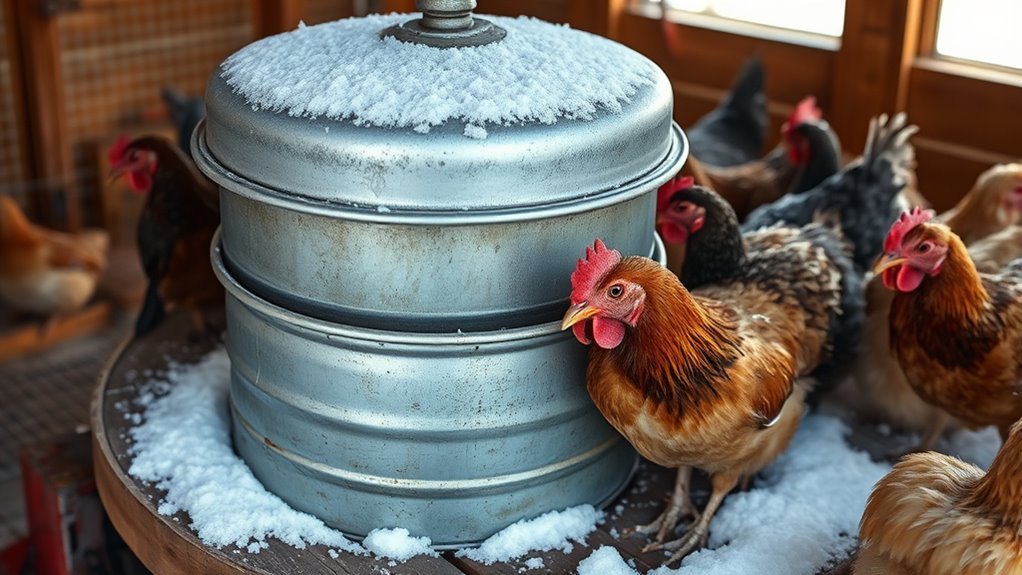
When temperatures drop, keeping your chickens’ water from freezing becomes crucial to their health and well-being.
Use heated waterers like plug-in models or heated bases to prevent freezing and maintain hydration.
Elevate water containers on stands to ensure clean water and easy water access.
Wrapping containers with insulation or thermal covers helps reduce heat loss in cold weather.
| Method | Purpose | Tips |
|---|---|---|
| Heated Waterers | Prevent freezing | Use plug-in or heated bases |
| Elevation | Cleanliness & Access | Place on stands or bricks |
| Insulation/Thermal Covers | Retain warmth | Wrap containers securely |
Avoid metal or thin plastics.
Choosing insulated or non-conductive materials instead will help create efficient winter water sources.
Selecting and Caring for Winter-Hardy Chicken Breeds
If you want your flock to thrive through harsh winters, selecting winter-hardy chicken breeds is essential.
Focus on breed selection that offers excellent feathering and insulation, boosting cold tolerance naturally.
Opt for breeds with climate adaptation suited to cold environments, such as Plymouth Rock, Wyandotte, and Orpington.
These breeds have dense feathering and larger bodies, providing better frostbite protection.
When choosing and caring for your winter-hardy breeds, consider these points:
Prioritize breeds with smaller combs and wattles to reduce frostbite risk.
Choose older or heavier breeds for improved cold tolerance.
Look into Scandinavian or Russian breeds known for climate adaptation.
Recognizing and Preventing Cold Stress and Frostbite
You’ll want to watch for signs like puffed feathers, huddling, and sluggish movement that indicate cold stress in your chickens.
To prevent frostbite, apply petroleum jelly or coconut oil to their combs and wattles.
Also, keep their coop dry and well-ventilated.
Taking these steps helps protect your flock from the dangers of cold weather.
Signs of Cold Stress
Although chickens are hardy birds, they can still suffer from cold stress and frostbite, which you can recognize by specific signs.
When you notice your chickens puffing up feathers, huddling tightly, or shivering, they’re trying to conserve body heat and might be experiencing cold stress.
Frostbite often shows up as black or gray areas on their combs, wattles, or toes. Early detection is key to preventing serious damage.
Watch for these signs:
- Puffed feathers and shivering indicating cold stress
- Huddling together or holding a foot close to the breast for warmth
- Discolored, swollen combs or wattles signaling frostbite
Regularly check your flock to catch these symptoms early and keep them safe this winter.
Frostbite Prevention Techniques
When temperatures drop below freezing, protecting your chickens from frostbite becomes essential. Their unprotected combs, wattles, and toes are especially vulnerable.
To prevent frostbite, apply a thin layer of petroleum jelly on combs and wattles to insulate exposed skin.
Check your chickens regularly for signs of frostbite, such as black or gray discoloration and swelling.
Providing flat roosts allows chickens to tuck their toes in, reducing exposure.
During extreme cold, consider wrapping vulnerable toes with cloth or vet wrap for added protection.
While managing coops, focus on keeping birds dry and minimizing moisture without compromising airflow.
Taking these steps helps prevent frostbite and keeps your flock healthy through harsh winter conditions.
Maintaining Dry, Ventilated Coop
Since excess moisture can quickly lead to frostbite and respiratory issues, you must keep your chicken coop both dry and well-ventilated.
Proper ventilation reduces moisture buildup, preventing dampness that causes frostbite.
Use deep bedding like straw or shavings, and remove soiled material regularly to maintain dryness.
Insulate water sources to stop freezing, as dehydration increases cold stress risks.
Focus on these key points:
Ensure good ventilation without drafts to balance airflow and warmth.
Use thick bedding and replace it often to absorb moisture.
Insulate water containers and use flat roosts to protect chickens’ feet from frostbite.
Regularly check your flock for signs of cold stress and frostbite, such as blackened combs or toes.
If you notice anything concerning, improve conditions promptly.
Feeding Strategies for Maintaining Health in Cold Weather
To keep your chickens healthy in cold weather, you’ll need to boost their feed by up to 25% to provide the extra energy they require for warmth.
Offering high-calorie treats like cracked corn or oats in moderation can help generate body heat overnight.
Make sure to guarantee continuous access to calcium sources and grit to support digestion and shell strength.
Additionally, supplement their diet with poultry vitamins to enhance winter nutrition and bolster immunity.
Lastly, store feed in a dry, cool place to maintain its nutritional value.
| Feeding Aspect | Recommendation |
|---|---|
| Feed Increase | Up to 25% more for extra energy |
| High-Calorie Treats | Cracked corn or oats, in moderation |
| Calcium Sources | Always accessible for shell health |
| Vitamins & Storage | Use supplements; keep feed dry |
Using Supplemental Lighting to Support Winter Laying
Although shorter winter days can reduce egg production, you can help your chickens maintain steady laying by providing 14 to 16 hours of supplemental light daily.
Supplemental lighting mimics natural daylight hours, encouraging your winter chickens to keep laying despite the season.
Use low-wattage, soft-colored LED or incandescent bulbs with timers to keep light levels gentle and avoid stressing your flock.
Timers help simulate natural sunrise and sunset patterns, maintaining consistent light per day without disruption.
Remember to reset timers every few weeks to keep daylight hours steady.
- Use soft, low-wattage bulbs to prevent stress.
- Avoid lighting after sunset to preserve natural rhythms.
- Reset timers regularly to maintain consistent light length.
This approach supports healthy egg production throughout winter.
Controlling Pests and Maintaining Coop Cleanliness
How can you keep your chickens healthy during cold weather?
Focus on pest control and coop cleanliness to protect them from mites, lice, and rodents.
Regularly remove soiled bedding and manure to prevent moisture buildup, which attracts pests.
Seal cracks, holes, and gaps in the coop using hardware cloth or caulk to block rodent entry.
Store feed in airtight, rodent-proof containers to keep mice and rats away from food supplies.
Additionally, use natural repellents like diatomaceous earth or peppermint oil around the coop perimeter to deter pests without harmful chemicals.
Preparing Chicken Tractors and Outdoor Runs for Winter
When winter approaches, it’s time to prepare your chicken tractors and outdoor runs to keep your flock safe and comfortable.
Start by parking your chicken tractors on dry, elevated ground to avoid water and snow buildup.
Convert tractors into insulated coops by adding weather-resistant panels or tarps for winter protection.
Also, make sure to secure hardware cloth skirting around the base with landscape stakes to prevent predators and drafts.
Maintain proper ventilation to avoid moisture buildup while ensuring warmth.
Cover the outdoor run with roofing panels or tarps to keep snow off, letting chickens forage safely and stay dry.
Key steps include:
- Elevate and weatherproof chicken tractors for insulation and protection.
- Secure hardware cloth for predator prevention and ventilation.
- Add roofing to outdoor runs for snow protection and dry foraging.
Frequently Asked Questions
What Temperature Is Too Cold for Chickens?
You’ll find temperatures below freezing too cold for your chickens unless they have proper shelter.
They tolerate cold better if you provide warmth and keep drafts out, preventing frostbite and ensuring their comfort even in harsh weather.
Can I Put Salt in My Chicken’s Water to Keep It From Freezing?
You shouldn’t put salt in your chickens’ water to prevent freezing; it can harm them and cause dehydration.
Instead, use heated waterers or insulated containers to keep water safe and liquid during cold weather.
Can Chickens Survive Winter Without Heat?
Yes, chickens can survive winter without heat—even in temperatures as low as -20°F.
You just need to keep their coop dry, draft-free, and well-ventilated.
Plus, provide unfrozen water and cozy bedding to keep them comfortable.
How to Protect Chickens From Extreme Cold?
You protect chickens from extreme cold by insulating their coop, using deep dry bedding,
ensuring proper ventilation without drafts, keeping water unfrozen,
and applying petroleum jelly to combs and wattles to prevent frostbite during harsh weather.
Conclusion
As winter’s chill wraps your coop like a frosty blanket, your care becomes the warm fire inside.
By preparing their shelter, managing moisture, and offering hearty feed, you’re not just protecting chickens—you’re nurturing a living hearth through cold days.
Remember, each thoughtful step you take is like adding a glowing ember, keeping your flock safe and vibrant until spring’s gentle thaw returns.
Your dedication turns winter’s bite into a season of strength and comfort.
So, focus on creating a cozy, dry environment for your chickens.
Check for drafts, ensure proper ventilation, and provide them with plenty of nutritious food.
With these actions, you can help your flock thrive in the cold, turning winter into a time of resilience.
Ultimately, your efforts will ensure that your chickens remain healthy and happy, ready to welcome the warmth of spring.