How to Help Chickens Stand Cold Weather
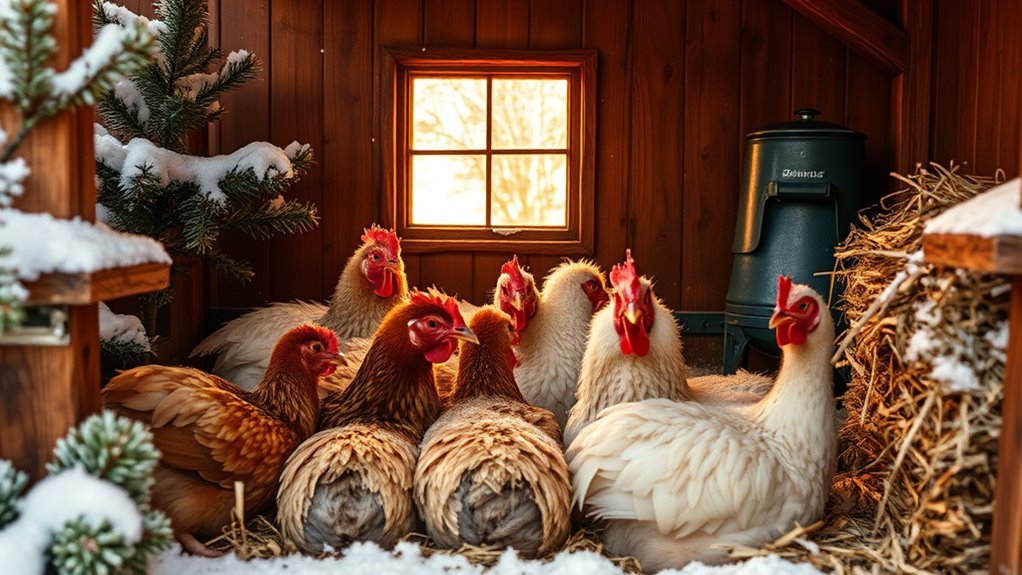
You can help your chickens stand cold weather by choosing cold-hardy breeds with dense feathers and compact bodies.
Then, insulating their coop well to block drafts and keep it dry is essential.
Provide plenty of warm bedding, and increase their high-energy feed.
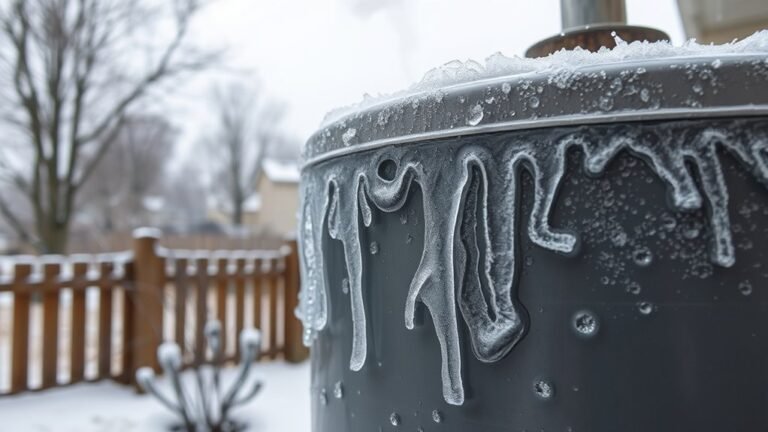
Keeping water fresh and unfrozen is key too.
Protect combs from frostbite with petroleum jelly, and ensure good ventilation without drafts to support respiratory health.
Taking these steps creates a cozy, healthy environment your flock will thrive in as temperatures drop.
Understanding How Chickens Keep Warm
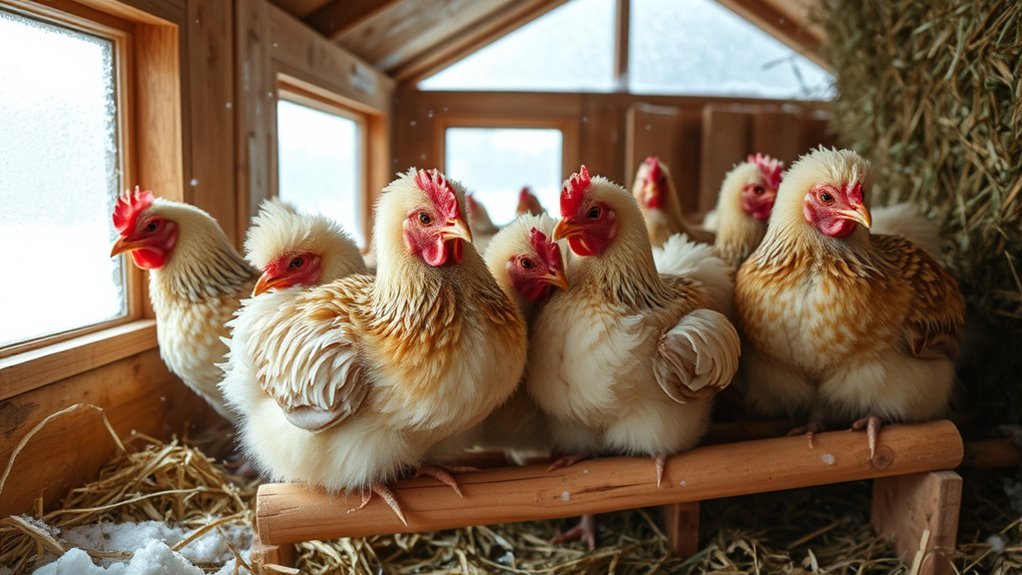
Although chickens can’t grow extra feathers like some wild birds, they keep warm by trapping air between their existing feathers, creating natural insulation.
Chickens trap air between their feathers to create natural insulation and stay warm without growing extra feathers.
You’ll notice they hunch and draw their necks close to their bodies to conserve body heat and maintain body temperature.
At night, during roosting, hens tuck their heads under their wings to shield themselves from the cold.
You might also see them standing on one leg to reduce heat loss through their feet, which have less blood flow.
Social bonding plays a big role too; cuddling together helps them share warmth and insulate each other.
Preparing and Insulating the Coop
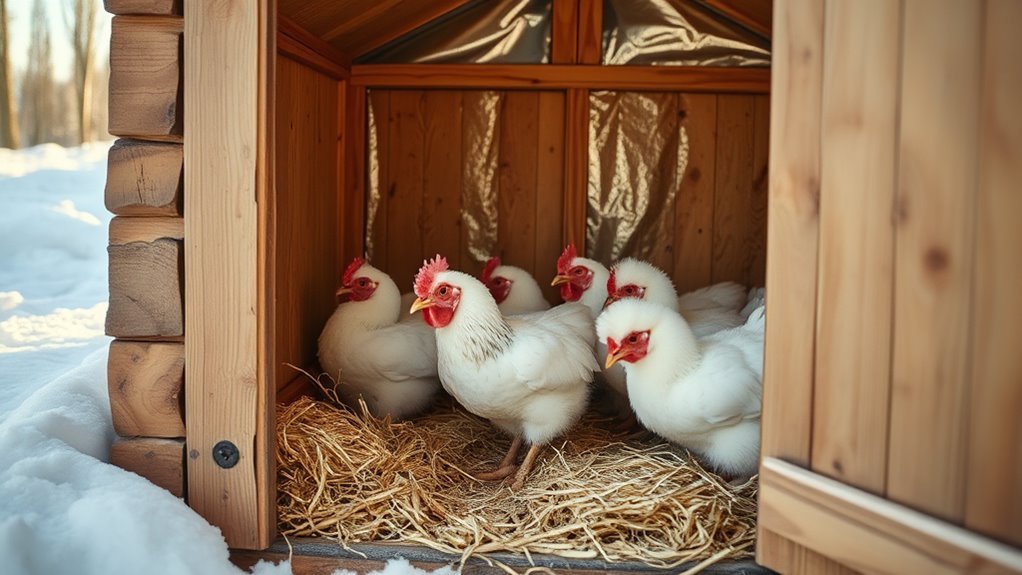
To keep your chickens warm, you’ll want to focus on sealing any drafts by filling gaps and covering windows with protective materials.
Adding thick bedding like straw or pine shavings on the coop floor provides essential insulation.
These simple steps help create a cozy environment that blocks cold air and retains heat effectively.
Draft Prevention Techniques
When you prepare and insulate your coop, sealing all holes, cracks, and gaps with weatherproof materials like plywood or foam keeps cold drafts out effectively.
Draft prevention starts with thorough coop insulation and weatherproofing.
Use weatherstripping and draft blockers around doors and windows to stop cold drafts from sneaking in.
Install weatherproofed vents near the coop’s roof for ventilation control, allowing moist air to escape without letting chilly air blow directly on your chickens.
Cover windows and vents with heavy curtains or blankets on freezing nights to block drafts while avoiding moisture buildup.
Wrapping your winter coop with clear plastic or tarps creates a greenhouse effect, maintaining warmth inside.
Also, position roosts and nesting boxes away from doors and vents to minimize your flock’s exposure to cold drafts throughout the night.
Bedding and Insulation
Since chickens lose a lot of body heat through the coop floor, you should use thick bedding materials like straw, pine shavings, or shredded paper to insulate the ground and keep warmth inside.
Proper insulation and bedding are essential for heat retention during cold weather.
To prepare and insulate your coop effectively:
- Layer foam boards or straw bales around walls and roof for added insulation.
- Seal gaps with weatherproofing materials to prevent drafts.
- Elevate and wrap roosts with cloth towels to keep perching areas warm.
- Cover windows and vents at night with blankets or tarps for draft-proofing.
Managing Feeding and Water in Winter
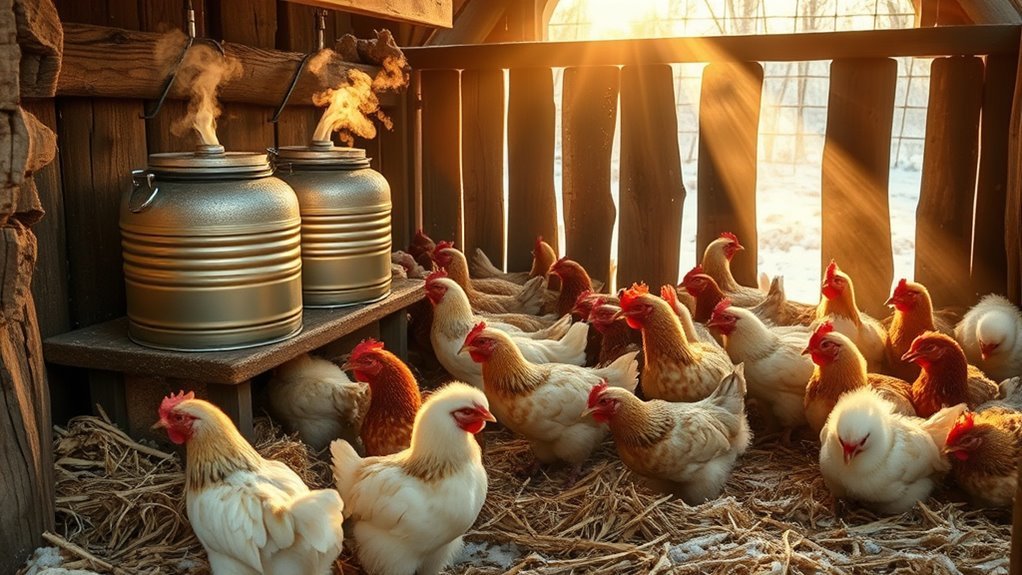
You’ll need to increase your chickens’ feed by up to 25% to help them generate enough body heat.
Keeping their water from freezing is essential. You can do this by using heated containers or adding a few drops of glycerine.
Offering high-energy treats like cracked corn or oats will also boost their ability to stay warm during cold days.
Increasing Winter Feed Intake
As temperatures drop, chickens naturally eat up to 25% more to fuel their increased energy needs.
To support this increased intake during cold weather, you need to optimize their winter feed and nutrition strategies.
Try these tips:
- Offer high-energy treats like cracked corn or cooked grains to boost internal body heat.
- Moistening feed with warm water or providing fermented feed encourages eating and improves nutrient absorption.
- Always provide continuous access to poultry grit, which aids digestion and supports efficient feed consumption.
- Keep winter feed readily available and protected from the elements to ensure consistent nutrition.
Preventing Water Freezing
Keeping your chickens well-fed during winter also means ensuring they have constant access to unfrozen water.
Use heated waterers or heated bases to prevent freezing in cold weather.
You can add a few drops of food-grade glycerine to water containers to help keep water liquid longer.
Place water containers on stands or in sheltered spots to protect water from frost and snow.
Remember to refill frequently, especially during extreme cold, to provide fresh water.
| Tip | Action | Benefit |
|---|---|---|
| Heated waterers | Use electric heated bases | Prevent freezing |
| Add glycerine | Few drops in water containers | Keeps water unfrozen |
| Elevate containers | Place on stands or shelves | Protect water from frost |
Effective water management keeps your flock hydrated and healthy all winter.
Nutritional Adjustments for Cold
Although cold weather challenges your chickens’ ability to stay warm, adjusting their diet can help them maintain energy and health.
Nutritional adjustments are essential during feeding in cold weather to meet their increased energy demands.
You’ll notice their feed intake rises by up to 25% as they burn more calories to generate heat.
Focus on providing a balanced diet with extra nutritional needs in mind.
- Offer carbohydrate-rich treats like cracked corn or oats to boost energy levels.
- Include protein-rich foods, especially during molting or extreme cold, to support feather regrowth.
- Ensure continuous access to poultry grit to aid digestion.
- Use heated water sources or additives to keep water from freezing, supporting hydration.
These steps optimize feeding during winter and help your flock thrive.
Preventing and Treating Frostbite
When temperatures drop below freezing, you’ll want to protect your chickens from frostbite, especially those with large, serrated combs that are more vulnerable.
To prevent frostbite, apply petroleum jelly or coconut oil to combs and wattles, creating an insulating barrier against freezing temperatures.
Good comb protection is essential for comb health during winter care.
Provide flat, insulated roosts and reduce drafts around their head and neck area to add insulation and minimize exposure.
Regularly inspect combs, wattles, and toes for early signs like black or white patches, which signal frostbite.
Promptly treating affected areas helps avoid tissue damage.
Proper cooping that blocks wind and moisture also plays a critical role in frostbite prevention.
Staying vigilant ensures your flock stays warm and healthy all winter.
Choosing Cold-Hardy Breeds
If you want your flock to thrive through harsh winters, choosing cold-hardy breeds is essential.
Focus on breed selection that offers excellent cold tolerance and winter resilience.
Hardy chickens with compact bodies and dense feathering provide superior insulation and heat retention, reducing your need for extra heating.
Consider these breed characteristics when picking your flock:
- Dense feathering for better insulation
- Compact bodies to minimize heat loss
- Dual-purpose or heritage breeds for stronger cold tolerance
- Avoid breeds with large combs or sparse feathering.
Cold-hardy breeds like Rhode Island Reds and Wyandottes stand up well to freezing temperatures.
Monitoring and Maintaining Chicken Health
Since cold weather can quickly affect your flock’s well-being, you need to watch for signs of stress like puffed feathers, huddling, or lethargy.
Act promptly to keep your chickens healthy.
Monitoring chickens for comb discoloration or blackening helps detect frostbite signs early.
Keep an eye on egg production; a sudden drop often signals cold stress or illness.
Regular injury prevention checks are essential—inspect for frostbite and other injuries.
Isolate affected birds to avoid complications.
Guarantee proper ventilation in the coop to reduce moisture buildup, which can worsen respiratory issues.
Maintaining a clean, dry environment supports overall chicken health and helps you spot signs of illness quickly.
Frequently Asked Questions
At What Temperature Is Too Cold for Chickens?
You’ll find temperatures below -15°C (5°F) start being too cold for chickens, risking cold stress and frostbite.
Without proper shelter and warmth, they struggle below this, so keep their coop cozy and draft-free to protect them.
How to Protect Chickens From Extreme Cold?
You can protect chickens from extreme cold by insulating their coop, sealing drafts, and adding safe heat sources.
Apply petroleum jelly to combs, provide unfrozen water, and offer extra high-energy feed to keep them warm and healthy.
What Is the 90/10 Rule for Chickens?
The 90/10 rule means you focus 90% on providing proper shelter, insulation, and management to keep chickens warm.
While only 10% depends on their breed and health.
You control most factors by managing their environment well.
Can Chickens Survive in the Winter Without Heat?
Yes, your chickens can survive winter without heat if they have good feather coverage, a dry, insulated coop, and proper ventilation.
Avoid drafts and keep them dry to help them naturally stay warm and healthy in cold weather.
With the right conditions, your feathered friends will manage just fine!
Conclusion
Keeping your chickens warm in cold weather takes a bit of effort, but it’s worth its weight in gold.
By insulating their coop, managing their diet, and watching for frostbite, you’re giving them the best chance to thrive through winter.
Remember, choosing cold-hardy breeds and staying vigilant about their health will keep your flock happy and healthy.
With these steps, you’ll have your chickens cozy and clucking all season long.
In conclusion, keeping chickens warm during winter is essential for their well-being.
By insulating their living space, providing a balanced diet, and being mindful of frostbite, you can help them thrive.
Don’t forget to select breeds that can withstand the cold and monitor their health closely.
With these practices, your flock will stay warm and content, ensuring they continue to be a joy throughout the chilly months.