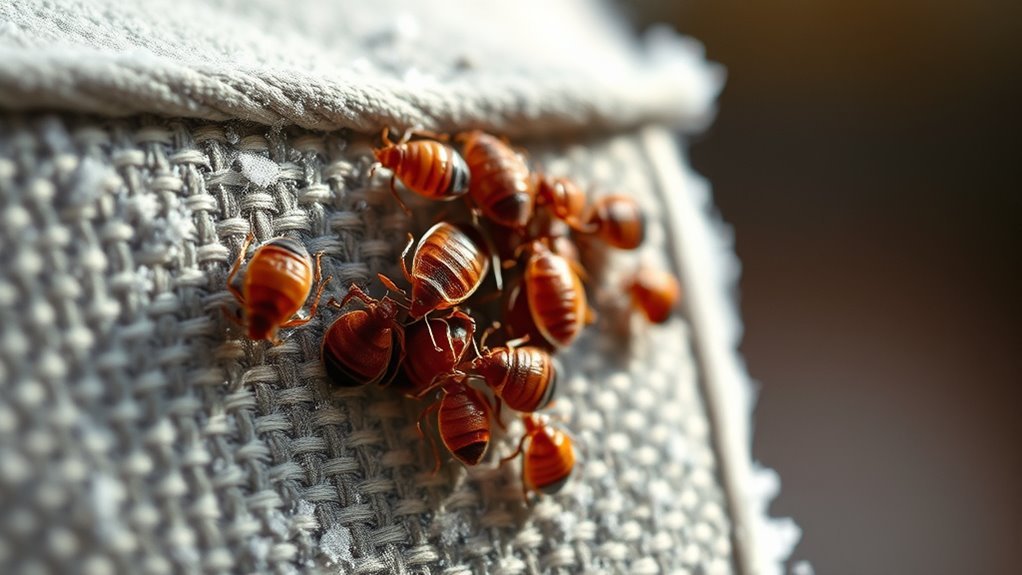
Can Bed Bugs Survive Cold Weather?
You might think cold weather kills bed bugs, but they’re tougher than you expect.
They can survive temperatures as low as 46°F and even brief freezes near -13°F.
To really get rid of them, you need prolonged cold—around 0°F for four days or more.
And even then, freezing alone might not be enough.
If you want to understand how to manage and prevent infestations effectively, there’s more to discover.
Bed bugs are resilient creatures, and knowing how they respond to cold can help you tackle an infestation.
Understanding their survival tactics is key to eliminating them for good.
So, let’s dive deeper into the world of bed bugs and learn how to keep them at bay.
Bed Bugs and Temperature Tolerance
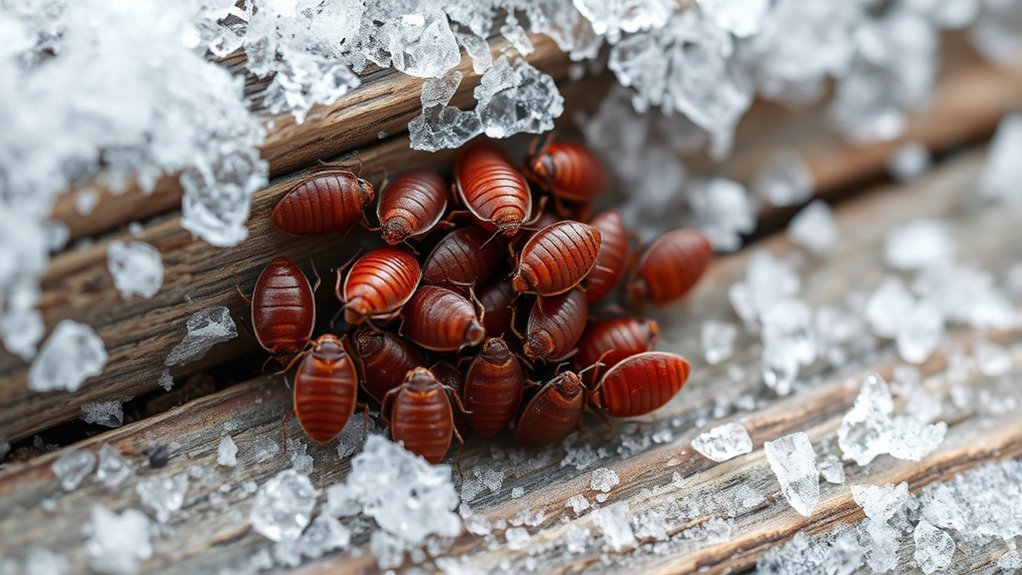
Although bed bugs generally prefer warmer environments, they can survive in temperatures as low as 46°F.
Some even endure short-term exposure to -13°F due to their lowered bodily fluid freezing points.
When you consider bed bugs’ temperature tolerance, you’ll see their survival isn’t just about warmth.
Their ability to withstand cold temperatures stems from adaptations like reduced freezing points in their bodily fluids.
However, freezing bed bugs effectively requires extended cold exposure.
This is especially true since bed bug eggs can resist short-term low temperature spells.
You can’t rely on brief freezing temperatures to kill all life stages.
Brief freezing won’t eliminate all bed bug stages; prolonged cold is necessary for total eradication.
Proper temperature control, maintaining freezing conditions below 0°F for several days, is essential for complete eradication.
Understanding this helps you grasp why bed bugs survive in cooler settings despite their preference for warmth.
Survival of Bed Bugs in Cold Conditions
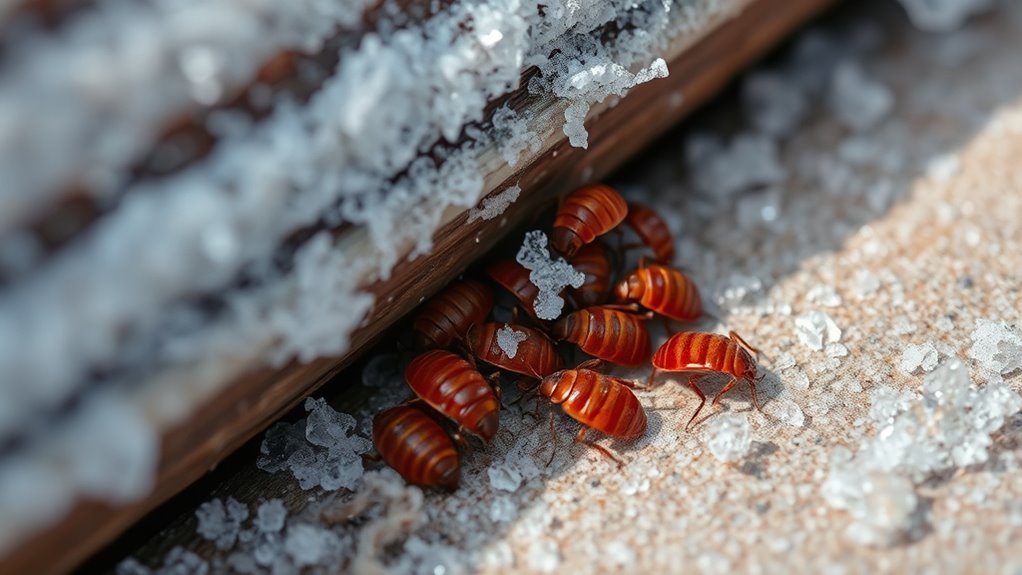
While bed bugs thrive in warm environments, they can survive cold conditions better than you might expect.
Bed bugs endure low temperatures down to 46°F and can tolerate brief freezing near -13°F.
However, extended exposure to freezing below 0°F for several days is required to kill bed bugs effectively.
During winter weather, indoor warmth and blood meals support their survival year-round.
| Temperature Range | Bed Bug Survival Outcome |
|---|---|
| Above 46°F | Active, thriving |
| Between -7°F and -12°F | Increased mortality with exposure |
| Below 0°F (4+ days) | Bed bugs killed by freezing |
So, you can’t rely on short cold spells alone to kill bed bugs.
Prolonged exposure to very low temperatures is essential to overcome their temperature tolerance and guarantee bed bug survival ends.
Effectiveness of Freezing for Bed Bug Control
Understanding how bed bugs respond to cold sets the stage for evaluating freezing as a control method.
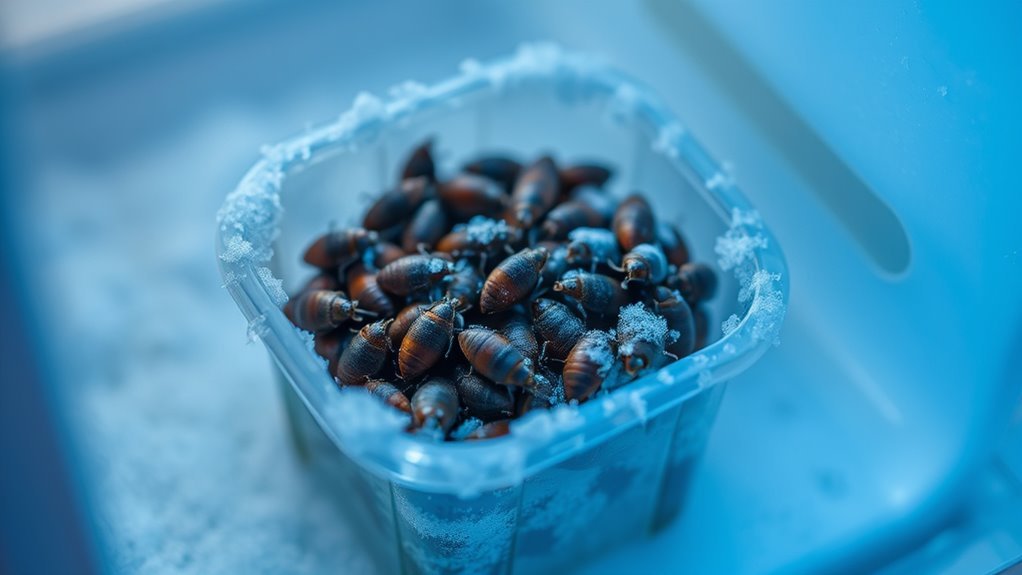
Freezing bed bugs at 0°F (-17.8°C) for at least four days kills all life stages, including bed bug eggs.
However, most household freezers don’t reliably maintain these cold temperatures, reducing freezing effectiveness.
For successful cold treatment, you must ensure the entire infested item, especially its core, reaches the temperature requirements for the full duration.
Residual cold exposure from outdoor winter conditions usually fails due to temperature fluctuations.
Keep in mind, freezing is a useful supplement but not a standalone solution in pest management.
- Requires consistent 0°F (-17.8°C) for 4+ days
- Must penetrate core of infested items
- Kills eggs and all life stages
- Household freezers often insufficient
- Best combined with other pest control methods
Strategies for Removing Bed Bug Infestations
Since bed bugs can survive harsh conditions, tackling an infestation requires a combination of strategies rather than relying on a single method.
You shouldn’t count on cold weather alone to eliminate bed bugs because they can survive cold temperatures if exposure isn’t long or cold enough.
Freezing infested items at 0°F or lower for at least four days is effective.
But simply leaving things outside won’t work due to fluctuating temperatures and moisture.
Instead, consider professional pest control services that use specialized freezing treatments, like CO2 snow, to thoroughly freeze bed bug infestations without damaging your belongings.
Combining freezing methods with other treatments ensures you effectively eliminate bed bugs and prevent a recurring bed bug infestation in your home.
Winter Precautions and Pest Management Tips
Cold weather alone won’t solve your bed bug problems, so it’s important to take specific precautions during the winter months.
Bed bugs’ survival in cold temperatures means you can’t rely on outdoor freezing to reduce bed bug activity.
Instead, focus on indoor pest control and proper freezing treatment of infested items.
Remember, effective bed bug eradication requires hitting precise temperature thresholds and maintaining exposure duration—freezing infested items at 0°F or below for at least four days is essential.
To protect your home this winter, consider these winter precautions:
- Use professional freezing treatments for reliable bed bug eradication.
- Freeze infested items indoors to ensure consistent temperature thresholds.
- Monitor bed bug activity regularly despite cold weather.
- Maintain thorough indoor pest control practices year-round.
- Avoid relying on short-term exposure to cold temperatures for bed bug survival reduction.
Frequently Asked Questions
What Temperature Is Too Cold for Bed Bugs?
You’ll find temperatures below 0°F (-17.8°C) too cold for bed bugs—they can’t survive prolonged exposure to this cold.
Keep items at or below this temperature for several days to effectively eliminate them.
Do Bed Bugs Go Away in Winter?
Imagine waking up to bites during winter—bed bugs don’t just disappear when it gets cold.
They survive indoors, so you’ll need proactive treatment since these pests keep thriving despite chilly weather outside your home.
Can Bed Bugs Survive the Washing Machine?
No, bed bugs can’t survive a washing machine if you wash clothes at 60°C (140°F) or higher for 30 minutes.
Cold washes won’t kill them, so use hot water and high heat drying to guarantee elimination.
What Do Bed Bugs Hate the Most?
You’ll find bed bugs hate extreme cold, heat, and sudden temperature changes the most.
They avoid dryness and light too, preferring warm, dark, moist places.
Disrupting those conditions helps you control and eliminate them effectively.
Conclusion
Just like a stubborn frost clinging to a windowpane, bed bugs resist the cold more than you might expect.
While freezing can crack their armor, it won’t always shatter their hold.
To truly clear your space, you need more than winter’s chill—you need a full strategy that tackles every corner.
Think of your home as a garden; only with careful, consistent care can you clear the pests and let warmth and comfort bloom again.
In conclusion, bed bugs can survive cold weather, but they are not invincible.
Relying solely on freezing temperatures won’t eliminate them completely.
A comprehensive approach involving cleaning, vacuuming, and possibly professional pest control is essential.
By treating your home like a well-tended garden, you can ensure that it remains a warm and comfortable space—free from the stubborn grip of these pests.