How to Make Bed Bugs Die in Cold Weather
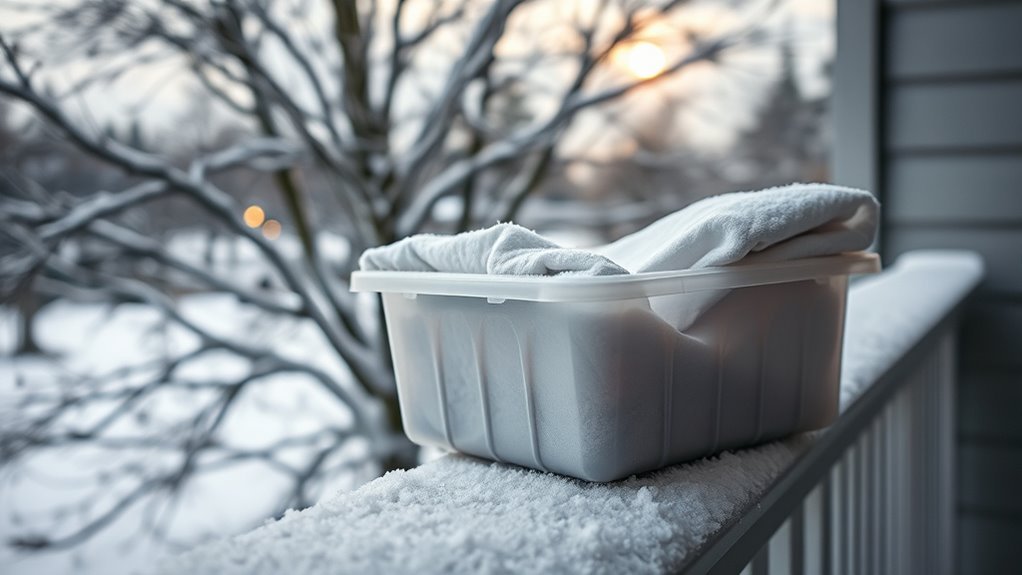
You can effectively make bed bugs die in cold weather by exposing infested items to temperatures below 0°F (-18°C) for at least four days.
This method is crucial because it guarantees the elimination of all life stages, including eggs.
To ensure success, make sure the cold reaches the core of the items evenly.
Also, remember to seal them tightly to prevent any escape.
However, cold alone rarely kills every bug.
So, for the best results, it’s smart to combine this cold treatment with thorough cleaning or other methods.
If you want to fully understand the limits of cold treatment and how to improve your success, keep researching.
There’s always more to learn about effective pest control!
Understanding Bed Bugs’ Cold Tolerance

Although bed bugs begin to die when temperatures drop below 46°F (8°C), you need sustained exposure to much colder conditions to eliminate them completely.
Their cold tolerance varies by life stage—eggs, nymphs, and adults respond differently to cold.
Some bed bugs can survive extreme cold, enduring temperatures as low as -13°F (-25°C) thanks to natural antifreeze-like substances in their bodies.
Most, however, cannot survive prolonged exposure to temperatures below 14°F (-10°C).
Keep in mind, indoor environments and insulation can shield bed bugs from extreme cold, making outdoor freezing unreliable without professional equipment.
Understanding their cold tolerance helps you realize why quick or mild cold exposure won’t work and why sustained, very low temperatures are necessary for effective bed bug control.
Effective Freezing Temperatures to Kill Bed Bugs
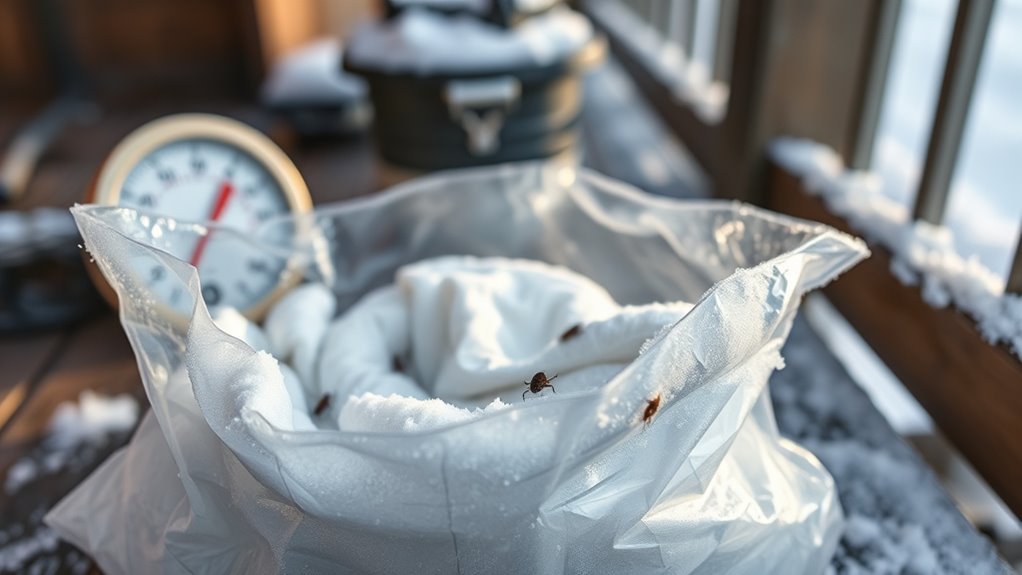
To effectively kill bed bugs, you need to freeze infested items at 0°F (-18°C) or lower for at least four days.
Make sure the cold reaches the core of each item, and use a reliable thermometer to verify the temperature.
Without maintaining these conditions, bed bugs and their eggs might survive.
Ideal Freezing Temperatures
When you expose bed bugs to temperatures at or below 0°F (-18°C) for at least four days, you can effectively eliminate them and their eggs.
Freezing temperatures need to be consistent, especially reaching the core of infested items.
For quicker results, temperatures around -30°F (-34°C) kill bed bugs within minutes.
Slightly higher temperatures, like 3.2°F (-19°C), require longer exposure but still ensure complete eradication.
| Temperature (°F) | Effect on Bed Bugs |
|---|---|
| -30 (-34°C) | Kills bed bugs rapidly (minutes) |
| 0 (-18°C) | Kills bed bugs after 4 days |
| 3.2 (-19°C) | Kills bed bugs after ~80 hours |
Exposure Duration Requirements
Knowing the ideal freezing temperatures gives you a solid starting point, but how long you expose your items to those temperatures makes all the difference.
To effectively kill bed bugs, you need an exposure duration of at least four days at 0°F (-18°C).
If you only reach 3.2°F (-16°C), expect to freeze bed bugs in about 80 hours.
At higher cold temperatures like 32°F (0°C), it could take several weeks to eliminate all pests.
Rapid freezing at -30°F (-34°C) kills bed bugs in minutes, but only if the entire item reaches that temperature.
Make sure the core temperature of your infested object hits the required cold temperature for the recommended exposure duration to guarantee bed bug death.
Temperature Verification Methods
Although freezing bed bugs effectively depends on reaching the right temperature, you need reliable methods to verify that your items actually hit and maintain at least 0°F (-18°C).
Use a digital or infrared thermometer for accurate temperature verification during cold treatment. Place a remote or probe thermometer directly into the core of infested items like furniture or bedding to ensure the center reaches the necessary freezing point.
Regularly monitor temperatures throughout the treatment to confirm the entire item stays cold enough for the required duration.
Keep in mind, household freezers often don’t maintain the consistent -4°F (-20°C) needed to kill bed bugs and their eggs reliably.
For best results, professional cold treatment uses specialized sensors and thermometers to control and verify correct low temperatures precisely.
How Long to Expose Items to Cold for Bed Bug Control
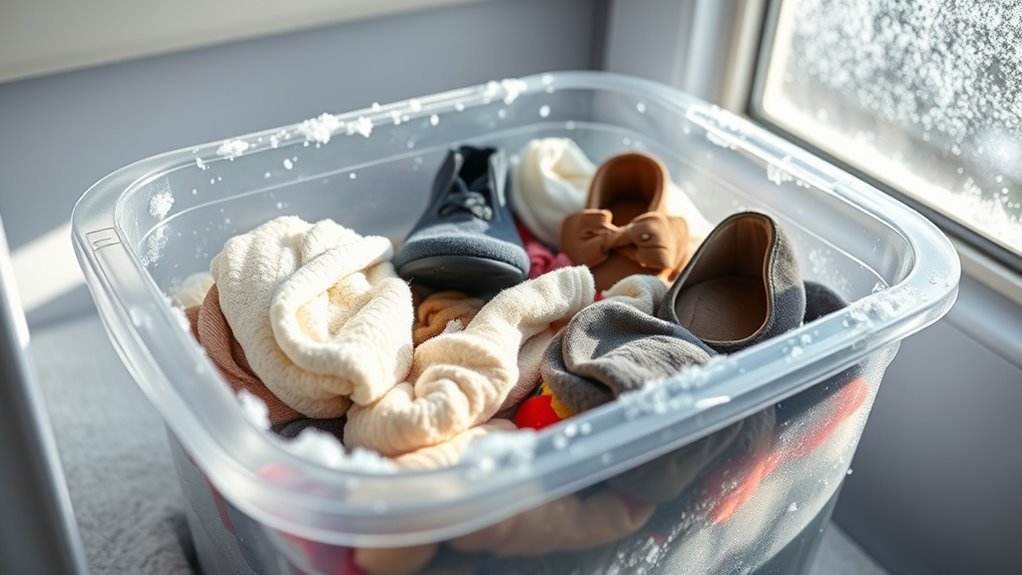
You’ll need to keep items frozen at or below 0°F for at least 72 hours to guarantee all bed bugs die.
Temperature consistency is vital, so make sure the cold penetrates the entire item, especially the core.
Anything warmer or shorter may not fully eliminate the pests.
Required Freezing Duration
When you expose infested items to freezing temperatures, you need to keep them at or below 0°F (-18°C) for at least four days to effectively eradicate bed bugs and their eggs.
Shorter freezing durations may not eliminate all life stages, allowing bed bugs to survive and re-infest your space. For example, freezing at 3.2°F (-16°C) for about 80 hours also works, but it’s less reliable.
Keep in mind that standard home freezers might require longer times to ensure the core of items reaches lethal temperatures.
To protect your home, remember:
- Bed bugs hide deeply; thorough freezing duration matters.
- Insufficient freezing can cause frustration and repeated infestations.
- Monitoring temperature with a remote thermometer helps guarantee success.
Stick to the recommended freezing duration for complete bed bug control.
Temperature Consistency Importance
Since bed bugs can survive brief warm spells, you must keep the temperature consistently below 0°F (-18°C) for the entire freezing period to guarantee all life stages die.
Temperature consistency is essential because any fluctuation above freezing can allow eggs, nymphs, or adults to survive.
To cold kill bed bugs effectively, maintain this temperature for at least four days, ensuring the core of the item reaches and stays at the required cold level.
Using a remote thermometer helps you monitor and verify the temperature consistency throughout the process.
If the temperature rises even briefly, the treatment’s effectiveness drops considerably.
Preparing Infested Items for Cold Treatment
Before exposing your infested items to freezing temperatures, make sure you thoroughly vacuum and clean them to remove as many bed bugs as possible.
Vacuuming targets hidden bugs and eggs, which helps in reducing their chance of survival.
Next, seal these items tightly in durable plastic bags to prevent any bed bugs from escaping during cold treatment.
Before sealing, remember to remove moisture to enhance the freezing effectiveness.
Keep in mind:
- Use plastic bags that won’t tear or puncture easily.
- Ensure items are small enough for even freezing below 0°F (-18°C).
- Label and time-stamp each bag to track exposure for at least 4 days.
Limitations of Using Cold Weather for Bed Bug Elimination
Although cold weather can help reduce bed bug populations, it rarely kills all of them unless temperatures stay below 0°F (-18°C) for several days.
Cold alone struggles to kill bed bugs hidden in insulated items or wall cracks. Eggs resist cold more than adults, needing longer exposure.
DIY freezing risks uneven cold, leaving some bugs alive. Here’s a quick summary:
| Factor | Challenge | Impact on Cold Treatment |
|---|---|---|
| Temperature | Must be below 0°F (-18°C) | Essential to kill all stages |
| Insulation | Furniture, items protect | Bugs survive in insulated spots |
| Eggs | More cold resistant | Require prolonged freezing |
| DIY Methods | Uneven freezing | Leaves some bugs alive |
| Hidden Infestations | Wall cracks, furniture gaps | Cold doesn’t reach all areas |
You can’t rely solely on cold to kill bed bugs completely.
Combining Cold Treatment With Other Bed Bug Control Methods
To increase your chances of eliminating bed bugs completely, you should combine cold treatment with other control methods like vacuuming, washing, and applying heat or insecticides.
Cold treatment can kill adult bed bugs, but eggs often survive unless you add heat or chemical treatments.
Addressing all life stages of the bed bug problem requires a thorough approach.
Consider these steps to strengthen your efforts:
- Vacuum infested areas thoroughly to remove bugs and eggs.
- Wash and dry bedding and clothes on high heat.
- Use steam or insecticides to target eggs cold treatment might miss.
Regular inspections and re-treatment every two weeks help catch any bugs that hatch after cold exposure.
This greatly reduces the chance of re-infestation.
Signs That Bed Bugs Have Survived Cold Exposure
If you still notice bites, live bugs, or dark droppings after cold treatment, it means some bed bugs have survived the freezing process.
These pests can endure if the temperature wasn’t cold enough or exposure time was too short.
Look for these signs to confirm survival:
| Sign | What It Means |
|---|---|
| Live bugs visible | Bugs survived and remain active |
| Persistent bites | Bed bugs are still feeding on you |
| Dark droppings | Waste left by surviving bed bugs |
| Shed skins or eggshells | Bugs continued to mature post-treatment |
Additionally, a musty odor or bugs in cracks indicate the infestation persists.
If these signs show up, you’ll need to reassess your cold exposure method to ensure it’s truly cold enough to kill all bed bugs.
When to Seek Professional Help for Bed Bug Infestations
Noticing signs that bed bugs have survived your cold treatment means it’s time to contemplate professional help.
If bed bugs persist or reappear, DIY efforts alone might not make them die completely.
Severe infestations, especially those spreading across rooms or furniture, often need expert pest control intervention.
When you keep finding bites, shed skins, or eggs despite cold exposure, professionals can use specialized equipment to target all life stages.
Consider calling a licensed pest control provider if:
- You see repeated signs of infestation despite your treatments.
- The problem has grown beyond a single room.
- DIY methods aren’t eliminating hidden bugs or eggs.
Experts combine heat, chemical, and cold treatments to ensure bed bugs die fully.
This way, you can restore your home’s safety.
Frequently Asked Questions
Will Cold Weather Kill Bed Bugs?
Yes, cold weather can kill bed bugs, but you’ll need to expose them to temperatures below 0°F for several days.
Just remember, normal indoor cold won’t work—you’ve got to freeze infested items thoroughly outside.
How to Get Rid of Bedbugs in the Winter?
You can get rid of bedbugs in winter by sealing infested items in plastic bags and freezing them below 0°F for several days.
This method is effective because extreme cold can kill both bedbugs and their eggs.
Remember to repeat freeze cycles and combine this method with other treatments to fully eliminate bedbugs.
Conclusion
Now that you know how to use cold weather to tackle bed bugs, don’t rely on just the cold snap alone—these pests can be as stubborn as a knight’s armor.
Make sure to freeze infested items long enough and combine freezing with other treatments for the best results.
If those creepy crawlies keep showing up, it’s time to call in the pros.
You’ve got this—cold weather is just one weapon in your bed bug battle!
Remember, while cold temperatures can help eliminate bed bugs, they often require additional methods for complete eradication.
So, don’t hesitate to explore other options, such as heat treatments or professional extermination.
The combination of freezing and other pest control methods will ensure you get the best results in your fight against these pesky invaders.
Stay persistent and proactive in your approach, and you’ll be able to reclaim your space from bed bugs for good!