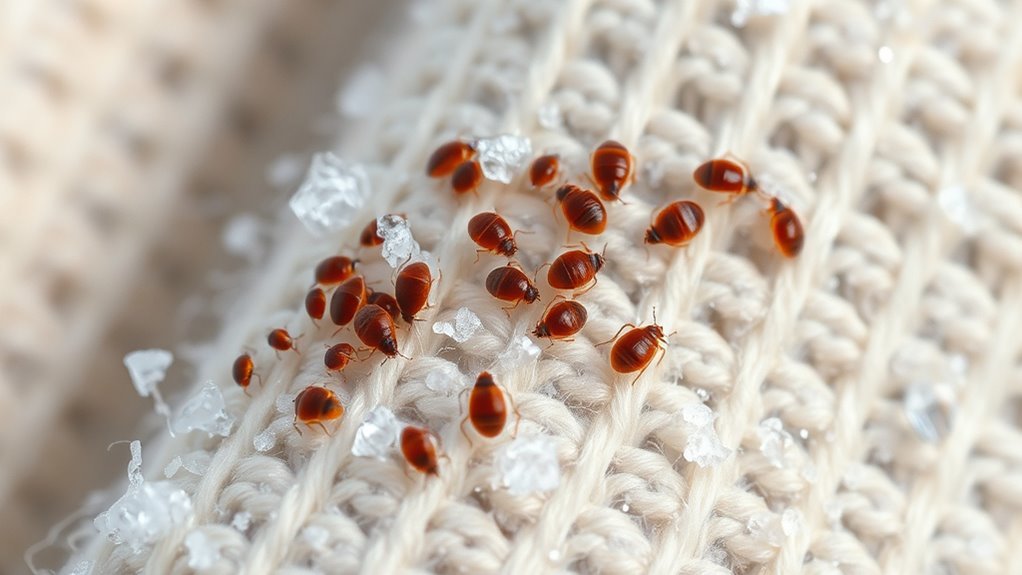
Can Bed Bugs Die From Cold Weather?
You can kill bed bugs by exposing them to freezing temperatures of 0°F (-18°C) or lower for at least 2 to 4 days.
However, short cold spells or outdoor winter temperatures usually won’t do the trick because bed bugs survive well indoors where it’s warm.
They’ve adapted to cold by slowing down in dormancy but stay alive near you.
If you want to understand why cold treatments sometimes work and when they don’t, there’s more to uncover.
How Temperature Affects Bed Bug Survival
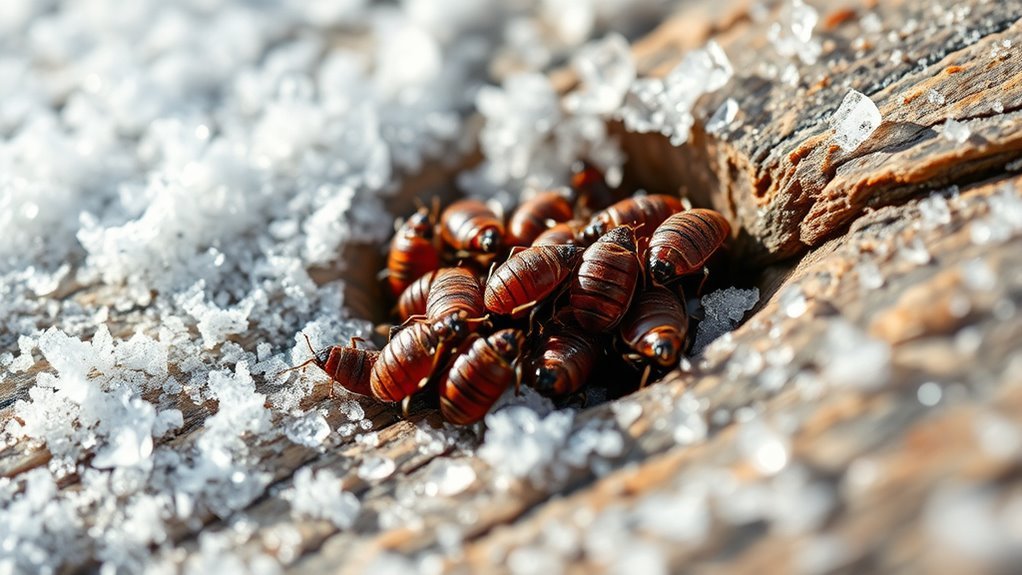
Although bed bugs can endure a range of temperatures, you’ll notice they start struggling below 46°F (8°C).
Bed bugs begin to weaken and struggle when temperatures drop below 46°F (8°C).
They usually die after long exposure to 14°F (-10°C) or colder.
Cold temperatures play a vital role in bed bug survival, especially when considering temperature thresholds necessary to kill them.
For instance, complete mortality across all life stages requires at least 80 hours at -16°C (3°F) or lower.
Eggs are tougher, surviving brief exposures to -25°C (-13°F), but extended cold increases their mortality.
You can use freeze treatment effectively by placing small, sealed items in a properly maintained freezer at 0°F (-18°C) for 2-4 days to eliminate bed bugs.
Understanding these thresholds helps you manage infestations using targeted cold strategies.
Bed Bugs’ Cold Adaptations and History
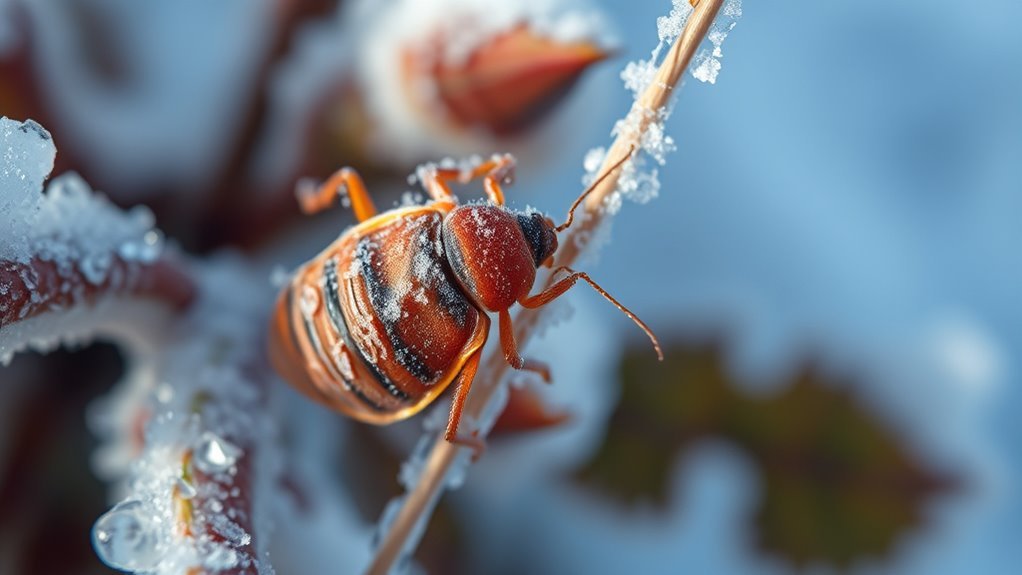
You might not realize that bed bugs come from cave-dwelling ancestors who fed on bats in cold environments.
Their evolutionary history gave them cold tolerance, helping them survive even freezing temperatures.
Understanding these survival mechanisms shows why cold weather alone doesn’t stop infestations.
Evolutionary Cold Adaptations
Because bed bugs evolved from cave-dwelling insects that fed on bats in cold environments, they’ve inherited a remarkable ability to withstand low temperatures.
This evolutionary cold tolerance means they can survive conditions that might surprise you.
When temperatures drop below 61°F, bed bugs enter dormancy, slowing their metabolism to endure harsh climates.
Their survival isn’t accidental; it’s a trait honed over thousands of years in chilly caves.
Here’s what you should know about their cold adaptations:
- They survive freezing temperatures as low as -16°C (3.2°F) if cold exposure is prolonged.
- Dormancy helps them pause activity and wait out unfavorable cold conditions.
- Their evolutionary history equips them to thrive in diverse climates, including winters you might think lethal.
You can’t underestimate their resilience due to these adaptations.
Ancestral Bat Habitats
The cold adaptations of bed bugs trace back to their origins in ancestral bat habitats—dark, chilly caves where their insect ancestors fed on bats.
These caves provided a stable, cold environment that shaped their cold tolerance.
They also developed the ability to enter hibernation-like dormancy during harsh conditions.
This evolutionary history in ancestral habitats explains why bed bugs can survive cooler climates better than you might expect.
Here’s a snapshot of their early environment and adaptations:
| Feature | Description |
|---|---|
| Habitat | Dark caves housing bat colonies |
| Temperature Range | Consistently low, cool temperatures |
| Food Source | Bat blood |
| Cold Adaptation | Dormancy/hibernation during cold spells |
| Survival Benefit | Enhanced cold tolerance and resilience |
Understanding this helps you see how their past equips them for survival in cold weather today.
Survival Mechanisms in Cold
Although bed bugs originated in cold cave environments, they’ve developed remarkable survival mechanisms that help them endure chilly conditions today.
You might be surprised at how well they tolerate cold temperatures through these adaptations:
- Dormancy: When temps drop below 61°F, bed bugs slow their metabolism. They enter dormancy to conserve energy and survive longer without feeding.
- Eggs resilience: Their eggs withstand harsher cold. They can survive short-term exposure to around -25°C (-13°F), making infestations tough to eliminate.
- Cold tolerance: While activity declines below 46°F, prolonged exposure to 14°F (-10°C) can kill adults. Bed bugs’ history in caves means they’re built to survive indoors during winter’s chill.
Understanding these survival tactics helps you grasp why simply lowering temperatures often isn’t enough to eradicate them.
Freezing Temperatures That Kill Bed Bugs
When you expose bed bugs to freezing temperatures at or below 0°F (−18°C) for several days, you can effectively kill them.
Cold temperatures like these disrupt their bodily functions, leading to death across all life stages.
For instance, maintaining −16°C for around 80 hours guarantees complete mortality.
Bed bug eggs, however, are tougher and need even colder conditions—below −25°C—for a prolonged time to ensure elimination.
You’ll get the best results with strict temperature control by freezing items in a sealed environment at or below −18°C for 2 to 4 days.
Just relying on fluctuating outdoor cold temperatures won’t work as reliably.
Limitations of Cold Exposure for Bed Bug Control
You might think freezing temperatures offer a simple solution to bed bug infestations, but cold exposure has its limits.
While bed bugs struggle to survive prolonged cold temperatures, effective control requires very low temperatures sustained for long exposure times.
Effective bed bug control demands sustained exposure to very low temperatures over extended periods.
Here’s why cold treatments might disappoint you:
- Eggs resist cold better than adults or nymphs, surviving short exposures even below -13°F.
- You need around four days at 0°F to reliably kill all life stages.
- Indoor and outdoor temperatures often fluctuate, rarely staying cold enough long enough to guarantee bed bug death.
Because of these factors, relying solely on cold exposure won’t always eliminate bed bugs.
Especially when eggs can survive and temperatures don’t remain lethal for the necessary duration.
Bed Bug Behavior During Winter Months
You might think bed bugs disappear in winter, but they stay active indoors where it’s warm.
They slow down their metabolism through diapause when temperatures drop but don’t fully stop moving.
To survive, they hide in furniture and cracks near your sleeping areas, avoiding the cold outside.
Winter Activity Patterns
Although cold weather slows many pests, bed bugs stay active indoors throughout winter because they’re protected by warm environments.
You might think they hibernate during cold temperatures, but bed bugs don’t truly hibernate—they enter diapause. This means they slow their metabolism but remain ready to feed.
Their indoor activity continues as long as heat is on, making extreme cold outside irrelevant unless they’re exposed directly.
During winter, bed bugs hide close to you—in mattress seams, furniture cracks, and behind wall trim.
Remember, cold won’t naturally eliminate them indoors.
Here’s what you should know about their winter activity patterns:
- They survive without feeding for months by slowing metabolism.
- They stay close to warm areas and human hosts.
- Extreme cold must be sustained and direct to affect them.
Indoor Survival Strategies
When temperatures drop outside, bed bugs rely on indoor warmth and clever hiding spots to survive the winter months.
Their indoor survival depends on shelter from cold temperatures, often found in mattress seams, furniture cracks, and wall voids.
Though they can enter diapause to slow metabolism, heated environments let them stay active and feed year-round.
| Survival Factor | Bed Bug Behavior |
|---|---|
| Indoor warmth | Keeps bugs active during winter |
| Shelter | Mattress seams, furniture cracks, walls |
| Cold temperatures | Below 46°F slows activity but not kills |
| Diapause | Metabolic slowdown to endure harsh times |
| Year-round survival | Possible in properly heated spaces |
You’ll find that their resilience makes indoor cold less threatening than outdoor exposure.
Dormancy and Diapause
Since bed bugs face harsh winter conditions, they enter a state called diapause to survive.
This form of dormancy slows their metabolism drastically, helping them withstand cold temperatures that would otherwise be lethal.
When temperatures drop below 61°F (16°C), bed bugs stop feeding and reproducing, conserving energy to endure the tough months ahead.
You should know:
- Diapause allows bed bugs to survive without food for months during winter.
- They remain hidden, inactive, and undetected while in dormancy.
- Extreme cold below −7°C (19°F) can kill them even during diapause.
Understanding this survival tactic helps explain why bed bugs can persist through winter despite cold weather challenges.
Practical Freezing Methods for Infested Items
If you want to kill bed bugs by freezing infested items, you’ll need to seal them in plastic bags and place them in a freezer set to 0°F (-18°C) or lower for at least two to four days.
Most household freezers don’t reach these cold temperatures consistently, so a dedicated deep freezer is best for bed bug control.
Freezing works well for small, non-porous items like clothing or electronics, but isn’t practical for large or fragile objects.
Maintaining the right temperature and duration is vital since eggs and nymphs resist cold more than adults.
| Item Type | Freezing Suitability |
|---|---|
| Clothing | High |
| Bedding | High |
| Electronics | Moderate |
| Large Items | Low |
Why Bed Bugs Persist Indoors in Cold Weather
Although cold weather can challenge many pests, bed bugs persist indoors because they take advantage of heated environments and easy access to human hosts. This allows them to survive and reproduce year-round, despite freezing temperatures outside.
Their remarkable temperature tolerance means cold temperatures outside don’t affect them much indoors. Instead of hibernating, they enter diapause, a dormancy state, to endure brief cold spells but thrive when your indoor climate stays warm.
So, you should know why they keep coming back:
- Indoor heating keeps temperatures ideal (70-80°F), perfect for bed bug survival and reproduction.
- Diapause lets them pause development during short cold exposures without dying.
- Constant access to your blood meals indoors fuels their persistence, no matter the season.
You can’t rely on outdoor cold to solve a bed bug issue inside.
Signs of Bed Bug Activity in Winter
Even during winter, bed bugs stay active indoors because they thrive in moderate temperatures and don’t hibernate.
You might notice signs of bed bug activity despite the cold outside.
Look for itchy bites appearing on your skin, small dark droppings on mattress seams, and blood smears on your bedding.
Shed skins and tiny eggshells often hide in furniture crevices, box springs, or behind wall trim.
A musty odor in certain rooms can also indicate winter bed bug presence.
Since these pests survive indoors by feeding on you and finding warmth, they remain a problem year-round.
Paying attention to these signs helps you catch infestations early, even when it’s cold outside and you might assume bed bugs are dormant.
Integrating Cold Treatment Into Bed Bug Management
Integrating cold treatment into your bed bug management plan can considerably reduce bed bugs’ survival when done right.
To maximize effectiveness, maintain strict temperature control—expose infested items to 0°F (-18°C) or lower for 2-4 days.
Remember, eggs resist cold more than adults, so prolonged freezing is key.
Use cold treatment mainly for small, non-porous items like clothing and luggage, sealing them tightly to avoid temperature fluctuations.
For best results, combine cold treatment with other tactics in an integrated pest management approach.
This layered strategy helps prevent re-infestation and ensures thorough eradication.
Here’s how you can take action:
- Seal and freeze infested items properly.
- Target small, manageable belongings for freezing.
- Complement cold treatment with chemical or heat methods.
Frequently Asked Questions
How Long Does It Take for Bed Bugs to Die in Cold Weather?
It takes about 2 to 4 days at temperatures below 0°F (-18°C) to kill bed bugs completely.
Shorter exposure or higher temperatures won’t work, so you’ve got to keep them cold long enough.
Can Cold Weather Get Rid of Bed Bugs?
You might imagine winter’s icy grip wiping out bed bugs, but cold weather alone won’t get rid of them indoors.
You’ll need sustained freezing temperatures or professional help to truly banish these stubborn pests.
Can Bed Bugs Freeze and Come Back to Life?
Yes, bed bugs can freeze and come back to life if the cold isn’t extreme or long enough.
You need to expose them to 0°F (-18°C) or lower for at least 3-4 days to guarantee they die completely.
Conclusion
You might think cold weather would send bed bugs packing, but these resilient pests can tough it out indoors where it’s warm.
While freezing temperatures can kill them, you’ve got to hit the right conditions—otherwise, they’ll just hang in there.
Don’t put all your eggs in one basket by relying solely on cold; combine freezing with other treatments for the best results.
Remember, getting rid of bed bugs takes a well-rounded approach, not just a quick freeze.
In conclusion, while cold weather can potentially eliminate bed bugs, it’s not a foolproof solution.
To effectively tackle these pests, you should incorporate freezing temperatures with other pest control methods.
A comprehensive strategy will yield better results, ensuring that your home is truly bed bug-free.