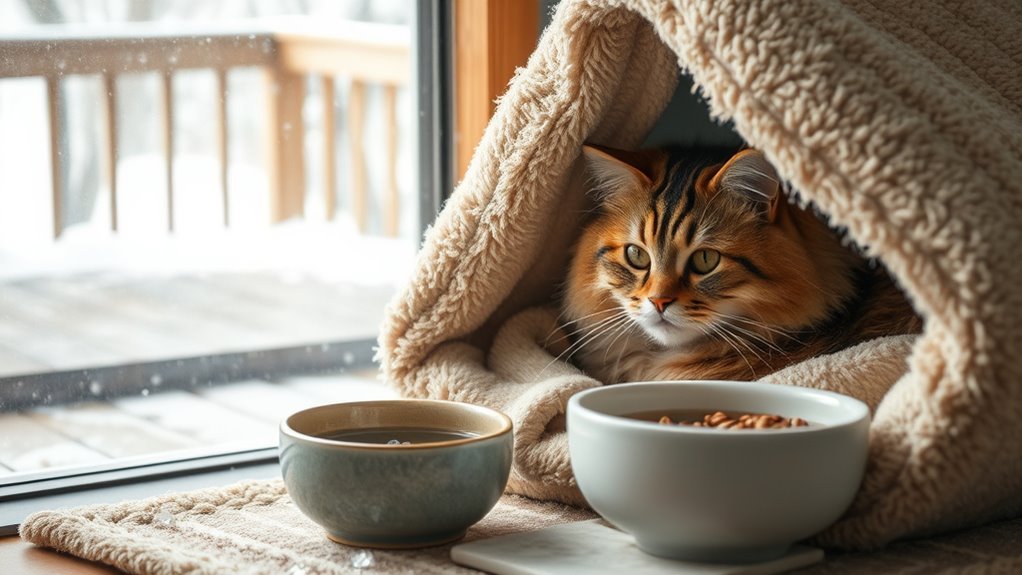
How to Help Your Cat Survive Cold Weather
You can help your cat survive the cold weather by taking a few simple steps.
Start by providing a warm, draft-free shelter for your feline friend—this could be indoors or an insulated outdoor space.
Make sure they have access to extra high-protein food and fresh, unfrozen water daily.
It’s also important to keep an eye out for signs that your cat is too cold.
Look for symptoms like shivering, lethargy, or cold ears.
Additionally, ensure that antifreeze and other chemicals are kept well out of reach, as these can be extremely harmful.
By taking these precautions now, you can protect your cat from the dangers of winter.
There are even more ways to keep them safe and healthy this season!
Understanding How Cats React to Cold Temperatures
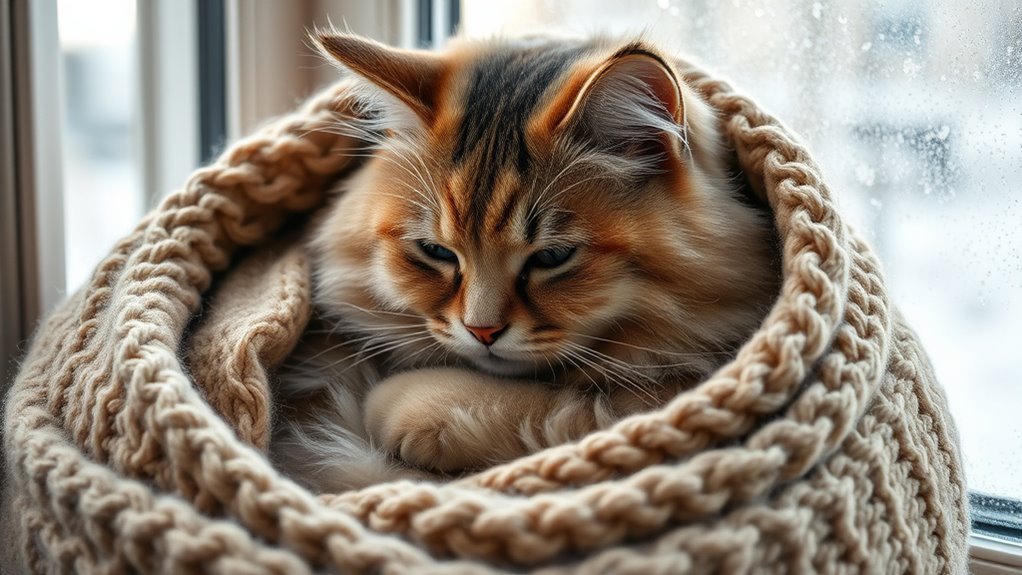
Although cats are known for their independent nature, they’re quite sensitive to cold temperatures.
You’ll notice your cat seeking out sunny spots, radiators, or your lap to stay warm when it’s chilly.
Their normal body temperature ranges from 100.4°F to 102.5°F, and they become vulnerable as outdoor temperatures drop below 45°F.
If your cat starts curling up tightly, shivering, or showing decreased activity, these are clear signs it’s feeling cold.
Cats with short hair, hairless breeds, seniors, kittens, or those with health issues are especially at risk.
When exposed to cold, your cat might hide or search for shelter to protect its body temperature.
Understanding these behaviors helps you keep your cat safe and comfortable during colder weather.
Identifying When Temperatures Are Dangerous for Cats
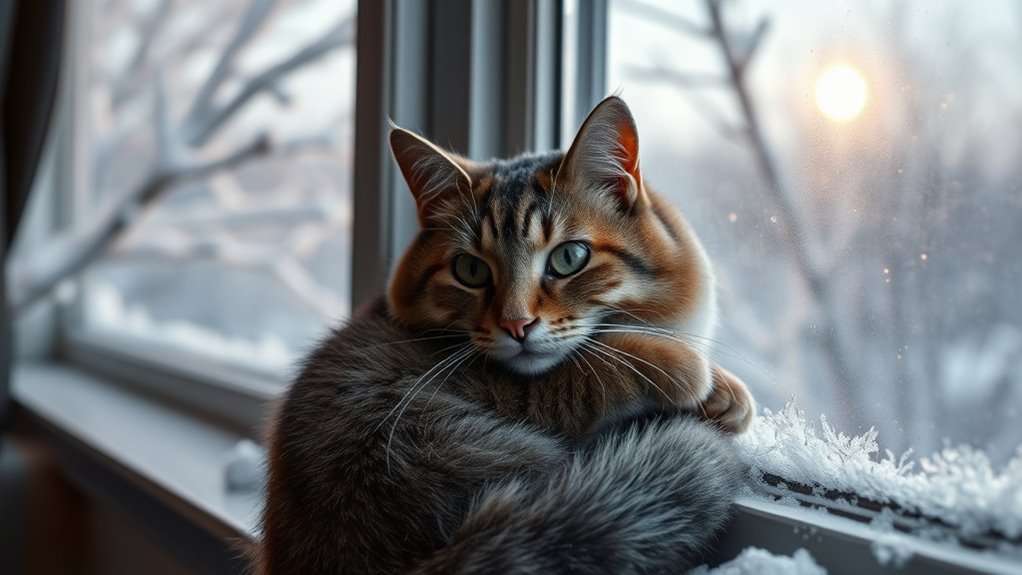
You need to watch for temperatures below 45°F, as they can quickly become dangerous for your cat, especially if they’re outside for long.
Kittens, elderly, or sick cats face even higher risks when it drops below 50°F.
Keep an eye out for signs of cold stress like shivering or lethargy to know when they’re in trouble.
Temperature Thresholds for Cats
When temperatures drop below 45°F (7°C), your cat faces increasing risks, especially if it spends extended time outdoors.
Outdoor cats begin experiencing cold stress symptoms like shivering and lethargy between 45°F and 50°F (7°C to 10°C).
Once temperatures fall below 45°F, the risk of hypothermia and frostbite rises sharply, particularly at or under 32°F (0°C).
Small, thin, hairless, young, or elderly cats are even more vulnerable and may feel uncomfortable at temperatures as high as 50°F to 60°F (10°C to 15°C).
To protect your cat, monitor the weather closely and limit outdoor exposure during cold spells.
Understanding these temperature thresholds helps you act before your cat suffers serious cold-related health issues.
Signs of Cold Stress
Recognizing the temperature thresholds for your cat is only the first step in keeping them safe during cold weather.
You need to spot signs of cold stress early to act fast. Cats often hide discomfort, so watch closely for subtle clues.
Key indicators include:
- Shivering or trembling, signaling their body is struggling to maintain heat.
- Lethargy or unusual weakness, showing their body temperature is dropping.
- Cold extremities, especially ears and paws, that feel chilly to the touch.
- Difficulty walking or unresponsiveness, indicating severe cold stress requiring immediate care.
If your cat’s body temperature falls below 100°F, they’re at risk of hypothermia.
Notice these signs early, and bring your cat inside or warm them up promptly to protect their health.
Signs That Your Cat May Be Too Cold
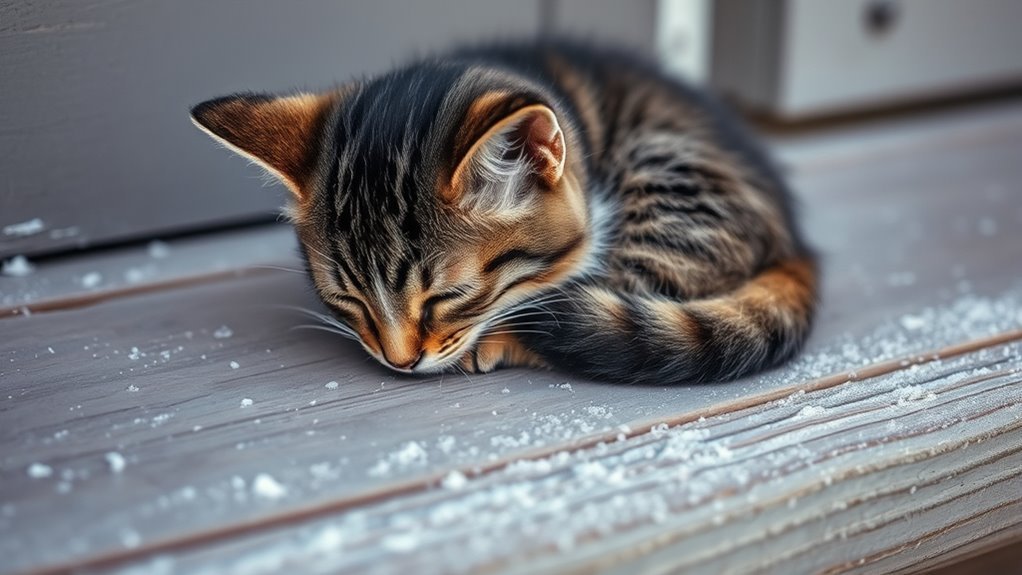
Although cats often hide their discomfort, you can tell they’re too cold if they seek warm spots like sunbeams or radiators.
Watch for shivering or if your cat curls up tightly—both are clear signs of cold stress.
Shivering or curling up tightly are clear signals your cat is feeling cold stress.
Check their cold extremities, especially ears, paws, and tail; if these feel chilly, your cat may be struggling to stay warm.
Notice any changes in behavior, such as lethargy, weakness, or a decreased appetite, which can indicate prolonged exposure to cold.
In severe cases, hypothermia may set in, causing unresponsiveness or difficulty walking.
If you observe these symptoms, it’s vital to act quickly to warm your cat and prevent further health complications.
Your attentiveness can make all the difference in keeping your feline friend safe during cold weather.
Creating a Warm and Safe Outdoor Shelter
If your cat shows signs of being too cold, providing a warm and safe outdoor shelter can make a big difference.
You want to create a space that keeps stray cats protected from harsh weather while retaining heat efficiently.
To do this, build a small outdoor shelter about 2×3 feet and at least 18 inches tall.
Insulate it with straw—never blankets or hay—and line the inside with reflective Mylar to trap warmth.
Make sure the entrance is small, has a flap, and is elevated to block cold air and predators.
Keep the shelter elevated off the ground to avoid cold transfer.
Face the entrance away from prevailing winds.
Check regularly for snow buildup and moisture.
Use durable materials to protect from weather damage.
Providing Adequate Food and Water During Winter
To help your cat stay warm this winter, increase their food portions with high-protein wet foods and add some dry food for extra calories.
Make sure their water doesn’t freeze by refilling bowls often and using heated bowls or water fountains.
You can also warm water before serving and choose deep, non-metal bowls to keep it accessible and fresh.
Increase Food Portions
During winter, you should increase your cat’s food portions to provide the extra calories needed to maintain body heat.
Outdoor cats especially need up to 25% more calories to stay warm and healthy.
Focus on high-protein wet food options like seafood or chicken formulas to maximize energy intake.
Increasing food not only prevents weight loss but also supports a healthy immune system during cold months.
- Increase food portions gradually to meet higher energy demands.
- Offer high-protein wet food for better calorie absorption.
- Use sheltered outdoor feeding stations to keep food dry.
- Monitor your cat’s weight and adjust portions as needed.
Make sure to keep a close eye on how your cat is doing as the temperatures drop!
Prevent Water Freezing
Alongside increasing your cat’s food intake in colder months, you’ll want to guarantee they always have access to fresh, unfrozen water.
To prevent water from freezing, consider using heated bowls or water fountains with built-in heaters, especially when temperatures drop below 32°F.
You can also refill water bowls frequently with room-temperature water to slow ice formation.
Elevate the containers off the ground and place them in sunny spots to help maintain a warmer temperature.
Another effective method is insulating water bowls with foam or thermal wraps, which retain heat and delay freezing.
If your cat drinks outdoors, running a slight flow from outdoor faucets can keep water moving and prevent it from freezing.
These steps ensure your cat stays well-hydrated even in cold weather.
Use Heated Bowls
A heated bowl can make a big difference in keeping your cat’s water from freezing in cold weather.
Heated bowls use electrical elements or self-warming materials to keep water accessible for outdoor cats, ensuring they stay hydrated even in freezing conditions.
To maximize effectiveness, place heated bowls on insulated or elevated surfaces.
Always check for safe electrical connections to prevent hazards and ensure the bowl functions properly.
- Place heated bowls on insulated or elevated surfaces to maintain warmth.
- Regularly check and maintain safe electrical connections.
- Refill with fresh water frequently to avoid mineral buildup.
- Clean bowls often for continuous, safe use.
Using heated bowls ensures your outdoor cats won’t have to struggle to find unfrozen water during the cold months.
Protecting Cats From Toxic Substances and Hazards
Because cats are naturally curious and often groom themselves after exploring, they can easily ingest harmful substances like antifreeze, which contains ethylene glycol and is deadly even in small amounts.
To protect your cat from poisoning, practice chemical safety by storing antifreeze and other toxins out of reach.
Clean up any spills immediately to avoid chemical hazards.
Choose non-ethylene glycol-based deicers and screen washes to reduce risk.
Besides antifreeze, be mindful of other toxins like holiday decorations and certain plants that can cause choking or poisoning.
By staying vigilant and controlling access to these dangers, you’ll help keep your cat safe from toxic substances during cold weather.
Prioritize chemical safety to prevent accidental poisoning and ensure your feline friend stays healthy all season long.
Keeping Indoor Cats Comfortable and Warm
Keeping your cat safe from harmful substances is just one part of winter care; ensuring they stay warm indoors is equally important.
You want to create a cozy, comfortable environment where your indoor cats can relax without chills. Focus on maintaining a warm resting area and consider pet-safe heat pads to provide consistent warmth.
Here’s how to keep your indoor cats comfortable and warm:
- Provide warm, draft-free spots like heated beds or radiator hammocks.
- Use heat pads or electric blankets designed for pets.
- Insulate windows and doors to prevent heat loss.
- Regularly check your cat’s resting area for warmth and dryness, especially during cold spells.
Keeping your feline friends cozy is essential for their well-being!
Supporting Community Cats in Cold Weather
When temperatures drop, community cats face harsh challenges outdoors, and you can play an essential role in helping them survive.
Start by providing extra food and water, using heated or insulated water bowls to prevent freezing.
Setting up insulated outdoor shelters with straw and elevating them off the ground will protect cats from the cold weather.
You can also use microwavable or heated pads inside shelters to keep them warm.
Volunteering with local rescue groups to support trap-neuter-return (TNR) efforts and maintain shelters strengthens community cat populations.
Avoid taking feral cats to shelters, as they often aren’t adoptable; instead, focus on improving their outdoor habitats.
Responding to Cold-Related Emergencies and Health Issues
If you notice your cat shivering, curling up tightly, or acting unusually lethargic, these signs show they’re struggling with the cold and need your help immediately.
Hypothermia is an urgent emergency that requires quick action.
Watch for signs like weakness, slow breathing, pale gums, or unresponsiveness.
To respond effectively:
- Bring your cat indoors and keep them warm and dry.
- Wrap them gently in blankets or towels—avoid hot water or heating pads directly.
- Monitor their condition closely for worsening symptoms.
- Seek emergency veterinary care without delay.
Prompt recognition and response can save your cat’s life.
Don’t ignore cold-related signs; your swift action is essential to prevent serious health issues or even death from hypothermia.
Frequently Asked Questions
What Temperature Is Too Cold for Cats?
You should consider temperatures below 45°F (7°C) too cold for your cat, especially if they’re small, thin, or hairless.
Below 32°F (0°C) is dangerous, risking frostbite and hypothermia.
What Is the 3-3-3 Rule for Cats?
Think of the 3-3-3 rule as your cat’s safety net:
Keep them indoors for three months.
Then slowly introduce outside time over the next three,
How to Help Cats in Cold Weather?
You should provide insulated shelters with straw.
Offer increased high-protein food to help them maintain their energy levels.
Keep water unfrozen using heated bowls, and protect feeding areas from harsh weather conditions.
It’s also important to bring cats indoors when temperatures drop below 45°F.
This helps ensure they stay safe and warm during the cold weather.
Do Cats Like to Be Covered With Blankets?
Cats often like being covered with lightweight blankets because it mimics cozy hiding spots.
But you shouldn’t force it.
Watch your cat’s reaction—if they seem stressed or try to escape, let them be instead.
Conclusion
By keeping a close eye on your cat’s comfort and offering cozy shelter, you’re giving them a gentle hug against winter’s chill.
When you provide extra nourishment and safe spaces, you’re wrapping them in care without them even knowing.
Whether your feline friend roams outside or lounges indoors, your thoughtful actions keep the cold at bay and their spirits warm.
Remember, a little warmth goes a long way in turning frosty days into purr-fect moments.
—
In conclusion, ensuring your cat’s comfort in cold weather is essential.
By providing cozy shelter, extra nourishment, and safe spaces, you can help your furry friend thrive during winter months.
Your care not only keeps them warm but also boosts their spirits.
So, take those extra steps to keep your cat safe and cozy, and enjoy those snuggly moments together!