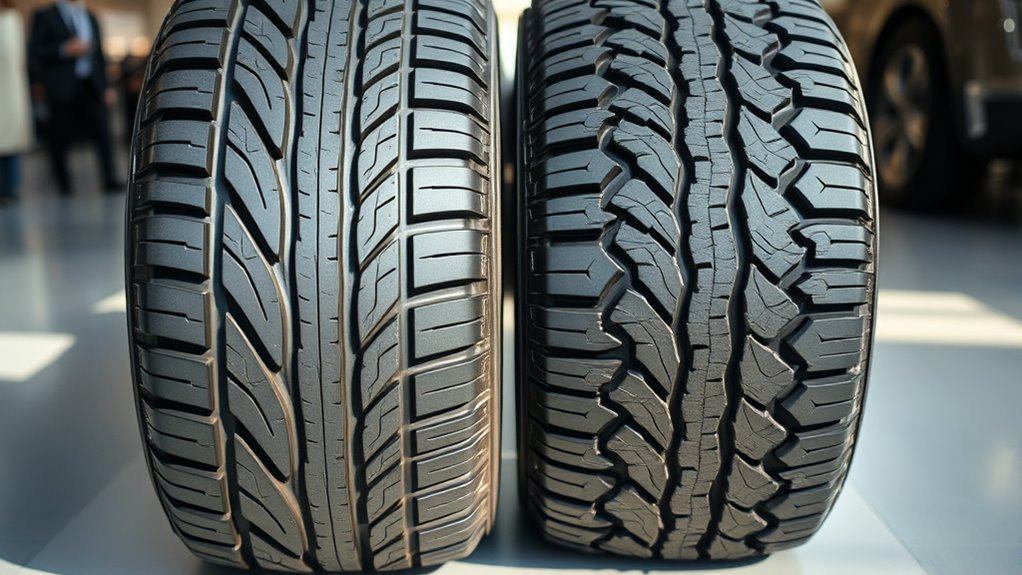
Are All Weather and All Season Tires the Same?
All weather and all season tires aren’t the same, even though they sound similar.
All season tires work well in mild climates above 45°F, effectively handling dry, wet, and light snow conditions.
On the other hand, all weather tires excel in colder, snowy conditions. This is because their rubber remains flexible, allowing for better grip on ice and snow.
If you’re curious about how each type performs, and which one is best suited for your climate, keep exploring these key differences.
Understanding the distinctions can help you make an informed choice for your vehicle’s needs.
What Defines All Season Tires

What makes all season tires stand out is their ability to provide reliable traction in dry, wet, and light snow conditions year-round.
When you choose all-season tires, you’re getting a tire design that balances rubber compounds and tread patterns to perform well across a moderate temperature range, typically above 45°F.
These tires offer moderate traction, making them suitable for mild winters where heavy snow or ice is rare.
The rubber compounds are optimized for year-round performance, helping maintain safety without the hassle of changing tires each season.
While all-season tires handle light snow effectively, they aren’t meant for severe winter conditions.
What Defines All Weather Tires
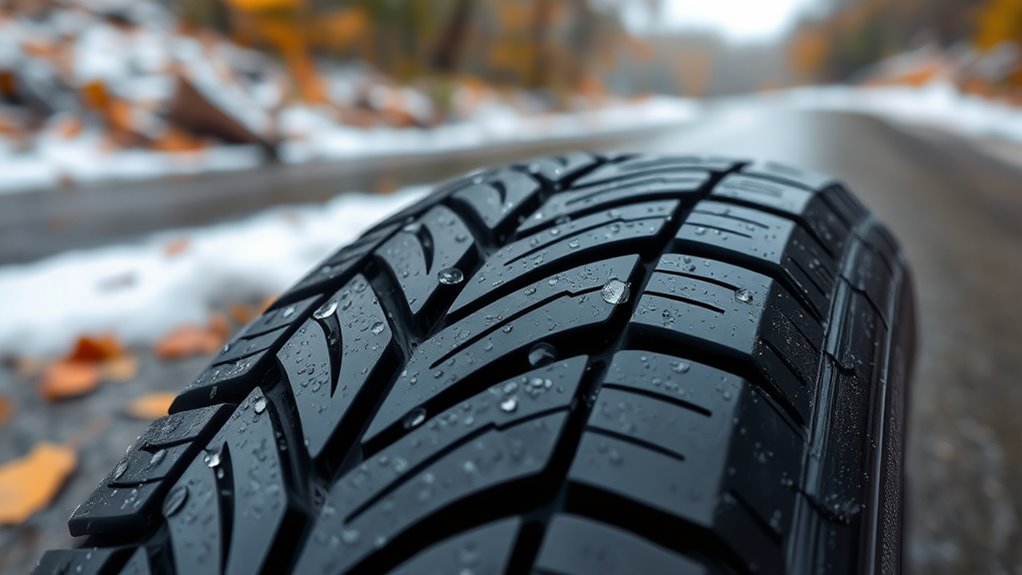
Although all weather tires look similar to all season tires, they’re engineered to handle a wider range of conditions, including snow and ice, throughout the year.
What sets all-weather tires apart is their tire design that balances versatility and cold weather performance.
Here’s what defines them:
- They carry the Three-Peak Mountain Snowflake symbol, proving they meet specific snow traction standards for winter conditions.
- Their tire tread pattern features deeper grooves and more siping than all-season tires, enhancing grip on snow and ice.
- The rubber compound stays flexible in low temperatures, providing better traction when it’s cold outside.
With these features, all-weather tires fill the gap between all-season tires and dedicated winter tires.
They offer dependable performance year-round.
Performance Comparison in Various Weather Conditions

When you compare all-weather and all-season tires, you’ll notice that all-weather tires deliver better traction in snow and icy conditions.
This is thanks to their deeper tread patterns and increased siping.
This difference means all-weather tires maintain superior traction in snow, meeting specific standards like the Three-Peak Mountain Snowflake symbol, unlike most all-season tires.
In cold weather below 45°F, all-weather tires stay flexible and grip the road better.
Meanwhile, all-season tires tend to harden, which reduces their performance.
However, in warm weather, all-season tires often provide slightly better handling and traction on dry and wet roads.
So, when considering performance across various weather conditions, all-weather tires excel in winter traction.
On the other hand, all-season tires perform well in mild, warm weather, highlighting the key differences in their traction and overall performance.
Tread Patterns and Traction Standards
Because tread patterns and traction standards directly affect tire performance, understanding their differences is key when choosing between all-weather and all-season tires.
Tread patterns and traction standards crucially influence tire performance when selecting all-weather or all-season tires.
You’ll notice these main distinctions:
1. Tread Pattern and Depths: All-weather tires have deeper, more aggressive tread patterns with numerous sipes to boost grip on snow and ice.
In contrast, all-season tires feature moderate depths suited for dry, wet, and light snow conditions.
2. Traction Standards: All-weather tires often carry the 3PMSF symbol, certifying superior traction performance in severe winter weather.
This is something most all-season tires lack, making it an important consideration.
3. Winter Performance: The specialized tread design and rubber compounds in all-weather tires maintain flexibility and grip at low temperatures.
This enhances performance in winter compared to all-season tires, which aren’t designed for harsh conditions.
Understanding these differences guarantees you pick the right tire for your climate and driving needs.
Pros and Cons of All Season and All Weather Tires
Understanding the differences in tread patterns and traction standards sets the stage for weighing the pros and cons of all-season and all-weather tires.
All-season tires offer balanced wet traction and decent snow performance in mild driving conditions. They’re usually quieter and more affordable.
However, their tread design hardens below 45°F, which reduces winter traction.
On the other hand, all-weather tires boast aggressive tread design with deeper grooves and siping. This ensures better snow performance and temperature flexibility, even in harsh winters.
But, this comes at the cost of faster tire wear and increased road noise.
When you compare these two, all-season tires suit milder climates.
In contrast, all-weather tires excel where unpredictable weather demands reliable winter traction without the hassle of switching tires seasonally.
Choosing the Right Tire Based on Climate and Driving Needs
You need to match your tires to the climate you drive in and how you use your vehicle.
If you face harsh winters or unpredictable weather, all-weather tires might be your best bet.
But if you mostly drive in mild conditions, all-season tires could offer the performance and safety you need.
Climate Considerations
When choosing tires, consider how your local climate influences driving conditions throughout the year.
Your tire choice should match the typical weather patterns you face. Here’s what to keep in mind:
- If you live where winter weather rarely brings snow or ice and temperatures stay above 45°F, all-season tires work well for mild climate conditions.
- For areas with cold temperatures and moderate snow, all-weather tires provide better traction since they stay flexible in winter weather.
- In regions with severe winter, heavy snow, or prolonged freezing, switch to dedicated winter tires or snow tires to ensure safety on snow and ice.
Matching your seasonal tire to your climate helps you maintain control and extend tire life through varying conditions.
Driving Habit Assessment
Climate plays a big role in choosing the right tires, but your driving habits matter just as much.
If you frequently drive through winter conditions or regions with weather unpredictability, all-weather tires offer superior tire performance and versatility.
They handle snow, ice, and cold temperatures better than all-season tires, which excel mainly in mild regional climates.
Consider your vehicle use: highway commuting in stable climates often doesn’t demand the same traction levels, so all-season tires might suffice.
Seasonal weather variations influence your choice too. If you prefer not to switch tires seasonally, all-weather tires save you that hassle.
Ultimately, evaluating your driving habits against your regional climate guarantees you pick tires that match your safety needs and convenience year-round.
This way, you can balance performance with practicality.
Seasonal Performance Needs
Although tire options might seem similar, selecting the right one hinges on understanding how seasonal weather impacts your driving needs.
Seasonal performance varies based on climate conditions, so you need to choose accordingly:
- In moderate climates with warm temperatures and mild winters, all-season tires deliver reliable performance in dry, wet, and light snow conditions.
- If you face snow and ice regularly but not extreme winters, all-weather tires offer better winter traction and performance in various weather, often marked by the 3PMSF symbol.
- For severe winter conditions, dedicated winter tires remain essential, providing unmatched grip and safety.
Matching your tires to your local climate ensures the best safety and handling year-round without compromising performance in any season.
Frequently Asked Questions
Should I Buy All-Weather Tires or All-Season Tires?
You should buy all-weather tires if you face regular snow or icy roads since they offer better traction.
If winters are mild where you live, all-season tires will save you money and still perform well.
What Is the Downside of All-Weather Tires?
You’ll face higher costs, faster wear in summer, and louder road noise with all-weather tires.
Plus, you can expect reduced fuel efficiency as well.
And let’s not forget that they might still struggle in severe winter conditions, so consider your priorities before choosing them.
Can All-Weather Tires Be Used Year Round?
Yes, you can use all-weather tires year-round since they handle snow, ice, and warm conditions well.
They stay flexible in cold weather, so you won’t need to swap tires each season in most climates.
How Long Do All-Weather Tires Last Compared to All-Season Tires?
Think of all-weather tires as sprinters—they last around 40,000 to 60,000 miles.
In contrast, all-season tires are more like marathon runners, often reaching 50,000 to 70,000 miles.
You’ll want to maintain both for best performance.
Conclusion
When choosing between all season and all weather tires, remember they’re not the same.
All weather tires perform better in snowy and icy conditions, offering up to 25% more traction than all season tires.
If you live somewhere with unpredictable weather, all weather tires give you extra safety without switching tires seasonally.
So, consider your climate and driving habits carefully to pick the tire that keeps you safest year-round.
In conclusion, understanding the differences between all season and all weather tires is crucial for your safety.
If your area experiences harsh winters or varying conditions, opting for all weather tires is wise.
They provide enhanced traction and peace of mind, ensuring your vehicle performs well in all types of weather.
Make the right choice based on your local climate and driving needs to keep yourself and others safe on the road.