5 Tips to Keep Feet Warm in Cold Weather
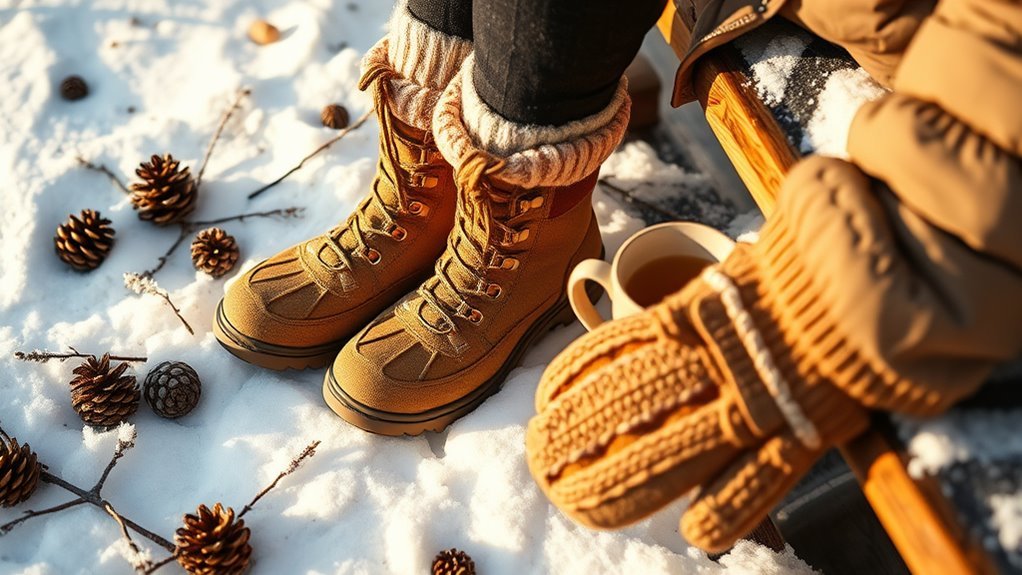
To keep your feet warm in cold weather, it’s essential to choose the right footwear and layering techniques. Insulated, waterproof boots with good soles are key to staying dry and protecting against the cold ground.
Layering is also crucial. Opt for thin, moisture-wicking socks underneath thick wool ones for optimal warmth and sweat control. Just remember to avoid cotton, as it traps moisture and can lead to cold feet.
Keeping your feet dry is vital, so change your socks if they become damp, and consider using vapor barriers for added protection.
Additionally, staying warm starts with your core insulation to enhance circulation to your extremities.
For those extremely cold days, heated accessories can provide that extra boost of warmth.
There’s so much more to learn about smart layering and gear that can really make a difference in keeping your feet cozy.
Invest in Quality Insulated Footwear
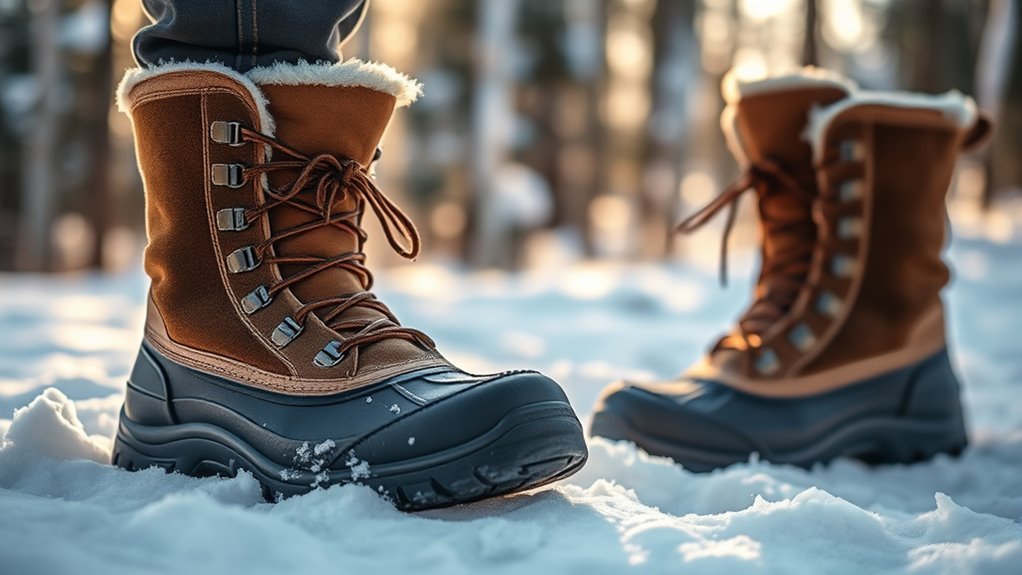
When you invest in quality insulated footwear, you’ll keep your feet warm and comfortable even in the coldest weather.
Look for insulated footwear featuring high-quality thermal insulation materials like Thinsulate to maximize warmth.
Choose insulated footwear with premium thermal materials like Thinsulate for superior warmth and comfort.
Choose waterproof boots or water-resistant shoes, such as those lined with Gore-Tex, to stay warm and dry by preventing moisture absorption that causes heat loss.
Make sure your boots provide a proper fit—there should be enough room for layering socks without restricting circulation.
Thick, rugged soles help insulate your feet from cold ground while improving traction on slippery surfaces.
Don’t forget regular boot maintenance: dry your insulated footwear thoroughly after use to maintain their insulating properties and avoid moisture buildup that leads to cold feet.
This care guarantees your boots stay effective season after season.
Choose the Right Sock Materials and Layers
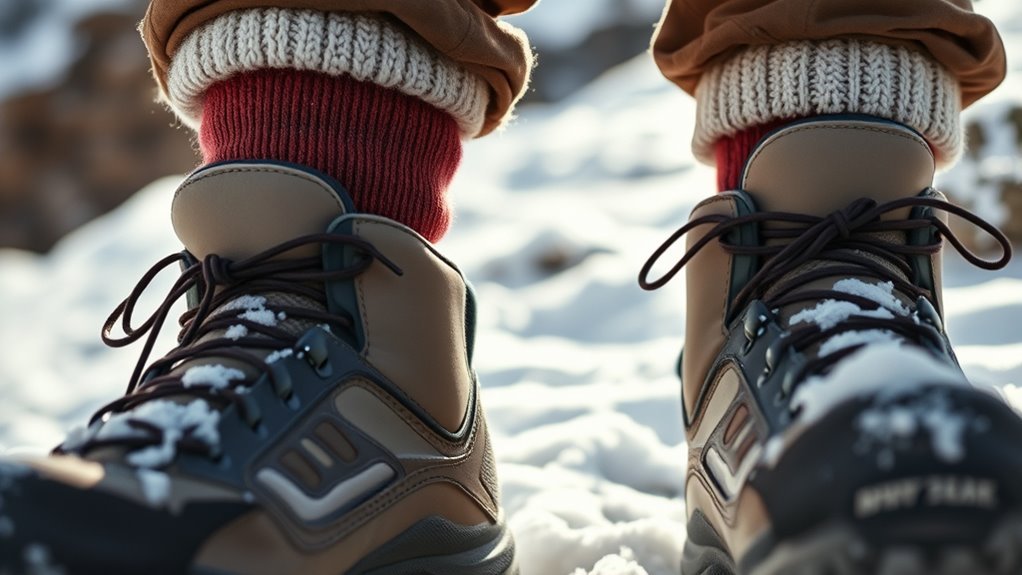
Although insulated footwear plays a crucial role, choosing the right sock materials and layering them properly can make a significant difference in keeping your feet warm.
Start with a thin, moisture-wicking liner sock to manage sweat and add thermal layers like thick wool socks, especially those made from merino wool, which excel at insulation and moisture management.
Avoid cotton socks since they trap moisture and reduce warmth.
Synthetic socks, made from polyester or nylon blends, also provide effective moisture-wicking and dry quickly, making them ideal for active winter activities.
When layering socks, ensure the fit remains snug but not tight to promote circulation and avoid constriction that worsens cold feet.
Maintain Dryness to Prevent Heat Loss
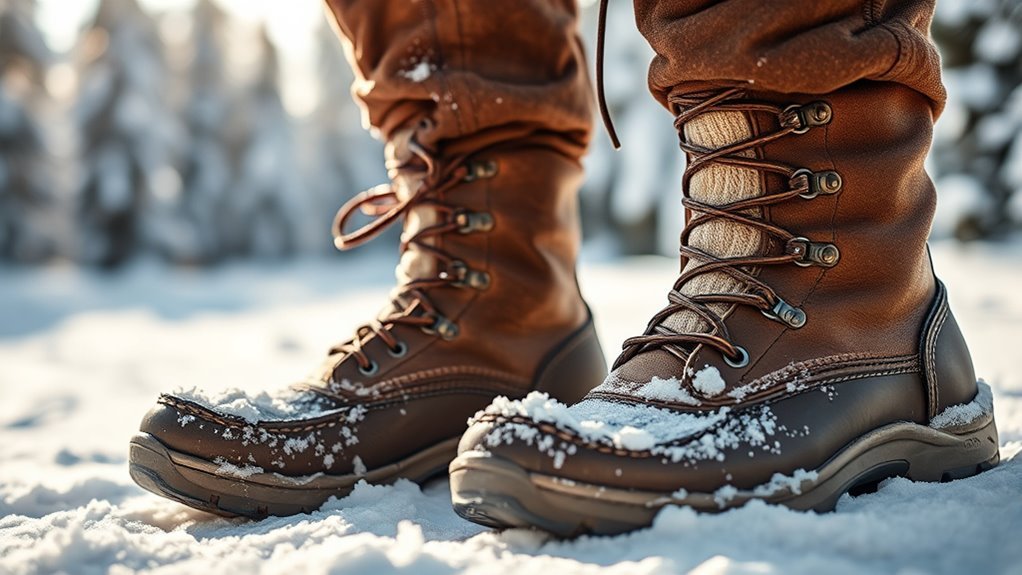
Since moisture quickly drains heat from your skin, keeping your feet dry is essential for staying warm in cold weather.
To prevent heat loss, wear moisture-wicking socks that pull sweat away, and waterproof boots that block snow or rain from soaking your feet.
Wet feet speed up heat loss through dampness and moisture absorption. So, make sure to change into dry socks during long outdoor activities to restore warmth.
You can also use vapor barriers, like plastic liners, inside your boots to trap warm air and keep internal moisture from reaching your socks and skin.
By focusing on staying dry, you’ll effectively prevent heat loss and reduce the risk of cold-related issues.
This way, your feet will stay warm and comfortable no matter how low the temperature drops!
Keep Your Core Body Warm for Better Circulation
Keeping your core body warm plays a crucial role in ensuring your feet stay cozy during cold weather.
When your core temperature is maintained through proper insulation and layering—like thermal shirts and insulated jackets—blood flow improves, directing essential warmth to your extremities.
Engaging in physical activity, such as brisk walking or leg swings, further boosts circulation, enhancing heat retention throughout your body.
However, avoid overheating by removing excess layers to prevent sweating, which can cause heat loss and cold feet.
By consistently focusing on keeping your torso and abdomen warm, you promote better circulation and maximize warmth to your feet.
Use Additional Accessories for Extreme Cold Conditions
When you face extreme cold, relying on basic layers might not be enough to keep your feet warm.
Heated socks and boot heaters offer targeted, consistent warmth, perfect for long outdoor activities, though they need recharging.
Battery-powered insoles provide extra warmth inside your footwear, especially when combined with heated gear.
Adhesive toe warmers are a budget-friendly option, but they generate less heat and may not last through extended cold.
Neoprene boot covers trap heat and help keep feet dry, adding insulation for those harsh conditions.
However, they can be bulky and limit boot adjustments.
By using these additional accessories, you’ll stay warm and comfortable, ensuring your feet are protected against extreme cold.
This way, you can maintain mobility and dryness throughout your day.
Frequently Asked Questions
How Do You Keep Your Feet Warm in Extreme Cold Weather?
You keep your feet warm by wearing insulated, waterproof boots and layering moisture-wicking socks.
Don’t forget to keep your feet dry.
Use vapor barriers, loosen tight boots, and move your toes regularly to maintain circulation.
It really helps to keep the blood flowing and your feet comfy!
How Do I Get My Feet to Stop Being so Cold?
Why let cold feet ruin your day?
You can stop them by moving your toes often, wearing layered wool socks, and keeping your core warm.
Don’t forget insulated boots and occasional foot massages to boost blood flow and warmth.
Does Putting Cayenne Pepper in Socks Help Keep Feet Warm?
Putting cayenne pepper in your socks might create a temporary warming sensation by boosting blood flow.
However, it’s not a reliable way to keep your feet warm and could cause irritation if you have sensitive skin.
Why Put Vaseline on Feet in Winter?
You put Vaseline on your feet in winter to lock in moisture, prevent dryness, and create a barrier that keeps warmth in.
Just use it sparingly to avoid slippery shoes and clogged pores.
Conclusion
Don’t let cold feet freeze your fun—remember, warm feet start with smart choices.
By investing in insulated footwear, layering the right socks, staying dry, and keeping your core cozy, you’ll be ready to face any chill.
When the cold bites harder, accessories have your back. So, step confidently into winter’s grasp.
After all, happy feet lead to happy adventures. Isn’t it time you gave your feet the warmth they deserve?
Keeping your feet warm in cold weather is essential for enjoying outdoor activities.
With insulated shoes, moisture-wicking socks, and cozy layers, you can tackle winter with ease.
Don’t forget to accessorize—things like thermal socks and heated insoles can make a big difference.
Stay warm, stay dry, and keep your core cozy to ensure your feet remain toasty.
Embrace the chill and enjoy your winter adventures, knowing your feet are well taken care of!