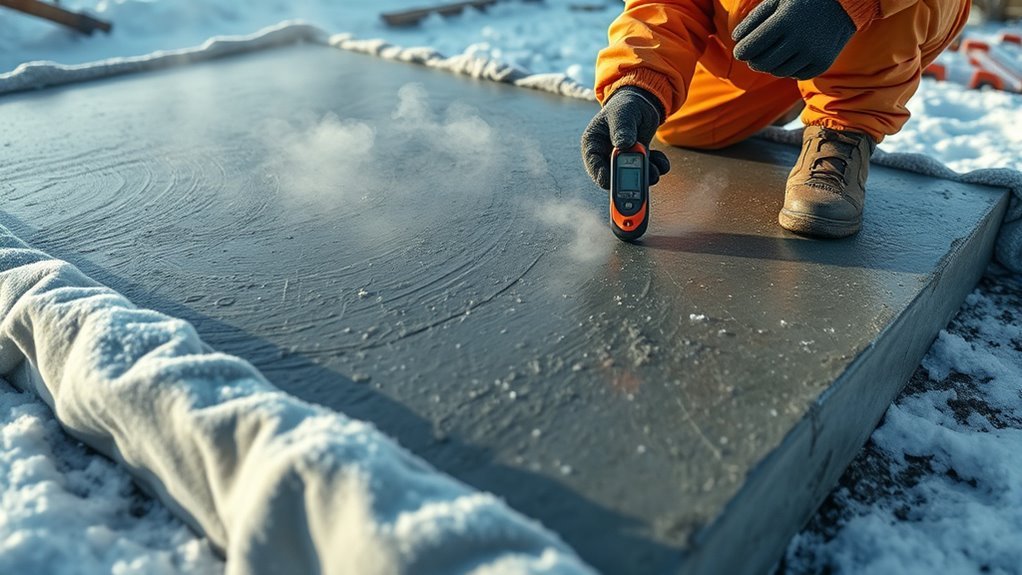
How to Ensure Concrete Cures Properly in Cold Weather
To ensure that concrete cures properly in cold weather, it’s crucial to pay attention to a few key factors. First off, aim to pour the concrete when temperatures are consistently above 40°F and avoid any freezing conditions.
Using a low water-cement ratio is essential, and incorporating accelerators and high-early-strength cement can significantly speed up the curing process.
Additionally, insulating the fresh concrete with blankets or heated enclosures is a smart move. It’s important to monitor temperatures closely, especially during the first day, to keep them above 50°F.
Proper ground preparation and timing your pour during warmer daylight hours can also make a big difference.
So, keep these essentials in mind as you navigate the challenges of curing concrete successfully in the cold.
Understanding the Challenges of Cold Weather Concrete Curing
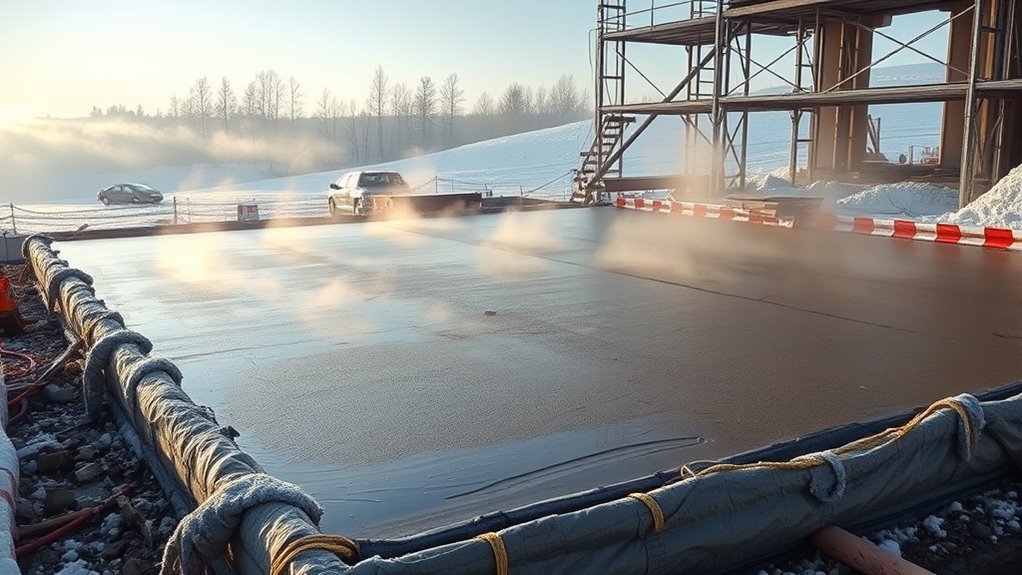
When temperatures drop below freezing, you face a major challenge in curing concrete properly: the hydration process slows or stops entirely.
In cold weather concreting, this means the curing process is delayed, and the concrete struggles to gain strength.
If the concrete temperature falls below 32°F, the water inside can freeze, posing a serious freezing risk that leads to internal cracks and surface defects.
Pouring concrete when it’s too cold, especially below 40°F in the first 24 hours, substantially compromises durability.
To combat these issues, you need to maintain an adequate concrete temperature through proper insulation and sometimes supplemental heating.
Using insulation helps protect the mix from rapid cooling, ensuring the hydration process continues uninterrupted and your concrete cures correctly despite the cold.
Ideal Temperature Ranges for Pouring Concrete in Cold Conditions
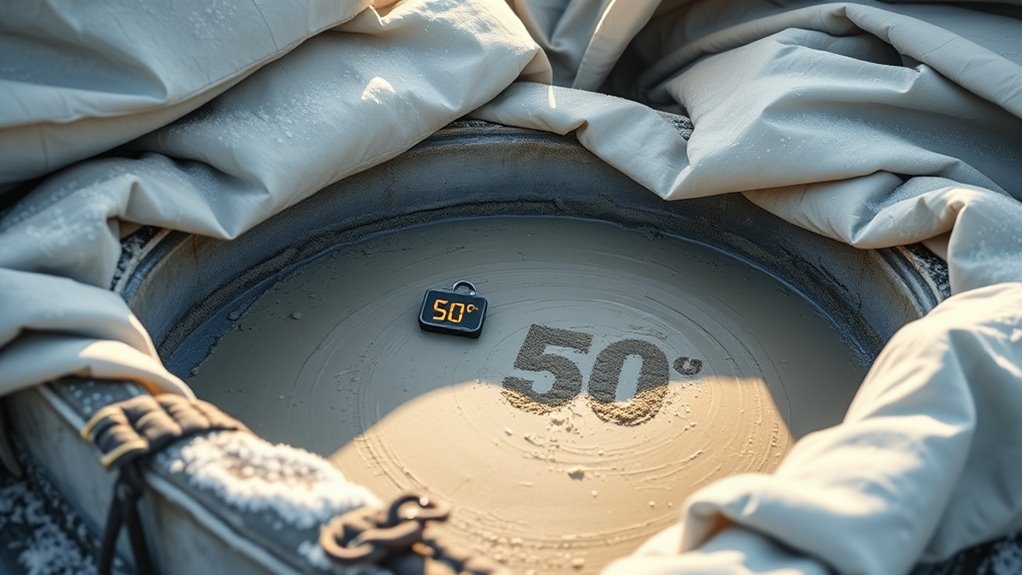
Maintaining the right temperature is key to successful concrete curing in cold weather.
For cold weather concrete, you want the concrete temperature to stay above 50°F (10°C) during the vital first 24 hours to ensure proper initial set and strength development.
Avoid pouring if the ambient temperature drops below 20°F (-6°C) unless you use special measures.
The ideal window to pour is between 10 a.m. and 2 p.m., when the ambient temperature peaks. This gives your concrete more time to cure before nighttime freezes.
Use thermometers or sensors to monitor both ambient and concrete temperatures actively.
Keeping curing conditions stable within these temperature ranges prevents freezing and helps your concrete achieve maximum durability despite the cold environment.
Preparing the Ground and Subgrade for Cold Weather Pours
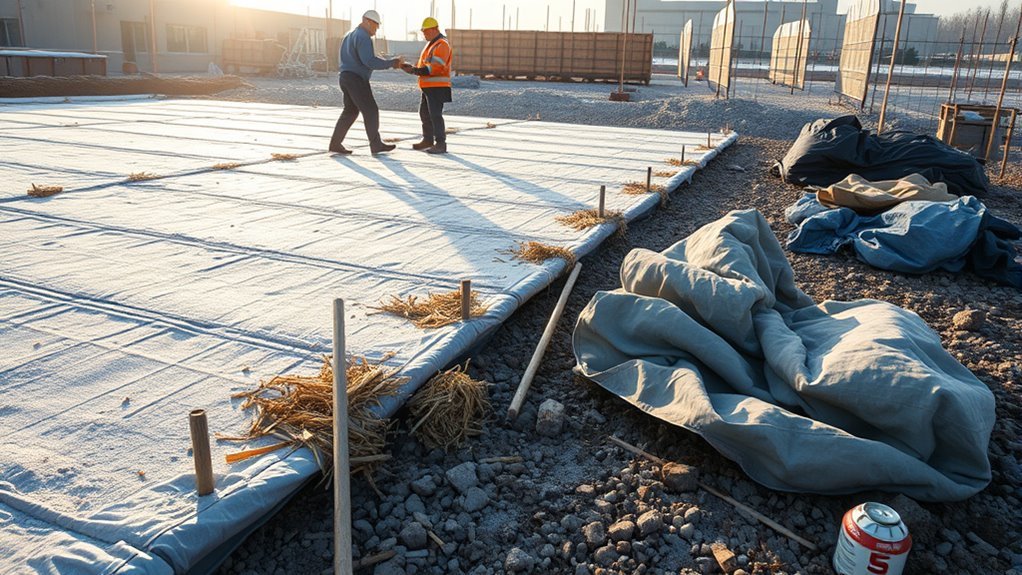
Before you pour concrete in cold weather, you need to prepare the ground and subgrade thoroughly to prevent issues like cracking and uneven settling.
Start by making certain the ground is completely thawed and free of ice or snow—use ground heaters or blankets if needed.
Ensure the ground is fully thawed and clear of ice or snow before pouring concrete.
Avoid pouring on frozen ground since thawing can cause uneven settlement.
Focus on proper ground preparation by compacting the subbase to provide a stable, moisture-controlled foundation.
Make sure to remove all standing water and frost to eliminate weak spots.
Next, apply subgrade insulation with materials like styrofoam or thermal blankets to retain heat and slow cooling.
This is vital during cold weather pouring.
These steps guarantee your concrete cures properly and maintains strength despite low temperatures.
Selecting the Right Concrete Mix for Low Temperatures
Although cold temperatures challenge concrete curing, selecting the right mix can help you overcome these obstacles effectively.
For low temperature curing, use a cold weather concrete mix with a lower water-cement ratio—around 0.45 to 0.50—to reduce freezing risk and improve durability.
Incorporate high-early-strength cement, like Type III, to accelerate strength gain. This allows you to protect the concrete sooner.
Adding non-chloride accelerating admixtures can speed up setting without harming reinforcement.
Also, increase the cement content by 100-200 lbs. per cubic yard to boost early compressive strength in cold conditions.
Don’t forget to choose air-entrained concrete with about 6.5% entrained air to enhance freeze-thaw resistance.
These mix adjustments are essential for successful concrete performance in cold weather.
Using Thermal Blankets and Insulation to Maintain Heat
When you cover freshly poured concrete with thermal blankets, you trap the heat generated during curing. This keeps temperatures above 50°F, even in cold weather.
Using insulation blankets made from fiberglass or polyethylene enhances heat retention and prevents freezing.
Make sure your thermal blankets are at least 12 inches thick and secured tightly to block any air infiltration that can cause heat loss.
This method extends curing time, allowing the concrete to gain sufficient strength despite the cold weather.
Don’t forget to regularly inspect and adjust the blankets to maintain continuous coverage. This ensures effective heat retention throughout the entire curing process.
Proper use of thermal blankets and insulation is vital for curing concrete successfully in low temperatures.
Employing Heated Enclosures and Portable Heaters Effectively
Thermal blankets and insulation help retain heat, but in colder conditions, you’ll want to create a more controlled environment using heated enclosures or tents.
These structures maintain ambient conditions above 50°F during the first 48 hours, which is crucial for proper concrete curing.
Portable heaters inside should be positioned carefully to ensure even temperature control without hot spots or fluctuations.
Seal your enclosure well with insulation and vapor barriers to trap heat and moisture efficiently.
| Aspect | Recommendation |
|---|---|
| Heated Enclosures | Maintain 50°F+ ambient temp |
| Portable Heaters | Position for even heat |
| Temperature Control | Avoid temps below 50°F or above 70°F |
| Sealing | Use insulation & vapor barriers |
Combining these methods guarantees ideal curing despite cold weather.
Best Practices for Monitoring Concrete Temperature During Curing
To keep your concrete curing properly, use embedded temperature sensors like SmartRock® for real-time monitoring.
Regularly tracking temperature lets you spot drops quickly and adjust your curing methods before problems arise.
Relying on accurate data helps you maintain ideal conditions and guarantee strong, durable concrete.
Temperature Sensors Usage
Although concrete curing can be affected by many factors, using embedded temperature sensors like SmartRock® lets you monitor internal temperatures in real time and guarantee proper curing.
You should place these sensors at various depths and locations within the slab to track temperature gradients and assure uniform curing. Continuous real-time monitoring of concrete temperature throughout the curing process helps you detect any drops below critical thresholds, such as 50°F.
To maintain accuracy, calibrate your sensors regularly and verify readings with infrared thermometers. Additionally, setting up alert systems will notify you immediately if temperatures approach freezing or fall outside the ideal curing range.
Using embedded sensors effectively ensures you can respond promptly and maintain the integrity of your concrete during cold weather conditions.
Real-Time Monitoring Benefits
Monitoring concrete temperature in real time gives you the edge to keep curing on track, especially in cold weather.
By using temperature sensors embedded within the concrete, real-time monitoring provides accurate internal curing temperature data—more dependable than surface measurements.
This continuous insight enables early detection of any temperature drops below the ideal 50°F threshold.
When you catch these changes early, you can quickly apply additional insulation or heating to maintain suitable conditions.
This proactive approach helps prevent freeze-thaw damage and ensures the concrete achieves its desired strength.
Leveraging real-time monitoring tools also improves your decision-making and reduces the risk of curing failures.
Ultimately, integrating these technologies ensures your project meets cold weather concrete standards and delivers durable, high-quality results.
Data-Driven Temperature Control
When you rely on embedded temperature sensors like SmartRock® during curing, you gain precise, real-time insights into the concrete’s internal temperature.
Effective temperature monitoring uses embedded sensors and infrared thermometers to track both internal and surface temperatures continuously.
This real-time data helps you maintain curing parameters by adjusting heating or insulation when temperatures fall below the target range of 50-70°F.
Documenting all readings guarantees compliance and improves future projects.
| Monitoring Tool | Purpose | Target Range (°F) |
|---|---|---|
| Embedded Sensors | Internal temperature | 50 – 70 |
| Infrared Thermometer | Surface temperature | 50 – 70 |
| Thermocouples | Temperature fluctuations | 50 – 70 |
| Data Logging | Continuous monitoring | N/A |
| Protective Measures | Temperature control | Adjust as needed |
Avoiding Common Mistakes When Working With Cold Weather Concrete
Working with concrete in cold weather requires careful attention to avoid mistakes that can compromise its strength and durability.
Cold weather demands extra care in concrete work to ensure lasting strength and durability.
To guarantee proper curing, keep these points in mind:
- Monitor temperature closely using sensors to prevent freezing and weakened concrete.
- Use insulated forms and tools to maintain consistent curing conditions.
- Adjust mix designs by adding accelerators and reducing water-cement ratio for timely setting.
- Protect concrete with blankets or heated enclosures to guard against freeze-thaw damage.
Ignoring these factors leads to surface defects and reduces lifespan.
Timing Your Pour to Maximize Daylight and Warmth
You’ll want to schedule your concrete pours between 10 a.m. and 2 p.m. to take advantage of the warmest part of the day.
Keep an eye on weather forecasts and temperature trends to pick the best windows for pouring.
Adjust your work schedule to maximize daylight and warmth, helping your concrete cure properly before temperatures drop.
Optimal Pouring Hours
Although cold weather poses challenges for concrete curing, pouring during the warmest part of the day—typically between 10 a.m. and 2 p.m.—helps you maximize daylight and natural warmth.
Choosing ideal pouring hours ensures better concrete temperatures and enhances curing concrete in cold conditions. Here’s how to make the most of it:
- Schedule pours between 10 a.m. and 2 p.m. to capitalize on peak daytime warmth.
- Pour earlier to allow longer curing before nighttime freezes.
- Use temperature sensors during daylight to monitor both ambient and concrete temperatures.
- Avoid pouring during cold fronts or when forecasted temperatures dip below 40°F.
Monitoring Weather Trends
When you monitor weather trends closely, you can time your concrete pours to take full advantage of daylight and warmth.
Regularly checking weather forecasts and using temperature sensors helps you track ambient conditions. This ensures concrete stays above freezing during curing windows.
Avoid cold snaps by scheduling pours when daytime temperatures peak, typically between 10 a.m. and 2 p.m.
Longer daylight hours in winter extend these windows, maximizing natural heat and reducing freezing risks.
| Factor | Ideal Timing | Benefit |
|---|---|---|
| Weather Forecasts | Days with mild temps | Minimizes freezing risk |
| Ambient Conditions | Warmest part of day | Ensures proper curing |
| Temperature Sensors | Real-time monitoring | Immediate condition updates |
| Cold Snaps | Avoid during forecasts | Prevents early freeze damage |
Adjusting Schedule Accordingly
Monitoring weather trends gives you valuable insight.
But adjusting your schedule to pour concrete during the warmest part of the day truly maximizes curing success.
Timing your pour with temperature and daylight in mind is essential for ideal curing, especially in cold weather.
Here’s how you can adjust your schedule accordingly:
- Schedule pours between 10 a.m. and 2 p.m. to utilize the peak natural heat.
- Plan deliveries early to allow maximum curing time before nighttime temperatures drop.
- Avoid late-afternoon or evening pours to minimize cold exposure during early curing stages.
- Coordinate with weather forecasts to choose stable, warmer weather periods with sufficient daylight.
Enhancing Early Strength With Admixtures and Mix Adjustments
To enhance early strength in concrete during cold weather, you can adjust the mix and use specific admixtures that accelerate curing.
Incorporate accelerators like calcium chloride cautiously to speed up setting times but avoid corrosion risks to steel reinforcement. Instead, opt for non-chloride accelerators, which safely promote rapid strength gain.
Additionally, increasing cement content by 100-200 lbs. per cubic yard boosts initial strength, helping concrete resist low temperatures during early curing.
Use Type III cement for faster early strength development, often reaching 500 psi within 24 hours in cold weather.
Lowering the water-cement ratio combined with plasticizers improves durability and reduces freezing risks, enabling quicker strength gain.
These mix adjustments and admixtures ensure your concrete cures properly despite cold conditions.
Frequently Asked Questions
How to Make Concrete Cure Faster in Cold Weather?
You can make concrete cure faster in cold weather by using hot water in the mix.
Adding accelerators like calcium chloride can also help speed up the curing process.
Covering it with insulated blankets is another effective method.
Lastly, monitoring temperatures to maintain warmth will ensure hydration happens effectively.
What Is the 10/20/30/40 Rule When Making Concrete?
Imagine pouring concrete on a chilly day.
The 10/20/30/40 rule means you’ll place concrete above 40°F.
Keep its temperature 10°F warmer than air, avoid below 20°F, and limit temperature differences to 30°F for proper curing.
How Cold Is Too Cold for Concrete to Cure?
You shouldn’t pour concrete when temperatures drop below 40°F without precautions.
Below 20°F is too cold, risking freezing and damage.
Keep concrete above 50°F for three days to make certain of proper curing and strength development.
How to Keep Concrete From Cracking in Cold Weather?
To prevent pesky cracks, you’ll protect your concrete by placing heated enclosures, using insulating blankets, and incorporating cold-weather admixtures.
Keep temperatures consistent and monitor them closely to maintain strength and stave off structural splitting.
Conclusion
You might think curing concrete in cold weather is too tricky or risky, but with the right steps, you can handle it confidently.
By preparing your site, choosing the right mix, and using insulation or thermal blankets, you’ll keep your concrete warm enough to cure properly.
Just monitor temperatures closely and avoid rushing.
Follow these tips, and you’ll see that cold weather doesn’t have to stop you from getting strong, durable concrete.
In conclusion, curing concrete in cold weather is entirely feasible with some careful planning.
By ensuring the right site preparation, selecting appropriate concrete mixtures, and utilizing insulation methods, you can maintain optimal curing conditions.
Don’t forget to keep a close eye on temperatures to avoid any mishaps.
With these strategies, you can achieve robust and long-lasting concrete, proving that cold weather won’t hinder your construction projects.