How Cold Weather Causes Low Tire Pressure and How to Fix It
When cold weather hits, the air inside your tires contracts, which can lead to a drop in pressure. This drop is typically about 1-2 PSI for every 10°F decrease in temperature.
This phenomenon occurs naturally and is not a result of leaks. However, low tire pressure can significantly affect your vehicle’s handling, safety, and fuel efficiency.
To fix low tire pressure, it’s essential to check the tire pressure when the tires are cold. Inflate them to the recommended PSI for optimal performance.
Maintaining proper tire pressure not only helps avoid uneven wear but also reduces the risk of accidents.
Keep reading for more tips on accurate measurement, tire maintenance, and knowing when to seek professional help.
Why Tire Pressure Drops When Temperatures Fall
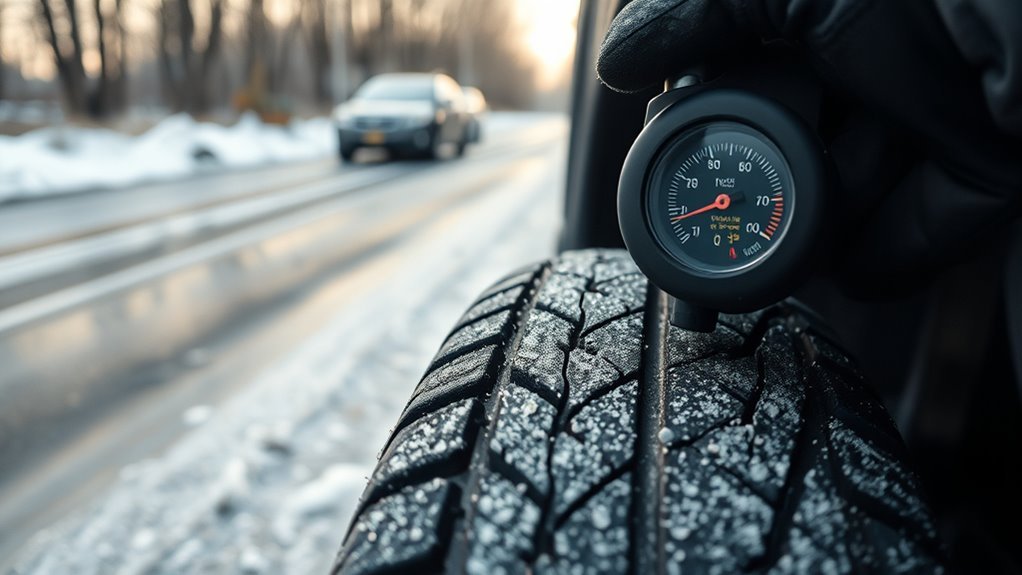
When temperatures fall, you’ll notice your tire pressure drops because the cold air inside contracts.
In cold weather, the air molecules inside your tires slow down and compress, causing air contraction that reduces tire pressure.
For every 10°F temperature drop, tire pressure decreases by about 1-2 PSI.
So, if the temperature falls by 30°F, you can expect a 3-6 PSI drop without any leaks.
This happens because denser cold air takes up less space, lowering the PSI inside your tires.
Your tire pressure monitoring system might alert you to low pressure during these temperature changes.
Keep in mind, this pressure loss is normal and usually temporary, often returning to standard levels once you drive and warm up the tires.
Effects of Low Tire Pressure on Vehicle Performance
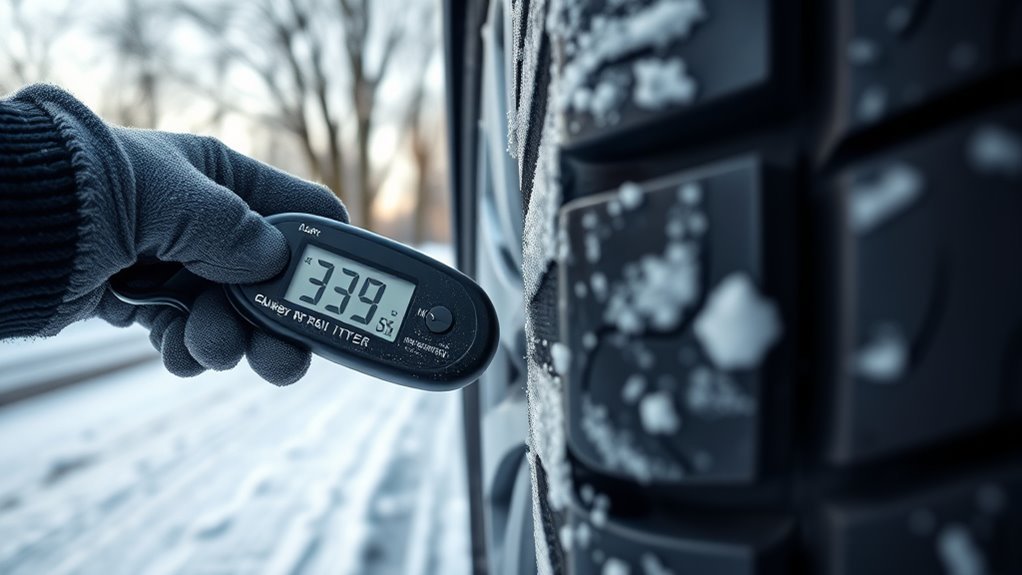
When your tire pressure drops, you’ll notice your handling and braking won’t be as sharp, especially on slick roads.
Low pressure also forces your engine to work harder, cutting into your fuel efficiency.
Plus, underinflated tires wear unevenly and can suffer damage faster, putting your safety at risk.
Handling and Braking Safety
Although cold weather often catches drivers off guard, maintaining proper tire pressure is essential for safe handling and braking.
When tire pressure drops, your tires’ contact patch with the road shrinks, reducing handling precision and making steering less responsive.
This is especially dangerous on icy or snowy roads, where low tire pressure increases braking distances by lowering traction.
You risk uneven tire wear too, which can weaken tire integrity and further compromise control.
To stay safe, regularly check your tire pressure with a tire gauge during cold weather.
Properly inflated tires maintain suitable traction, ensuring your vehicle responds predictably when you brake or maneuver.
Don’t let low tire pressure undermine your safety this winter—keep your tires properly inflated for reliable handling and braking performance.
Fuel Efficiency Impact
Since low tire pressure increases rolling resistance, your engine has to work harder, which leads to reduced fuel efficiency.
In cold weather, air pressure drops, causing underinflated tires that waste fuel.
For every 1 PSI drop, fuel efficiency decreases by about 0.2%.
Using a tire pressure gauge regularly helps you maintain proper tire pressure, enhancing fuel economy and saving money.
| Tire Pressure Issue | Effect on Fuel Efficiency |
|---|---|
| Properly inflated | Ideal fuel efficiency |
| 1 PSI underinflated | 0.2% decrease in fuel economy |
| 5 PSI underinflated | Approximately 1% decrease |
| Severe underinflation | Noticeable fuel consumption rise |
Keep your tires inflated to the recommended air pressure, especially during cold weather, to maximize fuel efficiency.
Tire Wear and Damage
If you don’t keep your tires properly inflated during cold weather, you’ll notice uneven tread wear, especially along the edges. This can really shorten your tire’s lifespan.
Low tire pressure caused by temperature drops leads to underinflation, which increases flexing in the sidewalls.
This flexing can cause sidewall damage, such as bulges or cracks, compromising your tire’s structural integrity.
Also, underinflated tires fail to absorb impacts effectively, raising the risk of punctures and internal damage from potholes or debris.
Over time, consistent low tire pressure results in uneven contact with the road. This worsens tire wear and reduces handling precision.
Ultimately, this accelerates tread separation and can even lead to tire failure during winter driving.
To avoid costly repairs and ensure safety, regularly check and maintain proper tire pressure throughout the colder months.
How to Accurately Measure Tire Pressure in Cold Weather
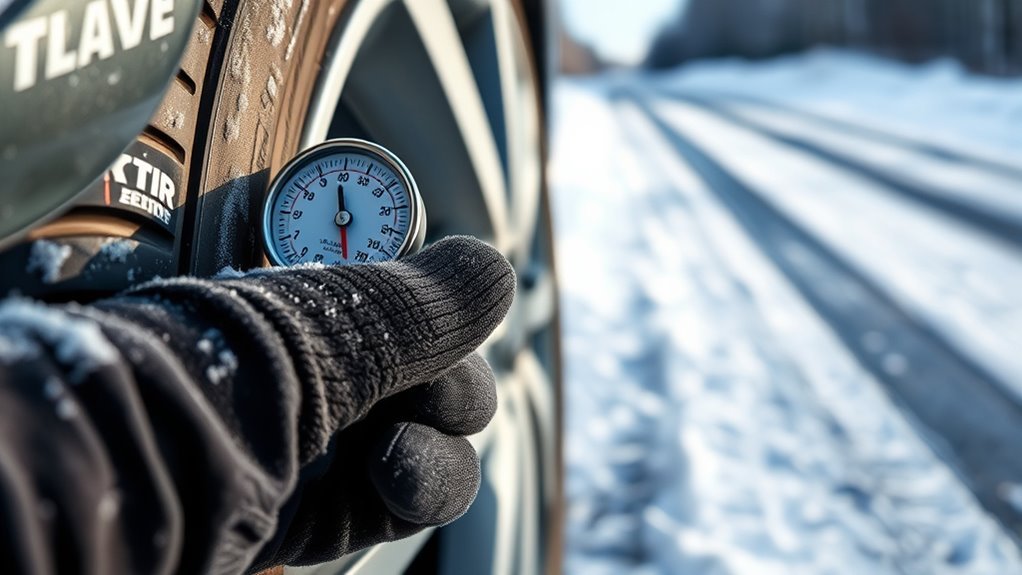
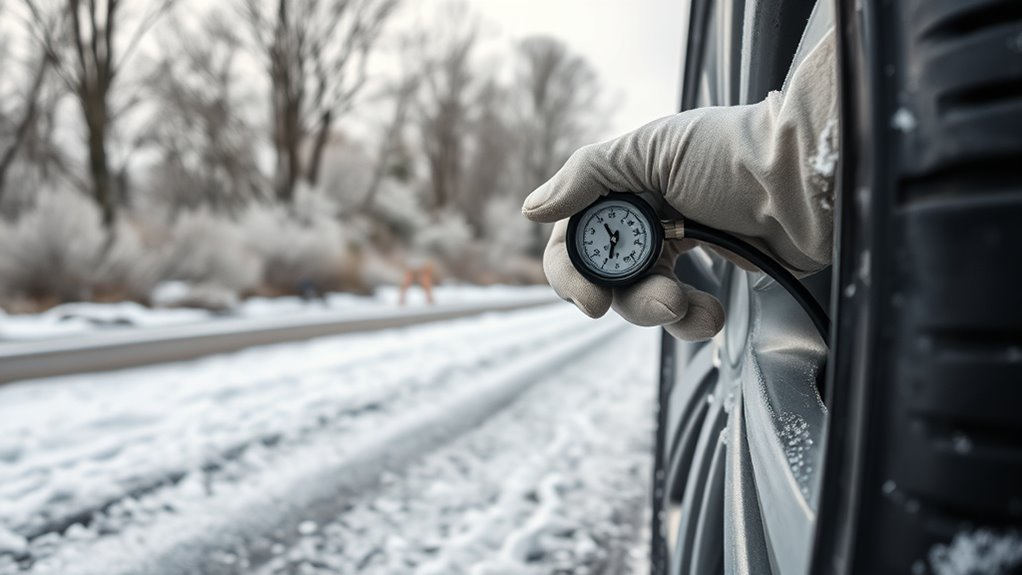
You should always check tire pressure when the tires are cold, ideally before driving or after the vehicle has sat for at least three hours.
Use a reliable tire pressure gauge and compare the reading to the recommended PSI found in your owner’s manual or on the door placard.
This guarantees you get an accurate measurement and keep your tires properly inflated in cold weather.
Cold Tires Pressure Check
When checking tire pressure in cold weather, ensure your tires are cold. This means your vehicle should have been parked for at least three hours or driven less than a mile.
This guarantees an accurate PSI reading since tire pressure drops as the temperature falls. To properly check and adjust your tire pressure, follow these steps:
- Use a reliable tire pressure gauge—either digital or dial—for precise measurement.
- Remove the valve stem cap and firmly attach the gauge to get a reading.
- Compare the reading with your vehicle’s recommended PSI, which can be found in the manual or on the door placard.
- Inflate or deflate tires as needed. Then, replace the valve cap to maintain pressure and keep out dirt.
While TPMS alerts can help, always manually check tire pressure for the best accuracy in cold weather.
Recommended PSI Reference
How do you make certain your tires maintain the proper pressure during cold weather?
First, always check tire pressure when the tires are cold—after the vehicle has been parked for at least three hours.
Then, find the recommended PSI for your vehicle in the owner’s manual or on the tire placard inside the driver’s door jamb; it’s usually between 30-35 PSI.
Use a reliable tire gauge—digital or dial—to get an accurate reading.
Remove the valve cap, press the tire gauge firmly onto the valve stem, and note the reading.
Adjust the tire pressure as needed to match the recommended PSI, then securely replace the valve cap to prevent dirt and air loss.
If your vehicle has a tire pressure monitoring system (TPMS), use it as a helpful alert but still verify pressure manually in cold weather.
Using Tire Pressure Gauge
Ensuring your tires have the correct pressure means taking accurate measurements with a reliable tire pressure gauge.
In cold weather, tire pressure drops, so you need to check tire pressure regularly to maintain safety and efficiency.
Follow these steps:
- Use a trusted digital or analog tire gauge instead of relying solely on your tire pressure monitoring system.
- Check tire pressure when the tires are cold—before driving or after at least three hours of inactivity—to get precise PSI readings.
- Remove the valve stem cap, press the tire gauge firmly onto the valve to avoid air leaks, and note the PSI.
- Adjust inflation as needed, then securely replace the valve cap to keep debris out and preserve correct tire pressure.
This method makes sure your tires stay properly inflated despite cold weather’s effects.
Steps to Correct Low Tire Pressure Safely
Although cold weather can lower your tire pressure, you can easily fix it by checking your tires when they’re cold—either before driving or after sitting for at least three hours.
Start by using a reliable tire gauge to check pressure on all tires, including the spare.
Compare the reading to the vehicle manufacturer’s recommended PSI, usually found on the door placard or in the owner’s manual.
If the pressure is low, inflate tires gradually, watching the gauge closely until you reach the proper level.
After inflating, drive about a mile to warm the tires slightly and allow the TPMS warning light to reset if it was on.
Regularly repeat this process during cold weather to maintain safe tire pressure and guarantee ideal vehicle performance.
Best Practices for Maintaining Tire Pressure During Winter
Keeping your tires properly inflated during winter goes beyond just correcting low pressure when you notice it.
To maintain ideal tire pressure in cold weather, follow these best practices:
1. Check your tire pressure at least once a month with a reliable gauge.
Ideally, do this before driving or after the tires have been cold for three hours.
2. Inflate your tires to the recommended PSI, usually between 30-35 PSI, as stated in your vehicle’s manual or door placard.
3. Use high-quality air sources or winter-specific air to ensure consistent pressure despite temperature drops.
4. Regularly inspect your tires for wear and monitor the tire pressure warning light.
Address any issues promptly to stay safe on the road this winter!
When to Seek Professional Tire Services
If your tire pressure stays low even after you’ve adjusted for the cold, it’s time to get professional help.
Persistent issues might mean there’s a leak or damage that you can’t spot yourself.
So, professional tire services can thoroughly check for leaks and perform a detailed tire inspection.
If your tire pressure light stays on or the pressure monitoring system doesn’t reset, it could indicate faulty sensors or other problems requiring expert attention.
You should also seek professional help if you notice uneven tire wear, sidewall damage, or if you struggle to maintain proper pressure.
Regular maintenance and timely inspections prevent bigger issues, ensuring your tires perform safely and efficiently throughout the cold season.
Don’t ignore warning signs—professional care keeps you safe on the road.
Frequently Asked Questions
How Do You Fix Low Tire Pressure in Cold Weather?
You fix low tire pressure by checking it with a gauge when tires are cold.
Then, add air to reach the recommended PSI.
Make sure to securely replace valve caps.
After that, drive to warm the tires.
Finally, reset warning lights if needed.
Do I Need to Put Air in My Tires When It’s Cold?
Yes, you should add air to your tires when it’s cold.
Check the pressure regularly, especially after temperature drops.
Inflate them to the recommended PSI to keep your vehicle safe and maintain tire performance.
What Is the 7’7 Rule for Winter Tires?
You should replace your winter tires when the tread depth reaches 7/32 inches—that’s the 7’7 Rule.
This depth guarantees better traction on snow and ice, keeping you safer during harsh winter conditions.
So, it’s really important to keep an eye on your tire tread!
When it gets too low, it’s time to start thinking about a replacement.
How Do I Keep My Tires From Losing Air in Cold Weather?
You keep your tires from losing air in cold weather by checking pressure monthly.
Using a reliable gauge is essential, as it ensures accuracy in your readings.
Inflate to the recommended PSI, and consider winter tires or slightly higher inflation to offset cold-induced pressure drops.
These practices can help maintain optimal tire performance during chilly temperatures.
Conclusion
Think of your tires like a balloon that shrinks when the air turns chilly.
Cold weather squeezes the air inside, dropping pressure and affecting your ride’s balance.
Just as you’d gently reinflate a deflated balloon to restore its shape, you need to check and adjust your tire pressure regularly in winter.
By staying attentive and proactive, you keep your vehicle steady and safe.
Steering through those cold roads with confidence and control is essential.
So, make it a habit to monitor your tire pressure, especially when temperatures drop.
This simple maintenance task can prevent poor handling and enhance your safety.
Remember, proper tire pressure not only helps with performance but also improves fuel efficiency.
Stay safe out there this winter by keeping your tires in check!