
What Causes a Sore Throat in Cold Weather?
You get a sore throat in cold weather due to several factors that come into play during the winter months. Cold, dry air, combined with indoor heating, dries out your throat’s mucous membranes. This drying effect leads to irritation and soreness, making it uncomfortable to swallow.
Additionally, the cold air can increase sensitivity by stimulating nerve endings in your throat.
Winter viruses and indoor allergens contribute to inflammation, which can make your sore throat feel even worse.
Mouth breathing and dehydration can also worsen your discomfort, especially when you’re sleeping in a heated room.
Furthermore, seasonal changes in your immune system make you more vulnerable to infections during this time.
If you want to understand these causes better and learn how to prevent or soothe your sore throat, there’s more to explore.
How Cold Air Affects the Throat
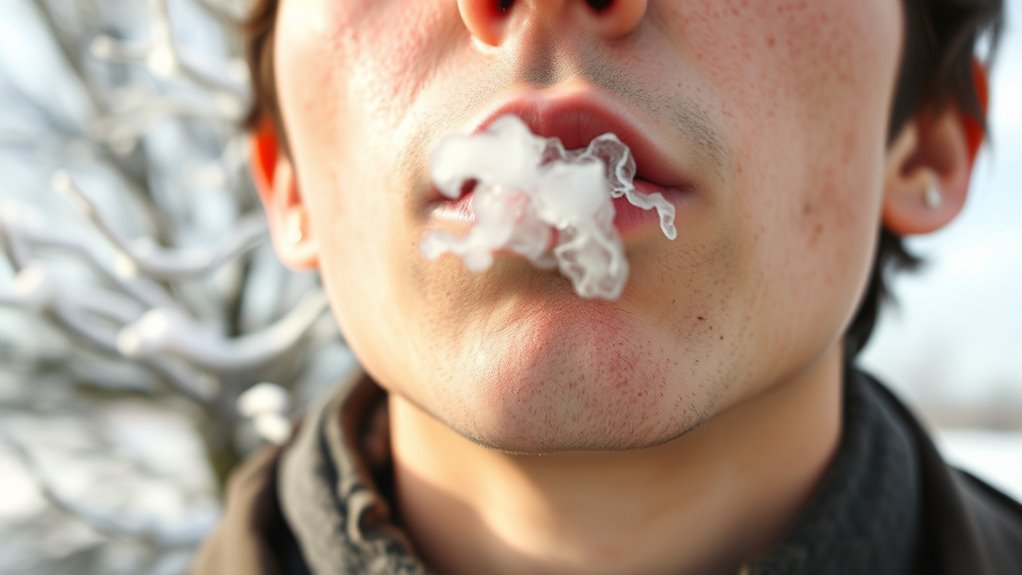
Although cold air might seem invigorating, it can actually dry out your throat by stealing moisture from its tissues.
When you breathe in cold air, its dry nature causes dehydration of the mucous membranes lining your throat.
This dry air thickens the mucus, which normally protects your throat from irritants.
As a result, your throat becomes more vulnerable to irritation.
The cold air also stimulates the small nerve endings in your throat, increasing sensitivity and soreness.
You’ll notice that this throat irritation can make swallowing uncomfortable and lead to a persistent scratchy feeling.
Throat irritation from cold air often causes discomfort when swallowing and a lingering scratchy sensation.
Understanding how cold air affects your throat helps you recognize why you might feel discomfort during chilly weather, especially when the air lacks moisture and leaves your throat dry and irritated.
The Role of Dry Indoor Heating in Throat Irritation
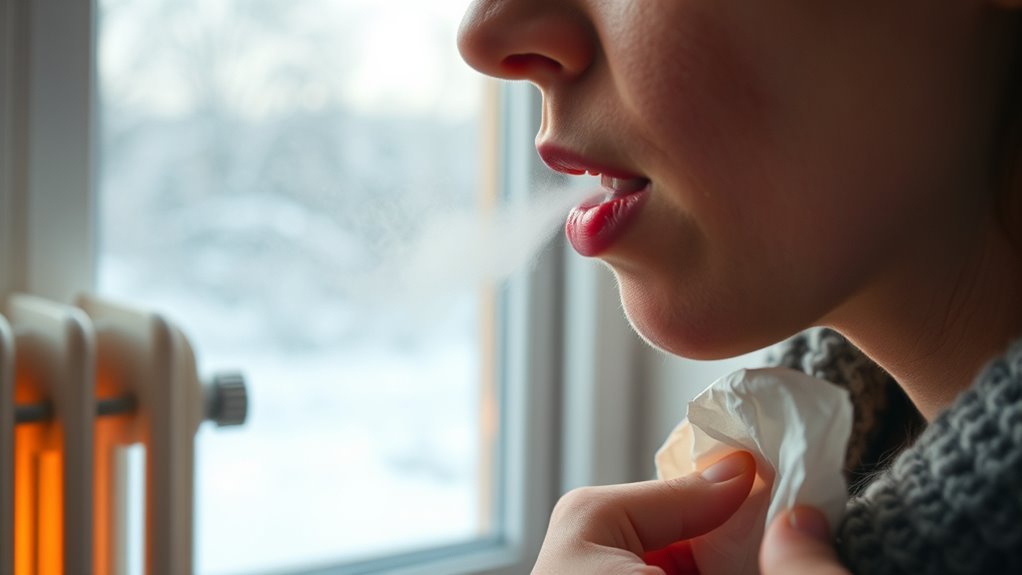
When cold air dries out your throat, the indoor environment can make things worse.
Indoor heating often lowers humidity levels below 30%, creating dry air that strips moisture from your throat’s mucous membranes.
This dryness leads to throat irritation, soreness, and a scratchy feeling. Plus, heating systems can circulate dust and allergens, aggravating your discomfort.
To protect your throat, consider these tips:
- Use a humidifier to boost indoor humidity.
- Keep heating vents clean to reduce dust circulation.
- Drink plenty of fluids to stay hydrated.
- Avoid sitting too close to heating sources.
- Ventilate rooms occasionally to refresh the air.
Managing indoor heating and humidity can considerably reduce throat irritation during cold weather.
Common Viral Infections That Cause Sore Throats in Winter

Since cold, dry winter air weakens your nasal defenses, viruses like rhinoviruses, influenza, adenoviruses, and coronaviruses find it easier to infect your throat.
Rhinoviruses, responsible for the common cold, thrive in cold weather and cause many sore throats.
Influenza viruses peak during winter and can lead to more severe throat irritation alongside flu symptoms.
Adenoviruses spread more efficiently indoors, where you’re likely to spend more time during winter, increasing your risk.
Coronaviruses also circulate more in cold weather due to close indoor contact and low humidity.
These viral infections challenge your immune system, which may already be compromised by the harsh conditions.
Understanding these common viral infections helps you recognize why sore throats become more frequent in winter and emphasizes the importance of protecting your immune system during this season.
Allergens and Their Impact on Winter Throat Health
You might not realize that common winter allergens like mold, dust mites, and pet dander can irritate your throat during cold months.
These allergens often trigger symptoms like post-nasal drip and inflammation, making your throat feel sore or scratchy.
Understanding how these allergens affect you can help manage your winter throat discomfort.
Common Winter Allergens
Although pollen levels drop in winter, you’ll still face indoor allergens like mold spores, dust mites, and pet dander that increase as you spend more time inside.
Heating systems and moisture leaks encourage mold growth, making mold spores more prevalent. Dust mites thrive in warm, humid indoor environments, while pet dander accumulates as pets stay indoors.
These indoor allergens can irritate your throat, often causing discomfort or soreness.
Common winter allergens you should watch out for include:
- Mold spores from damp areas
- Dust mites in bedding and carpets
- Pet dander from indoor animals
- Outdoor molds that remain active
- Increased indoor moisture from heating
Being aware of these can help you manage your throat health during cold weather.
Allergy Symptoms Effects
When indoor allergens like mold spores, dust mites, and pet dander increase during winter, they can trigger allergy symptoms that directly affect your throat.
Indoor mold growth and trapped pollen cause throat irritation and worsen mucus buildup, making your sore throat persist.
These allergens inflame your throat lining, leaving you feeling uncomfortable and scratchy.
| Symptom | Impact on You |
|---|---|
| Throat irritation | Causes constant soreness |
| Mucus buildup | Leads to frequent clearing |
| Indoor mold | Triggers inflammation |
| Allergy symptoms | Intensify cold discomfort |
Understanding these effects helps you manage your winter throat health better.
Mouth Breathing and Its Effect on Throat Discomfort
Since mouth breathing skips the nasal passages, it lets cold, dry air hit your throat directly without warming or humidifying it first.
This exposes your throat to unfiltered air, causing irritation and a dry throat.
When you breathe through your mouth, especially in cold weather or while sleeping, your throat loses moisture quickly.
This leads to soreness and scratchiness.
Over time, chronic mouth breathing can inflame your throat lining, making it more sensitive to cold air and increasing discomfort.
Here’s how mouth breathing affects you:
- Cold air dries out throat tissues rapidly.
- Lack of nasal filtration increases irritation.
- Moisture loss causes soreness and scratchiness.
- Inflammation makes throat more sensitive.
- Prolonged mouth breathing worsens discomfort.
Avoiding mouth breathing helps protect your throat from cold air irritation.
The Connection Between Dehydration and Sore Throats
Because cold weather and indoor heating draw moisture from your body, you can easily become dehydrated.
This reduction in moisture decreases saliva production, leaving your throat dry and vulnerable to irritation.
This throat dryness makes your tissues more prone to inflammation, causing soreness and discomfort.
When you don’t maintain adequate fluid intake during colder months, your body loses more moisture through evaporation without replenishing it, worsening dehydration.
Saliva normally protects your throat by keeping it moist, so less saliva means less defense against irritants and infections.
To prevent or ease sore throats caused by dehydration, it’s essential to drink plenty of fluids throughout the day.
Keeping your throat hydrated helps reduce inflammation and supports faster healing.
How Seasonal Changes Influence Immune Response
You might not realize it, but your immune system changes with the seasons, often weakening in cold weather.
This makes you more vulnerable to seasonal viruses that thrive during these months.
Understanding this variability can help you take steps to protect your throat and overall health.
Immune System Variability
When cold weather arrives, your immune system doesn’t always keep up with the increased risks.
Seasonal immune variability means your body’s immune response weakens due to several factors. You might notice:
- Vitamin D deficiency from reduced sunlight lowers immune regulation.
- Mucosal barriers in your respiratory tract become less effective at blocking pathogens.
- Hormonal changes, like increased melatonin, suppress immune activity.
- Cold air directly impairs the protective lining in your throat and nose.
- Spending more time indoors allows viruses to spread more easily when your defenses are down.
These changes make it harder for your body to fight infections.
As a result, your chances of sore throats and other cold-weather illnesses increase.
Understanding this variability helps you take steps to support your immune system during the colder months.
Seasonal Virus Activity
Alongside changes in your immune system, seasonal shifts also boost the activity of respiratory viruses like rhinoviruses and influenza.
Cold weather, combined with dry air, weakens your mucosal defenses and reduces humidity, making it easier for viruses to invade.
Indoor crowding during colder months increases your risk of catching respiratory infections.
Your immune response also slows down, lowering your ability to fight off these seasonal viruses.
Understanding this seasonal virus activity helps explain why sore throats spike in winter.
| Factor | Effect on Immune Response | Impact on Respiratory Infections |
|---|---|---|
| Cold Weather | Narrows nasal blood vessels | Increases susceptibility |
| Low Humidity | Dries mucous membranes | Reduces pathogen elimination |
| Indoor Crowding | Facilitates virus spread | Raises infection rates |
| Weakened Immunity | Slows immune defenses | Prolongs viral infections |
Preventative Measures to Avoid Winter Sore Throats
Although cold weather increases the risk of sore throats, you can take simple steps to protect yourself.
Keeping your throat healthy this winter involves maintaining moisture and boosting your immune defenses. Here are some effective preventative measures:
- Use a humidifier indoors to keep air moisture between 40-60%. This helps prevent dryness that irritates your throat.
- Practice regular hand washing to reduce exposure to viruses that cause sore throats.
- Stay hydrated by drinking warm beverages like herbal tea with honey and lemon. These can soothe and moisturize your throat tissues.
- Eat a balanced diet rich in vitamins, especially C and D. This will help strengthen your immune system.
- Gargle daily with salt water to reduce inflammation and prevent throat discomfort.
These habits can really help you avoid sore throats during those chilly months!
Effective Home Remedies for Soothing a Winter Sore Throat
If you’re dealing with a sore throat this winter, several simple home remedies can bring quick relief.
Drinking warm herbal teas or broths helps soothe sore throat discomfort by providing hydration and warmth.
Adding honey and lemon to your tea coats your throat, reducing irritation.
Gargling with salt water decreases swelling and kills bacteria, speeding up recovery.
Using a humidifier indoors keeps the air moist, preventing further dryness that worsens soreness.
You can also inhale steam from hot water to add moisture directly to your throat.
These home remedies work together to ease pain and support healing, making your winter sore throat more manageable without needing medication.
Incorporate them into your routine to feel better faster.
When to Seek Medical Attention for Persistent Throat Pain
Home remedies can ease your sore throat, but you shouldn’t ignore persistent pain.
Home remedies may help soothe your sore throat, but persistent pain warrants medical attention.
If your sore throat lasts more than a week or worsens, it’s time to seek medical advice.
Infections often cause prolonged symptoms, and additional symptoms could signal a serious issue.
Watch for these signs:
- Difficulty swallowing or breathing
- High fever or swollen glands
- Voice loss or worsening pain over time
- Sore throat unresponsive to home treatments
- Recurring or long-lasting throat pain
Persistent throat pain paired with these symptoms requires prompt evaluation to rule out bacterial infections, tonsillitis, or other underlying conditions.
Don’t hesitate to consult a healthcare professional if you notice any of these, ensuring you get timely treatment and avoid complications.
Frequently Asked Questions
Is It Normal to Have a Sore Throat During Cold Weather?
Yes, it’s normal to have a sore throat during cold weather.
You’re likely experiencing dryness and irritation from cold air or indoor heating,
which can make your throat feel sore even without an infection.
What Causes a Sore Throat in Children?
You get sore throats in children mainly because viruses spread easily, and cold, dry air irritates their throats.
Mouth breathing and indoor heating dry out their throats, making discomfort more likely during winter months.
Can Pregnancy Cause a Sore Throat?
Sure, pregnancy can throw you a sore throat party you never asked for!
Hormones, increased blood flow, and reflux team up, making your throat dry, irritated, and vulnerable to infections.
Enjoy the delightful chaos!
Why Do I Have a Sore Throat but Don’t Feel Sick?
You have a sore throat but don’t feel sick because dry, cold air irritates your throat, reducing mucus and increasing sensitivity.
Stay hydrated and use a humidifier to ease discomfort and prevent dryness without needing medication.
Conclusion
You might feel the cold air sting your throat.
Yet dry indoor heat can make it worse.
Viruses lurk in winter’s chill, while allergens silently irritate you.
Breathing through your mouth may ease congestion but worsens discomfort.
Your immune system battles quietly as seasons shift.
By understanding these contrasts, you can take simple steps to protect your throat.
Don’t just endure the winter—soothe it, prevent it, and know when to seek help.
—
In conclusion, winter brings unique challenges for your throat.
Cold air, dry heat, and lurking viruses all contribute to discomfort.
By staying hydrated, using humidifiers, and limiting allergens, you can ease symptoms.
It’s essential to listen to your body and seek help if needed.
Taking proactive steps will help you enjoy the season more fully.
So, remember to care for your throat this winter!